
Facelift in Turkey means having a rhytidectomy, an operation that lifts and tightens sagging skin and deeper tissues of the lower face and neck, at a Turkish hospital and then flying home. It mainly improves jowls, deep folds and loose neck skin in healthy non-smokers with realistic expectations, but it does not stop aging. Anyone planning a facelift in Turkey should verify the surgeon and hospital, allow at least 7 to 10 days before flying, and arrange follow-up care at home.
Source: NHS, ASPS, NHS (abroad)
Contents
- What a facelift in Turkey involves
- Facelift techniques: traditional, mini and neck lift
- Who is a good candidate for a facelift in Turkey?
- What happens on the day of surgery
- Recovery after a facelift in Turkey and when to fly
- Facelift in Turkey: risks and complications
- Results: how long a facelift lasts
- Choosing a surgeon and hospital for a facelift in Turkey
- Planning the trip step by step
- Facelift in Turkey: frequently asked questions
What a facelift in Turkey involves
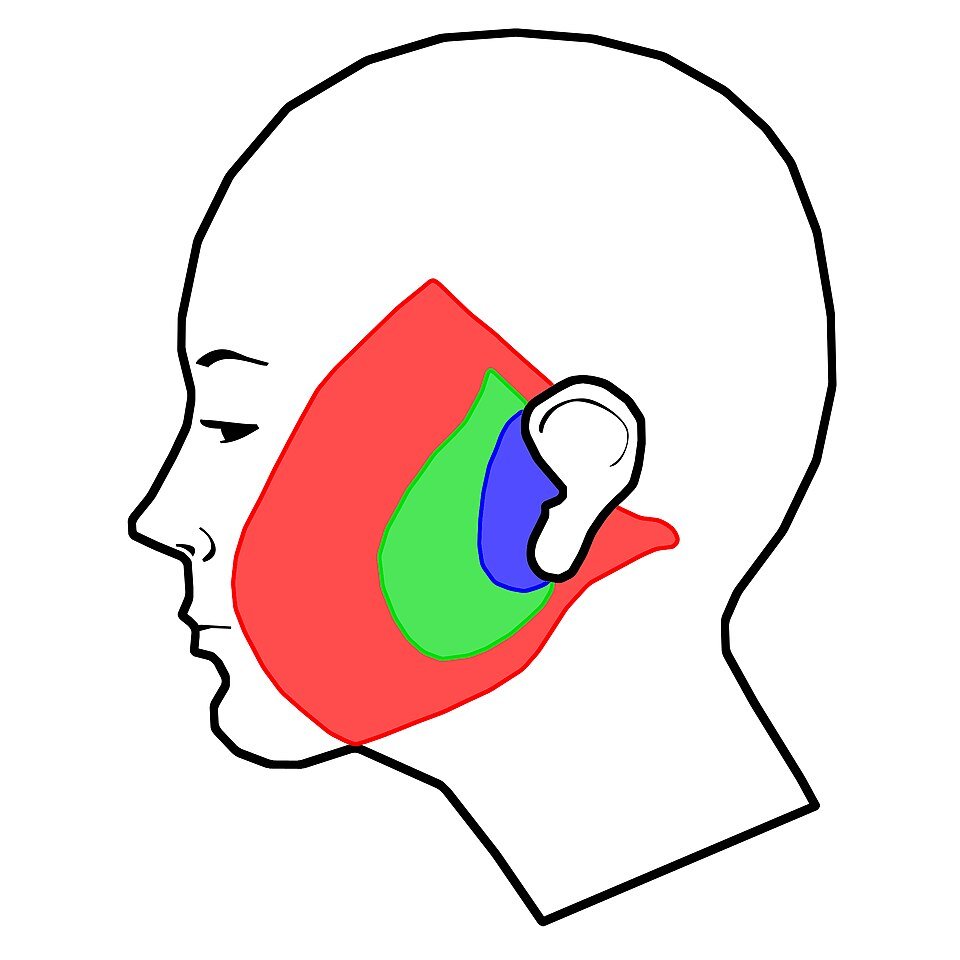
A facelift in Turkey or anywhere else raises and repositions the skin and soft tissue of the lower face, from the level of the eyes and ears downward. The surgeon removes surplus skin, re-drapes the remaining skin and may move or add fat. The brow and upper eyelids are treated by separate operations, which are often combined with it.
Facial aging comes from thinning skin, loss of facial fat, gravity, sun damage, smoking, heredity and stress. A facelift targets the visible results: sagging cheeks, deep lines between the nose and the corners of the mouth, jowls along the jaw, and loose skin or fat under the chin. It cannot change your basic appearance. Our guide to skin laxity explains why skin loses its spring.
Source: ASPS, MedlinePlus
Clinically, a facelift in Turkey is the same operation performed in Europe or North America. What differs is the logistics: consultation, surgery and the first check-ups are compressed into one trip, and later problems may have to be handled by a doctor at home. Our facelift treatment guide covers the operation itself; this article focuses on the decisions that matter when you travel.
Source: NHS (abroad), CDC
Because it is cosmetic, a facelift is not usually available on the NHS. The NHS says a mini facelift in a UK private clinic can cost a few thousand pounds and a face and neck lift up to about £10,000, with consultations and follow-up extra. Lower prices drive much of the interest in a facelift in Turkey, but price should not be the deciding factor.
Source: NHS, NHS (abroad)
Facelift techniques: traditional, mini and neck lift
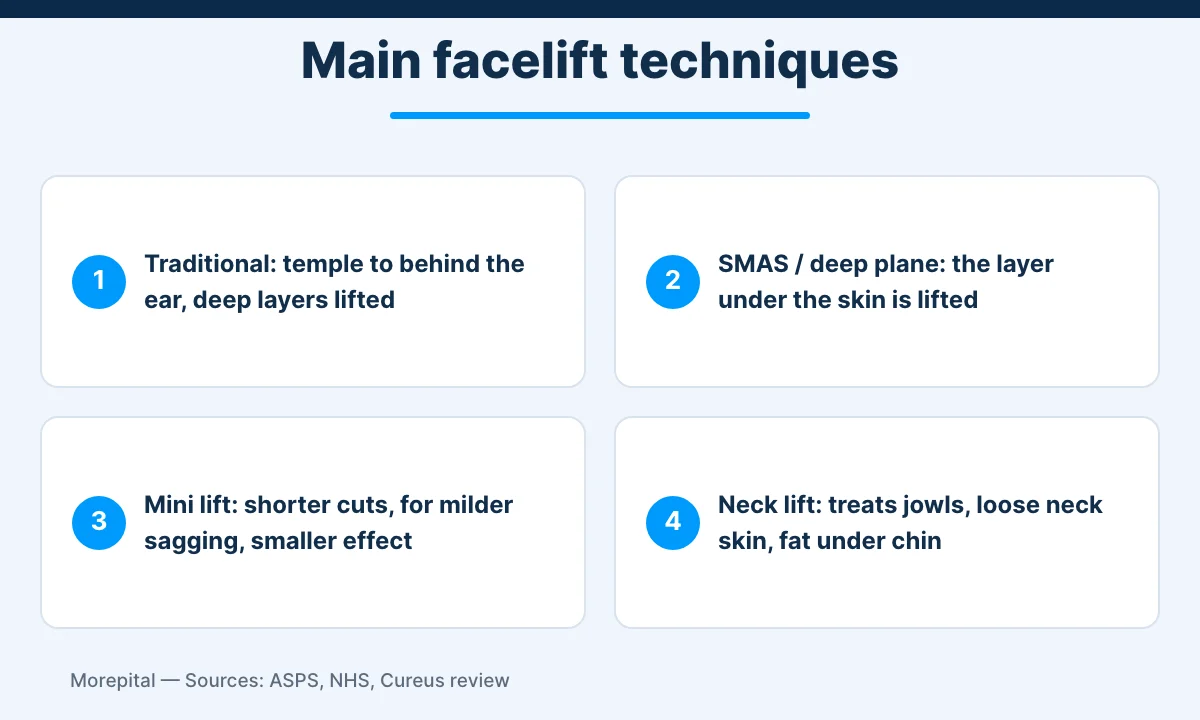
Surgeons offering a facelift in Turkey use the same standard techniques as elsewhere. Which one suits your facelift in Turkey depends on how much loose skin you have, where it sits and how much the deeper tissues have descended.
Source: ASPS (procedure), Cureus review
Traditional facelift
The incision usually starts in the hairline at the temples, runs around the front of the ear and ends in the lower scalp behind the ear. The surgeon may sculpt or redistribute fat, lifts the deeper layers and muscles, and trims excess skin. A small incision under the chin is added when the neck also needs work.
Source: ASPS (procedure), MedlinePlus
SMAS and deep-plane lifts
Many facelift techniques treat the superficial musculoaponeurotic system (SMAS), the fibrous layer beneath the skin, rather than pulling on skin alone. SMAS techniques lift and reposition this layer, while deep-plane techniques release and move tissue at a deeper level. A 2024 review notes that published comparisons are mostly small case series, so no single technique is proven best for everyone.
Source: Cureus review, ASJ Open Forum review
Mini facelift and neck lift
A limited-incision or “mini” lift uses shorter cuts at the temples and around the ear. ASPS says it is usually reserved for people with less skin relaxation and gives a less rejuvenating result. A neck lift uses an incision from in front of the earlobe around and behind the ear to treat jowls, loose neck skin and fat under the chin.
Source: ASPS (procedure), NHS
ASPS describes so-called stem cell facelifts as having unproven benefit. Treat any branded technique with a new name as a question to ask your surgeon, not as a reason to choose a clinic.
Source: ASPS
Who is a good candidate for a facelift in Turkey?
- Healthy: no medical conditions that impair wound healing.
- Non-smoker: smoking sharply increases the risk of skin loss after a facelift, so surgeons ask you to stop beforehand.
- Realistic expectations: you understand that a facelift improves the most visible signs of aging but cannot stop the process.
- Doing it for yourself: ASPS stresses that the decision should be your own, not to satisfy someone else.
Source: ASPS (candidates), ASPS (preparation), ASJ Open Forum review
Being certain of your reasons matters. The NHS advises not rushing the decision and talking it through with your GP or family doctor first. A good surgeon assessing you for a facelift in Turkey will ask about high blood pressure, bleeding problems and the medicines and supplements you take, because these affect bleeding risk.
Source: NHS, PRS Global Open review
When a facelift is not the right first step
If your main concern is fine lines, frown lines or lost volume rather than sagging, non-surgical options may be more appropriate for now. ASPS notes that minimally invasive treatments cannot match facelift results, but they may delay the point when surgery is needed and can complement it. See our guide to Botox injections for one such option. Fat transfer or fillers, skin resurfacing and eyelid or brow surgery are often combined with a facelift.
Source: ASPS
What happens on the day of surgery
Before a facelift in Turkey you will usually be asked to stop smoking and avoid aspirin, anti-inflammatory painkillers and herbal supplements before surgery, as they increase bleeding and bruising. You may need blood tests or a medical check. Arrange for someone to take you from the hospital and stay with you on the first night.
Source: ASPS (preparation)
A facelift in Turkey is done under general anesthesia or under local anesthesia with sedation. The NHS says it takes about 2 to 3 hours, while BAPRAS gives a range of 2 to 5 hours depending on what is done. Most people stay in hospital overnight.
Source: NHS, BAPRAS, ASPS (procedure)
Incisions are closed with stitches that dissolve or are removed later, or sometimes with skin glue. A bandage may be wrapped around the face to limit swelling and bruising, and a small drain tube may be placed behind the ear to remove blood or fluid.
Source: ASPS (procedure), ASPS (recovery), MedlinePlus
Recovery after a facelift in Turkey and when to fly
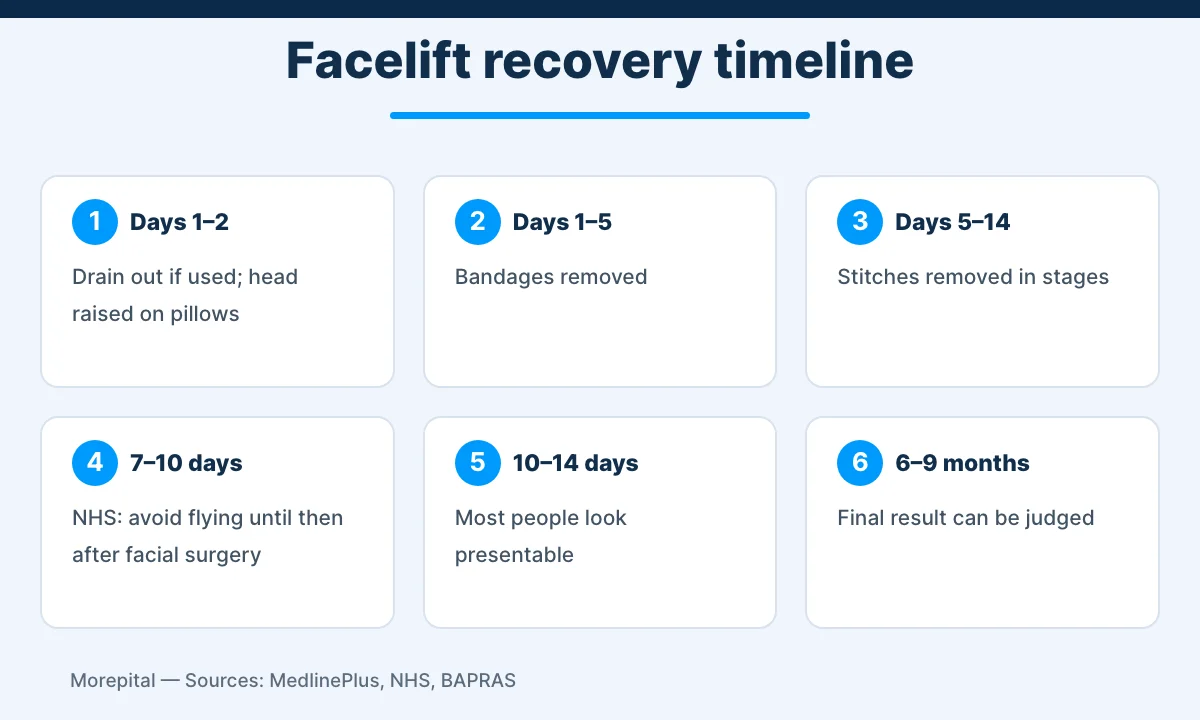
Recovery from a facelift in Turkey follows the same course as at home, but the first and most delicate days are spent abroad. MedlinePlus gives a typical sequence: a drain, if used, comes out after 1 to 2 days; bandages after 1 to 5 days; and some stitches after 5 to 7 days, with hairline stitches sometimes staying longer.
Source: MedlinePlus
- First 2 days: keep your head raised on 2 to 3 pillows and keep bandages dry.
- First weeks: swelling, bruising, numbness and a tight feeling when opening the mouth are normal; some people feel low for a few days.
- 10 to 14 days: most people look presentable and can consider returning to work or going out.
- At least 2 weeks: avoid strenuous activity, saunas and massages.
- 4 to 6 weeks: the face usually looks normal; NHS advises 2 to 4 weeks off work for full recovery.
Source: MedlinePlus, NHS, BAPRAS, ASPS (results)
When can you fly home?
Flying after surgery increases the risk of blood clots. The NHS advises not flying for 7 to 10 days after facial cosmetic procedures. CDC advice for major surgery in general is to delay air travel for 10 to 14 days. In practice, plan to stay for at least 7 to 10 days after a facelift in Turkey, ideally until stitches are checked, and confirm the date with your surgeon.
Source: NHS (abroad), CDC
Use the time to rest, not to sightsee. The NHS advises avoiding alcohol, sunbathing, sightseeing and swimming after cosmetic surgery abroad. Do not drive for several days.
Source: NHS (abroad), NHS
Warning signs
Contact your surgeon urgently if one side of the face becomes rapidly swollen, tight or very painful, as this can signal a hematoma, or if you notice signs of infection or new weakness of facial movement. After you return home from a facelift in Turkey, the NHS advises contacting the clinic for severe pain or unexpected symptoms; UK patients can also call NHS 111.
Source: NHS, ASJ Open Forum review, MedlinePlus
Facelift in Turkey: risks and complications
All the usual surgical risks apply: reactions to anesthesia, bleeding, blood clots, infection and heart or lung problems. Facelift-specific risks include a collection of blood under the skin (hematoma), nerve injury, fluid buildup, poor wound healing or skin loss, prolonged swelling, lasting pain, numbness, hair loss at the incisions, visible scars and asymmetry. Sometimes the result is not what you hoped for and further surgery is needed.
Source: ASPS (safety), MedlinePlus, NHS
Published rates vary by technique and study, so when weighing a facelift in Turkey, treat the figures below as a general guide rather than the risk for any particular clinic.
Source: ASJ Open Forum review, Cureus review
| Complication | Reported frequency | What it means |
|---|---|---|
| Hematoma | 0.2% to 8% across studies; about 1.8% expanding hematoma in a meta-analysis | Blood collecting under the skin; more common in men and with high blood pressure |
| Great auricular nerve injury | Up to 7% | Numbness around the earlobe; the most commonly injured nerve |
| Facial (motor) nerve injury | Frontal branch under 1%; permanent about 0.1% | Weakness of eyebrow or lip movement, usually temporary |
| Skin slough | About 3.6% after skin-flap lifts, under 1% after deep-plane lifts | Delayed healing; much more likely in smokers |
| Infection | About 0.2% to 0.9% | Mostly bacterial, often staphylococcal; minor cases may be under-reported |
Source: ASJ Open Forum review, PRS Global Open review, MedlinePlus
What raises your risk
In one study cited by an Aesthetic Surgery Journal review, systolic blood pressure above 150 mmHg raised hematoma risk about 3.6-fold, male sex 2.8-fold, and aspirin or anti-inflammatory use and smoking about 2-fold each. Active smokers were about 12 times more likely than non-smokers to have skin slough. A large database review found complications were more common when a facelift was combined with other procedures (3.7%) than when it was done alone (1.5%).
Source: ASJ Open Forum review, Cureus review, PRS Global Open review
The practical lessons for a facelift in Turkey are clear: stop smoking well before surgery, have your blood pressure controlled, declare every medicine and supplement, and be cautious about packages that combine many operations in one session.
Source: ASPS (preparation), ASJ Open Forum review
Results: how long a facelift lasts
Visible improvement appears as swelling and bruising settle, and the face takes about 2 to 3 months to feel normal in texture and sensation. BAPRAS advises not judging the final result for 6 to 9 months. Scars sit mostly in the hairline and natural creases around the ear and fade over time, but they do not disappear, and the hairline or sideburns may be slightly raised.
Source: ASPS (results), BAPRAS, NHS
A facelift does not stop aging; your face continues to age from its new starting point. In a study of 50 patients followed for an average of 5½ years, published in Plastic and Reconstructive Surgery, 76% still looked younger than before surgery. Improvement in the jowls fell by about 20%, while the neck lost the most, about 70% of the gain in the chin-to-neck angle.
Source: ASPS (5-year study), ASPS
Daily sun protection and a healthy lifestyle help the results of a facelift in Turkey last. Results are not guaranteed: sometimes the best outcome cannot be achieved in one operation and a revision is needed, so ask in advance how further surgery would be arranged and paid for after a facelift in Turkey.
Source: ASPS (results), NHS
Choosing a surgeon and hospital for a facelift in Turkey
The British Association of Aesthetic Plastic Surgeons (BAAPS) and the Turkish Society of Plastic, Reconstructive and Aesthetic Surgeons (TSPRAS) published joint guidance for patients considering surgery in Türkiye. Its main checks are:
Source: BAAPS/TSPRAS
- The surgeon is a TSPRAS member and holds Turkish board certification you can see; EBOPRAS membership is desirable.
- The surgeon has practiced plastic, reconstructive and aesthetic surgery for at least 5 years and works within their own specialty.
- Surgery takes place in a fully recognized hospital, which the statement suggests means at least 30 beds.
- If you book through a company, the surgeon has worked with it for at least 3 years.
- You know the surgeon’s name and contact details, receive an aftercare plan and complete a full consent form before you travel.
Source: BAAPS/TSPRAS
Under a 2017 Turkish regulation, facilities and agencies serving international patients must hold an International Health Tourism Authorization Certificate, and the UK government points travelers to the Ministry of Health’s list of approved providers. The FCDO says it is aware of 7 British nationals who died in Turkey in 2025 after medical procedures, and it does not endorse any provider, so authorization is a minimum check rather than a guarantee.
Source: Health Türkiye, GOV.UK (FCDO)
Questions to ask before you book
- Am I a suitable candidate, and which technique do you recommend for me and why?
- How many facelifts do you perform, and how do you handle complications?
- Where will the operation take place, and how many nights in hospital are included?
- How long will recovery take, and when can I safely fly?
- How will my face likely look over time, and what are my options if I am unhappy?
- Can I see before-and-after photos of your own patients?
Source: ASPS (questions), NHS
When comparing offers for a facelift in Turkey, be wary of pressure to decide quickly, consultations only with sales staff or little information about complications. CDC notes that accreditation helps but does not guarantee a good outcome, and that language barriers can cause misunderstandings, so make sure you can talk directly with your surgeon.
Source: NHS (abroad), CDC
Planning the trip step by step
The NHS recommends two consultations with the surgeon who will operate and a cooling-off period of about 2 weeks between them, which is the UK norm. Do not pay for a hospital you have not seen or a surgeon you have not met.
Source: NHS (abroad)
- See your own doctor first: discuss your plans and medical history at least 4 to 6 weeks before departure.
- Insurance: travel insurance does not normally cover problems from surgery; check the clinic’s and surgeon’s cover and look for medical evacuation cover.
- Records: carry your medical records and medicine list, and bring home copies of the operation notes, translated into English if needed.
- Length of stay: for a facelift in Turkey, book at least 7 to 10 days after surgery, with flexible return flights.
- Budget: include accommodation, a companion and a possible return trip or local treatment for complications.
Source: CDC, NHS (abroad)
If you have read our guides to rhinoplasty in Turkey or a tummy tuck in Turkey, the same planning logic applies to a facelift in Turkey. Many patients combine a facelift with eyelid surgery; remember that combined procedures carry a higher complication rate and may lengthen your stay.
Source: ASPS, Cureus review
Back home, tell your GP about the operation, keep all follow-up appointments, protect the scars from sun and follow your surgeon’s aftercare plan. If something goes wrong, contact the operating surgeon first and seek local care for anything urgent.
Source: NHS, ASPS (results), CDC
Considering a facelift in Turkey? Contact us for a free consultation and a treatment plan tailored to you.
Facelift in Turkey: frequently asked questions
How long should I stay in Turkey after a facelift?
Plan at least 7 to 10 days, the NHS minimum before flying after facial cosmetic surgery. CDC suggests 10 to 14 days after major surgery in general.
Source: NHS (abroad), CDC
Is a facelift in Turkey safe?
It can be, when done by a qualified plastic surgeon in an authorized hospital, but it carries the same risks as anywhere, mainly hematoma, nerve injury and healing problems.
Source: ASPS (safety), BAAPS/TSPRAS
How long does the operation take?
About 2 to 5 hours under general anesthesia or sedation, usually with one night in hospital.
When will I look normal again?
Most people look presentable within 10 to 14 days and normal by about 4 to 6 weeks; the final result takes 6 to 9 months.
Source: ASPS (results), MedlinePlus, BAPRAS
How long do facelift results last?
The effect is long-lasting but aging continues. In one study, 76% of patients still looked younger about 5½ years later, with the neck losing the most improvement.
Source: ASPS (5-year study)
Is a mini facelift in Turkey a good option?
It suits people with milder sagging. It uses shorter incisions but gives a less rejuvenating result than a full facelift.
Source: ASPS (procedure)
How do I check a clinic for a facelift in Turkey?
Check the Ministry of Health’s approved-provider list, confirm the surgeon’s TSPRAS membership and board certification, and ask for a written aftercare plan.
Source: GOV.UK (FCDO), Health Türkiye, BAAPS/TSPRAS
Disclaimer: this article is for general health education and does not replace advice from a qualified doctor who can assess your individual case. Last updated: October 2026.