
Obesity
Overweight and obesity (excess body fat)
Obesity is a chronic disease in which excess body fat harms health; in adults it is usually defined as a body mass index (BMI) of 30 or more. It affects about 1 in 7 people worldwide and raises the risk of type 2 diabetes, heart disease, some cancers and other conditions. Treatment combines diet, activity and behavior change, and may include weight-loss medicines or bariatric surgery.
- What is obesity?
- Symptoms of obesity
- Causes and risk factors
- Types and classes of obesity
- How obesity is diagnosed
- Treatment options for obesity
- Complications and health risks
- Prevention and living with obesity
- When to see a doctor
- FAQ
- Sources
What is obesity?

Obesity is a long-term (chronic) disease in which the body carries more fat than it needs, to a degree that harms health. The World Health Organization describes it as the result of interactions between environmental, psychosocial and biological factors, including genetic susceptibility, rather than a simple matter of willpower.
In adults, obesity is usually identified with the body mass index (BMI): weight in kilograms divided by height in meters squared. A BMI of 25 or more counts as overweight and a BMI of 30 or more as obesity. A BMI of 40 or more is classed as severe obesity.
Source: WHO, NIDDK, MedlinePlus
How common is obesity?
According to WHO, about 1 in 7 people worldwide, or 1.1 billion people, lived with obesity in 2024. Among adults, 2.6 billion (45%) were overweight, and 940 million of them had obesity. Adult obesity has more than doubled since 1990, and obesity in adolescents has quadrupled. The fastest rises are now seen in low- and middle-income countries.
Source: WHO
In the United States, the CDC reports that 41.9% of adults had obesity in 2017 to March 2020, up from 30.5% in 1999–2000, and 9.2% had severe obesity. About 19.7% of children and teens aged 2 to 19 also had obesity in the same period.
Symptoms of obesity
The condition does not have a single defining symptom; it is recognized by measuring BMI and body shape. However, excess weight often causes day-to-day problems that people notice first:
- Breathlessness, especially with activity
- Difficulty moving around and tiring easily (fatigue)
- Joint pain and back pain
- Snoring, which can be a sign of sleep apnea
- Low mood or other mental health problems, such as depression
Source: Cleveland Clinic, NHS
Some people also experience problems with self-esteem, body image or eating patterns. In children, it is linked to stigma, bullying, lower quality of life and poorer school performance, and it often continues into adulthood.
Causes and risk factors
At its simplest, weight increases when a person takes in more calories from food and drink than the body uses over a long period. Many forces, however, shape how much we eat, how active we are and how the body stores fat, which is why it is regarded as a complex disease.
Lifestyle and behavior
- Diets high in calories, added sugar, fat and highly processed foods, especially sugar-sweetened drinks
- Too little fiber, fruit and vegetables
- Long periods of sitting, low physical activity and high screen time
- Too little or poor-quality sleep, which can increase hunger and calorie intake
- Long-term stress, which raises hormones such as cortisol that can boost appetite
Genes and family history
Having one or both parents with overweight or obesity raises the risk. Genes can influence appetite, fullness, metabolism, how much fat is stored and where it is carried. In most people many genes play a small part each, but rare single-gene disorders such as Prader-Willi syndrome and Bardet-Biedl syndrome can directly cause obesity.
Medical conditions and medicines
Conditions that can contribute to weight gain include an underactive thyroid (hypothyroidism), Cushing’s syndrome, polycystic ovary syndrome (PCOS), depression and eating disorders such as binge-eating disorder. Some medicines can also increase appetite or reduce calorie burning, including certain steroids, antidepressants, antipsychotics, anti-seizure drugs, some diabetes medicines (such as insulin and sulfonylureas), some blood pressure medicines (such as beta blockers) and some hormonal contraceptives.
Environment
Where people live and work matters. Limited access to affordable healthy food, unsafe places to walk or exercise, communities designed around cars and heavy marketing of energy-dense foods all make weight gain more likely. The NHS also lists age over 55 and menopause or perimenopause as risk factors.
Types and classes of obesity
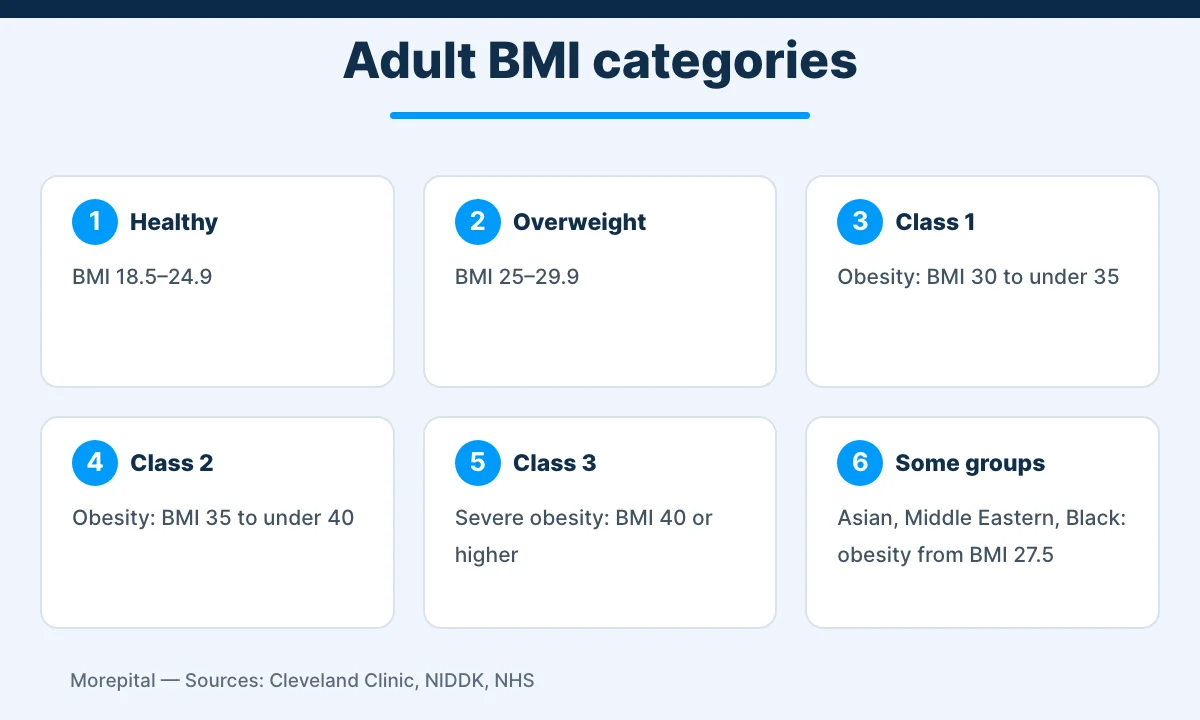
Doctors often divide the adult condition into three classes according to BMI. The class helps guide which treatments are suitable:
| Category | BMI (kg/m²) |
|---|---|
| Healthy weight | 18.5–24.9 |
| Overweight | 25–29.9 |
| Class 1 obesity | 30 to under 35 |
| Class 2 obesity | 35 to under 40 |
| Class 3 (severe) obesity | 40 or higher |
Source: Cleveland Clinic, NIDDK
Lower thresholds for some ethnic groups
People of South Asian, Chinese, other Asian, Middle Eastern, Black African or African-Caribbean background face health risks at a lower BMI. For these groups, the NHS uses 23 to 27.4 for overweight and 27.5 or more for obesity.
Source: NHS
Obesity in children
Children are assessed differently because their bodies are still growing. In the United States, a child is classed this way when their BMI is at or above the 95th percentile for their age and sex. WHO uses growth reference charts, defining obesity in children aged 5 to 19 as a BMI-for-age more than two standard deviations above the median.
How obesity is diagnosed
A doctor usually starts by measuring height, weight and waist size and calculating BMI. They will also ask about weight history, eating habits, physical activity, sleep, stress, medicines and mental well-being, and check vital signs such as blood pressure.
Source: Cleveland Clinic
Why waist size matters
BMI cannot tell muscle from fat, so very muscular people may be placed in a higher category than their body fat warrants. Measuring the waist adds information about fat around the belly. The NHS suggests keeping your waist size under half your height (a waist-to-height ratio below 0.5) when BMI is under 35. Cleveland Clinic, citing the CDC, notes that a waist above 35 inches (89 cm) in women or 40 inches (102 cm) in men can be a risk factor for heart disease and type 2 diabetes.
Source: NHS, Cleveland Clinic
Additional tests
Blood tests may be ordered to look for related problems such as high blood sugar or cholesterol, or for causes such as thyroid disease. Body composition tests, such as a DEXA scan or bioelectrical impedance analysis, can estimate how much of the body is fat.
Source: Cleveland Clinic
Treatment options for obesity
Treatment is long-term care rather than a one-off fix. WHO recommends that people with obesity have access to multimodal chronic care that can combine behavioral, nutritional, psychological and drug treatment, plus metabolic and bariatric surgery where appropriate, with ongoing follow-up. Even modest weight loss helps: losing 5% to 10% of body weight can improve blood sugar, blood pressure and blood fats.
Source: WHO, NIDDK, MedlinePlus
Diet, activity and behavior change
Treatment normally begins with eating fewer calories than the body uses while keeping a balanced diet with less fat and sugar and more fruit and vegetables. A reasonable first goal, according to NIDDK, is to lose about 5% of body weight over six months; the NHS suggests aiming for 0.5 to 1 kg (1 to 2 lb) a week. Adults are advised to do at least 150 minutes of moderate aerobic activity a week, such as brisk walking.
Structured programs work best. Effective programs typically include 14 or more counseling sessions over six months, a personalized eating plan, daily tracking of food and activity, weekly weigh-ins and regular feedback. Cognitive behavioral therapy (CBT), group support and online coaching are common options.
Source: NIDDK, NHS, Cleveland Clinic
Weight-loss medicines
Medicines may be added when lifestyle changes alone are not enough. In the US they may be prescribed for adults with a BMI of 30 or more, or 27 or more with a weight-related condition such as high blood pressure or type 2 diabetes. FDA-approved options for long-term use include orlistat, phentermine-topiramate, naltrexone-bupropion, liraglutide, semaglutide and tirzepatide; GLP-1 and GIP-based drugs work mainly by reducing appetite. After a year, people taking medicine plus a lifestyle program lose about 3% to 12% more of their starting weight than with lifestyle changes alone, but weight is usually regained after stopping.
Bariatric (weight-loss) surgery
Surgery is the most powerful option for very high BMI. The American Society for Metabolic and Bariatric Surgery (ASMBS) recommends metabolic and bariatric surgery for people with a BMI of 35 or more, whether or not they have related diseases, and for people with type 2 diabetes and a BMI of 30 or more. It may also be considered at a BMI of 30 to 34.9 when other methods have not worked. The NHS uses stricter criteria: a BMI of 40 or more, or 35 or more with conditions such as type 2 diabetes or high blood pressure (lower cut-offs for some ethnic groups).
- Gastric sleeve (sleeve gastrectomy): most of the stomach is removed, leaving a narrow banana-shaped tube. It makes you feel full sooner and may affect hunger hormones. It cannot be reversed.
- Gastric bypass (Roux-en-Y): a small stomach pouch is created and connected directly to a lower part of the small intestine, so less food is eaten and fewer calories are absorbed. It produces greater average weight loss than the band or sleeve but has more complications in the first month.
- Adjustable gastric band: an inflatable band around the top of the stomach; it is used less today because of complications.
- Duodenal switch (BPD-DS): can lead to more weight loss but carries a higher risk of surgical problems and vitamin, mineral and protein shortages.
Source: NIDDK, Cleveland Clinic
Bariatric surgery usually involves a hospital stay of 1 to 2 days and a recovery of 3 to 4 weeks, followed by regular check-ups. Most people regain some weight over time, though usually much less than they lost.
Gastric balloon and other endoscopic devices
A gastric (intragastric) balloon is placed through the mouth with an endoscope and filled with saline to take up space in the stomach; it is removed after six months to a year. These non-surgical devices lead to less weight loss than surgery, and their long-term risks and benefits are not yet well studied.
Complications and health risks
Excess body fat affects almost every organ system. WHO estimates that higher-than-optimal BMI caused about 3.7 million deaths in 2023, mainly through heart disease, diabetes and cancer. The NHS notes that obesity may shorten life expectancy by 2 to 10 years. Linked conditions include:
- Type 2 diabetes – nearly 9 in 10 people with type 2 diabetes have overweight or obesity (see diabetes symptoms)
- High blood pressure, heart disease and stroke
- Metabolic syndrome and high cholesterol
- Fatty liver disease, gallstones and pancreatitis
- Some cancers, including breast, womb (uterine), bowel, prostate and gallbladder cancer
- Sleep apnea, asthma and obesity hypoventilation syndrome
- Osteoarthritis, back pain and gout
- Chronic kidney disease
- Fertility problems, erectile dysfunction and pregnancy complications such as gestational diabetes and preeclampsia
- Depression, low self-esteem and eating disorders
Source: WHO, NHS, NIDDK, Cleveland Clinic
In the US, 58% of adults with obesity have high blood pressure and about 23% have diabetes. It also carries a large economic cost: annual medical costs are about $1,861 higher per adult with obesity than for an adult at a healthy weight (2019 dollars).
Source: CDC
The good news is that weight loss reduces many of these risks. Losing 5% to 7% of starting weight can help prevent or delay type 2 diabetes, losing 3% to 5% may reduce liver fat, and women with obesity who lose 5% of their weight may improve their chances of regular ovulation and pregnancy.
Source: NIDDK
Prevention and living with obesity
Small, consistent changes add up. Cleveland Clinic notes that just 150 extra calories a day can add up to about 10 pounds of weight gain in a year, so swapping one sugary drink or snack can make a real difference over time.
Source: Cleveland Clinic
- Base meals on fruit, vegetables, legumes, whole grains and nuts, and limit sugary drinks and energy-dense foods.
- Cut down on alcohol, which is high in calories.
- Stay active every day; the NHS suggests 45 to 60 minutes of activity a day when trying to lose weight, which can be split into shorter sessions.
- Get enough sleep, manage stress and limit screen time.
- Weigh yourself regularly and set realistic goals.
- Aim for a healthy weight before pregnancy, and breastfeed exclusively for the first six months if possible.
Source: WHO, NHS, Cleveland Clinic
Living with the condition is easier with support. Weight-management programs, talking therapies and patient groups can help with motivation and with the emotional side of weight. Stigma is common and can stop people seeking care, so it helps to remember that this is a recognized medical condition with effective treatments.
When to see a doctor
Talk to a doctor if your BMI is in the overweight or obesity range and you want help losing weight, especially if:
- Your waist is more than half your height
- You have prediabetes, diabetes, high blood pressure, high cholesterol, joint pain, sleep apnea or heart disease
- Excess weight runs in your family
- You think you may have an eating disorder, such as binge eating
Source: NHS
Excess weight raises the risk of heart attack and stroke, so it is important to know the emergency warning signs.
- You have chest pain, pressure or squeezing that lasts more than a few minutes or comes back
- You feel short of breath, faint or light-headed, or break into a cold sweat
- You have pain spreading to the jaw, neck, back, arm or shoulder
- Your face droops, or one arm or leg suddenly becomes weak or numb
- You suddenly have trouble speaking, seeing, walking or keeping your balance, or a severe headache with no known cause
In these situations, call your local emergency number right away rather than driving yourself to the hospital.
Related treatments
Related conditions
Further reading
Obesity: frequently asked questions
What BMI is considered obese?
Is obesity a disease?
Yes. WHO, the CDC and Cleveland Clinic describe it as a chronic, complex disease caused by a mix of genetic, biological, behavioral and environmental factors, not simply a lack of willpower.
Source: WHO, CDC, Cleveland Clinic
What is the main cause of obesity?
How much weight do I need to lose to improve my health?
Even 5% to 10% of your body weight can improve blood sugar, blood pressure and blood fats. Losing 5% to 7% can help prevent or delay type 2 diabetes.
Source: NIDDK, NIDDK, MedlinePlus
Who qualifies for bariatric surgery?
Do weight-loss injections like semaglutide work?
Which is better, gastric sleeve or gastric bypass?
Both are effective. In one study cited by NIDDK, gastric bypass gave greater average weight loss than the sleeve or band but had more complications in the first month. The sleeve cannot be reversed. A surgeon will advise based on your health.
Source: NIDDK
Can obesity shorten your life?
Is a waist measurement better than BMI?
They work best together. BMI cannot tell muscle from fat, while waist size shows belly fat. The NHS advises keeping your waist under half your height.
Source: NHS, Cleveland Clinic
Considering weight-loss surgery? Contact us for a free consultation about your options.
Sources
- NHS — Overweight and obesity in adults
- WHO — Obesity and overweight (fact sheet)
- CDC — Adult Obesity Facts
- CDC — Childhood Obesity Facts
- NIDDK — Definition & Facts for Adult Overweight & Obesity
- MedlinePlus — Obesity
- NIDDK — Health Risks of Overweight & Obesity
- Cleveland Clinic — Obesity: What It Is, Classes, Symptoms, Causes
- CDC — Risk Factors for Obesity
- NIDDK — Factors Affecting Weight & Health
- NIDDK — Treatment for Overweight & Obesity
- NIDDK — Prescription Medications to Treat Overweight & Obesity
- NIDDK — Types of Weight-loss Surgery
- ASMBS — Is Metabolic and Bariatric Surgery Right for You?
- CDC — About Heart Attack Symptoms, Risk, and Recovery
- CDC — Signs and Symptoms of Stroke
This page is part of the Morepital medical reference. It is for general health education and does not replace a consultation with a qualified doctor. Last reviewed: October 2026.