
Diabetes symptoms most often include feeling very thirsty, urinating more than usual (especially at night), constant tiredness, losing weight without trying, blurred vision, slow-healing cuts and repeated infections such as thrush. Type 1 diabetes symptoms tend to appear over days or weeks and can become an emergency, while type 2 diabetes symptoms usually build slowly over years and many people notice none at all. The only way to know for sure is a blood test, so anyone with these signs or a higher risk should get checked.
Contents
- What are diabetes symptoms?
- Early diabetes symptoms: the classic signs
- Type 1 vs type 2 diabetes symptoms
- Diabetes symptoms in women and men
- Diabetes symptoms in children and during pregnancy
- When to get tested
- Diagnostic thresholds in mg/dL and mmol/L
- Emergency diabetes symptoms: DKA and HHS
- Complications of untreated diabetes
- Diabetes symptoms: frequently asked questions
What are diabetes symptoms?
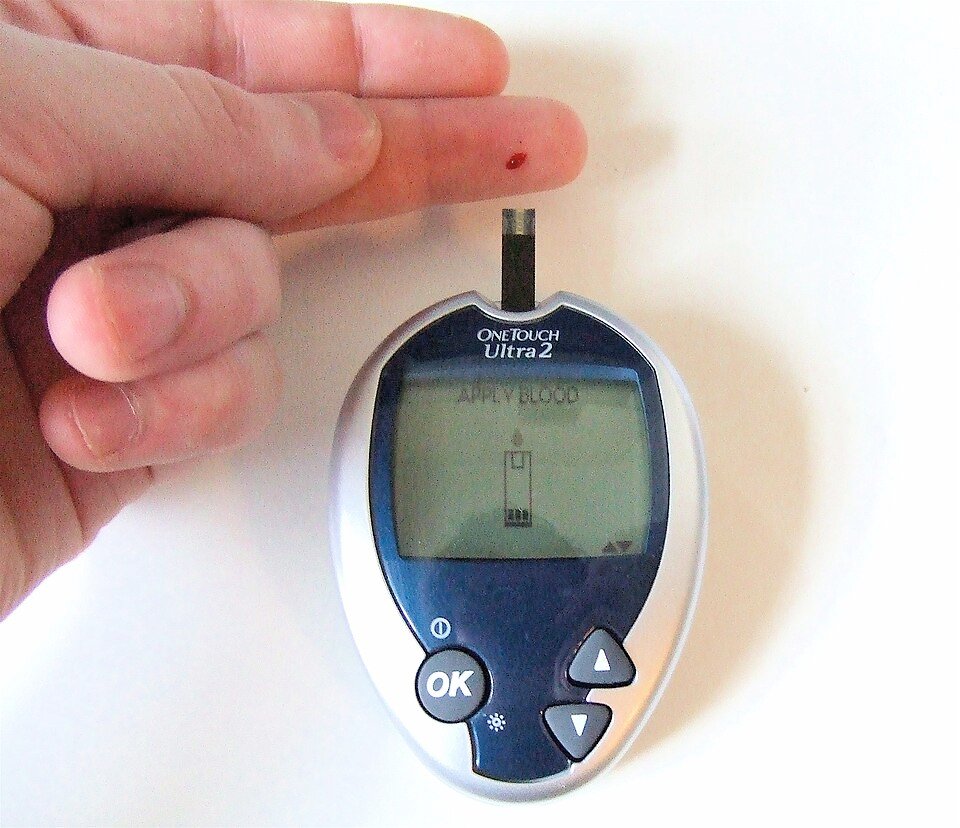
Diabetes is a long-term condition in which blood glucose (blood sugar) stays too high. In type 1 diabetes the pancreas makes little or no insulin, so people need insulin every day. In type 2 diabetes the body cannot use insulin effectively, and over time the pancreas may not make enough of it. Type 2 is by far the most common form: the World Health Organization (WHO) estimates that more than 95% of people with diabetes have type 2.
Diabetes symptoms are the effects of that raised blood glucose on the body. They matter for two reasons. First, they are often the earliest clue that something is wrong. Second, their absence proves nothing: the NHS stresses that not everyone with diabetes has symptoms, and the WHO notes that in type 2 diabetes symptoms can be mild and may take years to notice. The WHO estimates that 830 million people were living with diabetes in 2022.
Early diabetes symptoms: the classic signs
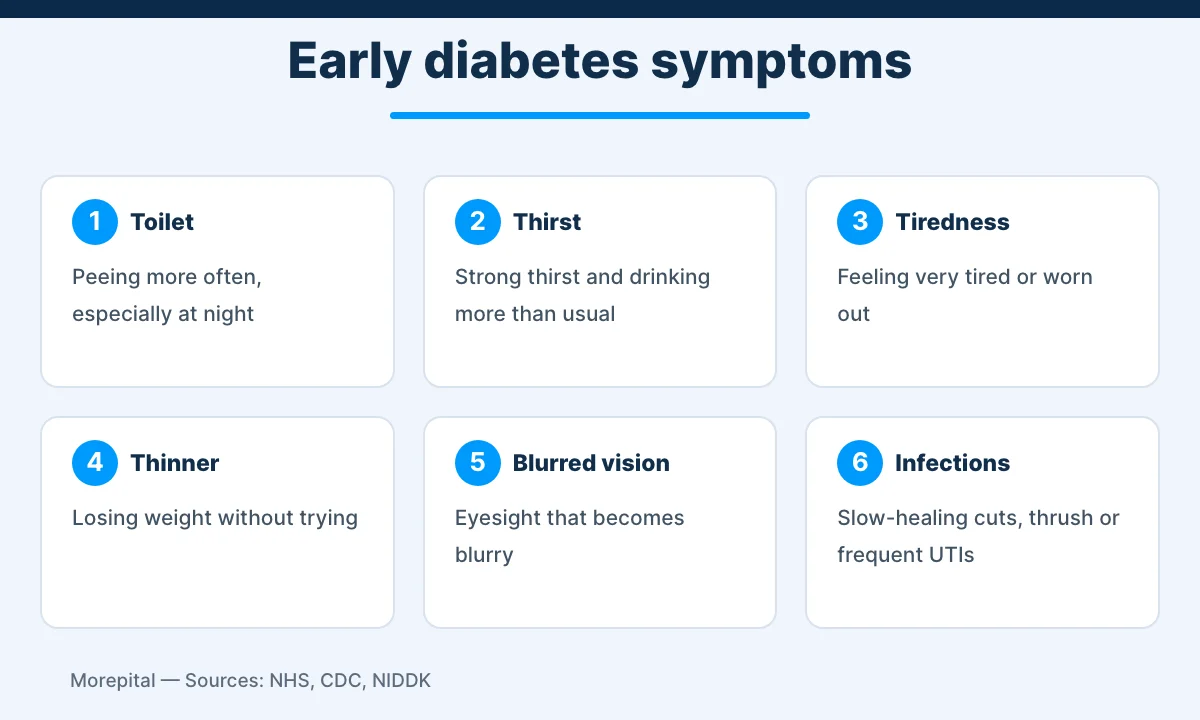
The NHS summarizes the most common early diabetes symptoms of type 1 as the “4 Ts”, and the same four signs head its list for type 2:
Arabic-speaking readers: a detailed, source-referenced Arabic overview of this topic is available in the Alphateb medical encyclopedia — السكري من النوع الثاني.
- Toilet: needing to pee more often than usual, especially at night.
- Thirst: a strong, constant thirst and drinking more than usual.
- Tiredness: feeling very tired or worn out.
- Thinner: losing weight without trying.
Source: NHS – Type 1 diabetes symptoms, NHS – Type 2 diabetes symptoms
Other common diabetes symptoms
Beyond the 4 Ts, the US Centers for Disease Control and Prevention (CDC), the National Institute of Diabetes and Digestive and Kidney Diseases (NIDDK) and Cleveland Clinic list several other diabetes symptoms that are easy to dismiss:
- Increased hunger, even after eating.
- Blurred vision.
- Dry mouth.
- Cuts, sores or wounds that heal slowly.
- Frequent infections, including urinary tract infections (UTIs), skin infections and yeast infections.
- Numbness or tingling in the hands or feet.
- Feeling irritable or moody.
Source: CDC, NIDDK, Cleveland Clinic
Skin signs worth knowing
One visible clue is darkened, velvety skin in body folds, such as the back of the neck, the armpits or the groin. Doctors call this acanthosis nigricans. The CDC lists dark patches in these areas among type 2 diabetes symptoms, and Cleveland Clinic notes it can also appear with prediabetes. It is a reason to ask for a blood test rather than a diagnosis in itself.
Source: CDC, Cleveland Clinic
Type 1 vs type 2 diabetes symptoms
The CDC explains that both types share similar symptoms. The real differences are in how fast they appear, how severe they are, and who tends to get them.
Source: CDC
Type 1 diabetes symptoms
Type 1 diabetes develops when the immune system destroys the insulin-making cells of the pancreas. In its early stages it causes no symptoms, but once they start, type 1 diabetes symptoms can appear suddenly, over a few days, weeks or months, and they can be severe. Besides the 4 Ts, the CDC lists nausea, vomiting and stomach pain, and notes that some people are only diagnosed when they develop diabetic ketoacidosis (DKA). The NHS adds sweet or fruity-smelling breath. Type 1 is often diagnosed in childhood or young adulthood, but it can start at any age. NIDDK points out that in adults the symptoms may develop slowly and look like type 2.
Type 2 diabetes symptoms
Type 2 diabetes symptoms often take several years to develop, and some people never notice any. NIDDK notes that some people only find out they have type 2 diabetes when a complication appears, such as numbness in the feet or hands, sexual problems, chest pain or vision loss. The CDC lists slow-healing wounds, dark skin patches and tingling in the hands or feet as signs that are particularly associated with type 2. It usually starts in adulthood, though more children and teenagers are now developing it.
Risk factors that make symptoms more significant
NIDDK lists these risk factors for type 2 diabetes: overweight, obesity or a large waist; age 35 or older; a family history of diabetes; certain racial and ethnic backgrounds; physical inactivity; smoking or exposure to secondhand smoke; prediabetes; and a history of gestational diabetes or of giving birth to a baby weighing 9 pounds (about 4 kg) or more. Some medicines, including glucocorticoids (steroids) and certain antipsychotic and antiseizure drugs, can also raise blood glucose.
Source: NIDDK
| Feature | Type 1 diabetes | Type 2 diabetes |
|---|---|---|
| Cause | Immune system destroys insulin-making cells | Insulin resistance plus too little insulin |
| Speed of onset | Days to weeks or a few months | Often several years |
| Typical age | Often childhood or young adulthood, but any age | Usually adults, increasingly children and teens |
| Extra symptoms | Nausea, vomiting, stomach pain, fruity breath | Slow-healing wounds, dark skin patches, tingling feet |
| Main emergency risk | Diabetic ketoacidosis (DKA) | Hyperosmolar hyperglycemic state (HHS) |
| Treatment | Lifelong insulin | Lifestyle changes, often metformin, sometimes insulin |
Source: CDC, NHS, Cleveland Clinic
Diabetes symptoms in women and men
Major health bodies such as the CDC, the NHS and Cleveland Clinic present the same core diabetes symptoms for everyone. They do not describe a separate set of signs for women or for men. However, high blood glucose and the nerve and blood-vessel damage it causes over time do affect the genital and urinary systems, so some problems show up differently by sex.
Source: CDC, NIDDK – Sexual and bladder problems
Diabetes symptoms in women
- Recurrent thrush (vaginal yeast infections): NIDDK states that women with diabetes are more likely to have yeast infections because yeast grows more easily when blood glucose is high. The NHS lists itching around the vagina and recurring thrush among type 2 diabetes symptoms.
- Frequent UTIs: the CDC includes frequent urinary tract infections in its symptom list.
- Vaginal dryness and painful sex: linked by NIDDK to nerve damage, reduced blood flow and hormonal changes.
- Low sexual desire and response: linked to nerve damage, high or low glucose, fatigue, depression and anxiety.
Diabetes symptoms in men
- Erectile dysfunction (ED): NIDDK reports that more than half of men with diabetes will develop ED, that men with diabetes are more than three times as likely to have it, and that it may appear 10 to 15 years earlier than in men without diabetes. New ED can therefore be a reason to check blood glucose.
- Itching around the penis or recurring thrush: listed by the NHS among type 2 diabetes symptoms.
- Low testosterone: more common in men with diabetes, especially older and overweight men.
- Retrograde ejaculation: semen going into the bladder instead of out through the penis; NIDDK says diabetes causes this only rarely.
Diabetes symptoms in children and during pregnancy
Children
Children show the same 4 Ts, but the NHS describes some child-specific clues: heavier nappies (diapers) in babies, and bedwetting in a child who was previously dry, because they are passing more urine. Early diabetes symptoms in children can be masked by common illnesses such as colds, tonsillitis, tummy pain or nappy rash, which can delay diagnosis. For a child under 5 with possible symptoms, the NHS advises calling 111 in the UK, and urgent same-day assessment is the safe approach anywhere.
Source: NHS – Type 1 diabetes symptoms, NHS – Diabetes
Pregnancy (gestational diabetes)
Gestational diabetes usually causes no symptoms, so it is found by testing rather than by noticing signs. NIDDK recommends testing all pregnant women without known diabetes between 24 and 28 weeks of pregnancy, and testing at the first prenatal visit (or within the first 15 weeks) for those at higher risk of type 2 diabetes. Diabetes UK lists the UK thresholds for gestational diabetes as a fasting glucose of 5.6 mmol/L or more, or a 2-hour glucose of 7.8 mmol/L or more after a glucose drink.
Source: CDC, NIDDK, Diabetes UK
When to get tested for diabetes
NIDDK is clear that anyone who has diabetes symptoms should be tested. If the symptoms come on quickly, or you suspect type 1 diabetes in yourself or your child, the NHS advises asking for an urgent appointment the same day (in the UK, via a GP or NHS 111) rather than waiting.
Testing without symptoms (screening)
Because type 2 diabetes is so often silent, screening matters as much as watching for symptoms. Recommendations differ slightly between organizations:
- US Preventive Services Task Force (USPSTF, 2021): screen adults aged 35 to 70 who have overweight (BMI 25 or more) or obesity (BMI 30 or more). Consider earlier screening for groups with higher rates of diabetes, and a lower BMI cutoff of 23 for Asian American adults. Rescreening every 3 years may be reasonable after a normal result.
- NIDDK: recommends routine testing for adults aged 35 or older and for people with other risk factors, testing children aged 10 to 18 who have overweight or obesity plus at least one more risk factor, retesting every 3 years after normal results, and testing every year once prediabetes is found.
- American Diabetes Association (ADA): advises that people with prediabetes are checked for type 2 diabetes every one to two years.
Diagnostic thresholds in mg/dL and mmol/L
The US reports glucose in milligrams per deciliter (mg/dL), while the UK, Europe and many other countries use millimoles per liter (mmol/L); 1 mmol/L of glucose is about 18 mg/dL. A1C is reported as a percentage in the US and in mmol/mol in the UK. The table below uses the ADA cut-offs; the mmol/L diabetes values are those given by Diabetes UK, and the prediabetes mmol/L values are the arithmetic equivalents of the ADA figures.
Source: ADA, Diabetes UK
| Test | Normal | Prediabetes | Diabetes |
|---|---|---|---|
| A1C | Below 5.7% | 5.7–6.4% (UK: 42–47 mmol/mol) | 6.5% (48 mmol/mol) or higher |
| Fasting plasma glucose | Below 100 mg/dL (5.6 mmol/L) | 100–125 mg/dL (5.6–6.9 mmol/L) | 126 mg/dL (7.0 mmol/L) or higher |
| 2-hour OGTT | Below 140 mg/dL (7.8 mmol/L) | 140–199 mg/dL (7.8–11.0 mmol/L) | 200 mg/dL (11.1 mmol/L) or higher |
| Random plasma glucose | – | – | 200 mg/dL (11.1 mmol/L) or higher with symptoms |
Source: ADA, Diabetes UK, Cleveland Clinic
Why one result is not always enough
The ADA explains that a diagnostic test usually needs repeating on a second day, unless glucose is very high or classic diabetes symptoms are present alongside one positive result. Diabetes UK takes the same line: in someone with symptoms, a single HbA1c of 48 mmol/mol or more is enough, but without symptoms the result should be confirmed. Diabetes UK also points out that an HbA1c below 48 mmol/mol does not rule out diabetes if glucose tests show it. Note that the prediabetes range differs: the ADA starts it at an A1C of 5.7%, while UK practice uses 42–47 mmol/mol (about 6.0–6.4%) and calls it non-diabetic hyperglycemia.
Source: ADA, Diabetes UK
Emergency diabetes symptoms: DKA and HHS
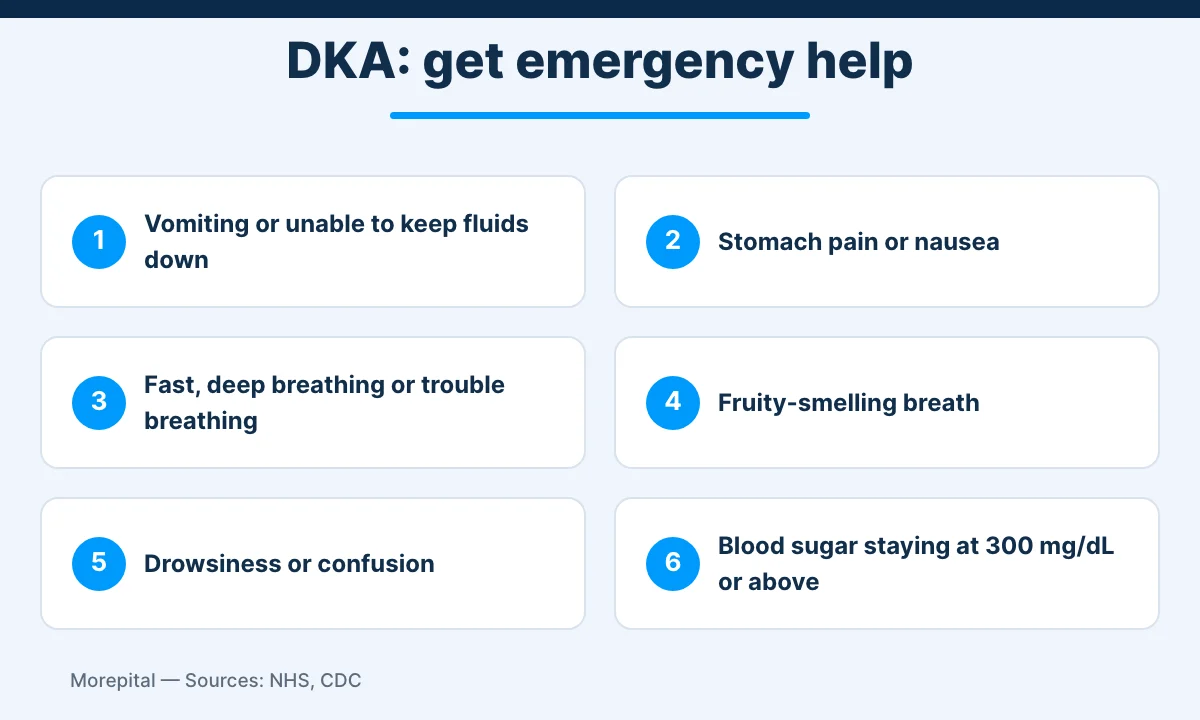
Some diabetes symptoms signal a medical emergency. The most important is diabetic ketoacidosis (DKA): when the body lacks insulin, it breaks down fat for energy, producing ketones that make the blood acidic. DKA mainly affects people with type 1 diabetes, including people whose type 1 has not yet been diagnosed (especially children), and people with type 2 who need insulin. The NHS says DKA symptoms usually develop over about 24 hours but can come on faster.
Source: NHS – Diabetic ketoacidosis, Cleveland Clinic
Warning signs of DKA
- Extreme thirst and passing urine much more often.
- Nausea, vomiting, stomach pain or diarrhea.
- Deep or fast breathing.
- Fruity-smelling breath.
- Tiredness, drowsiness or confusion.
- Blurred vision, headache, dry skin and mouth, a flushed face, or muscle aches.
Source: NHS, CDC – Diabetic ketoacidosis
When to call emergency services
The CDC advises going to the emergency room or calling 911 (999 in the UK) if blood sugar stays at 300 mg/dL (about 16.7 mmol/L) or above, the breath smells fruity, you are vomiting and cannot keep food or fluids down, you have trouble breathing, or you have several DKA symptoms at once. The NHS adds that anyone with these symptoms who has not been diagnosed with diabetes should also get emergency help, and that you should not drive yourself.
Ketone levels for people already diagnosed
For people who test blood ketones, the NHS gives this guide: under 0.6 mmol/L is normal; 0.6–1.5 mmol/L is slightly high (retest in 2 hours); 1.6–3 mmol/L means you are at risk and should contact your diabetes team; over 3 mmol/L may indicate DKA and needs emergency care. The CDC recommends checking blood sugar every 4 to 6 hours and testing for ketones when you are sick or your glucose is 250 mg/dL or above. Common triggers include illness, injury, surgery and missed or insufficient insulin; the NHS stresses never stopping insulin, even if you are not eating. Your own care team may set different targets.
Hyperosmolar hyperglycemic state (HHS)
HHS mainly affects people with type 2 diabetes. Cleveland Clinic describes it as blood sugar above 600 mg/dL (about 33 mmol/L) for a prolonged period, with severe dehydration and confusion. It is also an emergency.
Source: Cleveland Clinic
Complications of untreated diabetes
Ignoring early diabetes symptoms allows high glucose to damage blood vessels and nerves for years. The WHO lists these major long-term complications:
- Eyes: damage to blood vessels in the retina (retinopathy) that can lead to vision loss or blindness.
- Kidneys: kidney disease that can progress to kidney failure.
- Heart and brain: heart attack and stroke; the WHO estimates that high blood glucose causes around 11% of cardiovascular deaths.
- Feet: nerve damage and poor blood flow leading to foot ulcers and lower-limb amputation.
Source: WHO
Cleveland Clinic adds nerve damage (neuropathy), sexual dysfunction such as erectile dysfunction and vaginal dryness, gastroparesis (slow stomach emptying), hearing loss, gum disease and skin infections, and notes that people with diabetes are two to three times more likely to have depression. The WHO reports that diabetes directly caused 1.6 million deaths in 2021, nearly half of them before age 70.
Source: Cleveland Clinic, WHO
Diabetes symptoms: frequently asked questions
What are the first diabetes symptoms people usually notice?
Usually more frequent urination (especially at night), strong thirst, tiredness and unexplained weight loss. Blurred vision and slow-healing cuts are also common early signs.
Can you have diabetes with no symptoms?
Yes. Type 2 diabetes and prediabetes often cause no noticeable symptoms for years, and gestational diabetes usually has none. That is why risk-based screening is recommended.
How fast do type 1 diabetes symptoms develop?
Usually over a few days or weeks, sometimes a few months. Rapid worsening, vomiting, stomach pain, drowsiness or deep breathing needs emergency care.
Source: NHS
Are diabetes symptoms different in women?
The core signs are the same. Women may additionally notice recurrent vaginal thrush, frequent UTIs, vaginal dryness or reduced sexual response.
Source: NIDDK
Can erectile dysfunction be a sign of diabetes?
It can. NIDDK reports that more than half of men with diabetes develop ED, often 10 to 15 years earlier than men without diabetes, and NIDDK notes some people discover type 2 diabetes only through complications such as sexual problems.
Source: NIDDK
What blood sugar level means diabetes?
A fasting plasma glucose of 126 mg/dL (7.0 mmol/L) or higher, a 2-hour OGTT or random glucose with symptoms of 200 mg/dL (11.1 mmol/L) or higher, or an A1C of 6.5% (48 mmol/mol) or higher, usually confirmed by a repeat test.
Source: ADA, Diabetes UK
Which diabetes symptoms mean I should go to the emergency room?
Vomiting, stomach pain, fast deep breathing, fruity-smelling breath, drowsiness or confusion together with high glucose or classic symptoms, as these may signal DKA.
Disclaimer: this article is for general health education and does not replace advice from a qualified doctor who can assess your individual case. Last updated: October 2026.