Finasteride for hair loss is a once-daily 1 mg prescription tablet that treats male pattern baldness by blocking the conversion of testosterone into dihydrotestosterone (DHT), the hormone that shrinks scalp hair follicles. The American Academy of Dermatology reports that it slows further hair loss in about 80% to 90% of men who take it, with improvement usually visible after 3 to 6 months. It only works while you keep taking it, and it can cause sexual and mood side effects that you should discuss with a doctor first.
Source: NHS, MedlinePlus, MHRA
Contents
- How finasteride for hair loss works
- Who should consider finasteride for hair loss?
- Finasteride for hair loss: results and timeline
- How to take finasteride 1 mg
- Side effects of finasteride for hair loss
- Finasteride, PSA tests and prostate cancer
- Women, pregnancy and fertility
- Topical finasteride, minoxidil and other options
- Finasteride for hair loss and hair transplant surgery
- Finasteride for hair loss: frequently asked questions
How finasteride for hair loss works
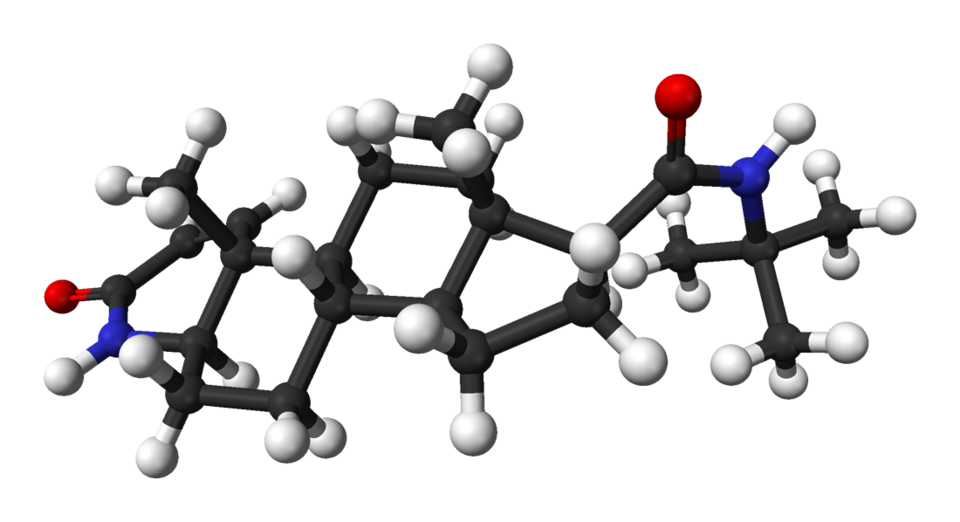
Male pattern baldness, also called androgenetic alopecia, is an inherited condition in which scalp follicles become sensitive to DHT. Affected follicles gradually shrink. You can read more about the pattern, stages and causes in our guide to male pattern baldness.
Source: J Cosmet Dermatol
Finasteride blocks type II 5-alpha reductase, the enzyme that turns testosterone into DHT. According to DermNet, the 1 mg dose lowers DHT by up to 70% in the blood and up to 60% in the scalp. With less DHT, thinning slows. When you stop, scalp DHT rises again and hair loss is likely to resume.
Source: DermNet, J Cosmet Dermatol
The US Food and Drug Administration (FDA) approved finasteride for male pattern baldness in 1997. The same molecule is sold at a higher strength, 5 mg (brand name Proscar), to treat an enlarged prostate. Finasteride for hair loss uses the lower 1 mg tablet (brand name Propecia). In the UK, it is not available on the NHS for hair loss; you need a private prescription and pay the full cost.
Source: J Cosmet Dermatol, NHS, NHS
Who should consider finasteride for hair loss?
The NHS says most men aged 18 and over can take finasteride. It is aimed at men with typical male pattern thinning: a receding hairline, a thinning crown, or both. The AAD notes that men tend to get better results when they start soon after noticing hair loss, because the drug protects follicles that are still alive rather than reviving ones that are long gone.
Arabic-speaking readers: a detailed, source-referenced Arabic overview of this topic is available in the Alphateb medical encyclopedia — الصلع الوراثي.
DermNet notes that the three placebo-controlled trials that led to approval enrolled 1,879 men aged 18 to 41 with mild to moderate hair loss. There are no clinical data for completely bald men, and older men were not studied in those trials. A review in the Journal of Cosmetic Dermatology adds that finasteride works better on the crown (vertex) than on the frontal hairline.
Source: DermNet, J Cosmet Dermatol
When finasteride may not be suitable
Tell your doctor before starting finasteride for hair loss if you have:
- a past allergic reaction to finasteride or another medicine
- a history of depression or thoughts of self-harm
- liver problems or severe bladder problems
- a history of prostate cancer
Source: NHS, MedlinePlus, MHRA
The NHS advises seeing a GP if you are worried about your hair loss, and getting their view on the cause before paying a commercial hair clinic.
Source: NHS
Finasteride for hair loss: results and timeline
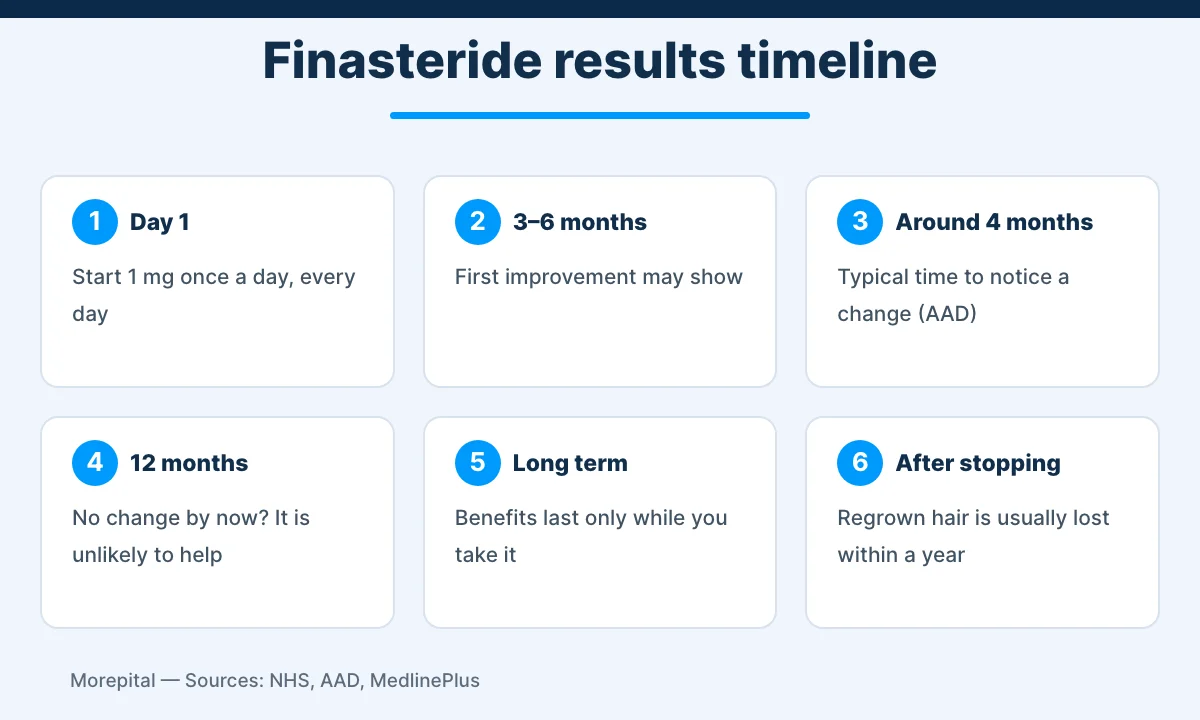
Finasteride for hair loss is a slow treatment. The NHS says you may see some improvement after 3 to 6 months, and the AAD says it usually takes about 4 months to notice any improvement. MedlinePlus advises that you should see improvement within the first 12 months; if there is none after a year, further treatment probably will not help, and you should discuss whether to continue.
Source: NHS, AAD, MedlinePlus
What the trials show
In the original placebo-controlled trials summarized by DermNet, 86% of men taking finasteride maintained or increased their hair count in two of the studies. After 12 months, 14% of men on finasteride had further hair loss compared with 58% of men on placebo. In other words, the main effect of finasteride for hair loss is stopping the decline, with regrowth as a bonus for some men.
Source: DermNet
In a Japanese study of more than 3,000 men followed for three years, cited in the Journal of Cosmetic Dermatology review, 11.1% had significant regrowth, 36.5% moderate growth and 39.5% a slight increase with finasteride for hair loss.
Source: J Cosmet Dermatol
The NHS stresses that no hair loss treatment is 100% effective. Photos of your crown and hairline every three months help you judge whether finasteride for hair loss is working.
Source: NHS
How to take finasteride 1 mg
The usual dose for hair loss is 1 mg once a day, taken with or without food at around the same time each day. Swallow the tablet whole with water and do not break or crush it. The 5 mg tablet is the prostate dose, not the dose of finasteride for hair loss.
- Missed dose: if it is less than 6 hours late, take it when you remember; if more than 6 hours, skip it and take the next dose as normal. Never take two doses together.
- Alcohol and food: you can drink alcohol and eat normally while taking finasteride.
- Stopping: do not stop without talking to your doctor first.
Source: NHS, NHS, MedlinePlus
Side effects of finasteride for hair loss
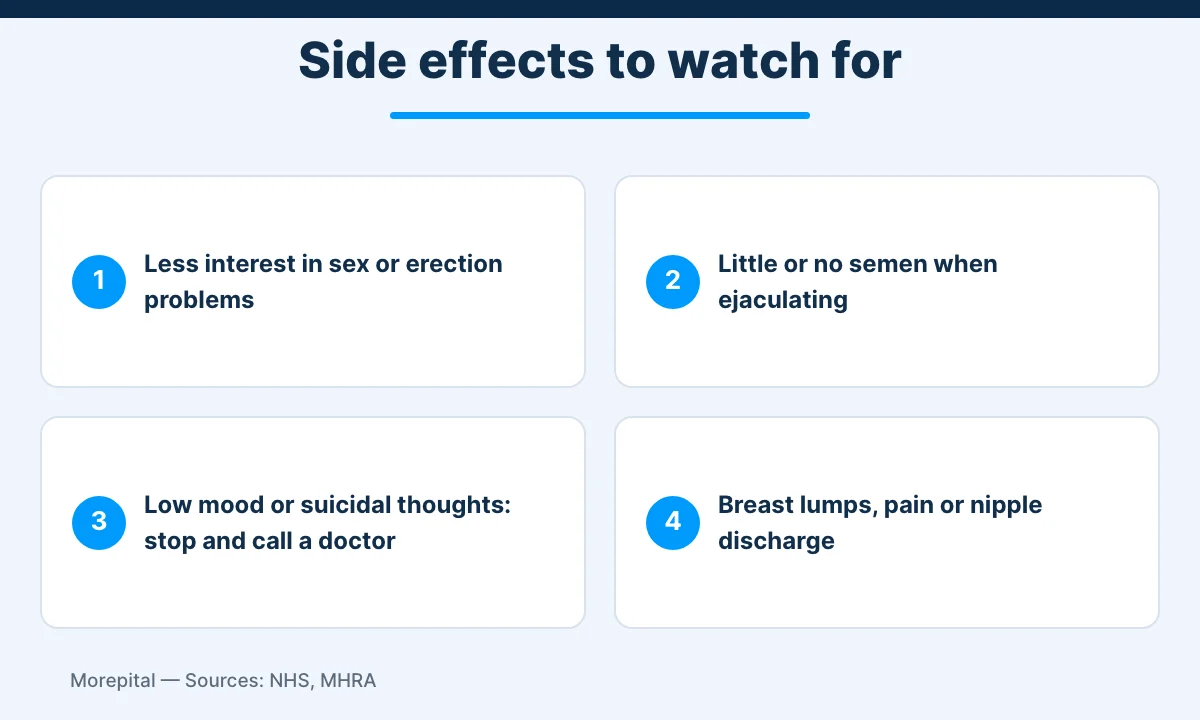
The NHS lists these common side effects of finasteride for hair loss, affecting more than 1 in 100 people:
- problems getting an erection
- less interest in sex
- problems ejaculating, such as little or no semen
Source: NHS
These usually improve after a while, but the NHS adds that they can sometimes carry on even after you stop the medicine. In the original trials of finasteride for hair loss, DermNet reports that sexual side effects were similar to or only slightly higher than placebo rates. If you already have erection problems, see our guide to erectile dysfunction and mention them to your prescriber before starting.
Mood changes and regulator warnings
On 29 April 2024 the UK medicines regulator, the MHRA, asked men taking finasteride to stay alert for psychiatric and sexual side effects, including depressed mood, depression, suicidal thoughts, reduced sex drive and erection problems. It introduced a patient alert card in packs and encouraged men to show it to family and friends, who may notice mood changes first. If you take finasteride for hair loss and develop depression or suicidal thoughts, stop treatment and contact your doctor as soon as possible.
In May 2026 the MHRA strengthened the 1 mg product information again, stating that sexual dysfunction may contribute to mood disorders and has been reported both with and without mood changes. Thoughts of harming yourself are an emergency: in the UK call 999 or go to A&E.
Other serious side effects
Call your doctor promptly about breast changes, such as lumps, pain, swelling or nipple discharge, which the NHS says can rarely be a sign of breast cancer. A swollen face, lips or throat or difficulty breathing can signal a serious allergic reaction and needs emergency care.
Source: NHS, MedlinePlus
What is post-finasteride syndrome?
Post-finasteride syndrome (PFS) is the term used for sexual, neuropsychiatric and physical symptoms that continue for at least three months after stopping the drug. A 2020 review in Anais Brasileiros de Dermatologia lists symptoms such as low libido, depression, anxiety, insomnia and fatigue. In 2012, the FDA required the label to mention possibly persistent side effects.
Source: An Bras Dermatol
The same review calls the evidence weak: studies are small and often recruit from online forums, and no causal link has been established. It notes a possible nocebo effect: in one study, 43.6% of men counseled about sexual side effects reported them, versus 15.3% of men who were not. The authors advise caution in men with a history of depression, sexual dysfunction or infertility.
Source: An Bras Dermatol
Finasteride, PSA tests and prostate cancer
Finasteride lowers the PSA (prostate-specific antigen) blood test. DermNet says it reduces PSA by about 50% on average, so doctors usually double the result when assessing prostate cancer risk. Always tell your doctor and the laboratory that you take finasteride before a PSA test, even at the 1 mg hair loss dose.
Source: DermNet, NHS, MedlinePlus
The main prostate cancer data come from the Prostate Cancer Prevention Trial, in which men aged 55 and over took 5 mg of finasteride or placebo daily for seven years. The National Cancer Institute reports that finasteride reduced prostate cancer diagnoses by about 30% (10.5% versus 14.9%), entirely through fewer low-grade cancers. High-grade cancers were slightly more common with finasteride (3.5% versus 3.0%), which later analyses linked, at least in part, to better detection in smaller prostates. The two groups had similar 15-year overall survival.
Source: National Cancer Institute
Sources frame this differently: MedlinePlus says finasteride may increase the risk of high-grade prostate cancer, while DermNet says current evidence does not show a higher risk of serious disease. Discuss your prostate history with your doctor before starting finasteride for hair loss.
Source: MedlinePlus, DermNet
Women, pregnancy and fertility
Finasteride for hair loss is licensed for men. The NHS says women should not use it and that it is generally not recommended for women, though a specialist might prescribe it in very rare cases. The AAD notes that dermatologists may prescribe it for a woman with hereditary hair loss who cannot get pregnant, and DermNet mentions off-label use in some postmenopausal women.
Source: NHS, NHS, AAD, DermNet
The reason for caution is pregnancy. Finasteride can cause abnormal development of the genitals in a male fetus, so women who are or may become pregnant must not handle crushed or broken tablets. Intact tablets are coated; if contact with a broken tablet happens, wash the area with soap and water straight away and call a doctor.
Source: FDA, MedlinePlus, DermNet
For men, only very small amounts of finasteride reach semen. The NHS says it is very unlikely to harm a pregnant partner or her baby. Poor sperm quality or infertility has been reported in some men, but it is not common, and sperm usually returns to normal after stopping. If you are trying for a baby, discuss finasteride for hair loss with your doctor.
Topical finasteride, minoxidil and other options
Finasteride for hair loss is not the only option. The NHS calls finasteride and minoxidil the main treatments for male pattern baldness. Minoxidil is applied to the scalp and works differently: the AAD says it can reduce hair loss, stimulate growth and strengthen existing strands, but full regrowth is unlikely.
Combining finasteride and minoxidil
The Journal of Cosmetic Dermatology review cites a 2020 meta-analysis of 8 studies and 809 patients showing better results from combining oral finasteride with topical minoxidil than from either alone. DermNet, by contrast, says human studies on the combination are limited, although it has been prescribed safely to many patients. Ask your dermatologist whether to combine minoxidil with finasteride for hair loss.
Source: J Cosmet Dermatol, DermNet
Topical finasteride
A 2021 phase III trial in 458 men compared a 0.25% finasteride spray with placebo and with oral finasteride over 24 weeks. Hair counts rose by 20.2 hairs with the spray, 6.7 with placebo and 21.1 with oral tablets, while blood DHT fell by about 34.5% with the spray versus 55.6% with tablets. Sexual side effects were reported by 2.8%, 3.3% and 4.8% of men in the three groups.
Source: J Eur Acad Dermatol Venereol
However, in April 2025 the FDA warned that there are no FDA-approved topical finasteride products in the United States. It had received 32 adverse event reports for compounded topical finasteride between 2019 and 2024, including erectile dysfunction, anxiety, depression and suicidal thoughts, and most effects continued after stopping. Skin absorption is expected, and gels or sprays carry a higher risk of transfer to women and children.
Source: FDA
| Option | How it is used | Key points |
|---|---|---|
| Oral finasteride 1 mg | One tablet daily, long term | Slows loss in about 80–90% of men; benefits fade after stopping; sexual and mood side effects possible |
| Topical minoxidil | Applied to the scalp | Can reduce loss and stimulate growth; works only while used |
| Topical finasteride | Spray or solution on the scalp | Trial results similar to tablets at 24 weeks; no FDA-approved product; transfer risk |
| Hair transplant | One-off surgery | Moves donor hair to thin areas; hair loss can continue around the grafts |
Source: AAD, NHS, J Eur Acad Dermatol Venereol, FDA, AAD
Finasteride for hair loss and hair transplant surgery
A hair transplant moves follicles from the back of the scalp to thinning areas, but it does not stop the underlying condition. The AAD explains that hair loss and thinning can continue even after a transplant, so a dermatologist may recommend hair loss medicine to help keep the results. It adds that a man in his 20s may be asked to start medicine first.
Source: AAD
Finasteride for hair loss and surgery can work together. The Journal of Cosmetic Dermatology review cites a study of 79 men in which 94% of those taking finasteride after a transplant showed visible increases in hair on the top and front of the scalp, compared with 67% of men on placebo. In practice, finasteride for hair loss aims to protect the native hair around the grafts.
Source: J Cosmet Dermatol, AAD
Some patients travel abroad for surgery. Hair Cultivate is a specialised hair-transplant centre in Istanbul; you can read about its approach to hair transplant in Turkey and supportive options such as PRP hair treatment. Wherever you go, bring a list of your medicines, including finasteride, so the surgical team can plan around them.
Source: Hair Cultivate
Questions to ask before starting or combining treatments
- Is my hair loss male pattern baldness, or could it be another cause that needs tests?
- Should I try finasteride for hair loss before considering surgery, and for how long?
- Should I continue finasteride after a transplant, and what happens if I stop?
Source: NHS, AAD, MedlinePlus
Considering a hair transplant alongside finasteride? Contact us for a free consultation and a treatment plan tailored to you.
Finasteride for hair loss: frequently asked questions
How long does finasteride for hair loss take to work?
Most men need 3 to 6 months of daily use before seeing improvement, and the AAD says about 4 months is typical. Judge the result at 12 months; if nothing has changed by then, further treatment probably will not help.
Source: NHS, AAD, MedlinePlus
Is finasteride for hair loss permanent?
No. Finasteride only works while you take it. After stopping, DHT levels rise again, and you will probably lose the hair you gained within 12 months.
Source: MedlinePlus, DermNet
Can finasteride regrow a receding hairline?
It can regrow some hair, but it tends to work better on the crown than on the frontal hairline. Starting early gives the best chance of a visible result.
Source: J Cosmet Dermatol, AAD
Are the sexual side effects of finasteride permanent?
They usually improve, but the NHS and MHRA say some have persisted after treatment ended; how often is not well established.
Source: NHS, MHRA, An Bras Dermatol
Can women take finasteride for hair loss?
Generally no. It is licensed for men, and women who are or may become pregnant must avoid it and must not handle broken tablets. A specialist may occasionally prescribe it for a woman who cannot get pregnant.
Source: NHS, AAD, MedlinePlus
Should I stop finasteride if I feel depressed?
Yes. If you take finasteride for hair loss and develop low mood or suicidal thoughts, stop it and contact your doctor straight away.
Disclaimer: this article is for general health education and does not replace advice from a qualified doctor who can assess your individual case. Last updated: October 2026.