
Hair transplant in Turkey is a surgical procedure, most often performed in Istanbul, in which a doctor moves hair follicles from the back and sides of the scalp to thinning or bald areas. People mainly travel for lower prices and all-inclusive packages, but quality varies widely, so the safest choice is a licensed doctor who personally plans and performs your surgery. New hair usually starts growing around four months after surgery, with the full result at 10 to 18 months.
Source: Aesthet Plast Surg, NHS, BAAPS/BAHRS
Source: NHS, ISHRS, BAAPS/BAHRS
Contents
- Why people choose a hair transplant in Turkey
- Hair transplant in Turkey: FUE, DHI and sapphire
- Who is a good candidate for a hair transplant in Turkey?
- What a typical trip looks like
- Recovery and growth timeline after a hair transplant in Turkey
- Risks of black-market clinics
- How to choose a clinic for a hair transplant in Turkey
- Questions to ask before you book a hair transplant in Turkey
- Aftercare when you fly home
- Hair transplant in Turkey: FAQ
Why people choose a hair transplant in Turkey

Turkey, and Istanbul in particular, has become the center of hair transplant tourism. A 2025 review in Aesthetic Plastic Surgery by Mayo Clinic plastic surgeons estimated the sector generates about US$1 billion a year. The authors name substantially lower costs and all-inclusive packages as the main drivers, and note that many patients assume high surgical volume equals expertise and prioritize perceived value over the risks of surgery abroad.
Source: Aesthet Plast Surg
The CDC lists the same first reason for medical tourism in general, cost, followed by wanting a clinician who shares your culture and language and seeking procedures not available at home. In the UK, a hair transplant is not available on the NHS because it is classed as cosmetic surgery, and private treatment costs £1,000 to £30,000. With self-pay prices like these, a hair transplant in Turkey can look attractive on paper.
The review also warns that the industry operates with little standardization, oversight or consistent reporting, and that big price differences may reflect real differences in resources, surgeon experience and safety protocols. The UK Foreign Office (FCDO) adds that private companies have a financial interest in booking your treatment, so their literature should not be your only source of information.
Source: Aesthet Plast Surg, GOV.UK
Hair transplant in Turkey: FUE, DHI and sapphire techniques explained
Modern hair restoration uses follicular units, natural groups of one to four hairs, as grafts. Donor hair comes from the back and sides of the head, which typically resists balding. Every hair transplant in Turkey, whatever its brand name, combines two steps: harvesting grafts and placing them in the thinning area.
Arabic-speaking readers: a detailed, source-referenced Arabic overview of this topic is available in the Alphateb medical encyclopedia — زراعة الشعر.
Source: JAAD, Cleveland Clinic, NHS
FUT (strip method)
A strip of scalp is removed from the back of the head, divided into grafts and the wound is stitched. It leaves a linear scar that is usually hidden unless you wear your hair very short.
Source: NHS, Cleveland Clinic
FUE (follicular unit excision)
The donor area is shaved and individual follicular units are removed one at a time, leaving many tiny scars that are usually not very noticeable. The American Academy of Dermatology (AAD) notes this takes longer but avoids a long, narrow scar, which suits people who wear very short haircuts.
DHI (implanter pen)
DHI, or direct hair implantation, is not a separate harvesting method: grafts are taken by FUE, then placed with an implanter pen. A 2024 Facial Plastic Surgery review explains that Dr. Choi introduced the implanter in 1992 to make the incision and place the graft at the same time. It concludes that forceps are safe in well-trained hands and the choice depends on each instrument’s pros and cons. Implanters can also be used in pre-made slits; a 2019 study of 104 FUE patients reported visible growth from two to five months. For one clinic’s description, see this guide to DHI hair transplant in Turkey.
Source: Facial Plast Surg, J Cutan Aesthet Surg
Sapphire blades
“Sapphire FUE” means recipient channels are opened with sapphire-tipped rather than steel blades. Evidence is mixed: a 2021 mathematical model found a 30° sapphire blade caused the least theoretical tissue injury, while a 2023 split-scalp study of 12 men measured less vascular damage with handmade razor blades than with sapphire. A 2026 single-center observational study reported higher graft survival with sapphire, but it was not randomized. The ISHRS cautions that branded terms such as “Sapphire FUE” do not replace a physician’s judgment. See also this clinic overview of sapphire FUE.
Source: J Cosmet Dermatol, J Craniofac Surg, J Maxillofac Surg, ISHRS
Who is a good candidate for a hair transplant in Turkey?
The NHS says hair transplants suit people with permanent baldness that runs in families and are usually not suitable for other hair loss, such as alopecia areata. The AAD sets two requirements: enough healthy donor hair, and a scalp that can grow hair in the thinning area. A 2021 JAAD review stresses that not every hair disorder is suitable for surgery.
- Stable hair loss: Cleveland Clinic performs hair restoration once loss is stabilized with medical treatment.
- Age: men in their 20s may be asked to wait and try hair loss medicine first.
- Women: can be candidates, but few qualify, mainly those with traction, trauma or burn-related loss, or a male-like pattern with an unaffected donor area.
- Realistic goals: a full head of hair may be unrealistic; a fuller head is a reasonable goal.
Source: Cleveland Clinic, AAD
A proper diagnosis comes first: a dermatologist may order blood tests or a scalp biopsy. Finasteride and minoxidil are the main medicines for male pattern baldness, but they do not work for everyone, only work while you use them, and women should not use finasteride. An ethical surgeon may suggest medicine, observation or a staged plan instead of immediate surgery.
What a typical hair transplant trip to Turkey looks like
Packages differ, but in December 2023 UK and Turkish surgical societies (BAHRS, BAAPS, BAPRAS and TSPRAS) issued joint minimum standards for patients considering a hair transplant in Turkey.
Source: BAAPS/BAHRS
Before you travel
You should have a consultation with the doctor who will operate, and that doctor should decide the harvesting method, the number of grafts and the hairline design. You should then get two weeks to consider the plan and consent form before paying anything. The CDC advises seeing a travel medicine clinician 4–6 weeks before the trip, bringing your medical records and medicines in original packaging, and buying travel health insurance that covers medical evacuation.
Source: BAAPS/BAHRS, CDC
Surgery day
A hair transplant in Turkey, like one at home, is usually done under local anesthesia, sometimes with sedation, so you are awake but should not feel pain. It typically takes four to eight hours; people having many grafts may return for a few hours the next day. It is usually a day procedure, while large areas may need two or more sessions.
Source: AAD, NHS, Cleveland Clinic
The days after surgery
After a hair transplant in Turkey, your scalp is bandaged and you receive home-care instructions. Bandages usually come off after two to five days, and gentle hand washing is often possible from day 6. Decide in advance where you will stay right after the procedure.
Recovery and hair growth timeline after a hair transplant in Turkey
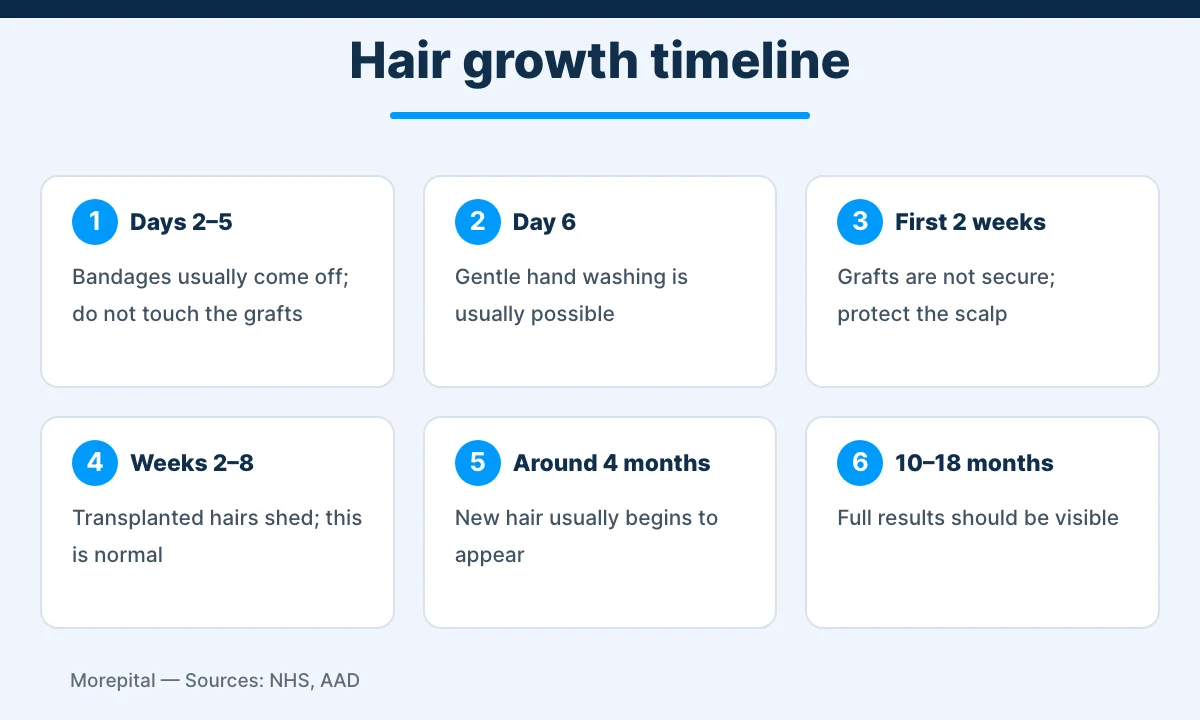
Recovery after a hair transplant in Turkey mostly happens after you fly back. You may need one to two weeks off work. The grafts are not secure for the first two weeks, and you should cut down on exercise in the first month to reduce scarring. Most people feel well within a day or two, although some swelling of the face and eyelids is common.
Source: NHS, Cleveland Clinic
Expect a tight, achy, swollen scalp for a few days and temporary scabbing. Transplanted hairs fall out two to eight weeks after surgery, and by the third month hair may look thinner than before; both are normal.
| Time after surgery | What to expect | What to do |
|---|---|---|
| Days 1–5 | Tight, swollen scalp; bandages off after 2–5 days | Do not touch the grafts |
| Day 6 | Gentle hand washing usually possible | Wash only as instructed |
| Days 10–14 | Non-dissolvable stitches removed (strip method) | Protect grafts for 2 weeks |
| Weeks 2–8 | Transplanted hairs shed (normal) | Limit exercise in month 1 |
| Months 3–4 | May look thinner; new hair starts around 4 months | Keep follow-up appointments |
| Months 6–18 | Results visible at 6–9 months; full result 10–18 months | Final review with your surgeon |
Source: NHS, AAD, BAAPS/BAHRS
Native hair can keep thinning around the transplant, so a dermatologist may recommend medicine to preserve the result. If you need more coverage, a healing interval of several months is usually recommended between sessions.
Source: AAD, Cleveland Clinic
Risks of black-market hair transplant clinics in Turkey
Performed by a licensed, trained physician, hair transplant surgery is generally safe, with small risks of bleeding, infection, allergic reaction to the anesthetic, grafts that do not take, noticeable scarring and continued thinning. The bigger danger for a hair transplant in Turkey comes from clinics that let non-doctors operate.
The ISHRS reported in 2016 that Turkish rules requiring hair transplants to take place in hospitals led to black-market clinics offering lower prices to medical tourists; the problem is also seen in Europe, the Middle East and the U.S. It describes a “bait and switch” where a doctor’s credentials attract patients but a technician operates, with risks including misdiagnosis, missed hair disorders and related systemic diseases, and unnecessary surgery. Its position is that any procedure that cuts the scalp is surgery that only a licensed physician should perform, and that a fraudulent clinic’s results can need corrective surgery for years.
The CDC warns that drug-resistant bacteria and fungi have caused outbreaks among medical tourists, and a 2026 Journal of Travel Medicine report described a cluster of genomically linked Mycobacterium abscessus infections after hair transplantation in Turkey. The FCDO was aware of 7 British nationals who died in Turkey in 2025 after medical procedures of all kinds. The joint UK–Turkish guidance notes that life-threatening complications after hair transplants are rarer than after general plastic surgery but do occur, while appearance-related complications are more common.
Source: CDC, J Travel Med, GOV.UK, BAAPS/BAHRS
How to choose a clinic for a hair transplant in Turkey
The AAD says the result depends largely on the surgeon you choose. Ask for the surgeon’s name, license number and credentials, and check the ISHRS Find a Doctor directory. ISHRS membership, ABHRS certification and ongoing research or education signal commitment. For a hair transplant in Turkey, also check that the facility is on the Turkish Ministry of Health’s list of approved providers, which the FCDO notes is not an endorsement.
Source: AAD, ISHRS, ISHRS, GOV.UK
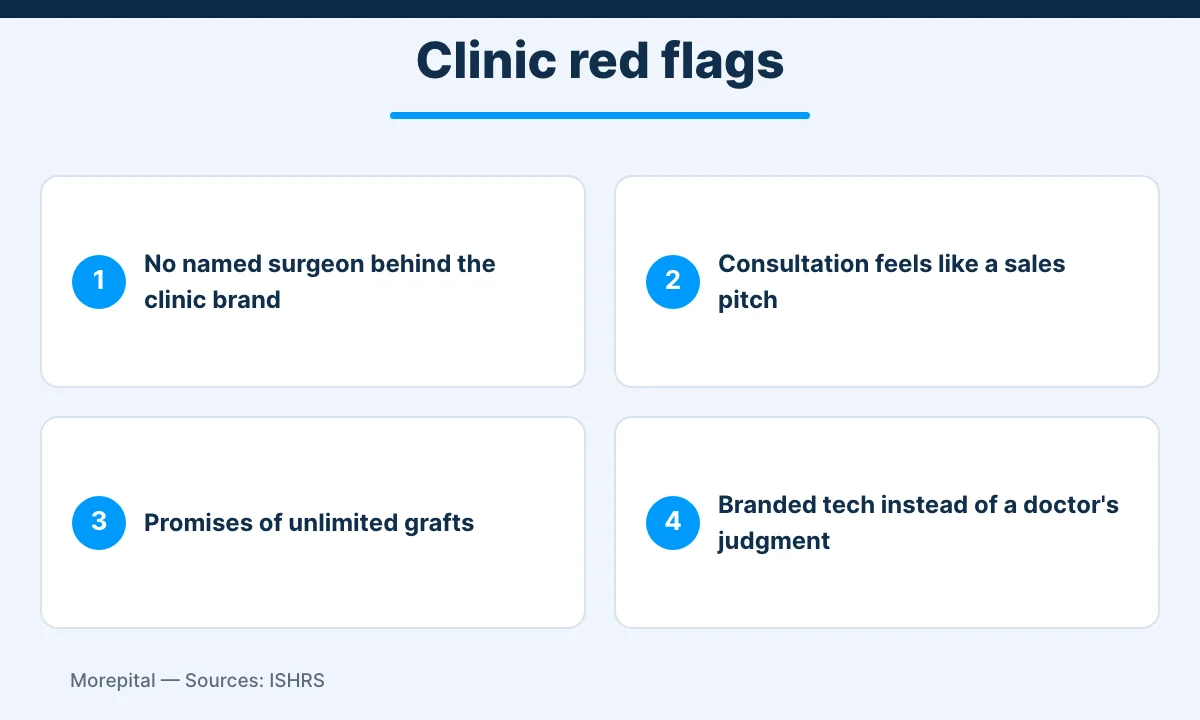
The NHS suggests checking BAHRS membership, asking how many transplants the surgeon has done and how many had complications, and being cautious of clinics that pay for search engine advertising. ISHRS red flags include no named surgeon behind a brand, a consultation that feels like a sales pitch, “unlimited” graft promises, proprietary-sounding technology, price-focused travel packages, and relying only on reviews. Hair Cultivate, a specialised hair-transplant center in Istanbul, describes its hair transplant in Turkey service online; apply the same checks to any clinic.
Questions to ask before you book a hair transplant in Turkey
Ask in writing and keep the answers:
- Who diagnoses my hair loss, and what is their training and license?
- Will I meet the operating surgeon beforehand, and will they be present throughout?
- Who designs my hairline, gives the anesthesia, makes the incisions and removes the follicles?
- Which steps will technicians perform, and on what legal basis?
- Does everyone involved carry malpractice insurance?
- How many grafts do you plan, and how will you protect my donor area?
- What is the long-term plan if my hair loss continues?
- Who manages complications out of hours, and will the operating doctor review my final result?
Source: ISHRS, ISHRS, BAAPS/BAHRS
The joint guidance says you should be told at the first consultation if the doctor will not make the skin incisions. The ISHRS also suggests asking whether the doctor will set realistic expectations, even if that means advising against surgery for now.
Source: BAAPS/BAHRS, ISHRS
Aftercare when you fly home after a hair transplant in Turkey
Before leaving, get copies of all your records, translated into English if needed, plus written aftercare instructions, and confirm you can get follow-up care at home, which may not be covered by insurance. The CDC notes that flying after surgery can raise the risk of blood clots and suggests waiting 10–14 days after major surgery; a hair transplant is usually a day procedure under local anesthesia, so ask your surgeon when you can fly. Keep your hands off the grafts during the journey.
At home, follow the washing schedule, limit exercise in the first month and stay in touch with the doctor. Clinics should have systems to manage complications such as skin necrosis, infection, cysts and abnormal sensation, including outside working hours. Contact the clinic, or see a local doctor, promptly for severe pain or any symptom you were not told to expect.
Source: NHS, BAAPS/BAHRS
Considering a hair transplant in Turkey? Contact us for a free consultation and a treatment plan tailored to you.
Hair transplant in Turkey: frequently asked questions
Is a hair transplant in Turkey safe?
It can be when a licensed, trained physician plans and performs the surgery. The main risks come from clinics where unlicensed technicians operate, so verify who performs each step.
Source: ISHRS, BAAPS/BAHRS
How long should I stay in Turkey for a hair transplant?
Surgery usually takes four to eight hours, sometimes with a short session the next day, and bandages come off after two to five days. Ask your surgeon when they want to see you before you fly.
Is DHI better than FUE?
DHI is a way of implanting FUE grafts with an implanter pen. Implanters and forceps each have pros and cons; the team’s skill matters more than the brand name.
Source: Facial Plast Surg, ISHRS
When will I see results after a hair transplant in Turkey?
Hairs shed within two to eight weeks, new growth usually starts around four months, and full results can take 10 to 18 months.
Can women have a hair transplant in Turkey?
Yes, with suitable hair loss and a stable donor area, but few women qualify. The cause of hair loss should be diagnosed first.
Source: Cleveland Clinic, AAD
Will I still need hair loss medicine afterward?
Possibly. Native hair can keep thinning around the transplant, and medicine may help preserve the result.
What if something goes wrong after a hair transplant in Turkey?
Contact the clinic and see a local doctor for urgent symptoms. Before travel, confirm how complications are handled and whether follow-up care at home is covered.
Source: BAAPS/BAHRS, CDC
Disclaimer: this article is for general health education and does not replace advice from a qualified doctor who can assess your individual case. Last updated: October 2026.