
Gastric sleeve
Sleeve gastrectomy (vertical sleeve gastrectomy)
A gastric sleeve (sleeve gastrectomy) is a weight-loss operation that permanently removes about 80% of the stomach, leaving a narrow, banana-shaped tube that holds less food and produces less hunger hormone. It is usually done by keyhole surgery and leads to an average loss of about 25% to 30% of body weight within one to two years.
Source: NIDDK, Cleveland Clinic, ASMBS
- What is a gastric sleeve?
- Who is a candidate for a gastric sleeve?
- How to prepare for gastric sleeve surgery
- How a gastric sleeve is performed
- Gastric sleeve recovery timeline
- Gastric sleeve results and long-term durability
- Risks and complications of a gastric sleeve
- Gastric sleeve vs. other options
- Choosing a surgeon and having a gastric sleeve abroad
- When to call the doctor after a gastric sleeve
- FAQ
- Sources
What is a gastric sleeve?
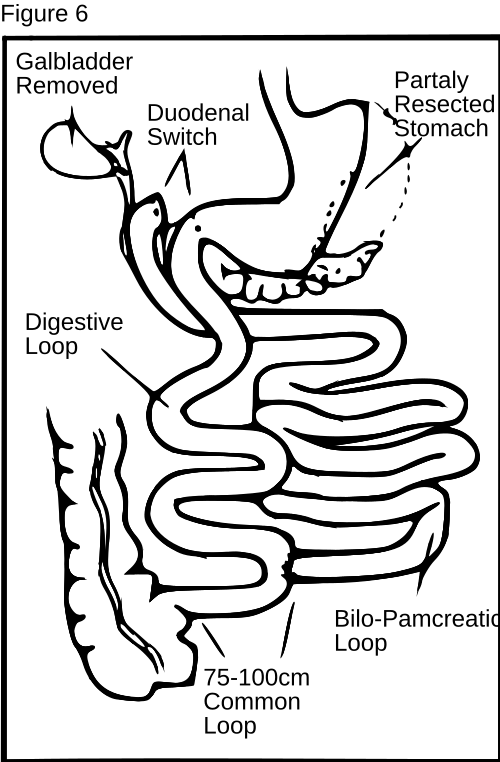
A gastric sleeve, known medically as a sleeve gastrectomy or vertical sleeve gastrectomy, is a weight-loss operation in which a surgeon permanently removes roughly 80% of the stomach. What remains is a narrow tube, often compared to a banana in size and shape, that is sealed along its edge with surgical staples. The intestines are not rerouted, which is the main technical difference from a gastric bypass.
Source: NIDDK, Cleveland Clinic, ASMBS
A gastric sleeve works in two ways. First, the much smaller stomach fills quickly, so people feel full after small portions. Second, the part of the stomach that is removed makes most of the body’s so-called hunger hormone, so appetite tends to drop. Researchers also think the surgery changes other gut hormones and gut bacteria that influence appetite and metabolism.
Source: ASMBS, NIDDK, Cleveland Clinic
The gastric sleeve is the most frequently performed weight-loss operation in the United States and worldwide. Cleveland Clinic estimates about 150,000 procedures a year in the U.S. and about 380,000 globally, while only around 1% of people who qualify actually have bariatric surgery. Together, the sleeve and the gastric bypass account for about 90% of bariatric operations performed around the world.
Source: Cleveland Clinic, ASMBS/IFSO (PMC)
Because part of the stomach is taken out, a gastric sleeve cannot be reversed. Surgeons and patient guides stress that it is not a quick fix: lasting results depend on permanent changes in eating, portion sizes, activity and lifelong follow-up.
Source: NIDDK, MedlinePlus
Who is a candidate for a gastric sleeve?
Eligibility is based mainly on body mass index (BMI) and on obesity-related health problems. The thresholds most often quoted to patients are:
- A BMI of 40 or higher, or
- A BMI of 35 or higher together with a serious condition that may improve with weight loss, such as type 2 diabetes, high blood pressure, heart disease, sleep apnea, asthma or arthritis, or
- A BMI of 30 or higher with type 2 diabetes that is hard to control with medicines and lifestyle changes (NIDDK).
Source: NHS, NIDDK, MedlinePlus
Newer joint guidance from the American Society for Metabolic and Bariatric Surgery (ASMBS) and the International Federation for the Surgery of Obesity and Metabolic Disorders (IFSO), published in 2022, goes further than the older 1991 NIH criteria. It recommends surgery for anyone with a BMI above 35, with or without related illness, and says surgery should be considered at a BMI of 30 to 34.9 when metabolic disease is present. For people of Asian descent, it advises offering surgery from a BMI above 27.5. The NHS similarly notes that people with South Asian, Chinese, other Asian, Middle Eastern, Black African or African-Caribbean backgrounds may be considered below a BMI of 40.
Source: ASMBS/IFSO (PMC), NHS
Age and special situations
The ASMBS/IFSO guidance sets no upper age limit and says frailty, rather than age alone, predicts complications in older adults. Carefully selected adolescents can also be candidates when evaluated by a specialist multidisciplinary team. The same document says insurance-mandated weight loss before surgery is not supported by data, although some insurers still require 3 to 6 months of a supervised diet program.
Source: ASMBS/IFSO (PMC), NIDDK, Cleveland Clinic
Who may not be a good candidate
Sources do not give a single universal list of exclusions. The pre-surgery assessment is designed to identify and manage issues such as disordered eating, severe uncontrolled mental illness and active substance misuse, and to confirm that the person understands the risks and can commit to lifelong supplements and check-ups. Because the gastric sleeve can worsen or trigger acid reflux, surgeons weigh existing reflux carefully when choosing between a sleeve and a bypass.
Source: ASMBS/IFSO (PMC), NIDDK, ASMBS
How to prepare for gastric sleeve surgery
Preparation for a gastric sleeve usually takes weeks to months and involves a team rather than a surgeon alone. Typical steps include:
- Medical assessment: blood and urine tests, a physical exam, imaging and sometimes a gallbladder ultrasound, to look for problems such as ulcers, hernias or blood clots.
- Nutrition and psychological review: counseling with dietitians and mental health professionals about eating patterns, previous weight-loss attempts and readiness for long-term change.
- Control of other conditions: diabetes and high blood pressure should be as well controlled as possible before surgery.
- Smoking: stopping or cutting back, because smoking slows healing and raises the risk of blood clots.
- Medicines: telling the team about all medicines and supplements; some, such as aspirin, ibuprofen, naproxen and vitamin E, may need to be paused.
Source: NHS, MedlinePlus, Cleveland Clinic
Many programs prescribe a liquid or low-calorie diet for about two weeks before a gastric sleeve. Its purpose is to shrink fat around the liver and abdomen, which makes keyhole surgery safer. Patients are then asked not to eat or drink for a set period, often about 12 hours, before the procedure.
Source: Cleveland Clinic, MedlinePlus
How a gastric sleeve is performed
Gastric sleeve surgery is done under general anesthesia, almost always by laparoscopic (keyhole) or robotic surgery. Open surgery through a single large cut is reserved for some people, for example those with previous stomach surgery or complex medical problems.
Source: NIDDK, Cleveland Clinic, MedlinePlus
- The patient is put to sleep with general anesthesia.
- The surgeon makes several small incisions in the abdomen (sources describe 2 to 5) and inflates the belly with carbon dioxide gas to create working space.
- A thin camera and long instruments are inserted through ports.
- The stomach is freed from surrounding tissue, then shaped into a tube and divided with a surgical stapler along its length.
- The larger, curved part of the stomach is removed through one of the incisions, and the incisions are closed.
Source: Cleveland Clinic, MedlinePlus, ASMBS
The valves at the top and bottom of the stomach are left intact. Because rapid weight loss raises the risk of gallstones, some surgeons remove the gallbladder before or during the same operation.
Source: MedlinePlus
Estimates of operating time vary between sources: Cleveland Clinic and MedlinePlus state about 60 to 90 minutes, while the NHS gives a range of 1 to 3 hours. The difference likely reflects variation between patients and hospitals.
Source: Cleveland Clinic, MedlinePlus, NHS
Gastric sleeve recovery timeline
After a gastric sleeve, most people stay in hospital for 1 to 3 days so that pain, nausea and fluid intake can be monitored. On discharge, medicines usually include pain relief and an acid-reducing drug (a proton pump inhibitor). Walking several times a day is encouraged from early on to lower the risk of blood clots.
Source: NHS, Cleveland Clinic, MedlinePlus
| Time after surgery | What to expect |
|---|---|
| Days 1–3 | Hospital stay; clear liquids from the day after surgery |
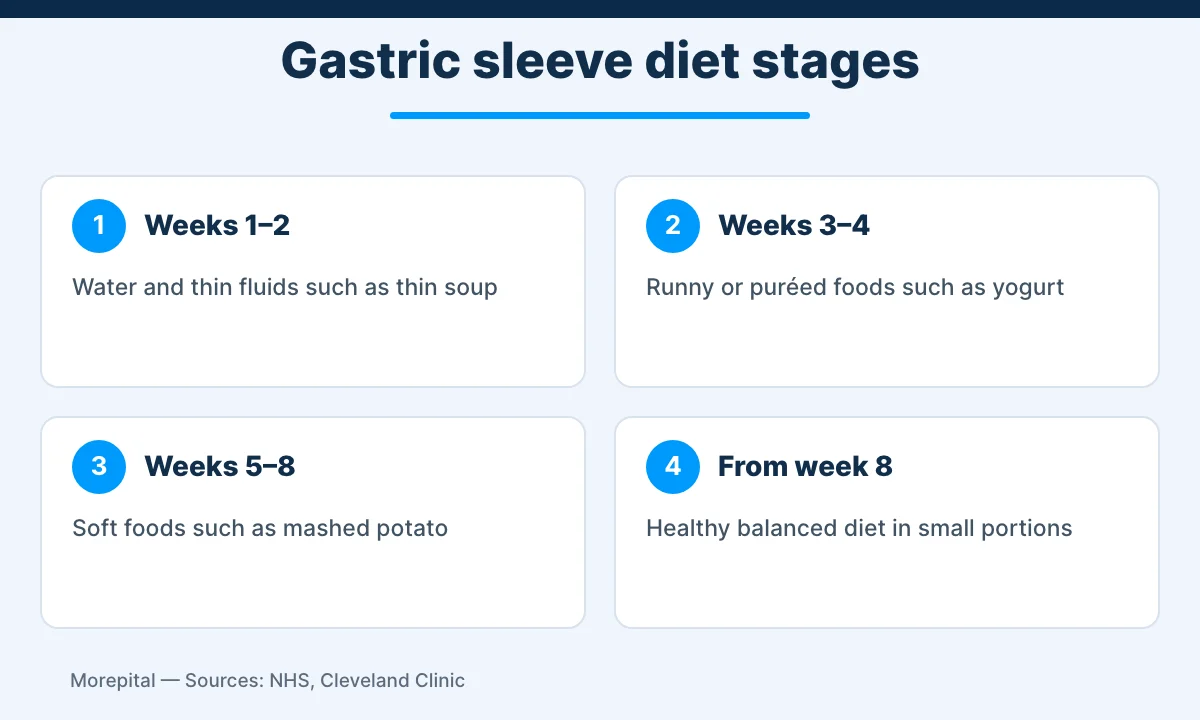
| Weeks 1–2 | Water and thin fluids, such as thin soup |
| Weeks 3–4 | Runny or puréed foods, such as yogurt |
| Weeks 4–6 | Gradual return to normal activities; fatigue is common in the first month |
| Weeks 5–8 | Soft foods, such as mashed potato |
| From week 8 | Gradual move to a healthy, balanced diet in small portions |
| Lifelong | Daily vitamin and mineral supplements and regular follow-up |
Source: NHS, Cleveland Clinic, MedlinePlus
Cleveland Clinic advises allowing about a month before feeling like yourself or working at full capacity. Eating slowly, chewing thoroughly, taking small bites and not drinking with meals help prevent food from getting stuck. Follow-up continues for life: in the UK, patients usually attend a specialist weight-loss clinic for at least two years and then have yearly checks with their GP. Women are advised to avoid pregnancy for 12 to 18 months, until weight has stabilized, and fertility can rise as weight falls.
Source: Cleveland Clinic, NHS, NHS
Gastric sleeve results and long-term durability
Weight loss after a gastric sleeve is gradual and can continue for 2 to 3 years. Cleveland Clinic reports an average loss of 25% to 30% of body weight within one to two years. The ASMBS/IFSO guidance notes that bariatric operations in general produce durable loss of more than 60% of excess weight, with results documented at 5, 10 and 20 years. Final weight loss with a gastric sleeve is usually somewhat less than with a gastric bypass, though often enough for many people.
Source: MedlinePlus, Cleveland Clinic, ASMBS/IFSO (PMC)
Ten-year gastric sleeve data give a more realistic long-term picture. A 2023 systematic review of 11 studies (1,020 patients) found an average total weight loss of 24.4% of starting weight after 10 or more years. About 19% of patients needed a second operation within that period, most often conversion to a gastric bypass, usually because of reflux or insufficient weight loss or regain.
Source: Obesity Surgery (PMC)
Effects on diabetes and other conditions
Weight loss after a gastric sleeve can improve or sometimes resolve type 2 diabetes, high blood pressure, high cholesterol, fatty liver disease, sleep apnea and joint pain. Randomized trials such as STAMPEDE found that sleeve gastrectomy and gastric bypass both controlled type 2 diabetes better than medical therapy alone over the long term. In the 10-year review, type 2 diabetes was in remission in about 46% of patients and high blood pressure in about 41%, although results varied widely between studies and the authors called for more research on how durable diabetes remission is.
Source: Cleveland Clinic, ASMBS/IFSO (PMC), Obesity Surgery (PMC)
Risks and complications of a gastric sleeve
Weight-loss surgery, including the gastric sleeve, is considered common and safe, but every operation carries risk. Cleveland Clinic puts the overall serious complication rate at under 1%, and the ASMBS/IFSO guidance reports perioperative mortality for bariatric surgery in general of about 0.03% to 0.2%.
Source: NHS, Cleveland Clinic, ASMBS/IFSO (PMC)
Short-term risks
- Staple-line leak: fluid escapes from the stapled edge and can cause a serious abdominal infection. It is described as the most dangerous complication of a gastric sleeve. An older systematic review cited an average incidence of about 2.7%, with rates of roughly 3% to 4% across pooled studies; leaks most often occur near the top of the staple line.
- Bleeding, infection and anesthesia reactions.
- Blood clots in the leg (deep vein thrombosis) that can travel to the lungs (pulmonary embolism).
- Injury to nearby organs.
Source: NHS, JSLS (PMC), Cleveland Clinic, MedlinePlus
Leaks often appear after the patient has gone home. In one series of 80 leaks, the average diagnosis came 18 days after surgery, more than 90% were found after discharge, and the most common signs were abdominal pain (90%), a fast heart rate (71%) and fever (61%). Many of these patients were first misdiagnosed with gastritis or pneumonia, which is why any of these symptoms after a gastric sleeve should be reported to the surgical team.
Source: Obesity Surgery (PMC)
Long-term risks
- Acid reflux (GERD): a gastric sleeve can worsen existing heartburn or cause new reflux; in the 10-year review about one in three patients developed new reflux symptoms. A hiatal hernia can also occur.
- Narrowing (stricture): scar tissue can narrow the sleeve, causing nausea, vomiting and difficulty eating.
- Nutritional deficiencies: including vitamins and iron, which is why lifelong supplements are needed, although deficiencies are less common than after gastric bypass.
- Gallstones, especially during rapid weight loss.
- Excess skin after major weight loss; removing it is usually considered cosmetic surgery.
Source: ASMBS, Obesity Surgery (PMC), NIDDK, Cleveland Clinic, NHS
Watch for signs of malnutrition such as constant tiredness, shortness of breath, palpitations, paler skin, pins and needles or weakness, and keep up with routine blood tests.
Source: NHS
Gastric sleeve vs. other options
The gastric sleeve is one of several options for treating obesity. The right choice depends on BMI, health problems such as reflux or diabetes, and personal preferences.
| Option | How it works | Key points |
|---|---|---|
| Gastric sleeve | About 80% of the stomach removed; intestines unchanged | Technically simpler; not reversible; may worsen reflux |
| Gastric bypass (Roux-en-Y) | Small stomach pouch joined to a lower part of the small intestine | More weight loss on average and stronger metabolic effects; more early complications and higher risk of vitamin and iron shortage; may raise the risk of alcohol use disorder |
| Duodenal switch | Sleeve-type stomach plus major intestinal rerouting | Performed less often; highest risk of surgical problems and nutrient shortages |
| Adjustable gastric band | Inflatable band around the top of the stomach | Reversible and adjustable; less weight loss; often removed because of problems |
| Gastric balloon | Balloon placed in the stomach through the mouth using an endoscope (about 20 minutes) | Non-surgical; removed after 6 to 12 months; long-term risks not well studied |
| Weight-loss medicines | Drugs such as semaglutide or tirzepatide, with lifestyle changes | For BMI 30+, or 27+ with a weight-related condition; typically 3% to 12% more weight loss than lifestyle alone after a year |
Source: NIDDK, NHS, ASMBS, NIDDK
The ASMBS notes that a gastric sleeve may also serve as a first step for people with very severe obesity or high surgical risk, with a later conversion to a bypass or another procedure if needed.
Source: ASMBS, Cleveland Clinic
Choosing a surgeon and having a gastric sleeve abroad
Bariatric surgery is a team-based treatment. Before choosing a gastric sleeve surgeon or clinic, it is reasonable to ask whether the program provides a full pre-operative assessment (medical, dietary and psychological), which operation will be performed and why, how complications such as leaks are handled, and what follow-up, blood tests and dietitian support are offered for at least the first two years.
Source: NHS, NHS, ASMBS/IFSO (PMC)
Many people travel abroad for a gastric sleeve. UK surgical societies BAAPS and BOMSS advise speaking with a surgeon in your home country first and point to specific risks of surgical tourism: limited pre-operative assessment, uncertainty about the surgical team, a higher chance of blood clots with long flights soon after surgery, and poor access to follow-up care, which can lead to weight regain and nutritional deficiencies. They also warn that local doctors may not be trained to manage bariatric complications, and that the cost of treating complications may fall on the patient.
Source: BAAPS/BOMSS
If you do travel, plan to stay near the clinic long enough to recover safely, carry a written report of the exact procedure, know the warning signs of a leak or clot, and arrange long-term follow-up at home before you go. Our guide to vitamin D deficiency and anemia symptoms explain two deficiencies that routine blood tests after surgery look for.
Source: BAAPS/BOMSS, NHS, Obesity Surgery (PMC)
When to call the doctor after a gastric sleeve
Contact your surgical team promptly, or get urgent medical advice, if you notice tummy pain, a high temperature or shivering, a fast heartbeat or fast breathing, difficulty swallowing, regular vomiting, or leg redness, swelling or pain that is not improving. These can be early signs of a leak, a narrowing or a blood clot.
Source: NHS, Obesity Surgery (PMC)
- You have severe abdominal pain
- You have difficulty breathing or chest pain, especially with a painful, swollen leg
- You vomit blood or material that looks like coffee grounds
- You pass large amounts of blood from your bottom or have non-stop rectal bleeding
Source: NHS
See a doctor in the next few days if a wound becomes painful, red, hot or swollen or leaks pus.
Source: NHS
Related conditions
Further reading
Gastric sleeve: frequently asked questions
How much weight can you lose with a gastric sleeve?
On average, people lose about 25% to 30% of their body weight within one to two years. A review of 10-year studies found average long-term loss of about 24% of starting weight.
Source: Cleveland Clinic, Obesity Surgery (PMC)
Is a gastric sleeve reversible?
No. About 80% of the stomach is permanently removed, so the operation cannot be undone. It can, however, be converted to a gastric bypass or another procedure if needed.
Source: NIDDK, Cleveland Clinic
What BMI do you need for a gastric sleeve?
Traditionally a BMI of 40 or more, or 35 or more with an obesity-related condition. The 2022 ASMBS/IFSO guidance also supports surgery at a BMI of 30 to 34.9 with metabolic disease, and lower thresholds for people of Asian descent.
Source: NHS, NIDDK, ASMBS/IFSO (PMC)
How long does gastric sleeve surgery take?
Cleveland Clinic and MedlinePlus say about 60 to 90 minutes; the NHS gives 1 to 3 hours. It is usually done by keyhole surgery under general anesthesia.
Source: Cleveland Clinic, MedlinePlus, NHS
How long is recovery after a gastric sleeve?
Most people leave hospital after 1 to 3 days and return to normal activities in 4 to 6 weeks. The diet moves from liquids to purées to soft foods over about eight weeks.
Source: NHS, Cleveland Clinic
Is a gastric sleeve better than a gastric bypass?
Can a gastric sleeve cure type 2 diabetes?
It can put type 2 diabetes into remission in some people. Trials show better long-term blood sugar control than medicines alone, and a 10-year review found remission in about 46% of patients, with wide variation.
Source: ASMBS/IFSO (PMC), Obesity Surgery (PMC), Cleveland Clinic
What are the most serious risks of a gastric sleeve?
The most dangerous early complication is a leak from the staple line, which may appear days or weeks after surgery. Other risks include bleeding, blood clots, reflux, narrowing of the sleeve and vitamin deficiencies.
Source: JSLS (PMC), Obesity Surgery (PMC), NHS
Do I need vitamins for life after a gastric sleeve?
Yes. Vitamin and mineral supplements start soon after surgery and are usually continued permanently, alongside regular blood tests.
Source: Cleveland Clinic, NHS
Can you get pregnant after a gastric sleeve?
Yes, and fertility may rise with weight loss, but the NHS advises avoiding pregnancy for 12 to 18 months after surgery until weight has stabilized.
Source: NHS
Considering a gastric sleeve? Contact us for a free consultation.
Sources
- NIDDK — Types of Weight-loss Surgery
- NIDDK — Potential Candidates for Weight-loss Surgery
- NIDDK — Prescription Medications to Treat Overweight & Obesity
- Cleveland Clinic — Gastric Sleeve Surgery: What it Is, Requirements
- MedlinePlus — Vertical sleeve gastrectomy
- NHS — Why weight loss surgery is done
- NHS — How weight loss surgery is done
- NHS — Preparing for weight loss surgery
- NHS — Recovering from weight loss surgery
- NHS — Complications of weight loss surgery
- ASMBS — Bariatric Surgery Procedures
- ASMBS/IFSO (PMC) — 2022 ASMBS and IFSO: Indications for Metabolic and Bariatric Surgery
- Obesity Surgery (PMC) — Long-Term Results of Laparoscopic Sleeve Gastrectomy: a Review of Studies Reporting 10+ Years Outcomes
- Obesity Surgery (PMC) — Challenges in the Diagnosis of Leak After Sleeve Gastrectomy
- JSLS (PMC) — A Systematic Review of Staple-Line Reinforcement in Laparoscopic Sleeve Gastrectomy
- BAAPS/BOMSS — Joint BAAPS/BOMSS statement on surgical tourism
This page is part of the Morepital medical reference. It is for general health education and does not replace a consultation with a qualified doctor. Last reviewed: October 2026.