
Anemia symptoms caused by low iron usually start quietly: tiredness, low energy, shortness of breath, a pounding or fast heartbeat, pale skin and headaches are the most common signs. Mild iron-deficiency anemia may cause no symptoms at all, so a simple blood test (a complete blood count plus ferritin) is the only reliable way to confirm it. Treatment is usually iron tablets for several months, together with finding and fixing the reason iron ran low.
Source: NHS, NHLBI (NIH), MedlinePlus
Source: NHS, NHLBI (NIH), American Family Physician (AAFP)
Contents
- Why low iron causes anemia symptoms
- Common anemia symptoms
- Less common anemia symptoms and physical signs
- What causes iron-deficiency anemia symptoms
- Who is most at risk of anemia symptoms
- Testing anemia symptoms: CBC, ferritin and iron studies
- Treating anemia symptoms: iron tablets, IV iron and the cause
- Iron-rich foods that help prevent anemia symptoms
- When anemia symptoms need a doctor
- FAQ
Why low iron causes anemia symptoms
Anemia means your blood has fewer healthy red blood cells, or less hemoglobin, than it should. Hemoglobin is the iron-containing protein that carries oxygen from the lungs to every tissue. When the body’s iron stores run low, it cannot make enough hemoglobin, so less oxygen reaches the muscles, brain and heart. That shortfall is what produces the classic anemia symptoms of tiredness and breathlessness.
Source: MedlinePlus, NHLBI (NIH)
Iron deficiency is the most common type of anemia and the most common nutritional cause of it. The World Health Organization estimates that about 40% of children aged 6–59 months, 37% of pregnant women and 30% of non-pregnant women aged 15–49 are anemic worldwide, with iron deficiency a leading cause. Other causes of anemia include deficiencies of folate, vitamin B12 and vitamin A, infections such as malaria, chronic inflammation, and inherited red-cell disorders like thalassemia and sickle cell disease, which is why testing matters before assuming low iron is to blame.
Source: WHO
Iron deficiency develops in stages. Stores in the body (measured as ferritin) fall first; only later does hemoglobin drop below the normal range. This explains why some people feel unwell while their hemoglobin is still normal, and why others with mild anemia notice nothing. Because anemia symptoms develop slowly, many people simply get used to feeling tired.
Source: MedlinePlus, Cleveland Clinic
Common anemia symptoms

The NHS lists the following as the most common iron-deficiency anemia symptoms:
- Tiredness and lack of energy that does not improve with rest.
- Shortness of breath, especially on stairs or during exercise.
- Heart palpitations – a noticeable, fast or pounding heartbeat.
- Paler skin than usual.
- Headaches.
Source: NHS
Other anemia symptoms listed by the NHLBI include dizziness or lightheadedness and cold hands and feet, and notes that more serious anemia can cause chest pain. MedlinePlus describes early anemia symptoms as developing slowly and including fatigue, headaches, dizziness, palpitations and difficulty concentrating.
Source: NHLBI (NIH), MedlinePlus
The WHO separates common and severe signs. In severe anemia, people may have pale mucous membranes and fingernails, rapid breathing and heart rate, dizziness on standing up and easy bruising. These deserve prompt medical review.
Source: WHO
Less common anemia symptoms and physical signs
As iron deficiency becomes longer-lasting or more severe, other anemia symptoms can appear. According to the NHS and MedlinePlus, these include:
- Pica – craving and eating non-food items such as ice, paper or clay.
- Restless legs syndrome – an uncomfortable urge to move the legs, often worse at night.
- Hair loss.
- A sore, smooth or inflamed tongue and an altered sense of taste.
- Painful cracks or ulcers at the corners of the mouth.
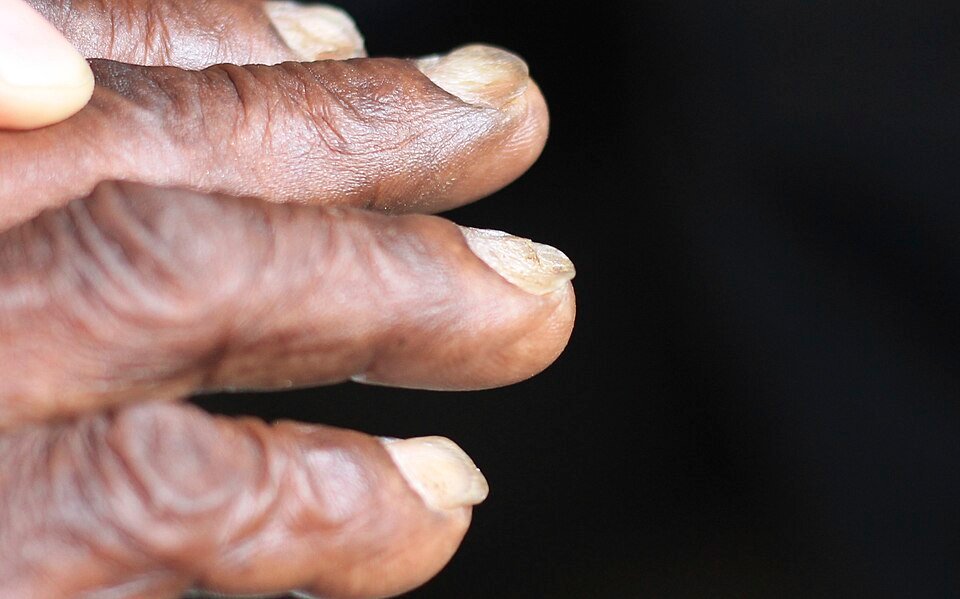
- Brittle or spoon-shaped nails (koilonychia), where the nail curves upward.
- Tinnitus (ringing or buzzing in the ears) and itchiness.
- Difficulty swallowing (dysphagia).
- A bluish tint to the whites of the eyes (blue sclera).
Source: NHS, MedlinePlus
Some signs point to the cause rather than to anemia symptoms themselves. MedlinePlus lists black, tar-like stools or visible blood in the stool, very heavy menstrual bleeding and upper abdominal pain as signs of the blood loss that often lies behind iron deficiency. These should never be ignored.
Source: MedlinePlus
Anemia symptoms in children
Young children cannot describe fatigue, so routine checks matter. The CDC explains that iron supports brain development, and children who do not get enough can develop anemia that may cause learning difficulties. The NHLBI notes that children aged about 9 months to 1 year are vulnerable as they move to whole foods, and the CDC says a doctor or nurse will usually test for anemia at around 12 months.
Source: CDC, NHLBI (NIH)
What causes iron-deficiency anemia symptoms
Iron deficiency happens when the body loses more iron than it takes in, cannot absorb enough, or needs more than usual.
1. Blood loss
Blood contains iron, so ongoing bleeding steadily drains stores. A review in American Family Physician reports that recurrent blood loss accounts for the large majority of cases (94% in the data it cites). Common sources include heavy periods, bleeding in the stomach or bowel from ulcers, inflammation, hemorrhoids or – less commonly – stomach or bowel cancer, and regular use of aspirin or NSAIDs such as ibuprofen. The NHLBI also lists bleeding from injuries, surgery, childbirth and the urinary tract.
Source: American Family Physician (AAFP), NHS, NHLBI (NIH)
2. Poor absorption
Several digestive conditions reduce how much iron the gut absorbs: celiac disease, Crohn’s disease, ulcerative colitis, H. pylori infection, and stomach or intestinal surgery, including weight-loss surgery. MedlinePlus adds heavy use of antacids. The NHLBI also mentions endurance athletes and certain rare genetic conditions.
Source: NHLBI (NIH), MedlinePlus
3. Increased need
Pregnancy is a common time for anemia symptoms to appear, because the body makes extra blood for the baby; according to the NHS, iron-deficiency anemia in pregnancy is most often due to low dietary iron. Breastfeeding and rapid growth in childhood also increase requirements.
Source: NHS, NHLBI (NIH), MedlinePlus
4. Low dietary intake and chronic disease
Diets with little iron, or strict vegetarian diets that are not carefully planned, can lead to deficiency over time. Chronic kidney disease reduces erythropoietin, the hormone that signals the bone marrow to make red cells, and long-lasting inflammatory conditions such as heart failure or obesity can also contribute.
Source: MedlinePlus, NHLBI (NIH)
Who is most at risk of anemia symptoms
Anyone can develop iron deficiency, but some groups are far more likely to experience anemia symptoms. American Family Physician estimates that in the United States iron-deficiency anemia affects about 5% of children under 5, 25% of pregnant women in the third trimester and 15% of adults, with female sex, age under 5, low socioeconomic status and chronic inflammation as key risk factors.
Source: American Family Physician (AAFP)
- Women with heavy periods – the most common cause in women of reproductive age.
- Pregnant women – the NHLBI says all pregnant women are at risk, and doctors check for anemia with blood tests at several points in pregnancy.
- Infants and toddlers, especially preterm babies, who may need extra iron.
- People with digestive conditions such as celiac disease or inflammatory bowel disease, and those who have had stomach or weight-loss surgery.
- Frequent blood donors and endurance athletes.
- People with chronic kidney disease or heart failure.
- Vegetarians and vegans who do not plan their iron intake.
- Regular users of aspirin or NSAIDs.
Source: NHLBI (NIH), NHLBI (NIH), CDC, Harvard T.H. Chan School of Public Health
Untreated anemia in pregnancy matters for both mother and baby. The NHLBI warns that serious or untreated anemia can lead to preterm labor, greater blood loss during delivery and low birthweight, and the NHS lists a higher risk of complications before and after birth.
Source: NHLBI (NIH), NHS
Testing anemia symptoms: CBC, ferritin and iron studies
Because anemia symptoms overlap with many other conditions, diagnosis depends on blood tests, after questions about your diet, periods, medicines and any bleeding.
Source: NHS, MedlinePlus
Complete blood count (CBC)
A CBC (called a full blood count, FBC, in the UK) measures hemoglobin, hematocrit and red blood cells, plus white cells and platelets. It needs no special preparation. In iron deficiency the red cells are typically small (low mean corpuscular volume, MCV) and pale. The NHLBI gives typical adult reference ranges of 14–17 g/dL hemoglobin for men and 12–15 g/dL for women, while noting that ranges vary with age, altitude and other factors. In 2024 the WHO published a dedicated guideline on hemoglobin cutoffs for defining anemia, because thresholds differ by age, sex and pregnancy.
Source: NHS, NHLBI (NIH), WHO
Ferritin and other iron studies
Iron tests are separate from the CBC. They include serum iron, transferrin, total iron-binding capacity (TIBC), transferrin saturation and ferritin. Ferritin reflects the body’s iron stores and is the most useful single marker. Some providers ask you to fast for up to 12 hours before iron tests, so check in advance.
Source: Cleveland Clinic, MedlinePlus
Sources use different ferritin cutoffs. The NHLBI describes ferritin under 10 µg/L as low, with normal ranges of 40–300 µg/L for men and 20–200 µg/L for women. A 2025 American Family Physician review recommends a higher diagnostic threshold of ferritin below 45 ng/mL (equivalent to µg/L) in adults without inflammation, or 46–99 ng/mL with transferrin saturation below 20%. Because ferritin rises with inflammation, the same review uses a cutoff of below 100 ng/mL in people with inflammatory conditions. Your doctor will interpret results against your lab’s range.
Source: NHLBI (NIH), American Family Physician (AAFP)
| Test | What it shows | Typical finding in iron deficiency |
|---|---|---|
| Hemoglobin (CBC) | Oxygen-carrying protein in blood | Low once anemia develops |
| MCV (CBC) | Average red-cell size (normal about 80–95 fL) | Small cells |
| Ferritin | Stored iron | Low (can look normal with inflammation) |
| Transferrin saturation | Share of carrier protein loaded with iron | Low (below 20% in AAFP criteria) |
| Serum iron / TIBC | Iron in blood now / carrying capacity | Read together with ferritin |
| Stool test (FIT) / endoscopy | Hidden bleeding in the gut | Used to find the cause |
Source: NHLBI (NIH), Cleveland Clinic, American Family Physician (AAFP), MedlinePlus, NHS
Finding the cause
For younger women with an obvious cause such as heavy periods, doctors usually treat the bleeding and replace iron. For men and post-menopausal women, American Family Physician recommends examining both the upper and lower gut (upper endoscopy and colonoscopy), noting that up to 9% of patients in this group without gut symptoms have a cancer. It also recommends non-invasive testing for H. pylori and celiac disease in all patients. In the UK, a GP may first order a faecal immunochemical test (FIT) or refer you to a specialist.
Source: American Family Physician (AAFP), NHS, MedlinePlus
Treating anemia symptoms: iron tablets, IV iron and the cause

Treating anemia symptoms has two goals: replace the missing iron and stop the loss. If heavy periods or an ulcer are the cause, these are treated alongside iron. Without that step, anemia symptoms tend to come back.
Source: NHS
Oral iron tablets
Oral iron, most often ferrous sulfate, is the first-line treatment for most people. The NHS says tablets are usually prescribed for about 6 months. MedlinePlus explains that anemia often improves within about 6 weeks, but iron should continue for several more months to rebuild stores in the bone marrow. Cleveland Clinic says it may take one to four weeks to start feeling better.
Source: NHS, MedlinePlus, Cleveland Clinic
Tips for taking iron, from Cleveland Clinic and the NHS:
- Take it on an empty stomach – at least one hour before or two hours after a meal – if you can tolerate it; if it upsets your stomach, taking it with food is acceptable.
- Do not take it with milk, caffeine, antacids or calcium supplements.
- A glass of orange juice may help absorption.
- Store tablets out of reach of children: an iron overdose can be fatal in young children.
Source: Cleveland Clinic, NHS
Side effects are common: constipation, diarrhea, stomach pain, heartburn, nausea and dark or black stools. American Family Physician reports that about half of patients take their iron less reliably because of side effects. Dark stools from iron are expected, but black tarry stools before you start iron can signal bleeding.
Source: NHS, Cleveland Clinic, American Family Physician (AAFP)
Daily or alternate-day dosing?
American Family Physician states that every-other-day dosing of oral iron improves absorption. A 2025 systematic review and meta-analysis in BMC Pharmacology & Toxicology found daily and alternate-day iron comparably effective for treating iron-deficiency anemia, with alternate-day dosing possibly better tolerated, but rated the evidence as very low certainty and advised individualizing treatment. Ask your doctor which schedule suits you.
Source: American Family Physician (AAFP), BMC Pharmacology & Toxicology (2025)
Intravenous (IV) iron
IV iron is given into a vein, often in one or a few sessions. It is used when people cannot tolerate or do not respond to tablets, have poor absorption, or have serious or long-term conditions; American Family Physician also supports it for people with heart failure and iron deficiency. Serious allergic reactions with newer formulations occur in under 1% of patients.
Source: NHLBI (NIH), American Family Physician (AAFP), MedlinePlus
Other treatments
Severe cases may need a blood transfusion or surgery to stop internal bleeding; in kidney disease, erythropoiesis-stimulating agents may be added. Your doctor will usually repeat blood tests over the following months to check that iron levels are recovering.
Source: NHLBI (NIH), NHS
Iron-rich foods that help prevent anemia symptoms
Food helps prevent anemia symptoms from returning. Dietary iron comes in two forms. Heme iron, found only in animal flesh, is absorbed more easily; sources include red meat, poultry, liver and other organ meats, oysters, clams, mussels, sardines and tuna. Non-heme iron comes from plant and fortified foods, such as beans, lentils, chickpeas, tofu, spinach and other dark leafy greens, nuts, seeds, potatoes with skin, dried apricots, prunes and raisins, and fortified cereals and bread. MedlinePlus notes that liver is the richest source.
Source: Harvard T.H. Chan School of Public Health, CDC, MedlinePlus, NHS
Boost absorption
- Pair plant sources with vitamin C – citrus fruit, kiwi, strawberries, broccoli, tomatoes or berries.
- Eat a little heme iron (meat or fish) with plant iron; it increases non-heme absorption.
- Keep tea and coffee away from iron-rich meals; tannins in tea reduce absorption.
- Limit large amounts of calcium (especially supplements), milk, bran and high-phytate wholegrains at the same meal.
Source: Harvard T.H. Chan School of Public Health, NHS, NHLBI (NIH), MedlinePlus
Recommended daily iron intake varies by life stage. The NHLBI and Harvard list 8 mg a day for adult men and women over 50, 18 mg for women aged 19–50, and 27 mg during pregnancy. The tolerable upper limit for adults and teens aged 14 and over is 45 mg a day from all sources, which is why iron supplements should be taken only on medical advice.
Source: NHLBI (NIH), Harvard T.H. Chan School of Public Health, MedlinePlus
For babies and toddlers
The CDC advises introducing iron-rich foods at around 6 months, such as iron-fortified infant cereal, meat, beans and lentils, and asking your child’s doctor whether breastfed babies need iron drops before then. Preterm babies may need extra iron.
Source: CDC
When anemia symptoms need a doctor
See a doctor if you have persistent anemia symptoms such as tiredness, breathlessness, palpitations or pale skin, especially if you also have heavy periods, a restrictive diet or a digestive condition. Do not start iron supplements without a test: anemia also has other causes, such as folate or vitamin B12 deficiency, infections, chronic disease and inherited red-cell disorders, and the reason for low iron itself needs to be found.
Source: NHS, MedlinePlus, WHO
Seek prompt or urgent care if you notice:
- Black, tarry stools or blood in your stool or vomit.
- Chest pain, severe shortness of breath or fainting.
- A very fast heartbeat or dizziness when you stand up.
- Upper abdominal pain or very heavy menstrual bleeding alongside anemia.
- Anemia symptoms during pregnancy.
Source: MedlinePlus, NHLBI (NIH), WHO, NHLBI (NIH)
Left untreated, iron-deficiency anemia can make you more prone to infection and can strain the heart, leading to a fast heart rate or, in severe cases, heart failure. In children it may contribute to developmental delays. The outlook with treatment is generally good, but it depends on the underlying cause.
Source: NHS, NHLBI (NIH), MedlinePlus
Anemia symptoms: frequently asked questions
What are the first anemia symptoms people notice?
The first anemia symptoms are usually tiredness, low energy and shortness of breath on exertion, often with headaches, palpitations or pale skin. Mild cases may have no symptoms.
Source: NHS, NHLBI (NIH)
Can you have low ferritin without anemia?
Yes, and some people still report anemia symptoms such as fatigue at this stage. Iron stores fall before hemoglobin does, so ferritin can be low while the blood count is still normal. Your doctor will decide whether treatment is needed.
Source: MedlinePlus, American Family Physician (AAFP)
How long until iron tablets relieve anemia symptoms?
Many people notice anemia symptoms easing within one to four weeks; blood counts often improve within about 6 weeks, but treatment typically continues for months to refill stores.
Source: Cleveland Clinic, MedlinePlus
Can iron tablets cause new symptoms, such as black stool?
Dark stools are a common, harmless side effect of iron tablets. Black, tarry stools before starting iron, or with abdominal pain, need medical review.
Source: NHS, MedlinePlus
Is craving ice one of the anemia symptoms?
Yes. Craving ice or non-food items (pica) is a recognized, less common symptom of iron deficiency.
Source: NHS, MedlinePlus
Can diet alone fix anemia symptoms?
Diet helps prevent it, but established anemia usually needs iron supplements prescribed by a doctor, plus treatment of the cause. A dietitian can help if eating enough iron is difficult.
Source: NHS, NHLBI (NIH)
Should men with anemia symptoms worry about bowel problems?
Iron deficiency in men and post-menopausal women warrants checking for gut bleeding, usually with endoscopy and colonoscopy, because a hidden cause such as an ulcer or cancer is possible.
Source: American Family Physician (AAFP), NHS
Disclaimer: this article is for general health education and does not replace advice from a qualified doctor who can assess your individual case. Last updated: October 2026.