
Veneers in Turkey are thin porcelain or composite shells bonded to the front of the teeth to change their color, shape or alignment, and many international patients travel for them. Because enamel is usually removed, the treatment is irreversible, so before booking veneers in Turkey check that you are a suitable candidate, that you are being offered veneers rather than full crowns, and how follow-up will work at home.
Source: ADA MouthHealthy, Oral Health Foundation
Contents
What veneers in Turkey actually involve
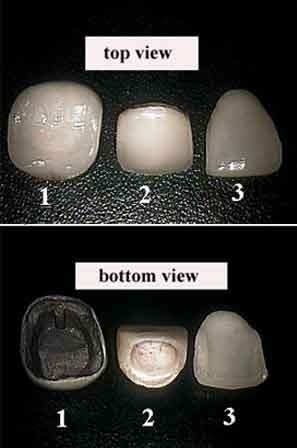
A veneer is a thin covering fixed to the front surface of a tooth. It can change the tooth’s color, shape and overall appearance, and it is often used for teeth that are discolored and do not respond to whitening. Dentists also use veneers to hide chips, small cracks, gaps between teeth and teeth that are slightly crooked or misshapen.
Source: Oral Health Foundation, Cleveland Clinic
Clinically, veneers in Turkey are the same treatment as anywhere else: the tooth front is prepared, the veneer is made and then bonded with a strong dental adhesive. What changes is logistics: treatment is packed into a limited stay, and later adjustments or repairs may be done by a different dentist at home.
Source: Oral Health Foundation, Oral Health Foundation
Veneers are cosmetic dentistry: the NHS generally provides them only privately unless there is a clinical need, and US insurance usually does not cover cosmetic treatment. Cost drives most interest in veneers in Turkey; in a British Dental Association (BDA) survey of 1,000 UK dentists, 98% named cheaper prices as the main reason patients seek dental care abroad.
Source: NHS, Cleveland Clinic, DrBicuspid (BDA survey)
Porcelain vs composite veneers in Turkey

Clinics offering veneers in Turkey generally present two materials, porcelain (ceramic) and composite resin, which differ in preparation, durability and repair.
Arabic-speaking readers: a detailed, source-referenced Arabic overview of this topic is available in the Alphateb medical encyclopedia — عدسات الأسنان.
Source: ADA MouthHealthy, Oral Health Foundation
Porcelain veneers
Porcelain veneers are thin, custom-made shells of medical-grade ceramic that the American Dental Association (ADA) describes as strong, long-lasting and natural-looking; they are usually the more expensive option. A small amount of enamel is removed, an impression or 3D scan is taken and a laboratory makes the veneer, sometimes with a temporary veneer in the meantime.
Source: ADA MouthHealthy, Cleveland Clinic
Composite veneers
Composite veneers use tooth-colored filling material that the dentist sculpts directly on the tooth, hardens with a curing light and then polishes. They may need less enamel removal and fewer visits, and they are easier to repair if they chip. The trade-off is that composite resists staining and wear less well than porcelain.
Source: ADA MouthHealthy
A 2018 review summarized porcelain studies reporting about 93–96% survival at 10 years and composite studies reporting roughly 79–89% at about five years, concluding that composite tends to fail faster. Composite can still be a sensible, conservative choice for small corrections; a 2026 review notes that minimally invasive preparations are strongly recommended because bonding to enamel is more predictable.
Source: Alothman and Bamasoud, PMC, Villalobos-Tinoco et al., PMC
Veneers vs crowns and the “Turkey teeth” debate
This is the key distinction when comparing offers for veneers in Turkey. A veneer is a thin, mainly cosmetic shell on the front of a tooth. A crown is a cap over the entire tooth and is mainly restorative, used for weak, cracked or broken teeth, root canal-treated teeth or implants. The NHS notes crowns can also be fitted just to improve appearance, so the choice is a clinical judgment.
Source: Cleveland Clinic, NHS
How much tooth is removed
A Leeds Teaching Hospitals NHS leaflet explains that veneers need less tooth removal than crowns. A 2026 review in Dentistry Journal, citing earlier work on front teeth, puts veneer preparations at roughly 3–30% of the visible (coronal) tooth structure versus about 63–72% for full crowns, a reduction that cannot be undone.
Source: Leeds Teaching Hospitals NHS Trust, Villalobos-Tinoco et al., PMC
Why “Turkey teeth” became a talking point
“#Turkeyteeth” began as a social media trend of traveling to Turkey for discounted dental work; DrBicuspid reported in 2022 that most of those patients received crowns rather than veneers, and that in a BBC News survey of 1,000 UK dentists, 597 had treated patients with complications after dental work in Turkey. In an AFP report published by Euronews, an Istanbul clinic head said some clinics put veneers on teeth that only need whitening and sometimes fit full crowns, and the BDA warned of “considerable risks” from cut-price treatment. The Turkish Dental Association responded that dentists are meeting patient demand and that complications can happen anywhere.
Source: DrBicuspid, Euronews (AFP)
The BDA’s survey of UK dentists found that 94% had seen patients who had traveled abroad for dental treatment and 86% had treated cases that developed problems afterward. Crowns were named most often as needing follow-up work (87%), followed by implants (85%). The survey did not single out one country and reflects failures rather than overall success rates.
Source: DrBicuspid (BDA survey)
A neutral approach to veneers in Turkey is to ask for a written, tooth-by-tooth plan naming each restoration (composite veneer, porcelain veneer or crown) and the reason for any crown. If crowns are proposed on healthy front teeth, get a second opinion at home.
Who is a good candidate for veneers in Turkey?
Veneers in Turkey suit people with basically healthy teeth who dislike their color, shape, small chips, gaps or mild crowding. Decay and gum disease must be treated first, because veneers over unhealthy teeth can worsen existing problems.
Source: Oral Health Foundation, ADA MouthHealthy
Veneers in Turkey may not be right for you if:
- You clench or grind your teeth (bruxism) or have a deep overbite; the ADA says veneers may not be a good choice in these cases, and studies link bruxism to higher porcelain veneer failure.
- Your teeth have little enamel left, since bonding to dentin (the layer under enamel) has been linked to more failures.
- You have active decay, untreated gum disease or poor oral hygiene.
- Your concern is mainly color and the teeth are otherwise healthy; whitening may be worth trying first, and veneers are often reserved for discoloration that does not respond to it.
Source: ADA MouthHealthy, AlJazairy, PMC, Alothman and Bamasoud, PMC, Oral Health Foundation
The General Dental Council (GDC) says a qualified dentist should examine you, including your medical history, chronic conditions and smoking, before giving a plan and cost. Smoking matters for veneers in Turkey too: one long-term study found more discoloration at veneer edges in smokers.
Source: GDC, AlJazairy, PMC
Steps and number of visits for veneers in Turkey
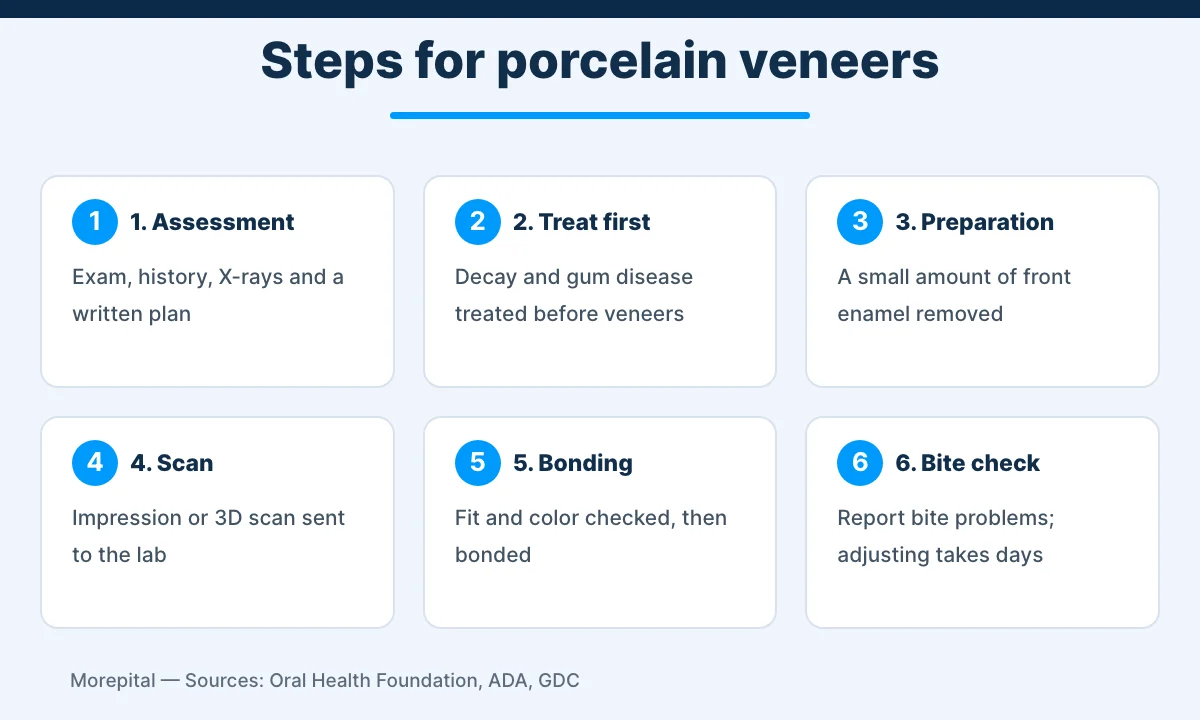
Plans for veneers in Turkey follow the usual clinical sequence, spaced around your travel:
- Consultation and assessment: examination, X-rays where needed and a written plan. Photos sent online are not a substitute for assessment by a qualified dentist.
- Treatment of underlying problems: decay or gum disease is treated before cosmetic work.
- Preparation: for porcelain, a small amount of enamel is removed from the front of the tooth.
- Impression or scan: a mold or 3D scan is taken and sent to a dental laboratory; a temporary veneer may be placed.
- Try-in and bonding: at a later visit the veneer is checked for fit and color, then bonded with dental adhesive.
- Bite check and adjustments: the ADA notes it can take a few days to get used to veneers and that bite problems should be reported to the dentist.
Source: Oral Health Foundation, ADA MouthHealthy, GDC
How many visits?
Porcelain veneers involve more than one visit, for preparation and then fitting; composite veneers may need fewer. Crowns usually take two visits, and Cleveland Clinic notes crown laboratory work usually takes two to three weeks. When planning veneers in Turkey, ask how long the laboratory step takes, how many days to stay and whether a second trip is planned.
Source: Oral Health Foundation, ADA MouthHealthy, Cleveland Clinic
The Oral Health Foundation notes that veneers and crowns need time and repeat visits for fine-tuning the bite, which is harder when the dentist is abroad, and the NHS advises staying a suitable period before flying home.
Source: Oral Health Foundation, NHS
How long do veneers in Turkey last?
Veneers can last many years with good care, but they can chip, crack, wear or come loose and may need repair or replacement. Cleveland Clinic gives a typical range of 5 to 15 years, and a Leeds Teaching Hospitals NHS leaflet says a well-cared-for crown or veneer should normally last around 8–10 years.
Source: Oral Health Foundation, Cleveland Clinic, Leeds Teaching Hospitals NHS Trust
A 2020 systematic review collected porcelain studies reporting, for example, 93.5% survival at 10 years and about 83% at 20 years in one cohort, and 96% and 91% in another, but only 53% without re-intervention at 10 years in UK general practice. It found no conclusive estimate beyond 20 years.
Source: AlJazairy, PMC
| Feature | Composite veneer | Porcelain veneer | Full crown |
|---|---|---|---|
| Covers | Front surface | Front surface | Whole tooth |
| Tooth reduction | Least; may need less enamel removal | Small amount of enamel | Most (about 63–72% on front teeth) |
| Typical visits | May be fewer | More than one | Usually two |
| Reported survival | About 79–89% at ~5 years | Often 90%+ at 10 years; wide range | Average 5–15 years |
| Repair | Easier | Small chips sometimes; may need replacing | Replacement if damaged |
| Main purpose | Cosmetic | Cosmetic | Restorative (sometimes cosmetic) |
Source: ADA MouthHealthy, Alothman and Bamasoud, PMC, Villalobos-Tinoco et al., PMC, Cleveland Clinic
With veneers in Turkey, future maintenance will most likely happen at home, so ask a local dentist in advance whether they would repair work done abroad.
Source: Oral Health Foundation
Risks and complications of veneers in Turkey
Every dental treatment carries risk, and the Oral Health Foundation stresses that no matter how skilled the clinician, treatment can fail. The main risks of veneers in Turkey, as anywhere, are:
- Irreversibility: enamel removed to place a veneer does not grow back, so the treatment cannot be undone.
- Chipping, cracking or debonding: ceramic fracture was the most common failure in one long-term porcelain veneer study; debonding rates are generally low in patients without grinding habits.
- Sensitivity: a UK dental hygienist quoted by the Oral Health Foundation reported severe sensitivity in some patients whose teeth were prepared for veneers abroad.
- Decay and gum problems: cavities can still form under or around a veneer, and a poorly fitting crown can trap bacteria and lead to decay.
- Infection and nerve damage: the ADA warns that unlicensed providers carry risks of infection and nerve damage.
Source: Oral Health Foundation, ADA MouthHealthy, AlJazairy, PMC, Alothman and Bamasoud, PMC, Cleveland Clinic
Extra risks when crowns replace veneers
A 2023 systematic review in BMC Oral Health estimated that about 5% of living teeth developed pulp necrosis (nerve death) after indirect restorations such as crowns, rising with longer follow-up. Evidence certainty was low, but a dead nerve usually means root canal treatment.
Source: Al-Manei et al., PMC
Risks specific to treatment abroad
Distance makes it hard to return if pain or infection develops, language barriers cause misunderstandings, and standards differ. In the BDA survey, about half of dentists said repairs cost patients over £1,000 (about $1,200), and the NHS does not reimburse dental treatment abroad.
Source: Oral Health Foundation, DrBicuspid (BDA survey), NHS
See a dentist promptly if you have ongoing pain, signs of infection, a loose or broken veneer, or a bite that still feels wrong after a few days.
Source: ADA MouthHealthy, Oral Health Foundation
Choosing a dentist for veneers in Turkey
The quality of veneers in Turkey depends on the individual dentist, laboratory and clinic. The NHS advises choosing on quality of care, and being wary of a hard sell, missing information, pressure to decide quickly or no discussion of complications or aftercare.
Source: NHS
Before booking veneers in Turkey, the GDC and the Oral Health Foundation suggest asking:
- Who will carry out my treatment, and what are their qualifications? Are they registered with a regulator, and is registration compulsory in that country?
- How many times has this dentist performed this procedure, and what are the success and complication rates?
- Will staff speak my language, or will an interpreter be provided?
- Is the work guaranteed, and for how long? What aftercare is included?
- If something goes wrong, who pays for extra flights, hotels and remedial treatment?
- Does the clinic have insurance and a complaints system I can see?
- Who can I contact for advice after I return home?
Source: GDC, Oral Health Foundation
A consultation that skips your medical history, medicines or past treatment is a warning sign, and you need not commit on the day. If an overseas clinic consults in the UK, anyone giving dental advice there must be on the GDC register.
Source: Oral Health Foundation, Oral Health Foundation, GDC
Finally, the NHS recommends appropriate travel insurance (tell your insurer about the treatment) and budgeting for exchange-rate changes, a longer stay and possible return trips.
Source: NHS
Caring for veneers and follow-up at home
Veneers in Turkey last longer with daily cleaning and check-ups. The ADA advises brushing twice a day with fluoride toothpaste, cleaning between teeth, avoiding nail biting and hard objects, a sports mouthguard, and limiting coffee, tea and red wine. Veneers do not need less cleaning, a hygienist quoted by the Oral Health Foundation stresses.
Source: ADA MouthHealthy, Oral Health Foundation, Oral Health Foundation
Arranging follow-up before you travel
The GDC and NHS recommend talking to your own dentist before you go, since they know your history and should know your plans in case of complications. The NHS also advises agreeing how records will be shared, so ask the clinic for X-rays, scans, materials and shade used and a summary of every tooth treated.
After veneers in Turkey, keep up regular check-ups and hygiene visits at home, mention any grinding to your dentist, and report any looseness, chips or sensitivity early, when small repairs may still be possible.
Source: Oral Health Foundation, Leeds Teaching Hospitals NHS Trust
Considering veneers in Turkey? Contact us for a free consultation and a treatment plan tailored to you.
Veneers in Turkey: frequently asked questions
Are veneers in Turkey the same as “Turkey teeth”?
Not necessarily. The “Turkey teeth” trend mostly involved discounted crowns, which remove much more tooth than veneers. Ask for a written, tooth-by-tooth plan stating which teeth get veneers and which get crowns.
Source: DrBicuspid, Cleveland Clinic
How many trips do I need for veneers in Turkey?
Porcelain veneers usually need more than one appointment, with laboratory time between preparation and fitting; composite veneers may need fewer. Ask the clinic how many days the plan requires and whether a second trip is likely.
Source: Oral Health Foundation, ADA MouthHealthy
Can veneers in Turkey be removed or replaced later?
Veneers are not reversible because enamel is removed to place them. A veneer can be replaced, but the tooth will always need some kind of covering.
Source: ADA MouthHealthy, Cleveland Clinic
Do veneers get stained?
Porcelain resists staining better than composite, which can discolor and wear more easily. Limiting coffee, tea and red wine helps both.
Source: ADA MouthHealthy
Can I get veneers if I grind my teeth?
Grinding and clenching make veneers a poorer choice and are linked to more failures. Discuss it openly with the dentist, who may suggest another option or protective measures.
Source: ADA MouthHealthy, AlJazairy, PMC
Who fixes problems with veneers in Turkey once I am home?
Many UK dentists already treat patients after treatment abroad, but repairs can be costly and NHS reimbursement for dental treatment abroad is not available. Talk to your dentist before you travel.
Source: DrBicuspid (BDA survey), NHS
How do I check a dentist’s credentials for veneers in Turkey?
Ask for the dentist’s qualifications and registration, check whether the country has a dental regulator and what its complaints process is, and confirm insurance and guarantees in writing.
Source: GDC, Oral Health Foundation
Disclaimer: this article is for general health education and does not replace advice from a qualified doctor who can assess your individual case. Last updated: October 2026.