
Botox is a prescription brand of botulinum toxin type A that is injected in tiny amounts into specific muscles to relax them, which softens expression lines such as frown lines, forehead creases and crow’s feet. It is also used medically for problems like chronic migraine, excessive sweating and muscle spasms. Results usually start within a few days, peak at about two weeks and wear off after roughly 3 to 4 months, so treatment has to be repeated to maintain the effect.
Source: Cleveland Clinic, American Academy of Dermatology
Contents
- What is Botox and how does it work?
- Cosmetic uses of Botox: which lines it treats
- Medical uses beyond wrinkles
- Who is a good candidate, and who should wait
- What happens at your appointment
- How long does Botox last?
- Botox side effects, risks and fake products
- Botox cost: what affects the price
- Choosing a practitioner at home or abroad
- Botox: frequently asked questions
What is Botox and how does it work?
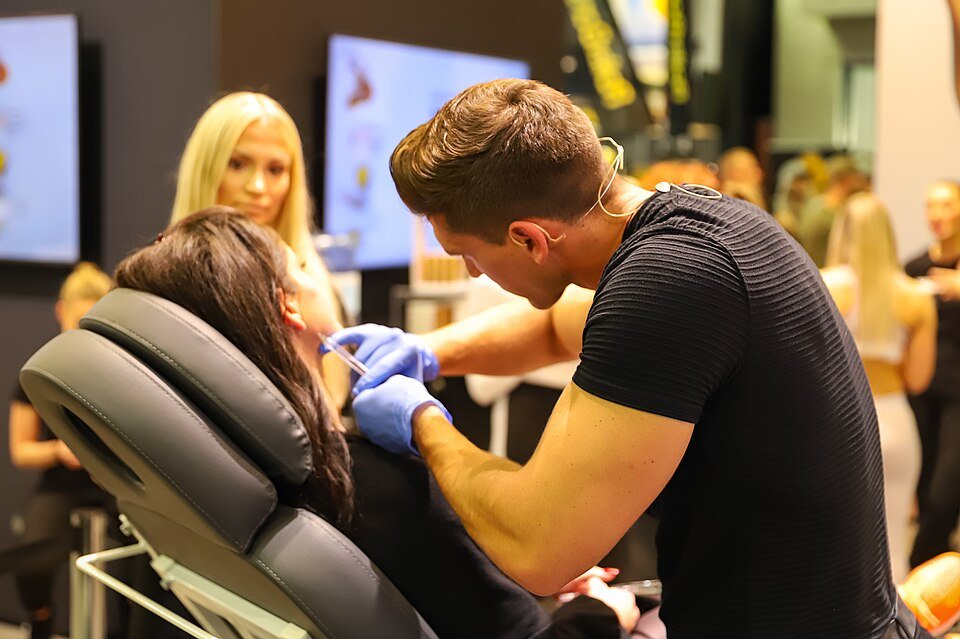
Botulinum toxins are neurotoxins made by the bacterium Clostridium botulinum. The type used in medicine and aesthetics, type A, is produced in a laboratory, then diluted and sterilized so that it does not cause botulism, the serious illness linked to the toxin in contaminated food or wounds. Botox is the best-known brand, and the name is often used for the whole group.
Source: Cleveland Clinic
When a small dose of Botox is injected into a muscle, it blocks the nerve signals that tell that muscle to contract. The muscle relaxes, and the “dynamic” wrinkles that form over it when you frown, squint or raise your eyebrows become softer or disappear. The same action can quiet overactive sweat glands and the bladder muscle.
Source: American Society of Plastic Surgeons, MedlinePlus
Brands of botulinum toxin
Cosmetic brands include Botox Cosmetic (onabotulinumtoxinA), Dysport, Xeomin, Jeuveau and Daxxify; Myobloc is a type B product. They are not identical: Dysport may work a little faster, while Botox may last somewhat longer. MedlinePlus states that one brand cannot be substituted for another, so ask exactly which product you are receiving.
Source: American Society of Plastic Surgeons, MedlinePlus
Cosmetic uses of Botox: which lines it treats
According to the American Society of Plastic Surgeons, Botox injections are used to:
Arabic-speaking readers: a detailed, source-referenced Arabic overview of this topic is available in the Alphateb medical encyclopedia — حقن البوتوكس.
- smooth frown lines between the eyebrows (the “11s”), forehead creases and crow’s feet at the outer corners of the eyes;
- soften “bunny lines” on the nose and fine lip lines;
- reduce vertical neck bands and dimpling of the chin;
- lift the corners of the mouth and correct a gummy smile;
- slim the appearance of a square jaw caused by thick jaw (masseter) muscles.
Source: American Society of Plastic Surgeons
Approved versus off-label areas
Only some of these areas are formally approved; the rest are “off-label” Botox uses. Sources describe the approved list differently. Cleveland Clinic’s cosmetic service says only frown lines and crow’s feet are FDA-approved, and the American Academy of Dermatology lists those two plus underarm sweating that topical treatments do not control. MedlinePlus, which reflects the current US product information, lists Botox Cosmetic for frown lines, crow’s feet, forehead lines and vertical neck bands. For off-label areas, ask your injector how much experience they have.
Source: Cleveland Clinic, American Academy of Dermatology, MedlinePlus
What it cannot do
Because it works on muscle movement, it is best for expression lines. Wrinkles that are visible even when your face is at rest often respond better when a dermal filler, most often hyaluronic acid, is added. It does not remove excess skin or fat. People who want those changes usually need surgery, such as a rhinoplasty to reshape the nose or liposuction for stubborn fat, with very different risks and recovery.
Source: Cleveland Clinic
Medical uses beyond wrinkles
Botox is also a medical treatment. Uses include:
- Eye conditions: crossed eyes (strabismus), blepharospasm and eyelid twitching.
- Movement disorders: cervical dystonia and other forms of dystonia, plus spasticity in adults and in children’s upper limbs.
- Chronic migraine: prevention in people with frequent headaches.
- Bladder problems: overactive bladder, related incontinence and neurogenic detrusor overactivity.
- Excessive sweating (hyperhidrosis): especially severe underarm sweating.
Source: Cleveland Clinic, MedlinePlus
For chronic migraine, Cleveland Clinic says Botox is FDA-approved for prevention and is usually considered for people who have headaches on at least 15 days a month. Injections are given into several points on the head, neck and shoulders, and the benefit often builds over the first two or three sessions.
Source: Cleveland Clinic
The distinction matters for paying. Health insurers often cover medical uses such as migraine or urinary incontinence, and excessive sweating may be at least partly covered, but treatment for signs of aging is generally not. For any of the conditions above, see your doctor or a specialist rather than an aesthetic clinic. Browse our diseases and conditions library.
Source: Cleveland Clinic, American Academy of Dermatology
Who is a good candidate, and who should wait
Cleveland Clinic’s cosmetic team describes good candidates as healthy men and women, roughly between 18 and 70 years old, who want a temporary improvement in frown lines, crow’s feet or forehead lines. A consultation decides whether Botox is right for you.
Source: Cleveland Clinic
Reasons to avoid or delay treatment
- Pregnancy and breastfeeding: most providers advise waiting, because safety in pregnancy and breast milk has not been established.
- Nerve or muscle disease: conditions such as myasthenia gravis, Lambert-Eaton syndrome or ALS raise the risk of serious weakness.
- Existing eyelid droop or weak facial muscles.
- An infection at the injection site: the medicine is not injected into infected skin.
- Allergy to any botulinum toxin product or its ingredients; Botox Cosmetic contains albumin from human blood.
Source: Cleveland Clinic, MedlinePlus, Cleveland Clinic Drugs
What to tell your injector
Give a full list of medicines and supplements. Aminoglycoside antibiotics (such as gentamicin), muscle relaxants and other botulinum toxin injections can interact with the treatment, and you should mention any toxin injection you have had in the past four months. Also report breathing, heart, lung or thyroid problems, diabetes, seizures, bleeding problems and recent eye or face surgery.
Source: Cleveland Clinic Drugs, MedlinePlus
What happens at your appointment
Before the injections
Blood thinners such as warfarin and anti-inflammatory painkillers (NSAIDs) increase the chance of bruising, so ask your prescriber whether any of them should be paused; do not stop a prescribed blood thinner on your own. Avoid alcohol for 24 hours beforehand. In the UK it is prescription-only, so a doctor or nurse must assess you in a consultation first.
Source: Cleveland Clinic, NHS
During the treatment
The practitioner uses a very fine needle to place small amounts of Botox into the target muscles, usually with several injections per area. A cosmetic session takes about 10 minutes and feels like a small prick with some stinging; a numbing cream can be applied first. You go home straight away.
Source: Cleveland Clinic
Aftercare
There is no real downtime after Botox. To lower the risk of redness, swelling or bruising, Cleveland Clinic recommends that you:
- avoid rubbing or pressing the treated area for 12 hours;
- stay upright for 3 to 4 hours after the injections;
- skip strenuous exercise for 24 hours.
Source: Cleveland Clinic, American Academy of Dermatology
How long does Botox last?
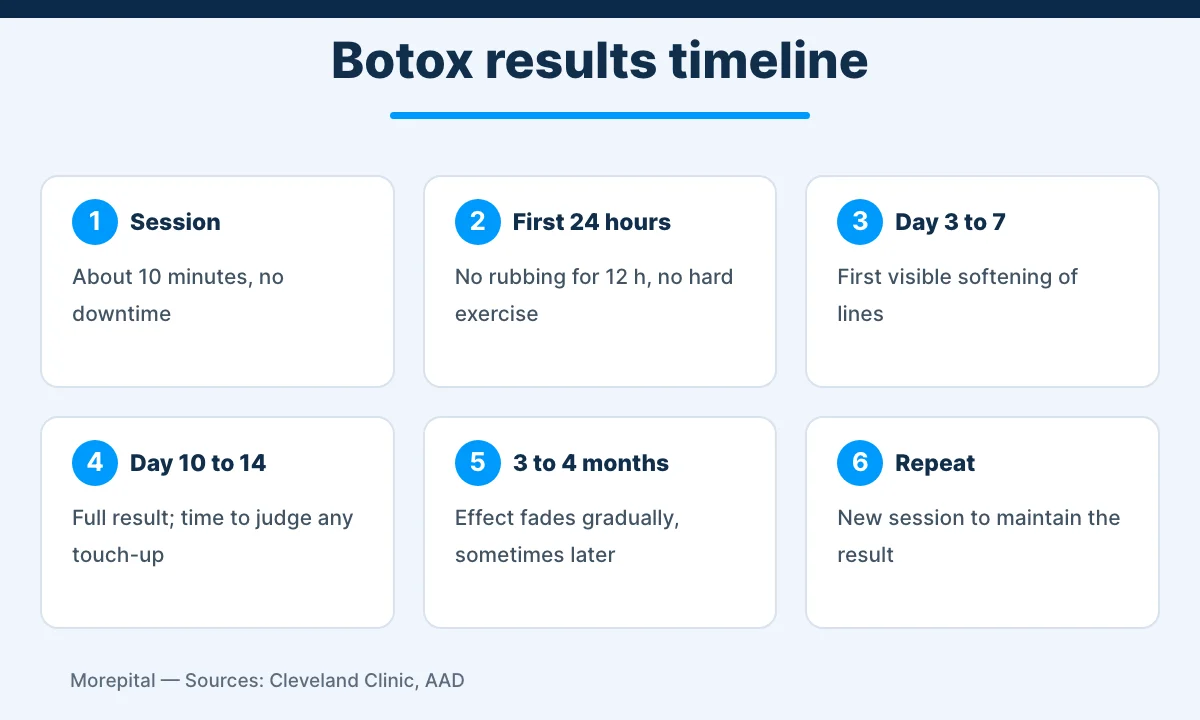
The effect of Botox is gradual. Most people notice a change around day 3 or 4, and the American Academy of Dermatology gives a range of 3 to 7 days. Cleveland Clinic says the full result appears within 10 to 14 days, so judge the outcome, and ask about any touch-up, only after about two weeks.
Source: Cleveland Clinic, American Academy of Dermatology
The smoothing effect typically lasts about 3 to 4 months and sometimes longer, after which nerve signals return and the lines gradually come back. Botox is never permanent. Cleveland Clinic gives a wider window of 3 to 6 months between repeat treatments, and its cosmetic service usually books follow-up sessions every 3 to 4 months.
Source: American Academy of Dermatology, Cleveland Clinic
| Question | Typical answer |
|---|---|
| Session length | About 10 minutes for cosmetic areas |
| Downtime | None; usual activities the same day |
| First visible change | Day 3 to 7 |
| Full result | 10 to 14 days |
| Duration | About 3 to 4 months, sometimes longer |
| Common side effects | Bruising, swelling, headache, temporary eyelid or brow droop |
| Insurance for cosmetic use | Generally not covered |
Source: Cleveland Clinic, American Academy of Dermatology
Botox side effects, risks and fake products
Most Botox side effects are mild and settle within a day or two. The common ones are pain, swelling, redness or bruising where the needle went in, headache, neck pain, tiredness, a flu-like feeling, nausea or indigestion, dry mouth, eye irritation, and a temporarily drooping eyelid or eyebrow.
Source: Cleveland Clinic, MedlinePlus
Drooping eyelid and asymmetry
A 2026 narrative review in Cureus found that upper eyelid droop (ptosis) was the most frequently reported clinically significant complication of facial injections. Reported rates ranged from about 1% to 14% after frown-line treatment, falling below 1% in series from experienced injectors, pointing to technique and dose as key factors. Ptosis typically appears in the first week and most cases resolve within 2 to 4 weeks; prescription eye drops such as apraclonidine can help while it wears off. It also cites an overall complication rate of about 12% to 16%, mostly headache and skin reactions. Mild asymmetry often improves as the toxin fades or can be corrected with a small extra dose.
Source: Cureus (PMC), 2026
Rare but serious: spread of the toxin
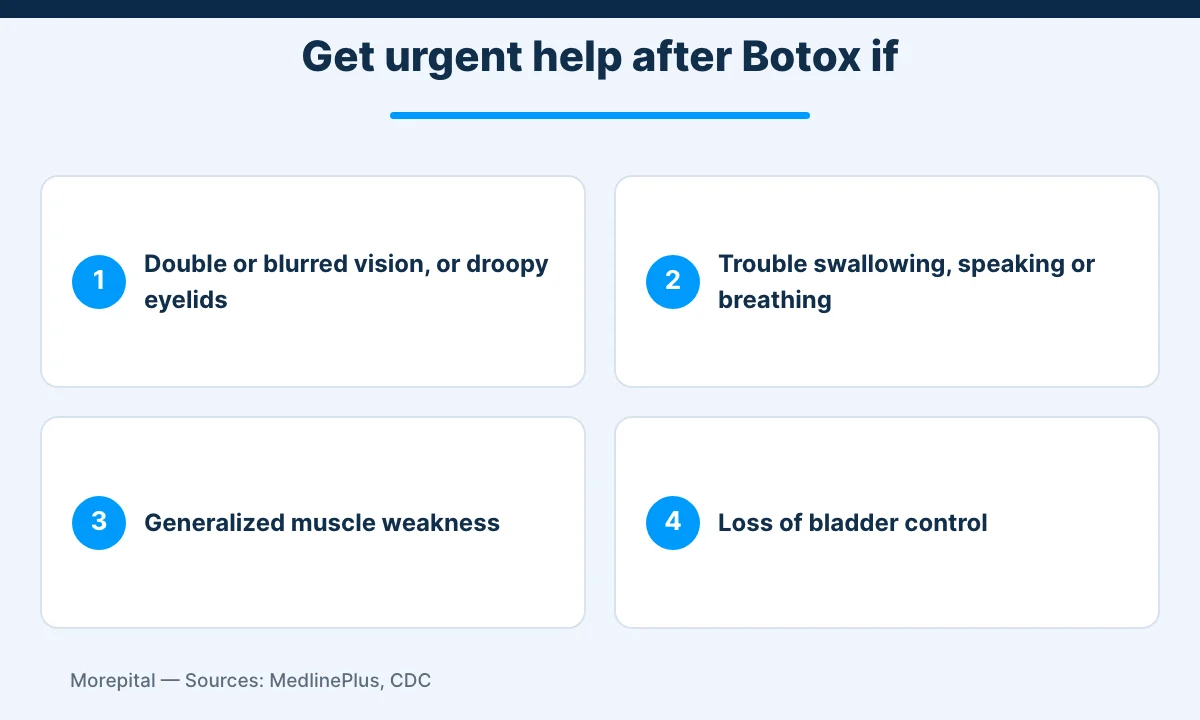
Botox carries a boxed warning that the toxin can spread beyond the injection site and weaken the muscles that control breathing and swallowing. Symptoms can begin within hours or as late as several weeks after treatment. The risk is thought to be highest in children treated for spasticity and in people who already have breathing, swallowing, nerve or muscle problems; medical-grade products are manufactured to avoid causing botulism. Seek urgent medical care if you develop:
- generalized muscle weakness;
- double or blurred vision, or drooping eyelids beyond the treated area;
- trouble swallowing, speaking or breathing, or a change in your voice;
- loss of bladder control.
Source: MedlinePlus, Cleveland Clinic Drugs
Counterfeit and unlicensed products
The biggest avoidable danger is fake Botox and untrained injectors. In 2024 the US Centers for Disease Control and Prevention (CDC) investigated harmful reactions in 17 people across 9 states, 13 of whom were hospitalized; no one died. The injections involved counterfeit products, products from unverified sources (some bought through large online marketplaces) or people who did not meet state requirements, and some people injected themselves.
Source: CDC
England saw a similar cluster in 2025. According to the Joint Council for Cosmetic Practitioners’ summary of the UK Health Security Agency investigation, 38 cases of botulism linked to cosmetic injections were identified between 4 June and 14 July 2025, most of them in the North East. Six people needed critical care for breathing support. Many of the products were unlicensed, mostly injected in homes or salons.
Source: Joint Council for Cosmetic Practitioners
The CDC’s advice is simple: confirm the provider is licensed and trained, confirm the product is approved and comes from a reliable source, and “if in doubt, don’t get the injection.”
Source: CDC
Botox cost: what affects the price
Botox prices vary widely between countries and clinics, so we do not quote them. The American Society of Plastic Surgeons lists these factors:
- How advanced the lines are: deeper or more established creases may need more product.
- How many areas you treat and how strongly: the amount of product (measured in units) is the main variable.
- The practitioner’s expertise and qualifications.
- The time and effort the treatment takes.
- The clinic’s location: city and country make a large difference.
Source: American Society of Plastic Surgeons
Because Botox lasts only a few months, the yearly cost is the price per session multiplied by the number of sessions. Cosmetic Botox is generally not covered by insurance, while medical uses such as migraine or excessive sweating may be. When you get a quote, the NHS suggests asking how much the treatment will cost and whether any further treatment, such as a review or top-up, will cost extra.
Source: American Academy of Dermatology, Cleveland Clinic, NHS
A very cheap offer is a warning sign, not a bargain. The NHS advises against buying treatment vouchers from group discount sites, group “parties” involving alcohol, mobile services in homes or hotels, and practitioners who advertise only on social media; the outbreaks above show why.
Source: NHS
Choosing a practitioner at home or abroad
Because Botox is a prescription medicine, the NHS says a doctor or nurse must prescribe it after a consultation. The person who injects does not have to be the prescriber, but the prescriber must make sure they are trained and safe. In the UK you can check whether a practitioner is on an accredited voluntary register, such as the Joint Council for Cosmetic Practitioners or Save Face, and in England whether the clinic is registered with the Care Quality Commission. Always book a consultation with the person who will actually treat you, and do not pay until you have had it.
Source: NHS
Questions to ask at the consultation
- Who is the prescriber, who will inject me, and what training do they have?
- How many of these treatments have you done, and are you a member of a professional association?
- Which product and brand will you use, and where was it sourced?
- What are the most common complications, and what happens if something goes wrong or I am unhappy?
- What aftercare is included, and who provides it?
- What is the total cost, and do reviews or top-ups cost extra?
Treatment in Turkey or another country
Some people have Botox while traveling for another cosmetic procedure, for example in Turkey. The NHS advice on cosmetic treatment abroad applies here too: find out how clinics and practitioners are regulated in that country, check the practitioner’s training and experience, make sure they speak a language you understand, and meet the practitioner rather than only sales staff before paying. Ask what follow-up care is available, because overseas clinics may not offer it, and check your insurance. Since Botox takes 10 to 14 days to show its full effect, plan how a review will be handled after you fly home. You can compare procedures in our treatments and procedures guide.
Source: NHS, Cleveland Clinic
Considering Botox? Contact us for a free consultation and a treatment plan tailored to you.
Botox: frequently asked questions
How soon does Botox work?
Most people see the first change within 3 to 7 days, and the full result within 10 to 14 days.
Source: American Academy of Dermatology, Cleveland Clinic
Is Botox permanent?
No. The effect usually lasts about 3 to 4 months, so treatments are repeated to keep the result. The lines then gradually return.
Source: American Academy of Dermatology
Does a Botox injection hurt?
It feels like a small prick with some stinging. A numbing cream can be applied first, and the session takes about 10 minutes.
Source: Cleveland Clinic
Can I exercise after Botox?
Avoid strenuous exercise for 24 hours, stay upright for 3 to 4 hours and do not rub the area for 12 hours.
Source: Cleveland Clinic
What if my eyelid droops after Botox?
A drooping eyelid usually appears in the first week and most cases settle within 2 to 4 weeks. Contact your injector, who may prescribe eye drops; seek urgent care if you also have vision, swallowing or breathing problems.
Source: Cureus (PMC), 2026, MedlinePlus
Can I have Botox while pregnant or breastfeeding?
Most providers recommend waiting until after pregnancy and breastfeeding, because safety has not been established.
Source: Cleveland Clinic
Is Botox the same as fillers?
No. Botox relaxes muscles to soften expression lines, while dermal fillers are a different injectable, most often hyaluronic acid. They are sometimes combined for lines that are visible at rest.
Source: Cleveland Clinic
Disclaimer: this article is for general health education and does not replace advice from a qualified doctor who can assess your individual case. Last updated: October 2026.