
Vitamin D deficiency means your body does not have enough vitamin D to keep calcium and phosphate in balance, which weakens bones and muscles over time. Vitamin D deficiency often causes no symptoms at first, but it can lead to fatigue, bone pain, muscle weakness, rickets in children and osteomalacia in adults. It is common, preventable and treatable with sensible sun exposure, food and, when needed, supplements.
Source: Cleveland Clinic, NHS
Source: Amrein et al., Eur J Clin Nutr (PMC), MedlinePlus, NHS
Contents
- What is vitamin D deficiency?
- Vitamin D deficiency symptoms
- Causes of vitamin D deficiency
- Who is at risk of vitamin D deficiency?
- Vitamin D deficiency blood levels (ng/mL and nmol/L)
- How much vitamin D do you need each day?
- Food sources and safe sunlight
- Treating vitamin D deficiency with supplements
- Too much vitamin D: toxicity and upper limits
- Vitamin D deficiency and bone health
- Vitamin D deficiency: frequently asked questions
What is vitamin D deficiency?
Vitamin D is a fat-soluble vitamin that the body stores in fatty tissue and the liver. Its main job is to help the gut absorb calcium, which bones need to form and stay strong. It also helps regulate phosphate, and together these minerals keep bones, teeth and muscles healthy. Your skin makes vitamin D when it is exposed to sunlight, which is why it is often called the “sunshine vitamin.”
Source: MedlinePlus, NHS
Vitamin D deficiency happens when you do not get enough vitamin D from sunlight and food, or when your body cannot absorb or use it properly. The vitamin made in skin or swallowed in food is converted by the liver and kidneys into active forms; the form doctors measure to judge your stores is 25-hydroxyvitamin D, written 25(OH)D. The separate “active vitamin D” (calcitriol) test is not used to check whether you have enough.
Source: Cleveland Clinic, MedlinePlus Lab Tests
How common is it?
Estimates vary with the cutoff used. Cleveland Clinic cites about 1 billion people worldwide with vitamin D deficiency and roughly 35% of US adults. A 2020 review in the European Journal of Clinical Nutrition, using a stricter definition of below 50 nmol/L (20 ng/mL), reported about 40% of Europeans, 24% of Americans and 37% of Canadians below that level, and more than 20% of people in India, Pakistan, Tunisia and Afghanistan below 30 nmol/L (12 ng/mL). Harvard’s Nutrition Source notes that about 20% of White US adults and 75% of Black US adults fall below 50 nmol/L.
Source: Cleveland Clinic, Amrein et al. (PMC), Harvard T.H. Chan School of Public Health
Vitamin D deficiency symptoms in adults and children
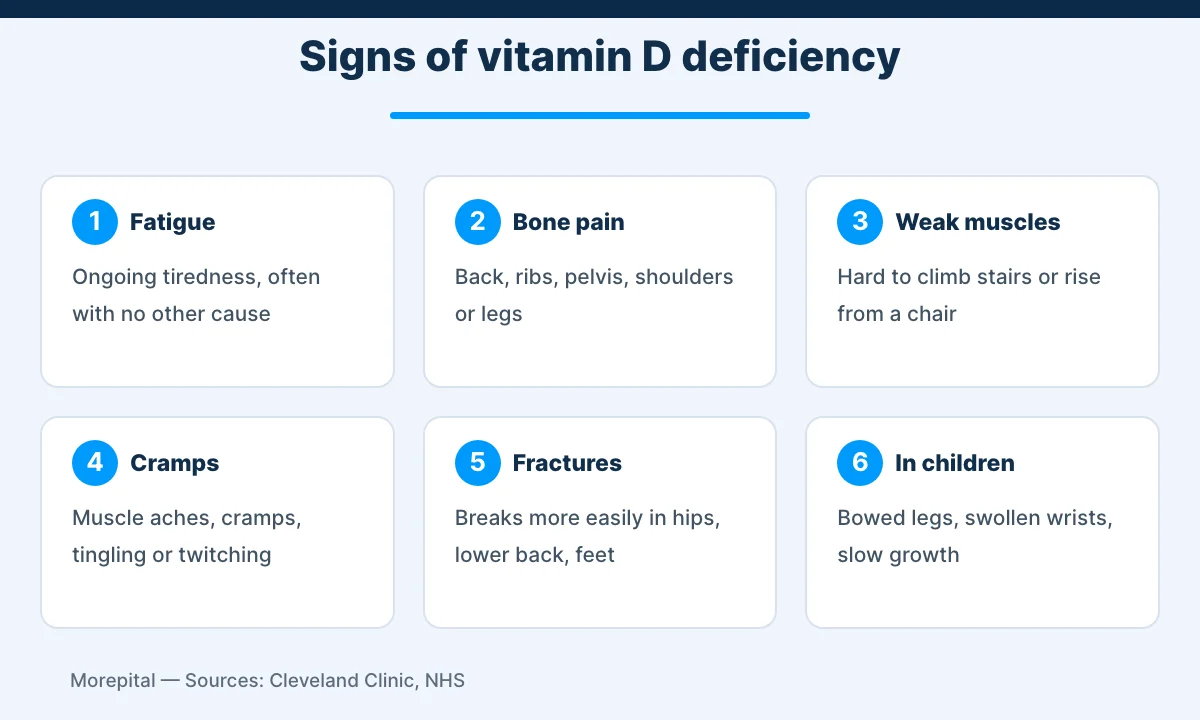
Many people with vitamin D deficiency feel completely well, so a normal energy level does not rule it out. When symptoms appear, they come mainly from the bones and muscles, and they tend to build slowly.
Source: Cleveland Clinic
Symptoms in adults
- Tiredness and fatigue
- Bone pain, especially in the back, shoulders, ribs, pelvis or legs
- Muscle weakness, aches or cramps; difficulty climbing stairs or getting up from a chair
- Tingling, cramps or twitching in the muscles
- Mood changes such as depression
- Fractures that happen more easily, especially in the hips, lower back and feet
Source: Cleveland Clinic, NHS
Symptoms in children
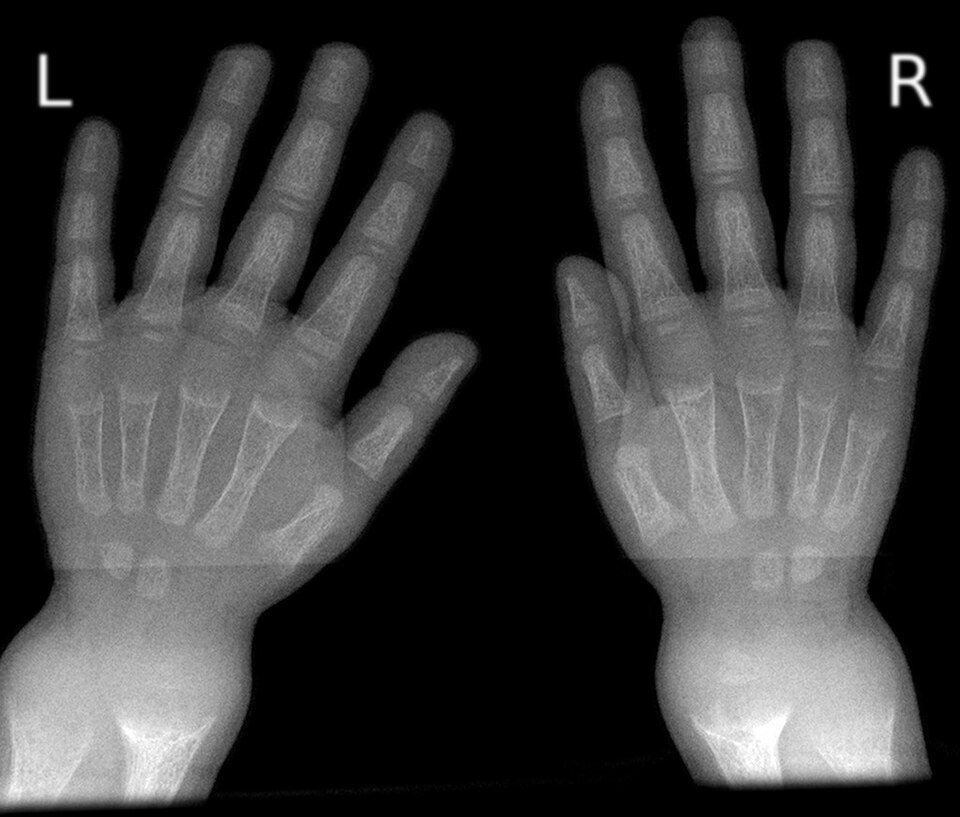
In children, severe vitamin D deficiency causes rickets: soft bones that bend. Signs include bowed legs, swollen and painful wrists, abnormal growth, joint deformities, muscle weakness and bone pain. A child may also be small for their age, and teeth can come through later than usual. Untreated rickets can leave lasting bone damage, and severe untreated cases can cause seizures and heart problems.
Source: NHS, Cleveland Clinic
When to see a doctor
See a doctor if you have ongoing bone pain, unexplained muscle weakness, frequent cramps or a fracture after a minor fall, or if your child has bowed legs or delayed growth or teeth. Also ask about vitamin D deficiency if you have a condition that affects absorption, have had weight-loss surgery, or take medicines known to lower vitamin D. A doctor can check your vitamin D and calcium levels with blood tests and, if needed, X-rays or bone scans.
Source: MedlinePlus Lab Tests, NHS
Causes of vitamin D deficiency
Vitamin D deficiency has three broad causes: too little vitamin D coming in, poor absorption in the gut, and problems converting or using it in the body.
Source: Cleveland Clinic
Not enough sunlight
Skin can only make vitamin D from ultraviolet B (UVB) light, and UVB is weaker at higher latitudes and in winter. In the UK, sunlight from October to early March is not strong enough for the skin to make vitamin D. Harvard researchers note that people in Boston, Edmonton and Bergen cannot make enough from sunlight for about 4, 5 and 6 months of the year, respectively. Window glass blocks UVB, so sitting by a sunny window or driving does not help, and correctly applied sunscreen can reduce vitamin D production by more than 90%.
Source: NHS, Harvard T.H. Chan School of Public Health
Not enough in the diet
Few foods naturally contain vitamin D, so diet alone rarely covers needs unless you eat oily fish often or use fortified foods. Babies who are only breastfed are at risk because breast milk contains little vitamin D.
Source: MedlinePlus, Cleveland Clinic
Medical conditions and surgery
Conditions that disturb fat absorption or vitamin D processing raise the risk. These include cystic fibrosis, Crohn’s disease, ulcerative colitis, celiac disease, obesity (BMI over 30), and kidney or liver disease. Weight-loss surgery such as gastric bypass also reduces absorption. The 2020 review reports that 85–99% of people on hemodialysis, kidney transplant recipients and people with liver disease have low vitamin D.
Source: Cleveland Clinic, MedlinePlus Lab Tests, Amrein et al. (PMC)
Medicines
Several drugs can lower vitamin D levels or interfere with how the body uses it: steroids such as prednisone, some laxatives, the cholesterol drugs cholestyramine and colestipol, the seizure drugs phenobarbital and phenytoin, the antibiotic rifampin, and the weight-loss drug orlistat. Some antiretroviral medicines and ketoconazole are also listed in the medical literature. Never stop a prescribed medicine on your own; ask your doctor whether you need monitoring.
Source: Cleveland Clinic, Amrein et al. (PMC)
Who is at risk of vitamin D deficiency?
Anyone can develop vitamin D deficiency, but some groups are much more likely to. The NHS advises the following people to take a 10 mcg (400 IU) supplement all year round, not just in winter:
- People who rarely go outdoors, such as frail or housebound adults
- People living in care homes or other institutions
- People who usually cover most of their skin when outside
- People with dark skin, including those of African, African-Caribbean or South Asian background
- All children aged 1 to 4, and babies unless they drink more than 500 ml (about 17 fl oz) of infant formula a day
Source: NHS
Other recognized risk groups include adults over 65, because ageing skin makes less of the vitamin D precursor (7-dehydrocholesterol); pregnant and breastfeeding women; people with obesity, especially after bariatric surgery; night-shift workers and people who are immobile; and people with chronic kidney, liver, gut or lung disease. Cleveland Clinic specifically notes the risk of extensive skin covering in Middle Eastern countries, which is relevant for many Gulf residents despite strong sunshine.
Source: Cleveland Clinic, Harvard T.H. Chan School of Public Health, Amrein et al. (PMC)
Vitamin D deficiency blood levels: ng/mL and nmol/L
Vitamin D deficiency is confirmed with a simple blood test for total 25(OH)D (D2 plus D3). No fasting or special preparation is needed, but tell your provider about all supplements you take. Results are reported either in nanograms per milliliter (ng/mL), common in the US, or nanomoles per liter (nmol/L), common in the UK, Europe and much of the Middle East. To convert, multiply ng/mL by about 2.5 (for example, 20 ng/mL is about 50 nmol/L).
Source: MedlinePlus Lab Tests, Amrein et al. (PMC)
There is no single agreed cutoff, and labs use different reference ranges. The table below shows how major sources interpret 25(OH)D results:
| 25(OH)D (ng/mL) | 25(OH)D (nmol/L) | How it is interpreted |
|---|---|---|
| Below 12 | Below 30 | Severe deficiency (2020 review) |
| Below 20 | Below 50 | Deficiency (2020 review); 20 ng/mL is considered adequate for most people by the US National Academy of Medicine |
| 30 or below | 75 or below | “Insufficient” on some lab reports, such as Cleveland Clinic Laboratories |
| 30–60 | 75–150 | Target often used for people with osteoporosis (BHOF) |
| Above 100 | Above 250 | “Toxic” range on Cleveland Clinic Laboratories reports |
| Above 150 | Above 375 | Level usually seen in reported vitamin D poisoning (2020 review) |
Source: Amrein et al. (PMC), Harvard T.H. Chan School of Public Health, Cleveland Clinic Laboratories, Bone Health & Osteoporosis Foundation
Sources disagree on the 30 ng/mL (75 nmol/L) threshold: the 2020 review notes that many authors use it, while others treat 20 ng/mL (50 nmol/L) as enough. Results can also shift with season, latitude, skin pigmentation and age, so always interpret a number with your own doctor and your lab’s reference range.
Source: Amrein et al. (PMC), Cleveland Clinic Laboratories
Should everyone be tested?
No. MedlinePlus states that routine testing is not recommended for everyone. The Endocrine Society’s 2024 guideline goes further and suggests against routine 25(OH)D screening in healthy adults, including adults with dark skin or obesity, because trials have not identified levels that guarantee specific health benefits. Testing remains appropriate when there is a clear reason, such as low blood calcium, bone disease, malabsorption, or checking the response to treatment.
Source: MedlinePlus Lab Tests, Endocrine Society
How much vitamin D do you need each day?
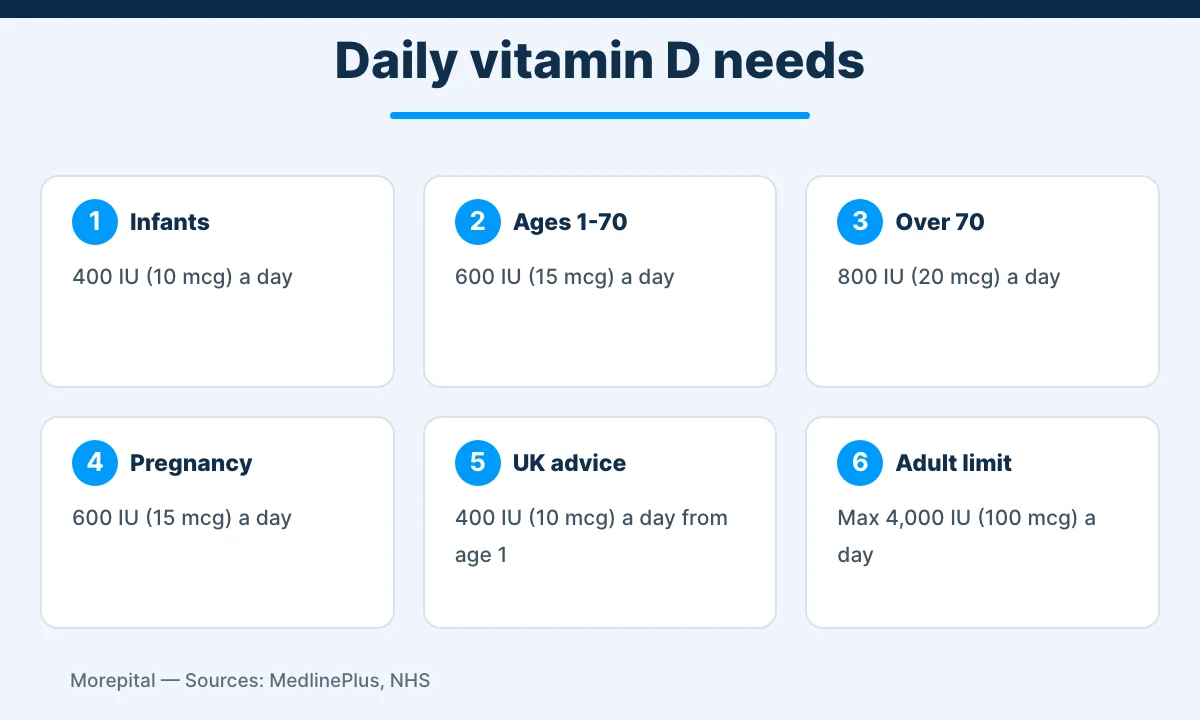
Vitamin D is measured in micrograms (mcg) or international units (IU); 1 mcg equals 40 IU. Meeting your daily intake is the simplest way to prevent vitamin D deficiency. US and UK advice differ because they are designed for different purposes: the US figures assume minimal sun, while the UK figure is aimed mainly at the winter months and at risk groups.
Source: NHS, MedlinePlus
US recommendations (National Academy of Medicine)
- Infants 0–12 months: 400 IU (10 mcg) a day
- Children, teens and adults 1–70 years: 600 IU (15 mcg) a day
- Adults over 70: 800 IU (20 mcg) a day
- Pregnancy and breastfeeding: 600 IU (15 mcg) a day
Source: MedlinePlus, Cleveland Clinic
UK recommendations (NHS)
Everyone aged 1 and over needs 10 mcg (400 IU) a day, and babies under 1 need 8.5–10 mcg. From October to early March, the NHS says everyone should consider a daily 10 mcg supplement, including pregnant and breastfeeding women; risk groups should take it all year.
Source: NHS
Bone-health and guideline advice
The Bone Health & Osteoporosis Foundation suggests 400–800 IU a day under age 50 and 800–1,000 IU a day from age 50. The Endocrine Society (2024) suggests routine supplementation for children and teens to prevent rickets, for adults 75 and older, during pregnancy, and for adults with high-risk prediabetes, but not extra doses above the recommended intake for healthy adults under 75.
Source: Bone Health & Osteoporosis Foundation, Endocrine Society
Food sources and safe sunlight
Food and sun together usually prevent vitamin D deficiency in healthy people, but neither is a reliable fix on its own once levels are low.
Foods that contain vitamin D
- Oily fish: salmon, sardines, trout, herring, mackerel and tuna are among the best natural sources
- Cod liver oil (check the label, as some fish oils are also high in vitamin A)
- Egg yolks, red meat and liver (liver should be avoided in pregnancy)
- Mushrooms, especially those exposed to ultraviolet light
- Cheese, in smaller amounts
- Fortified foods: most US milk (about 400 IU per quart, or roughly 100 IU per 8-ounce glass), some plant milks, breakfast cereals, orange juice, yogurt and fat spreads
Source: NHS, MedlinePlus, Cleveland Clinic, Bone Health & Osteoporosis Foundation
Fortification rules vary by country. In the US, most cow’s milk is fortified, but the NHS points out that UK cow’s milk is generally not a good source because it is not fortified. Check food labels where you live, especially if you rely on fortified foods to avoid vitamin D deficiency.
Source: NHS, MedlinePlus
Getting vitamin D from the sun
For people in the UK, the NHS suggests about 15 minutes of unprotected sun on the skin two to three times a week from late March to September, possibly more often for people with brown or black skin, while avoiding the strong midday sun between 11am and 3pm. Sunlight cannot cause vitamin D poisoning, but sunburn and skin cancer are real risks, so never let your skin redden or burn. MedlinePlus notes that improving vitamin D through supplements or diet is generally safer than seeking more sun.
Source: NHS, MedlinePlus Lab Tests
Treating vitamin D deficiency with supplements
The goal of treating vitamin D deficiency is to bring your level up and then keep it in a healthy range. Supplements are the main treatment, and the dose should be set by your healthcare provider based on your blood level, age, weight and any underlying condition. Doctors also treat the cause, such as a gut disease or a medicine effect.
Source: Cleveland Clinic, NHS
D3 or D2?
Supplements come as vitamin D3 (cholecalciferol) or vitamin D2 (ergocalciferol). Cleveland Clinic says D3 is absorbed more easily and is sold over the counter, while D2 is usually prescription-only in the US. The Bone Health & Osteoporosis Foundation considers both forms good for bone health.
Source: Cleveland Clinic, Bone Health & Osteoporosis Foundation, MedlinePlus
How fast levels rise
According to the 2020 review, 1,000 IU (25 mcg) a day raises 25(OH)D by about 15–25 nmol/L (6–10 ng/mL) on average over weeks to months. About 800 IU a day is enough for most healthy people to reach at least 50 nmol/L, and 2,000 IU a day to reach at least 75 nmol/L. Your doctor will recheck your level to see how you are responding.
Source: Amrein et al. (PMC)
Daily doses beat rare mega-doses
Both the Endocrine Society and the 2020 review favor regular daily doses over very large doses given at long intervals. Harvard’s Nutrition Source cites a trial in which a once-yearly dose of 500,000 IU in women aged 70 and older was linked to 15% more falls and 26% more fractures. Before adding a supplement, check whether your multivitamin or calcium tablet already contains vitamin D.
Source: Endocrine Society, Harvard T.H. Chan School of Public Health, Bone Health & Osteoporosis Foundation
Too much vitamin D: toxicity and upper limits
Treating vitamin D deficiency should never tip into excess. Vitamin D toxicity is rare and almost always comes from taking too many supplements, not from food or sunlight. Excess vitamin D increases calcium absorption and can raise blood calcium to harmful levels (hypercalcemia). Because the vitamin is stored in body tissues, the 2020 review notes it can accumulate for up to 18 months.
Source: MedlinePlus, Amrein et al. (PMC)
Warning signs of excess
Symptoms include nausea, vomiting, poor appetite, weight loss, constipation, weakness, increased thirst and urination, confusion, unsteady walking and slurred speech. Long-term excess can cause kidney stones, kidney damage, calcium deposits in the heart and lungs, irregular heartbeat, and weakened bones. Seek medical care if you develop these symptoms while taking high-dose vitamin D.
Source: Cleveland Clinic, MedlinePlus, Harvard T.H. Chan School of Public Health, NHS
Safe upper limits
The US upper limits are 1,000 IU (25 mcg) a day for babies 0–6 months, 1,500 IU (38 mcg) for 7–12 months, 2,500 IU (63 mcg) for ages 1–3, 3,000 IU (75 mcg) for ages 4–8, and 4,000 IU (100 mcg) for everyone 9 and older. The NHS sets 100 mcg (4,000 IU) for adults and teens 11–17, 50 mcg (2,000 IU) for children 1–10 and 25 mcg (1,000 IU) for infants. Some people with medical conditions need lower amounts, and higher therapeutic doses should only be taken under a doctor’s supervision.
Source: MedlinePlus, NHS, Harvard T.H. Chan School of Public Health
Vitamin D deficiency and bone health
Bones are where the effects of vitamin D deficiency matter most. Without enough vitamin D, the body cannot absorb enough calcium, blood calcium and phosphate can fall, and bones become soft and weak. In children this is rickets; in adults it is osteomalacia, which causes bone pain and muscle weakness. Low vitamin D can also contribute to osteoporosis, where bones become thin and fracture easily.
Source: MedlinePlus, Cleveland Clinic
Rickets and osteomalacia are treated with vitamin D and calcium supplements, a balanced diet with calcium-rich foods such as milk, cheese, yogurt and green leafy vegetables, safe time outdoors, and treatment of any underlying condition. Some children with significant bone deformity, such as bowed legs, may need surgery. Rickets is now very uncommon in the US because infant formula and milk are fortified.
Source: NHS, Cleveland Clinic
Do supplements prevent fractures?
The evidence is mixed. In the large VITAL trial of about 25,900 US adults, 2,000 IU a day for about five years did not reduce total, hip or spine fractures, or falls, in people who were generally not deficient. Earlier meta-analyses in older adults found that 500–800 IU a day lowered hip and non-spine fractures by about 20%, and a Cochrane review found a small protective effect when vitamin D was taken with calcium. Vitamin D also supports the muscles that help prevent falls. In practice, correcting a true vitamin D deficiency protects bones, while extra doses in people with normal levels add little.
Source: Harvard T.H. Chan School of Public Health, Bone Health & Osteoporosis Foundation
If you have osteoporosis or low bone mass, ask your doctor whether you should be checked for vitamin D deficiency. Vitamin D does not need to be taken at the same time as a calcium supplement.
Source: Bone Health & Osteoporosis Foundation
Vitamin D deficiency: frequently asked questions
What are the first signs of vitamin D deficiency?
Often there are none. When symptoms appear, the earliest are usually tiredness, aches, muscle weakness or cramps, and bone pain. Only a blood test can confirm vitamin D deficiency.
Source: Cleveland Clinic
What level counts as vitamin D deficiency?
Most experts define vitamin D deficiency as a 25(OH)D below 20 ng/mL (50 nmol/L) and severe deficiency as below 12 ng/mL (30 nmol/L). Some labs flag anything at or below 30 ng/mL (75 nmol/L) as insufficient.
Source: Amrein et al. (PMC), Cleveland Clinic Laboratories
How long does it take to correct vitamin D deficiency?
Levels rise gradually over weeks to months with daily supplements. Your doctor will usually recheck your blood level after a course of treatment to confirm the response and adjust the maintenance dose.
Source: Amrein et al. (PMC), MedlinePlus Lab Tests
Can I get enough vitamin D from the sun in a hot country?
Not always. Covering most of the skin, staying indoors, sunscreen, darker skin and older age all reduce how much vitamin D the skin makes, so deficiency is common even in sunny regions such as the Middle East.
Source: Cleveland Clinic, Harvard T.H. Chan School of Public Health
Is it safe to take 4,000 IU of vitamin D every day?
4,000 IU (100 mcg) is the upper daily limit for adults in both US and UK guidance. It is not a target. Most people need far less, and higher doses should only be used under medical supervision.
Source: NHS, MedlinePlus
Does vitamin D help with COVID-19?
The NHS says there is not enough evidence to recommend taking vitamin D solely to prevent or treat COVID-19.
Source: NHS
Should my baby take vitamin D drops?
In the UK, babies who are breastfed, or who drink less than 500 ml of formula a day, should have 8.5–10 mcg of vitamin D daily from birth. In the US, the recommended intake for infants is 400 IU (10 mcg) a day. Ask your pediatrician which product to use.
Source: NHS, MedlinePlus
Disclaimer: this article is for general health education and does not replace advice from a qualified doctor who can assess your individual case. Last updated: October 2026.