
Acne
Acne vulgaris
Acne is a common, non-contagious skin condition in which hair follicles become clogged with oil and dead skin cells, causing blackheads, whiteheads, pimples and sometimes deep painful nodules or cysts, mostly on the face, chest and back. It is most common in teenagers and young adults but can affect people of any age. Creams, tablets and in-clinic procedures can clear it and help prevent permanent scars.
Source: NIAMS (NIH), NHS, AAD
- What is acne?
- Symptoms and types of acne spots
- Causes and risk factors
- Types and severity grades
- How acne is diagnosed
- Treatment options for acne
- Complications: scars and dark marks
- Prevention and living with acne
- When to see a doctor
- FAQ
- Sources
What is acne?

Acne is a common skin condition in which hair follicles, the tiny openings people call pores, become clogged. The plugged pores turn into blackheads, whiteheads, red bumps, pus-filled pimples and, in more severe cases, deep and painful lumps called nodules or cysts. Doctors call the usual form acne vulgaris. It is an inflammatory skin disorder, and it is not contagious, so you cannot catch it from another person.
Source: NIAMS (NIH), Cleveland Clinic, AAD
Breakouts appear most often on the face, but the forehead, chest, shoulders and upper back are also common sites. Some people also get spots on the arms, legs or buttocks. It can be mild, with only a few clogged pores, or severe enough to leave permanent scars.
Source: NHS, Cleveland Clinic, MedlinePlus
How common is acne?
Cleveland Clinic describes acne as the most common skin condition and estimates that about 80% of people between 11 and 30 years old have at least a mild form. Worldwide, a 2023 review in Biochemistry and Biophysics Reports cites Global Burden of Disease data putting prevalence at about 9.4% across all ages, which ranks it eighth among skin diseases. The gap between these figures reflects different age groups and different ways of counting, so they should not be compared directly.
Source: Cleveland Clinic, Vasam et al., 2023 (PMC)
The condition is most common in teenagers and young adults, but it can affect people of every race and age, including babies. In the teen years it is more common in boys. When it continues into adult life, it is more common in women. The American Academy of Dermatology (AAD) notes that about 5% of women still have breakouts in their 40s.
Source: NIAMS (NIH), AAD, MedlinePlus
Symptoms and types of acne spots
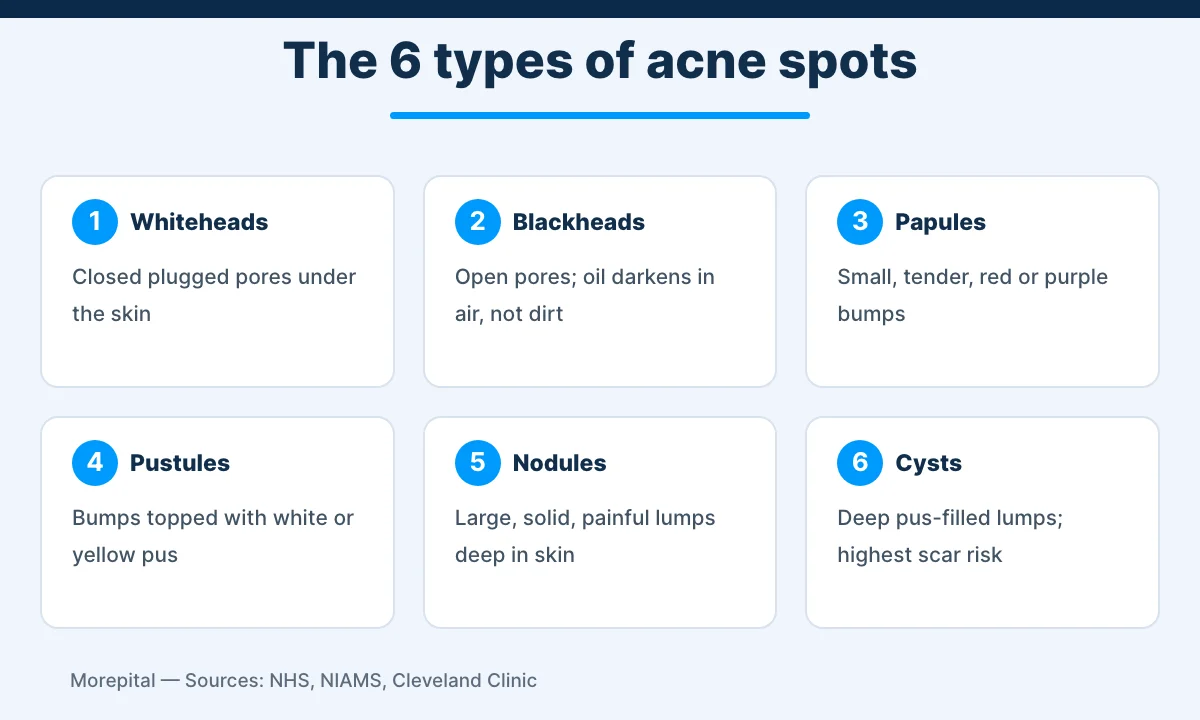
It usually shows up as a mix of different spots at the same time. The skin is often oily or greasy, and inflamed spots can feel hot, sore or painful to touch. The main types are:
- Whiteheads: closed, plugged pores that stay under the skin surface and form a small white or skin-colored bump.
- Blackheads: plugged pores that are open at the surface. The dark color comes from the oil reacting with air, not from dirt.
- Papules: small, tender, raised bumps that look pink or red on white skin and brown or purple on brown or black skin.
- Pustules: papules topped with white or yellow pus, the classic pimple.
- Nodules: large, solid, painful lumps deep in the skin.
- Cysts: deep, painful lumps filled with pus or fluid that can join together and are the most likely to scar.
Source: NHS, NIAMS (NIH), Cleveland Clinic
Whiteheads and blackheads are grouped together as comedones. They are non-inflamed. Papules, pustules, nodules and cysts are inflammatory lesions. Acne can also leave changes in skin color or texture where spots have healed, including shallow pitted scars.
Source: NIAMS (NIH), NHS
Emotional symptoms
The effects go beyond the skin. The NHS lists anxiety, depression and low self-esteem among its possible effects, and the AAD says many studies link severe acne with higher rates of depression and anxiety. Cleveland Clinic adds that acne can get in the way of social activities and that the stress it causes may in turn make breakouts worse.
Source: NHS, AAD, Cleveland Clinic
Causes and risk factors
Every hair follicle is connected to a sebaceous gland that makes an oily substance called sebum. Normally, sebum flows out through the pore, and the skin cells lining the follicle (keratinocytes) shed at the surface. In acne, sebum, dead skin cells and hair stick together and plug the pore. Bacteria that normally live on the skin then multiply inside the blocked follicle and cause inflammation: redness, swelling, heat and pain. If the follicle wall breaks, its contents spill into the surrounding skin and a deeper spot forms.
Source: NIAMS (NIH), NHS, Cleveland Clinic
Researchers describe four main processes behind breakouts: too much sebum, abnormal build-up of skin cells in the follicle, growth of the bacterium Cutibacterium acnes (formerly Propionibacterium acnes), and inflammation. The bacterium thrives in oily follicles and breaks down sebum, which can promote clogged pores and trigger an immune reaction.
Source: Vasam et al., 2023 (PMC)
Risk factors
- Hormones: androgens (male-type hormones present in both sexes) rise at puberty, enlarge the oil glands and increase sebum. Periods, pregnancy, menopause and starting or stopping birth control pills can also trigger breakouts.
- Family history: it tends to run in families. The AAD says the risk of a severe form is higher if a close blood relative had deep, painful acne that scarred.
- Medicines: corticosteroids, testosterone, lithium, phenytoin, some hormonal medicines and some hormonal IUDs can cause breakouts.
- Medical conditions: polycystic ovary syndrome (PCOS) is a known trigger.
- Oily products: greasy cosmetics, skin creams and hair products, and jobs with frequent contact with grease.
Source: NIAMS (NIH), MedlinePlus, NHS, AAD, Cleveland Clinic
Things that can make acne worse
Some factors are not causes on their own but can aggravate spots: stress, pressure or friction from helmets, tight clothing, backpacks or headbands, heavy sweating and high humidity, pollution, picking or squeezing spots, and scrubbing the skin too hard.
Source: NIAMS (NIH), Cleveland Clinic, MedlinePlus
What about diet?
The evidence on food is mixed and still being studied. Research does not show that chocolate, nuts or greasy foods cause it. The AAD says that small trials suggest a low-glycemic diet may reduce spots, and observational studies have linked cow’s milk, including skim milk, with more breakouts, although these studies cannot prove cause and effect. No studies have found that yogurt or cheese increase breakouts. Cleveland Clinic also mentions whey protein and high-sugar diets as possible links.
Source: AAD, MedlinePlus, Cleveland Clinic
Types and severity grades
Dermatologists describe it both by the kind of spots and by how severe it is. Cleveland Clinic summarizes a common four-grade scale:
| Grade | Severity | What it looks like |
|---|---|---|
| 1 | Mild | Mostly whiteheads and blackheads, with a few papules and pustules |
| 2 | Moderate (pustular) | Many papules and pustules, mostly on the face |
| 3 | Moderately severe (nodulocystic) | Numerous papules and pustules, some inflamed nodules; the back and chest may be involved |
| 4 | Severe nodulocystic | Numerous large, painful, inflamed pustules and nodules |
Source: Cleveland Clinic
Named forms of acne
- Comedonal: mainly blackheads and whiteheads.
- Inflammatory: red papules and pustules.
- Nodular and cystic: deep, tender lumps that carry the highest risk of permanent scarring.
- Hormonal or adult: often flares around periods and is more common in women.
- Fungal acne (pityrosporum folliculitis): not a true form but a yeast overgrowth in hair follicles that tends to itch.
- Infantile acne: babies can get spots too; MedlinePlus advises seeing a doctor if it has not cleared within 3 months.
Source: Cleveland Clinic, NIAMS (NIH), MedlinePlus
How acne is diagnosed
A family doctor or a dermatologist usually makes the diagnosis simply by looking at the skin: which types of spots are present and where they appear. They will often ask about stress, family history, whether breakouts follow the menstrual cycle, and which medicines you take. Routine blood or lab tests are generally not needed.
Source: Cleveland Clinic, MedlinePlus, AAD
Testing may be considered when breakouts appear suddenly and severely, especially in adults, to look for an underlying cause such as a hormone problem. A bacterial culture may be taken if large pus bumps keep coming back. An accurate diagnosis matters because several conditions look similar, including rosacea, hidradenitis suppurativa, perioral dermatitis and folliculitis.
Source: Cleveland Clinic, MedlinePlus, AAD
Treatment options for acne
Treatment aims to clear existing spots, stop new ones and prevent scars. There is no single plan for everyone; the choice depends on the type and severity. Combination treatment usually works better than one product alone. Whatever you use, give it time: the AAD and MedlinePlus advise sticking with a treatment for 6 to 8 weeks before judging whether it works. For a step-by-step guide to the options, see our article on acne treatment.
Source: AAD, AAD, MedlinePlus, Vasam et al., 2023 (PMC)
Over-the-counter products (mild acne)
- Benzoyl peroxide reduces acne bacteria. Lower strengths and washes cause less irritation, and it can bleach towels and clothing.
- Salicylic acid helps dissolve dead skin cells and keep pores clear.
- Adapalene, a retinoid sold without a prescription in some countries, unclogs pores and helps prevent blackheads.
- Sulfur and resorcinol are older options. All of these can cause redness, dryness or peeling, so use them sparingly at first.
Source: Cleveland Clinic, MedlinePlus, AAD, NHS
Prescription creams and gels
- Topical retinoids (tretinoin, adapalene, tazarotene, trifarotene) unclog pores, reduce inflammation and oiliness, and are also used to keep skin clear afterwards. They are applied to the whole area, not as a spot treatment.
- Topical antibiotics (clindamycin, erythromycin) are paired with benzoyl peroxide or a retinoid to lower the risk of antibiotic resistance.
- Azelaic acid targets clogged pores, bacteria and inflammation and can fade dark marks.
- Dapsone gel is used for inflamed spots.
- Clascoterone is a topical anti-androgen cream approved in the US for moderate to severe cases in people aged 12 and older.
Source: AAD, Cleveland Clinic, NHS
Tablets (moderate to severe cases)
- Oral antibiotics such as doxycycline, lymecycline, minocycline or sarecycline treat inflamed pimples. They are used for the shortest time needed, usually several months, together with a topical product such as benzoyl peroxide. Using antibiotics alone is discouraged because of bacterial resistance.
- Combined contraceptive pills can help women, and some are approved for acne. Doctors first check for risks such as smoking or heart disease.
- Spironolactone blocks hormone effects on the oil glands and is used for stubborn hormonal breakouts in women. Effective contraception is needed because it can harm a developing baby.
Source: AAD, NHS, Cleveland Clinic, Vasam et al., 2023 (PMC)
Isotretinoin
Isotretinoin is a vitamin A-derived tablet that shrinks the oil glands. It is reserved for severe or scarring nodular disease that has not responded to other treatment and is usually prescribed by a skin specialist. In the UK the NHS says a course usually lasts about 3 months, with regular check-ups and blood tests. Isotretinoin causes severe birth defects, so anyone who could become pregnant must use contraception from at least 1 month before treatment until at least 1 month after it ends; in the US, patients must enroll in the iPLEDGE program. Common side effects include dry skin, lips and eyes, sun sensitivity, and muscle or joint pain. Rarely, it can cause serious mental health effects, including thoughts of suicide, so doctors ask about any history of depression.
Source: NHS, MedlinePlus, AAD
In-clinic procedures
Dermatologists can add procedures to medicine for stubborn cases: a chemical peel to remove dead skin and excess oil from pores, light and laser therapy including photodynamic therapy, corticosteroid injections to calm a few large painful nodules quickly, and drainage and extraction of cysts, which should only be done by a trained doctor to avoid infection and scarring.
Source: AAD, MedlinePlus, Cleveland Clinic
Complications: scars and dark marks
The most lasting complication is scarring. It happens when inflammation reaches below the top layer of skin and damages deeper tissue. Any type can scar, but nodules and cysts carry the highest risk. Picking, squeezing or popping spots makes scarring and dark spots more likely and slows healing.
Source: Cleveland Clinic, AAD, AAD
Scars come in two broad forms. Depressed (sunken) scars include ice-pick, boxcar and rolling scars. Raised scars, called hypertrophic scars and keloids, form when the body makes too much collagen. Breakouts can also leave flat dark or discolored marks, which are more noticeable on brown and black skin and are different from true scars.
Scar treatment usually starts only after breakouts are under control. Options include laser resurfacing, chemical peels (mild peels often need 3 to 5 sessions), microneedling, which the AAD describes as safe for all skin tones, dermal fillers, scar surgery and dermabrasion, and injections for raised scars. Tell the dermatologist about every acne medicine used in the past two years, because some can cause problems when combined with scar procedures.
Source: AAD
Other complications include skin infection, with hot, swollen and red skin, and the emotional burden. MedlinePlus notes that untreated severe acne can lead to scarring and, in some people, significant depression.
Source: NHS, MedlinePlus
Prevention and living with acne
Breakouts cannot always be prevented, especially during hormonal changes, but good daily habits reduce breakouts and protect the skin while treatment works:
- Wash gently once or twice a day and after sweating, using lukewarm water, a mild cleanser and your fingertips rather than a washcloth or sponge.
- Avoid harsh scrubs, astringents, toners and exfoliants, which dry and irritate the skin.
- Choose oil-free products labeled non-comedogenic or “won’t clog pores” for moisturizer, makeup and sunscreen.
- Remove makeup before bed.
- Shampoo regularly if your hair is oily and keep hair off your face.
- Keep your hands off your face and do not pick, squeeze or pop spots.
- Wear loose, breathable clothing if you have acne on the body, especially when exercising.
- Use broad-spectrum SPF 30+ sunscreen and avoid tanning and sunbeds; tanning only hides spots, damages skin, and some of the medicines make skin more sensitive to UV light.
Source: AAD, NHS, Cleveland Clinic, MedlinePlus
Outlook
Most cases improve with time. For most people it fades by their thirties, and the AAD notes that many teenage boys have breakouts until about 20 to 25, while girls often have acne into their 20s or longer. Some people still have breakouts in their forties and fifties. A single pimple usually clears in one to two weeks, but severe cases can take weeks to months even with treatment. Dermatologists recommend treating acne early instead of waiting for it to pass, to avoid years of breakouts and lower the chance of permanent scars.
Source: NIAMS (NIH), AAD, Cleveland Clinic
When to see a doctor
See a doctor or dermatologist if:
- you have tried over-the-counter products for several weeks to months without improvement;
- you have many spots, or deep, painful nodules or cysts;
- spots are leaving scars or dark marks;
- a treatment causes irritation, itching or skin discoloration;
- your skin is affecting your mood, confidence or social life;
- the skin around spots looks infected: hot, swollen, red or painful (redness is harder to see on brown and black skin);
- a baby’s spots have not cleared within 3 months.
Source: NHS, Cleveland Clinic, MedlinePlus
- you have signs of a serious allergic reaction (anaphylaxis) to an acne medicine, such as swelling of the face, lips, tongue or throat, trouble breathing, or feeling faint;
- you have thoughts of suicide or self-harm, or new hallucinations, especially while taking isotretinoin;
- you have a seizure or sudden shortness of breath while taking isotretinoin.
Further reading
Acne: frequently asked questions
Is acne contagious?
No. Acne is caused by clogged pores, oil, skin bacteria and inflammation inside your own follicles. It cannot spread from person to person.
Source: AAD, NIAMS (NIH)
What is the main cause of acne?
Pores become blocked with oil (sebum) and dead skin cells, and skin bacteria grow inside them, causing inflammation. Hormones, especially androgens at puberty, drive the extra oil.
Source: NIAMS (NIH), Cleveland Clinic
Does chocolate or greasy food cause acne?
Research does not show that chocolate, nuts or greasy foods cause acne. Small studies link high-glycemic diets and cow's milk to more breakouts, but the evidence is not conclusive.
Source: MedlinePlus, AAD
How long does acne treatment take to work?
Most treatments need at least 6 to 8 weeks before you see fewer breakouts. Dermatologists advise using a product consistently for that long before switching.
Source: AAD, MedlinePlus
At what age does acne stop?
It usually improves after the teen years and fades for most people by their thirties, but some adults still have breakouts in their forties and fifties, more often women.
Source: NIAMS (NIH), AAD
Should I pop my pimples?
What is the strongest treatment for acne?
Can acne scars be removed?
Many scars can be improved with laser resurfacing, chemical peels, microneedling, fillers or minor surgery, usually after the breakouts are under control.
Source: AAD
Struggling with acne or acne scars? Contact us to arrange a consultation with a skin specialist.
Sources
- NHS — Acne
- NIAMS (NIH) — Acne
- Cleveland Clinic — Acne: Causes, Symptoms, Treatment & What It Is
- MedlinePlus — Acne (Medical Encyclopedia)
- AAD — Acne: Overview
- AAD — Acne: Diagnosis and treatment
- AAD — Acne scars: Diagnosis and treatment
- AAD — Acne: Tips for managing
- AAD — Can the right diet get rid of acne?
- NHS — Isotretinoin capsules (Roaccutane)
- Vasam et al., Biochem Biophys Rep 2023 — Acne vulgaris: A review of the pathophysiology, treatment, and recent nanotechnology based advances
This page is part of the Morepital medical reference. It is for general health education and does not replace a consultation with a qualified doctor. Last reviewed: October 2026.