
High blood pressure (hypertension) means the force of blood pushing against your artery walls stays too high over time, which strains the heart and damages blood vessels, the kidneys, the brain and the eyes. It usually causes no symptoms at all, so the only way to find it is to have your blood pressure measured. In US guidelines, hypertension starts at 130/80 mm Hg; the WHO and the NHS use 140/90 mm Hg for clinic readings. Lifestyle changes and, when needed, daily medicines can bring it under control and cut the risk of heart attack, stroke and kidney disease.
Source: NHS, WHO, American College of Cardiology
Contents
- What is high blood pressure?
- High blood pressure readings and categories
- High blood pressure symptoms: why it is called silent
- Causes and risk factors of high blood pressure
- Types of hypertension, including in pregnancy
- How high blood pressure is diagnosed and measured at home
- Complications of untreated high blood pressure
- Lowering high blood pressure with lifestyle changes
- Blood pressure medicines
- When to see a doctor or get emergency help
- High blood pressure: frequently asked questions
What is high blood pressure?
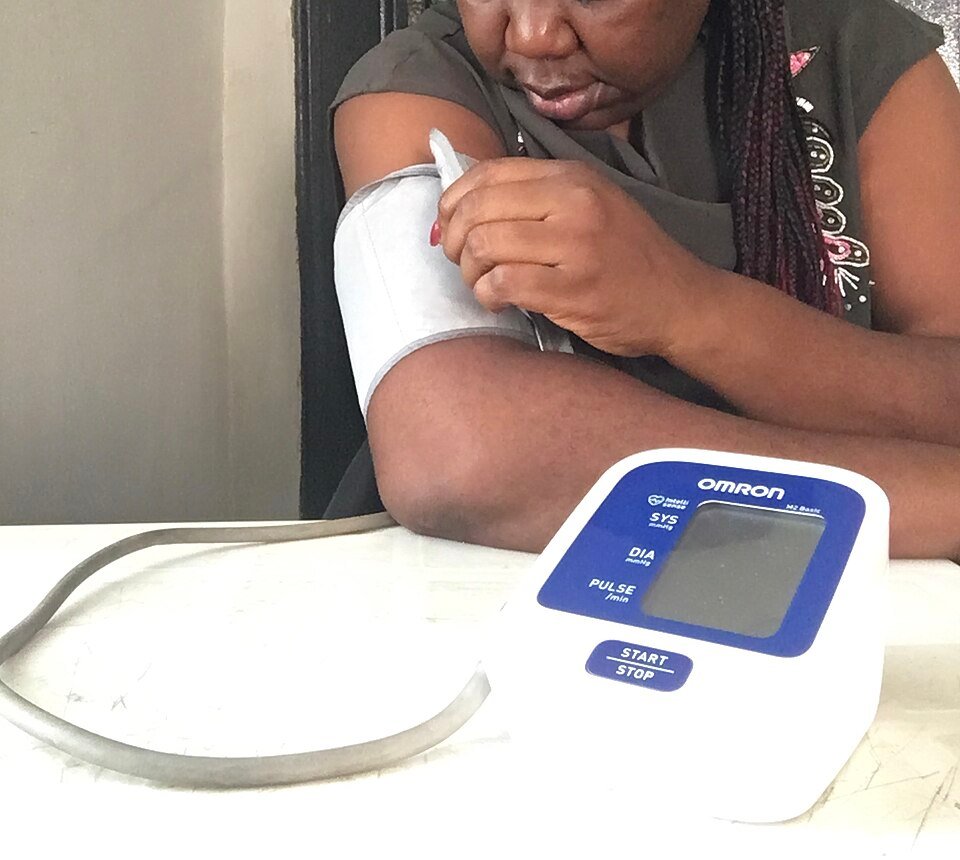
Blood pressure is the force of that blood against the artery walls, and it is written as two numbers in millimeters of mercury (mm Hg). The top number, systolic pressure, is the pressure when the heart beats; the bottom number, diastolic pressure, is the pressure between beats. High blood pressure is when these numbers stay above healthy levels over time, not just briefly during exercise or stress.
The World Health Organization (WHO) estimates that about 1.4 billion adults aged 30–79 had hypertension in 2024, roughly a third of people in that age range, up from 650 million in 1990. About 600 million of them (44%) were unaware of it, and only about 320 million (23%) had their blood pressure under control.
Source: WHO
In the United States, the CDC reports that 48.1% of adults (about 120 million people) have high blood pressure or take medicine for it (2017–March 2020 survey data) and that only about 1 in 4 of them has it under control. High blood pressure was a primary or contributing cause in 680,179 US deaths in 2024; the American College of Cardiology (ACC) puts prevalence at 46.7%.
Source: CDC, American College of Cardiology
High blood pressure readings and categories
Where high blood pressure begins depends on the guideline. US guidelines from the American Heart Association (AHA) and ACC, updated in 2025 with unchanged categories, call 130/80 mm Hg and above hypertension. The WHO defines hypertension as 140/90 mm Hg or higher on two different days. In the UK, the NHS says high blood pressure is usually diagnosed at 140/90 or higher when measured by a health professional, or 135/85 or higher when measured at home.
Source: American College of Cardiology, WHO, NHS
The table below shows the US categories used by the AHA/ACC, the CDC and the US National Heart, Lung, and Blood Institute (NHLBI).
| Category (US) | Systolic (top), mm Hg | Diastolic (bottom), mm Hg | What it usually means |
|---|---|---|---|
| Normal | Less than 120 | and less than 80 | Keep healthy habits and recheck regularly |
| Elevated | 120–129 | and less than 80 | A risk factor for hypertension; lifestyle changes |
| Stage 1 hypertension | 130–139 | or 80–89 | Lifestyle changes; medicine depending on overall risk |
| Stage 2 hypertension | 140 or higher | or 90 or higher | Lifestyle changes plus medicine, often two drugs |
| Severe hypertension / crisis | Higher than 180 | and/or higher than 120 | Call your doctor now; call emergency services if you have symptoms |
Source: CDC, NHLBI, American College of Cardiology
Treatment targets also differ. The 2025 AHA/ACC guideline aims for below 130/80 mm Hg for adults on medicine. The WHO recommends a target below 140/90 mm Hg for most people, and below 130/80 mm Hg for those with cardiovascular disease, diabetes, chronic kidney disease or high cardiovascular risk. Your doctor will set a personal target.
Source: American College of Cardiology, WHO
High blood pressure symptoms: why it is called silent
Most people with high blood pressure feel completely well. The NHS states that high blood pressure does not usually cause any symptoms, and the NHLBI notes that symptoms usually appear only after it has caused serious health problems.
Symptoms are more likely when blood pressure is very high, usually 180/120 mm Hg or higher. The WHO lists severe headaches, chest pain, dizziness, difficulty breathing, nausea and vomiting, blurred vision or other vision changes, anxiety, confusion, buzzing in the ears, nosebleeds and an abnormal heart rhythm.
Source: WHO
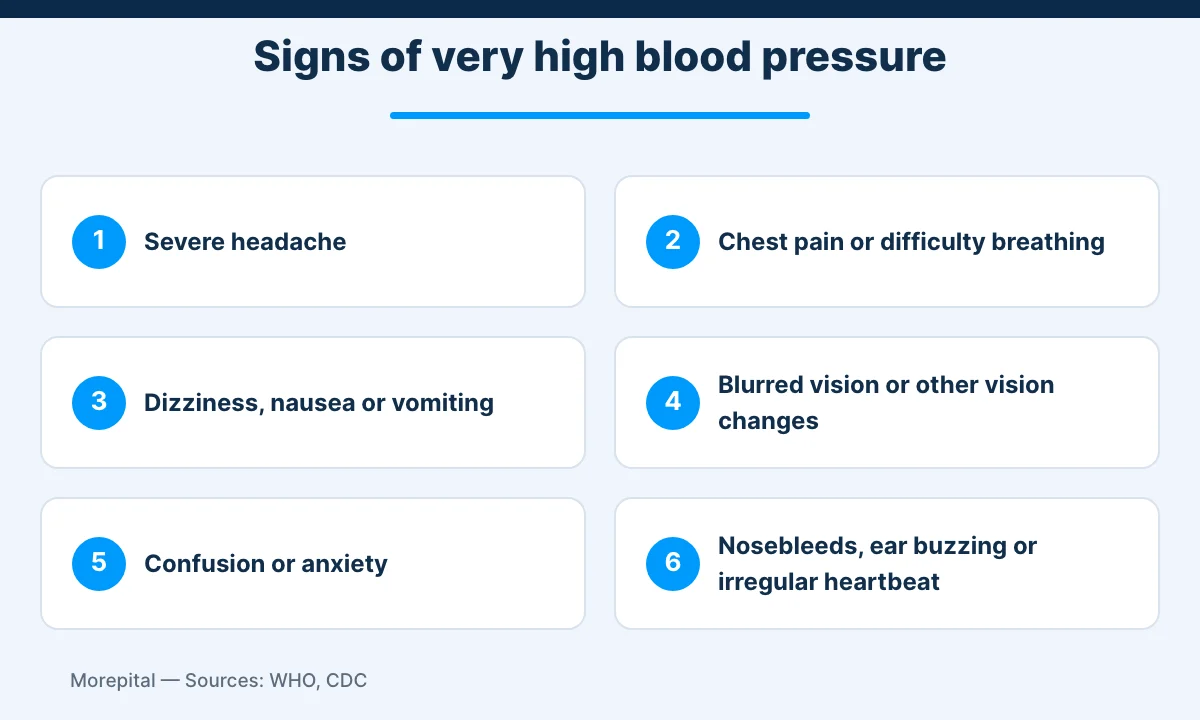
These signs cannot diagnose or rule out high blood pressure. With a very high reading, treat them as urgent (see when to get help); if you often get headaches or blurred vision, get checked.
Causes and risk factors of high blood pressure
In most adults, high blood pressure has no single cause. Cleveland Clinic describes this common form, primary hypertension, as the result of many factors such as aging, genetics and family history acting together, and it tends to develop gradually. Blood vessels thicken and stiffen with age, which is one reason blood pressure tends to rise over the years.
Source: Cleveland Clinic, NHLBI
Risk factors you cannot change
- Age: the risk rises with age; the WHO lists age over 65 as a risk factor.
- Family history and genes: hypertension often runs in families, and sensitivity to salt can run in families too.
- Ethnicity: the NHS lists Black African, Black Caribbean and South Asian backgrounds as higher risk. In the US, the CDC reports high blood pressure in 59.6% of non-Hispanic Black adults.
- Sex: men are more likely to develop it through middle age, while women are more likely to develop it at older ages.
Risk factors you can change
- A diet high in salt (sodium) and low in potassium, and too few fruits and vegetables
- Too little physical activity
- Overweight and obesity
- Drinking too much alcohol; smoking, vaping and other tobacco or nicotine use
- Long-term stress and poor-quality sleep
- Stimulant drugs such as cocaine and methamphetamine
Medical conditions and medicines
When a condition or substance causes high blood pressure, doctors call it secondary hypertension, and it often appears over a shorter period. Causes include chronic kidney disease, narrowing of the kidney arteries (renal artery stenosis), obstructive sleep apnea, thyroid problems, metabolic syndrome and some tumors. Some medicines can raise blood pressure, including certain antidepressants, decongestants, hormonal birth control pills, immunosuppressants and non-steroidal anti-inflammatory drugs (NSAIDs) such as ibuprofen. Type 2 diabetes is a major companion risk factor: both conditions damage blood vessels, and the 2025 US guideline notes that people with type 2 diabetes, obesity or kidney disease often need more than one drug to reach their target.
Source: Cleveland Clinic, NHLBI, American College of Cardiology
Types of hypertension, including in pregnancy
Doctors describe several patterns of high blood pressure:
- White coat hypertension: readings are high in a clinic, often because of anxiety, but normal at home.
- Masked hypertension: the opposite, normal in the clinic but high at home.
- Isolated systolic hypertension: the top number is 130 or higher while the bottom number is below 80; it becomes more common with age as arteries stiffen.
- Resistant hypertension: blood pressure stays high despite at least three medicines, or needs at least four to control.
Source: Cleveland Clinic
High blood pressure in pregnancy
During pregnancy, hypertension is diagnosed at 140/90 mm Hg or higher on two readings at least 4 hours apart, and 160/110 mm Hg or higher counts as severe. Chronic hypertension predates pregnancy or is found before 20 weeks; gestational hypertension starts after 20 weeks. Preeclampsia, which usually develops after 20 weeks and can involve protein in the urine or other signs of organ damage, affects about 2% to 8% of pregnancies and is one of the leading causes of pregnancy-related death. Warning signs include a headache that will not go away, vision changes, upper stomach pain, nausea or vomiting, swelling of the face or hands, sudden weight gain and trouble breathing.
Source: CDC
The 2025 US guideline advises people with high blood pressure who are pregnant or planning a pregnancy to discuss low-dose aspirin (81 mg a day) with their doctor to reduce preeclampsia risk, and recommends at least yearly blood pressure checks after a pregnancy complicated by hypertension. Some blood pressure medicines are not safe in pregnancy, so review prescriptions before conceiving.
Source: American College of Cardiology, NHLBI
How high blood pressure is diagnosed and measured at home
A check is quick: an inflatable cuff goes around your upper arm. One high reading is not enough for a diagnosis. Cleveland Clinic explains that doctors look for high readings at two separate visits, with at least two readings each time, and the WHO also requires readings on two different days. The NHS may also use home monitoring or a 24-hour portable (ambulatory) monitor, which helps reveal white coat and masked hypertension.
Source: Cleveland Clinic, WHO, NHS
The NHS recommends a check for anyone aged 40 or over who has not had one in more than 5 years, and for anyone who thinks they may be at risk; many pharmacies offer checks. The NHLBI suggests checking at least once a year. The 2025 US guideline also recommends a urine albumin-to-creatinine test, a check for kidney damage, for everyone with high blood pressure.
Source: NHS, NHLBI, American College of Cardiology
How to measure your blood pressure at home
Home monitoring is recommended to help confirm a diagnosis and track progress. To get accurate numbers, the CDC advises:
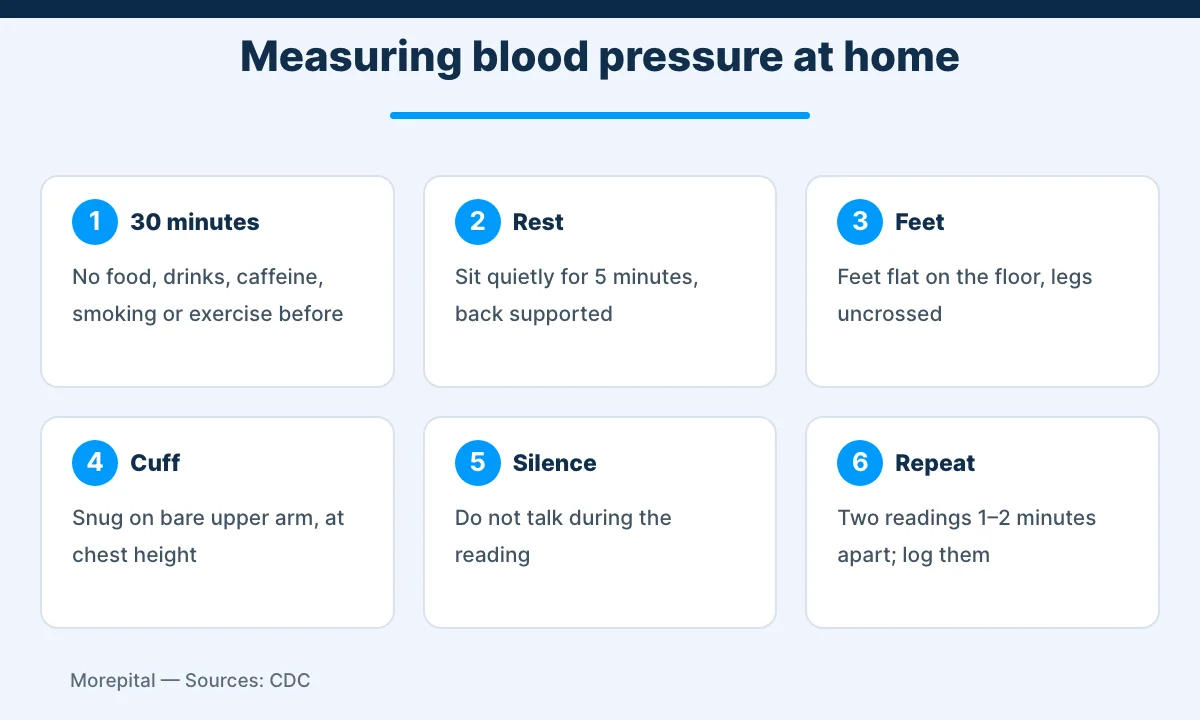
- Do not eat, drink, smoke, have caffeine or alcohol, or exercise for 30 minutes before measuring, and empty your bladder first.
- Sit quietly for at least 5 minutes in a chair with your back supported, feet flat on the floor and legs uncrossed.
- Rest your arm on a table so the cuff, placed snugly on your bare upper arm, sits at chest height. Do not talk during the reading.
- Take at least two readings 1 or 2 minutes apart, at the same time each day, and write them down in a log to share with your doctor.
Source: CDC, American College of Cardiology
Complications of untreated high blood pressure
According to the WHO, the CDC and Cleveland Clinic, the main consequences of uncontrolled high blood pressure include:
- Heart: coronary artery disease, angina, heart attack, heart failure and irregular rhythms such as atrial fibrillation.
- Brain: stroke, from blocked or burst arteries, and a higher risk of cognitive decline and dementia, especially when hypertension starts in midlife.
- Kidneys: chronic kidney disease, for which high blood pressure is a leading cause, and kidney failure.
- Eyes: hypertensive retinopathy, which can lead to vision loss.
- Blood vessels and sexual health: peripheral artery disease and erectile dysfunction.
Source: WHO, CDC, Cleveland Clinic
The NHS notes that even a small reduction in blood pressure can lower these risks, and the 2025 US guideline recommends early treatment partly to lower the risk of cognitive decline.
Source: NHS, American College of Cardiology
Lowering high blood pressure with lifestyle changes
Lifestyle changes are recommended for everyone with high blood pressure, whether or not they take medicine. Keep them up after starting tablets.
Source: American College of Cardiology, NHLBI
Cut salt and follow the DASH pattern
The WHO advises avoiding too much salty food and trying to stay under 2 grams a day. The 2025 US guideline recommends less than 2,300 mg of sodium a day, moving toward an ideal limit of 1,500 mg. The NHLBI’s DASH eating plan (Dietary Approaches to Stop Hypertension) is built around vegetables, fruits, whole grains, low-fat dairy, fish, poultry, beans, nuts and vegetable oils, while limiting fatty meats, full-fat dairy, tropical oils, sugary drinks and sweets. In DASH, cutting sodium to 1,500 mg a day lowers blood pressure more than 2,300 mg.
Source: WHO, American College of Cardiology, NHLBI
Move more
The WHO recommends at least 150 minutes a week of moderate aerobic activity or 75 minutes of vigorous activity, plus strength exercises on 2 or more days a week. The NHS gives the same 150-minute target for high blood pressure. Sitting less also helps.
Reach a healthier weight
For adults with overweight or obesity, the 2025 US guideline sets an initial goal of losing at least 5% of body weight; for someone weighing 90 kg (198 lb), that is about 4.5 kg (10 lb). It also says GLP-1 medicines may be considered for some people with overweight or obesity.
Source: American College of Cardiology
Limit alcohol, stop smoking and manage stress
The US guideline says no alcohol is ideal and, for those who drink, no more than two drinks a day for men and one for women; the NHS advises no more than 14 units a week. Stopping smoking, good sleep and managing stress with exercise, meditation or yoga also help.
Source: American College of Cardiology, NHS, NHLBI
Blood pressure medicines
Many people with high blood pressure need medicine as well. In the UK, a GP usually prescribes it if blood pressure is very high, if you have a higher risk of heart attack or stroke, or if it stays high despite lifestyle changes. US doctors use the PREVENT calculator to estimate cardiovascular risk in adults aged 30 to 79. For stage 2 hypertension (140/90 mm Hg or higher) the guideline recommends starting two medicines at once, preferably in a single combination pill.
Source: NHS, American College of Cardiology
The main first-line groups are:
- ACE inhibitors (names often end in “-pril”), which keep blood vessels from narrowing; a dry cough is a known side effect in some people.
- Angiotensin II receptor blockers, or ARBs (names end in “-artan”), which work in a similar way and are often used if ACE inhibitors cause side effects.
- Calcium channel blockers (many end in “-pine”), which stop calcium entering heart and blood vessel muscle cells so the vessels relax.
- Thiazide-type diuretics (“water pills”), which help the body remove extra water and sodium.
Source: NHLBI, Blood Pressure UK, American College of Cardiology
Cleveland Clinic also lists beta-blockers among the drug classes used. Any blood pressure medicine can make you feel faint or dizzy when you stand up, especially at first. Do not stop your tablets on your own: blood pressure goes back up, and Cleveland Clinic warns that stopping suddenly can trigger a hypertensive emergency. If side effects bother you, ask about a lower dose or a different drug; never double up after a missed dose. Many people need two or more medicines to reach their target.
Source: Cleveland Clinic, Blood Pressure UK, NHLBI
When to see a doctor or get emergency help
See a doctor or pharmacist for a check if you are over 40 and have not been measured recently, if you have risk factors such as diabetes, obesity or a family history, or if your home readings are often at or above your guideline threshold. Anyone with diabetes symptoms such as strong thirst and frequent urination should also have their blood pressure checked, since diabetes and high blood pressure often occur together.
A reading higher than 180/120 mm Hg is severe. If you have no symptoms, the CDC advises calling your health care professional. If the high reading comes with chest pain, shortness of breath, back pain, numbness, weakness, a change in vision or difficulty speaking, it may be a hypertensive emergency: call 911 in the US or your local emergency number. The NHS says to call 999 for sudden chest pain that does not go away, pain spreading to the arm, neck, jaw, stomach or back, or chest pain with sweating, sickness, light-headedness or breathlessness, and not to drive yourself to hospital. In pregnancy, a reading of 160/110 mm Hg or higher needs prompt medical attention.
High blood pressure: frequently asked questions
What is a normal blood pressure?
Under US guidelines, normal blood pressure is a systolic pressure below 120 mm Hg and a diastolic pressure below 80 mm Hg. Readings of 120–129 with a bottom number under 80 are called elevated.
Source: CDC, American College of Cardiology
Can high blood pressure be controlled?
Yes. Lifestyle changes and, when needed, medicines can control it, and even a small reduction lowers the risk of heart attack, stroke and kidney disease. Many people need two or more medicines, and doctors adjust the dose or drug over time.
Does high blood pressure cause headaches?
Usually not. Most people with high blood pressure have no symptoms. Severe headaches are more typical of very high blood pressure, around 180/120 mm Hg or above, and need urgent assessment if they occur with such a reading.
Can I stop my blood pressure tablets once my readings are normal?
No, not without talking to your doctor. Normal readings usually mean the medicine is working; stopping it lets blood pressure rise again and, in some cases, can cause a dangerous spike.
Source: Blood Pressure UK, Cleveland Clinic
Does coffee raise blood pressure?
Caffeine can raise a reading in the short term, which is why the CDC advises avoiding it for 30 minutes before measuring. The NHS also lists cutting down on caffeine from coffee, tea and cola among the lifestyle changes for high blood pressure.
Is high blood pressure in young adults a concern?
Yes. High blood pressure can occur at any age, and the risk is rising in children and teens, possibly because more of them have overweight or obesity. Midlife hypertension is also linked to a higher dementia risk later.
Disclaimer: this article is for general health education and does not replace advice from a qualified doctor who can assess your individual case. Last updated: October 2026.