
Tummy tuck in Turkey means having an abdominoplasty, an operation that removes excess abdominal skin and fat and usually repairs weakened or separated muscles, at a Turkish hospital and then flying home. It suits healthy non-smokers at a stable weight who are not planning a pregnancy, and it is not a weight-loss method. Before booking a tummy tuck in Turkey, check the surgeon’s credentials, plan at least 7 to 10 days before flying, and arrange follow-up care at home.
Source: NHS, ASPS, NHS (abroad)
Contents
- What a tummy tuck in Turkey involves
- Full, mini and extended tummy tuck
- Who is a good candidate?
- What happens on the day of surgery
- Recovery after a tummy tuck in Turkey
- Tummy tuck in Turkey: risks
- Choosing a surgeon and hospital in Turkey
- Planning the trip step by step
- Aftercare and results at home
- Frequently asked questions
What a tummy tuck in Turkey involves
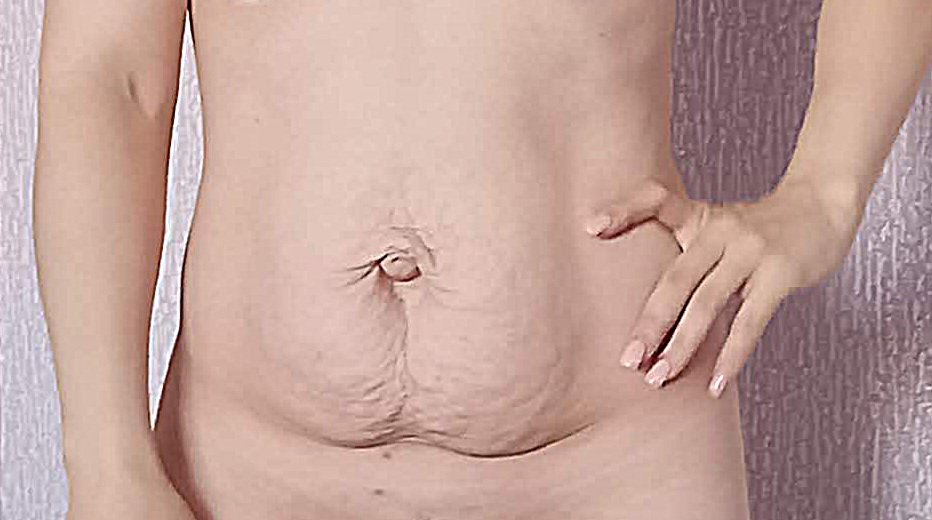
An abdominoplasty improves the shape of the abdomen by removing loose skin and fat and, in most cases, tightening the abdominal muscles. It is mainly meant for skin that diet and exercise cannot shift, such as after pregnancy or major weight loss. Stretch marks on the skin that is cut away disappear with it, but the operation cannot remove stretch marks elsewhere.
Clinically, a tummy tuck in Turkey is the same operation performed in the UK, Europe or the US. What changes is logistics: consultation, surgery and first check-ups are squeezed into one trip, and later problems may be managed by a doctor at home. Our tummy tuck treatment guide covers the operation itself; this article focuses on the decisions that matter when you travel.
Source: NHS (abroad), CDC
Because it is cosmetic, the procedure is not usually available on the NHS, and the NHS quotes a UK private price of about £5,000 to £10,000 plus consultations and follow-up. Lower prices drive much of the interest in a tummy tuck in Turkey, but the NHS advises weighing any saving against the risks, as safety standards and follow-up arrangements abroad may differ.
Source: NHS, NHS (abroad)
Full, mini and extended tummy tuck techniques
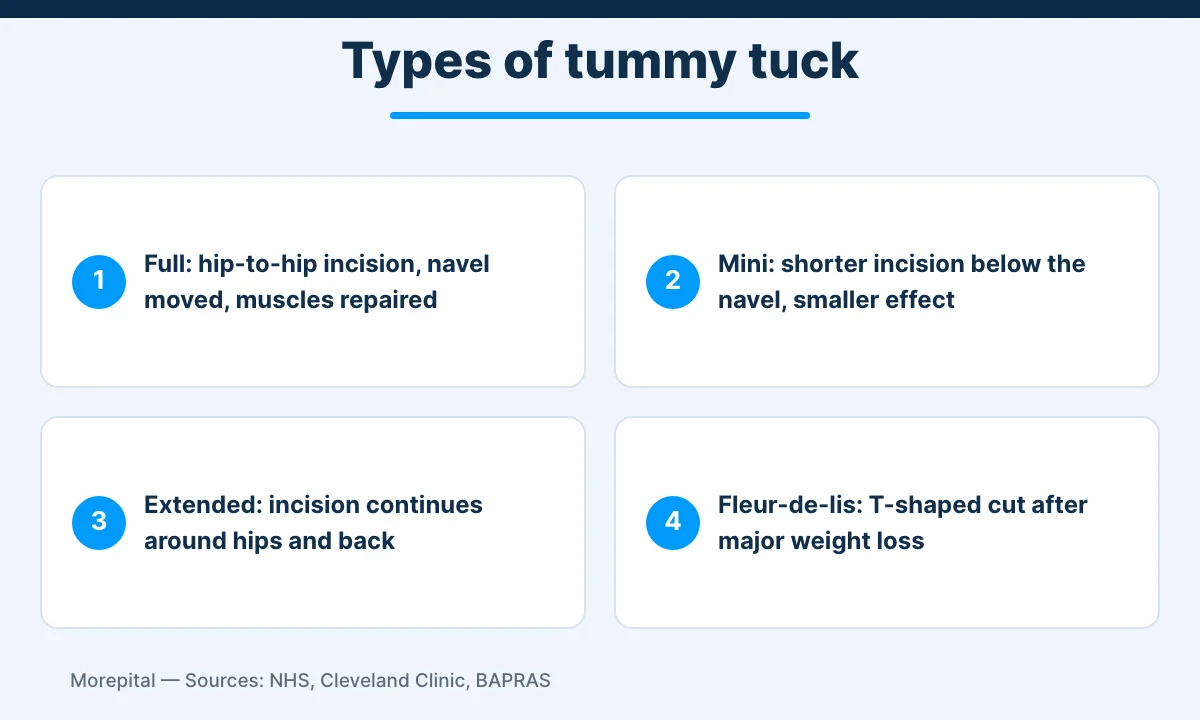
Surgeons offering a tummy tuck in Turkey use the same standard techniques. The right one for your tummy tuck in Turkey depends on how much loose skin you have, where it sits and whether the muscles need repair.
Source: Cleveland Clinic, BAPRAS
Full (complete) tummy tuck
A full tummy tuck uses a long horizontal incision from hip to hip above the pubic area, plus a second cut around the belly button. The surgeon lifts the skin, repairs the muscles, removes the excess skin and fat, and brings the navel out through a new opening. It leaves a long low scar and a circular scar around the belly button.
Mini (partial) tummy tuck
A mini tummy tuck removes a smaller wedge of skin and fat below the belly button through a shorter incision, usually without cutting around the navel. It leaves a smaller scar, but the effect is also smaller, so a mini tummy tuck in Turkey only suits people whose loose skin is limited to the lower abdomen.
Source: Cleveland Clinic, BAPRAS
Extended and fleur-de-lis techniques
An extended (circumferential) tummy tuck continues the incision around the sides and back to treat the hips and love handles. A fleur-de-lis tummy tuck adds a vertical incision to the horizontal one, forming a “T”; Cleveland Clinic says it is reserved for people who have lost about 100 pounds (45 kg) or more.
Source: Cleveland Clinic
Tummy tuck vs liposuction
Liposuction removes fat through small incisions but does not tighten loose skin or repair muscle. Surgeons sometimes combine the two during a tummy tuck in Turkey to refine the waist; see our liposuction guide for how fat removal alone compares. As the risk section explains, combining procedures raises the complication rate.
Source: MedlinePlus, BAPRAS, Cleveland Clinic
Who is a good candidate for a tummy tuck in Turkey?
The criteria for a tummy tuck in Turkey are the same as in any country. You may be a good candidate if you are physically healthy, at a stable weight, a non-smoker, bothered by the appearance of your abdomen and have realistic expectations.
Source: ASPS, Cleveland Clinic
- Weight: the NHS and BAPRAS say the operation is meant for people at a healthy or normal weight, not for those who are overweight. If you have obesity, our page on obesity explains medical and surgical weight-loss options that usually come first.
- Future pregnancy: postpone surgery if you may become pregnant, because the repaired muscles and skin can stretch again; BAPRAS advises that people thinking about pregnancy should not have a full abdominoplasty.
- Planned weight loss: large later weight changes can greatly reduce the result, so ASPS advises waiting until your weight has settled.
- Smoking: smoking slows healing and raises the risk of blood clots. Cleveland Clinic gives an example of stopping at least 1 month before and 2 weeks after surgery; your surgeon sets the exact period.
Source: NHS, BAPRAS, Cleveland Clinic
Muscle separation after pregnancy
Many women considering a tummy tuck in Turkey have diastasis recti, a separation of the “six-pack” muscles that makes the belly bulge. Cleveland Clinic estimates that about 6 in 10 women have it after childbirth. Targeted physical therapy is the first-line treatment, and surgery is generally reserved for people with an umbilical hernia or those who want an abdominoplasty, so ask about exercise first if the gap is your main concern.
Source: Cleveland Clinic
Be honest about your medical history during the consultation for a tummy tuck in Turkey. BAPRAS notes that surgeons will ask about smoking, alcohol, medicines and any previous clots in the legs or lungs, and Cleveland Clinic says conditions affecting circulation or wound healing raise the risk of complications.
Source: BAPRAS, Cleveland Clinic
What happens on the day of surgery
A tummy tuck in Turkey is usually done under general anesthesia, although ASPS notes that intravenous sedation is sometimes used. The NHS says the operation takes 2 to 5 hours; MedlinePlus gives 2 to 6 hours and Cleveland Clinic 1 to 5 hours, depending on the technique and any added procedures.
Source: NHS, MedlinePlus, Cleveland Clinic
- A horizontal incision is made between the pubic hairline and the belly button; its length depends on how much skin must go.
- The abdominal skin is lifted and the weakened or separated muscles are stitched together.
- The upper skin is pulled down, the excess is trimmed, and a new opening is made for the belly button.
- Small drains may be placed to remove fluid, and the wounds are closed with stitches, skin adhesive, tapes or clips.
Source: ASPS, Cleveland Clinic, MedlinePlus
How long you stay in hospital varies, and sources differ. The NHS says most people stay a few nights, MedlinePlus gives 1 to 3 days and BAPRAS 2 to 3 days for a full abdominoplasty, while Cleveland Clinic describes it as usually an outpatient operation. For a tummy tuck in Turkey, ask in writing how many nights in hospital are included and who decides when you are fit to leave.
Source: NHS, MedlinePlus, BAPRAS
Recovery timeline after a tummy tuck in Turkey
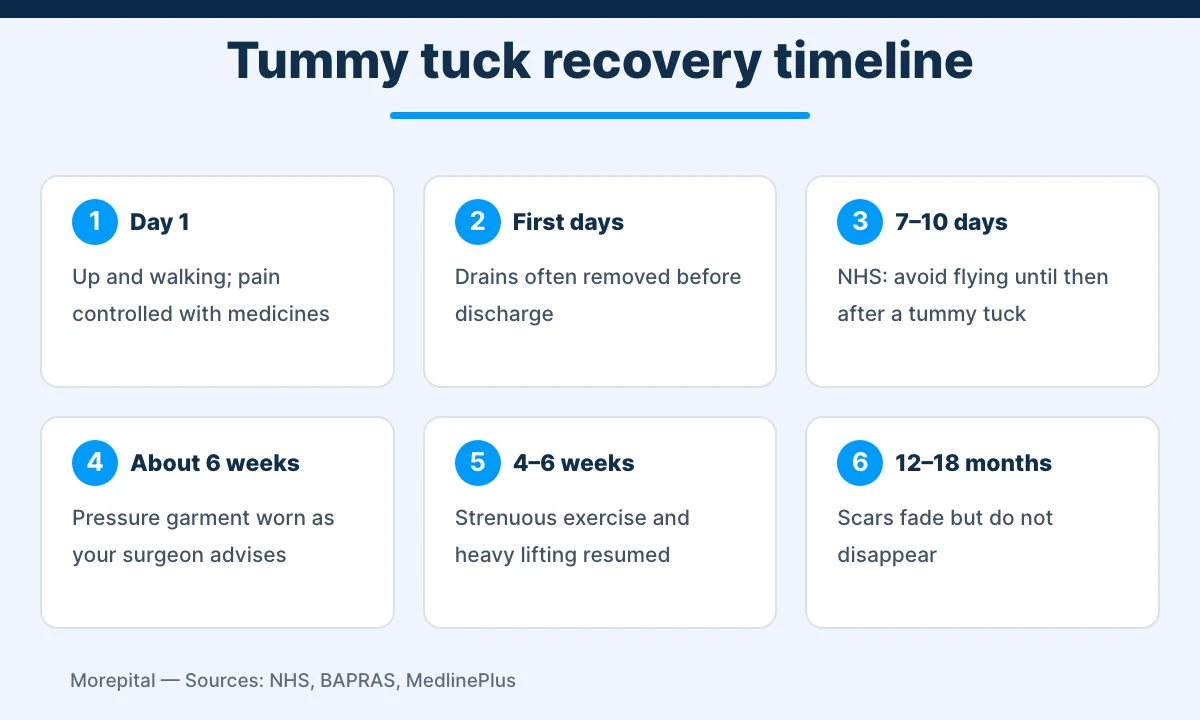
Recovery is the part of a tummy tuck in Turkey that shapes your travel plans most. Expect pain, bruising and difficulty standing fully upright at first. You leave with dressings and a pressure garment, and the NHS advises sleeping with your knees bent to protect the stitches. Someone should take you back to your hotel and stay with you for the first 24 hours.
| Time after surgery | What usually happens |
|---|---|
| Day 1 | Walking starts; BAPRAS says patients are mobile from day one |
| First days | Pain controlled with medicines; drains often removed before discharge |
| 1–2 weeks | Standing straighter; NHS advises no flying for 7–10 days |
| 2–6 weeks | Return to desk work (sources range from 1 to 6 weeks); pressure garment worn |
| 4–6 weeks | Strenuous exercise and heavy lifting usually resumed |
| 3–18 months | Swelling settles over months; scars fade over 12–18 months |
Source: BAPRAS, NHS, NHS (abroad)
Time off work and the pressure garment
Advice on work varies widely: Cleveland Clinic says at least 1 week on average, MedlinePlus 2 to 4 weeks, and the NHS and BAPRAS about 4 weeks or more. The NHS suggests wearing a corset or tummy-control pants for about 6 weeks, while MedlinePlus mentions 2 to 3 weeks of an elastic support garment, so follow your own surgeon’s instructions. Driving is not advised for a few weeks; check with your surgeon and insurer.
Source: Cleveland Clinic, MedlinePlus, NHS
When to fly home
Surgery and air travel each raise the risk of a blood clot. The NHS advises avoiding flying for 7 to 10 days after a tummy tuck, and the CDC says waiting 10 to 14 days after major surgery reduces risk. For most people planning a tummy tuck in Turkey, that means a stay of around 10 days or more, which should include a final wound check by the operating team before you leave.
Source: NHS (abroad), CDC
Tummy tuck in Turkey: risks and complications
Abdominoplasty carries more risk than many cosmetic procedures. In a study of nearly 25,000 abdominoplasties in the US CosmetAssure insurance database (Winocour and colleagues, 2015), about 4% of patients had a major complication, compared with 1.4% after other cosmetic operations. Hematoma (a collection of blood) was most common, followed by infection, blood clots and lung problems.
Source: Winocour et al. (ASPS)
The same study found the rate was 3.1% for abdominoplasty alone but up to 10.4% when it was combined with other body contouring and liposuction. Combined procedures, male sex, age 55 or older, obesity and surgery in a hospital or surgical center rather than an office suite were linked to higher risk. This matters because a tummy tuck in Turkey is often booked together with other procedures.
Source: Winocour et al. (ASPS)
Common and less common problems
After a tummy tuck in Turkey or anywhere else, expected effects include pain, swelling, bruising and numbness of the lower abdomen that can last months or years. Other risks listed by ASPS and the NHS include fluid collection (seroma), poor wound healing, skin loss, fat necrosis, bleeding, infection, deep vein thrombosis, uneven contours or “dog ears,” unfavorable scarring and a result that needs revision surgery.
What studies of cosmetic tourism show
No reliable figures compare outcomes in Turkey with outcomes at home, but studies of patients treated after surgery abroad show which problems tend to come back with them. In a systematic review of 214 US patients treated for complications of cosmetic surgery abroad, abdominoplasty was the most common procedure (35.7%), infection the most common complication, and 36.8% needed hospital admission. Most of those patients had traveled to the Dominican Republic, not Turkey.
Source: McAuliffe et al.
In another US series of 57 emergency patients, abdominoplasty was involved in 70% of cases; wound breakdown (33%), seroma (32%) and infection (26%) were most common, and 10.5% needed another operation. The UK Foreign Office says it is aware of 7 British nationals who died in Turkey in 2025 after medical procedures, and that some others needed further treatment.
Source: Long et al., GOV.UK (FCDO)
Warning signs that need urgent care
Before surgery, ask which warning signs to report, such as signs of infection, a wound that opens, fluid building up or symptoms of a blood clot, and whom to call day and night, both in Turkey and after you return home. Blood clots in the legs or lungs need months of blood-thinning treatment and lung clots can be serious, so do not wait to seek help.
Choosing a surgeon and hospital for a tummy tuck in Turkey
The British Association of Aesthetic Plastic Surgeons (BAAPS) and the Turkish Society of Plastic, Reconstructive and Aesthetic Surgeons (TSPRAS) issued joint guidance for UK patients considering surgery in Türkiye. Its main checks are:
- The surgeon is a TSPRAS member (searchable online) and holds Turkish board certification you can see on request; EBOPRAS membership is desirable.
- The surgeon has practiced plastic, reconstructive and aesthetic surgery for at least 5 years and is operating within their own specialty.
- Surgery takes place in a fully recognized hospital, which the statement suggests means at least 30 beds.
- If you book through a company, the surgeon has worked with it for at least 3 years.
- You know the surgeon’s name and how to contact them, receive an aftercare plan and complete a full consent form before you travel.
Source: BAAPS/TSPRAS
The UK government also advises checking the Turkish Ministry of Health’s list of approved providers on the Health Türkiye website. Facilities with an International Health Tourism Authorization Certificate are authorized to treat international patients and are subject to government monitoring; the certificate shows a provider is authorized, not that every outcome is guaranteed.
Source: GOV.UK (FCDO), Health Türkiye
Questions to ask before you book
- Which type of tummy tuck do you recommend for me, and why?
- How many of these operations do you perform, and what are your complication and revision rates?
- Will you repair the muscles, and will drains be used?
- How many nights in hospital and in a hotel are included, and when can I fly?
- Who treats a complication after I return home, and who pays?
- Can I see before-and-after photos of your own patients?
Source: NHS, NHS (abroad), ASPS
When comparing offers for a tummy tuck in Turkey, be wary of pressure to decide quickly, a hard sell, little information about complications or no mention of aftercare; the NHS lists these as warning signs. CDC notes that accreditation helps but does not guarantee a good outcome.
Source: NHS (checklist), CDC
Planning the trip step by step
The NHS recommends two consultations with your surgeon before any cosmetic operation and a 2-week cooling-off period, which is the UK norm. Do not book a package without having met the surgeon, and do not pay for a hospital or surgeon you have not seen.
Source: NHS (abroad)
- See your own doctor first: discuss your plans for a tummy tuck in Turkey and medical history with your GP or family doctor, ideally 4 to 6 weeks before departure, as the CDC advises for medical travel.
- Insurance: standard travel insurance usually does not cover problems arising from surgery; check what cover the clinic and surgeon hold and whether it includes you, and look for medical evacuation cover.
- Medical records: carry your records, allergy list and medicines, and bring home a copy of the operation notes, translated into English if needed.
- Rest, not a holiday: a holiday before surgery is fine, but afterward avoid alcohol, sunbathing, sightseeing and swimming.
- Budget: when pricing a tummy tuck in Turkey, include extra nights, flights and possible return trips for revision.
Source: NHS (abroad), CDC, NHS (checklist)
If you have read our guides to rhinoplasty in Turkey or a hair transplant in Turkey, the same planning logic applies, but a tummy tuck in Turkey needs a longer stay because of the larger wound and the higher clot risk.
Source: NHS (abroad)
Aftercare and results at home
After a tummy tuck in Turkey, book a check-up with your own doctor or a local plastic surgeon soon after you return, and bring your operation notes. The NHS points out that a UK surgeon is responsible for treating complications of their own surgery, but this is not guaranteed when you have had surgery abroad, so agree in advance how remote follow-up will work.
Source: NHS (abroad), CDC
Keep wearing the pressure garment for as long as your surgeon advises, avoid heavy lifting and strenuous exercise for about 4 to 6 weeks, and protect the scar from the sun. Scars are usually red and raised at first, then change over about 6 months and fade toward white over 12 to 18 months, although some stay thick or widened.
Source: NHS, BAPRAS, MedlinePlus
ASPS says most people stand fully upright within a week or two, but swelling hides the final shape for months; Cleveland Clinic puts the final result at up to 3 months. The removed skin and fat do not return, so results are long-lasting, but pregnancy or significant weight gain can stretch the abdomen again. A stable weight, healthy eating and regular exercise help keep the result.
Source: ASPS, Cleveland Clinic, ASPS
Considering a tummy tuck in Turkey? Contact us for a free consultation and a treatment plan tailored to you.
Tummy tuck in Turkey: frequently asked questions
How long should I stay for a tummy tuck in Turkey?
Plan for at least 7 to 10 days, the period the NHS advises avoiding flights after a tummy tuck. The CDC suggests 10 to 14 days after major surgery to reduce clot risk.
Source: NHS (abroad), CDC
Is a tummy tuck in Turkey safe?
Any abdominoplasty carries real risks, about 4% major complications in a large US database. Safety abroad depends on the surgeon’s training, the hospital and the aftercare, so check credentials using the BAAPS and TSPRAS criteria.
Source: Winocour et al. (ASPS), BAAPS/TSPRAS
Can I combine liposuction with a tummy tuck in Turkey?
It is possible, but combined procedures were a key risk factor in the Winocour study, with complication rates up to 10.4%. Discuss whether staging the operations would be safer for you.
Source: Winocour et al. (ASPS)
Can I have a tummy tuck before having more children?
Surgeons advise waiting, because pregnancy can stretch the repaired muscles and skin again and undo much of the result.
Will a tummy tuck in Turkey help me lose weight?
No. It reshapes the abdomen and is meant for people already at a healthy, stable weight. It is not a substitute for weight loss or exercise.
Will the scar from a tummy tuck in Turkey be visible?
A full tummy tuck leaves a long low scar, placed where clothing can hide it when possible, and a scar around the belly button. It fades over 12 to 18 months but does not disappear.
Source: NHS, Cleveland Clinic
How do I check a clinic for a tummy tuck in Turkey?
Check the Ministry of Health’s approved-provider list on Health Türkiye, confirm the surgeon’s TSPRAS membership and board certification, and ask for a written aftercare plan.
Source: GOV.UK (FCDO), Health Türkiye, BAAPS/TSPRAS
Disclaimer: this article is for general health education and does not replace advice from a qualified doctor who can assess your individual case. Last updated: October 2026.