
Premature ejaculation
Early ejaculation (rapid ejaculation, PE)
Premature ejaculation is a common male sexual dysfunction in which a man ejaculates sooner than he or his partner wants, usually within about one minute of penetration (lifelong form) or after a clear drop to about three minutes or less (acquired form), with little control and personal distress. It is treatable with behavioral techniques, counseling, topical anesthetics and medicines such as SSRIs.
Source: Sexual Medicine (PMC), NHS, Cleveland Clinic
- What is premature ejaculation?
- How common is premature ejaculation?
- Symptoms
- Types of premature ejaculation
- Causes and risk factors
- How premature ejaculation is diagnosed
- Treatment options
- Complications and impact
- Prevention and living with premature ejaculation
- When to see a doctor
- FAQ
- Sources
What is premature ejaculation?
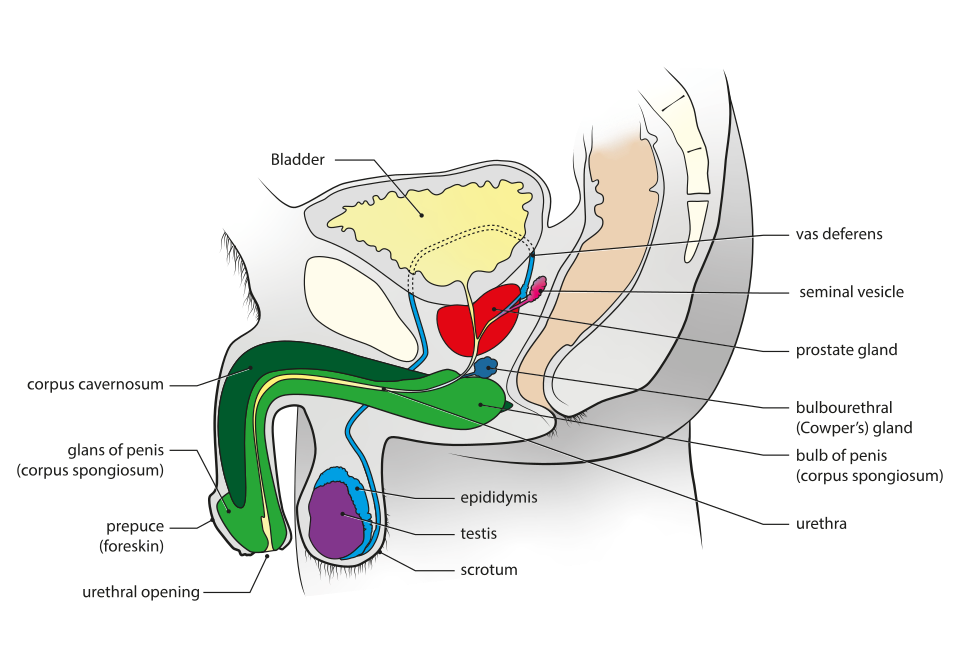
Premature ejaculation (PE) means reaching orgasm and ejaculating sooner than a man or his partner would like, often before penetration or very soon after it. It is the most common sexual complaint in men, and it is a medical condition that can be treated, not a personal failing. An occasional quick climax is normal and is not a reason for concern on its own; the condition becomes worth treating when it happens regularly and causes difficulty or distress.
Source: Cleveland Clinic, NHS
The International Society for Sexual Medicine (ISSM) uses a three-part definition. First, ejaculation always or nearly always happens before or within about one minute of vaginal penetration (lifelong form), or there is a clear, bothersome drop in timing, often to about three minutes or less (acquired form). Second, the man is unable to delay ejaculation on all or nearly all occasions. Third, the problem has negative personal consequences such as distress, frustration or avoiding intimacy. A man who climaxes quickly but feels in control and is not bothered does not meet the definition.
Source: Sexual Medicine (PMC), ISSM
The ISSM authors point out that their definition was built from studies of vaginal intercourse, because there was not enough research on oral, anal or same-sex activity to set time limits for those situations. Many clinicians in everyday practice also describe premature ejaculation more simply as climaxing sooner than desired in a way that causes distress for one or both partners and has lasted for several months.
Source: Sexual Medicine (PMC), Cleveland Clinic
How common is premature ejaculation?
Estimates vary widely because studies have used different definitions. Cleveland Clinic notes that 30% to 40% of men experience premature ejaculation at some point and that about 1 in 5 men aged 18 to 59 report it. A large international survey cited by the ISSM committee found self-reported rates of roughly 30% across all age groups, while an Italian survey found that 21.2% of 12,558 men described themselves as having PE.
Source: Cleveland Clinic, Sexual Medicine (PMC)
When strict criteria are applied, the clinical disorder is much less common than the complaint. In one population study, overall PE was reported by 19.8% of men, but only 2.3% had the lifelong form and 3.9% the acquired form; the rest had variable or subjective PE. The ISSM committee estimates that acquired PE affects roughly 4% of sexually active men in the community. The European Association of Urology (EAU) notes that, unlike erectile dysfunction, premature ejaculation does not become more common with age.
Source: Sexual Medicine (PMC), EAU Guidelines
Symptoms
The core symptom is ejaculating earlier than wanted, most often before or soon after penetration. Clinicians also look at the associated features that turn a quick climax into a disorder:
- Ejaculation happens within about a minute of penetration (lifelong PE) or noticeably sooner than it used to (acquired PE).
- It happens during all or almost all sexual encounters, not just now and then.
- The man feels he has little or no control over the timing.
- It causes distress, embarrassment or frustration, or leads him to avoid sex.
- It has continued for a long time, commonly six months or more.
Source: Cleveland Clinic, Sexual Medicine (PMC)
Some men with premature ejaculation also have trouble getting or keeping an erection. This matters for treatment, because erectile dysfunction can itself drive a man to rush to climax before he loses his erection, and in that case the erection problem is usually treated first.
Source: Cleveland Clinic, EAU Guidelines
Types of premature ejaculation
Doctors usually divide the condition into four patterns. Only the first two are treated as true medical disorders under the ISSM definition.
| Type | What it means |
|---|---|
| Lifelong (primary) | Present from the first sexual experiences; ejaculation within about 1 minute of penetration on nearly every occasion. |
| Acquired (secondary) | Develops later in a man who previously had normal timing; latency often falls to about 3 minutes or less. |
| Variable | Early ejaculation only sometimes; seen as a normal variation rather than a disorder. |
| Subjective | The man feels he ejaculates too early although his timing is normal or even long; usually linked to psychological or cultural expectations. |
Source: Sexual Medicine (PMC), Medical Sciences (PMC)
The distinction is practical. Lifelong PE is thought to have a stronger biological basis, while acquired PE is more often tied to anxiety, relationship factors or another health problem and tends to respond better to behavioral treatment. Men with variable or subjective PE generally benefit more from information, reassurance and psychological support than from medicine.
Source: Sexual Medicine (PMC), Medical Sciences (PMC), EAU Guidelines
Causes and risk factors
No single cause explains every case, and premature ejaculation usually involves a mix of mind and body. It is rarely caused by a disease or infection of the penis itself.
Source: Cleveland Clinic
Psychological and relationship factors
Anxiety, especially worry about sexual performance, is the most common contributor. Stress, depression, low self-esteem and relationship problems also play a part. Performance anxiety is often worse with a new partner or after a long gap without sex. For lifelong PE, the NHS describes possible learned patterns, such as rushing during early masturbation to avoid being caught, a past traumatic sexual experience, or an upbringing with very strict attitudes toward sex.
Source: NHS, Cleveland Clinic
Biological and medical factors
Serotonin, a brain chemical, is the main messenger controlling the timing of ejaculation, which explains why medicines that raise serotonin levels can delay it. Lifelong PE has been linked to family history and possible genetic differences in this system. Other reported factors include:
- Erectile dysfunction, which often leads to acquired PE through performance anxiety
- Inflammation or infection of the prostate (prostatitis)
- Thyroid disorders, particularly an overactive thyroid
- Other hormone differences, including low prolactin
- Diabetes, metabolic syndrome, obesity and physical inactivity
- Recreational drug use and substance use disorders
- Unusually sensitive penile skin
Source: Medical Sciences (PMC), EAU Guidelines, NHS, Cleveland Clinic
The EAU also reports that premature ejaculation is not affected by marital status or income and is reported more often in some ethnic groups and regions, which suggests cultural expectations shape how men experience and report it.
Source: EAU Guidelines
How premature ejaculation is diagnosed
Diagnosis is based mainly on a conversation with a doctor, often a GP or a urologist. Expect questions about:
- How long it usually takes to ejaculate after penetration, and how long the problem has existed
- Whether it began with your first sexual experiences or developed later
- Whether it happens with every partner and during masturbation
- How much control you feel and how much it bothers you or your partner
- Any difficulty getting or keeping an erection
- Other health conditions, medicines, supplements, alcohol and drug use
Source: Cleveland Clinic, Medical Sciences (PMC)
The time from penetration to ejaculation is called the intravaginal ejaculatory latency time (IELT). In routine care, a man’s own estimate is considered enough; stopwatch timing is used mainly in research. IELT alone does not make the diagnosis, because control and distress matter as much as the number. For context, one multinational study found a median IELT of 5.4 minutes, with a very wide normal range.
Source: EAU Guidelines, Medical Sciences (PMC)
Doctors may use a short questionnaire such as the Premature Ejaculation Diagnostic Tool (PEDT); a score above 11 suggests PE. A physical examination is recommended to look for problems such as those linked to erectile dysfunction, but routine blood or laboratory tests are not needed unless the history points to an underlying condition such as a thyroid disorder or prostatitis.
Source: EAU Guidelines, Sexual Medicine (PMC), Cleveland Clinic
Treatment options
Premature ejaculation responds well to treatment, and most men improve with one approach or a combination. The choice depends on the type, the likely cause and personal preference. If erectile dysfunction or an infection such as prostatitis is present, it should be treated first; in men with acquired PE and bacterial prostatitis, antibiotics have been reported to lengthen latency and improve control.
Source: Cleveland Clinic, EAU Guidelines, Sexual Medicine (PMC)
Self-help measures
Simple steps that some men find useful include masturbating an hour or two before sex, using a thicker condom to reduce sensation, and choosing positions where the partner is on top so they can pause when climax is near.
Source: NHS
Behavioral techniques and pelvic floor exercises
The stop-start method involves stimulation until close to climax, stopping for about 30 seconds, then repeating several times. The squeeze method adds a firm squeeze of the head of the penis for about 30 seconds to reduce arousal. Pelvic floor exercises are also recommended by the ISSM. These techniques need practice and a cooperative partner; reviews report short-term success of up to 65%, but only about 25% of men maintain the benefit in the long term.
Source: Cleveland Clinic, ISSM, Medical Sciences (PMC)
Counseling and sex therapy
Psychosexual counseling, alone or with a partner, addresses performance anxiety, stress, depression and relationship difficulties, and teaches behavioral methods. The EAU recommends combining psychological or behavioral therapy with medicine for acquired PE. In one study, latency rose far more with dapoxetine plus psychosexual therapy than with dapoxetine alone over 24 weeks.
Source: NHS, EAU Guidelines, Medical Sciences (PMC)
Topical anesthetic sprays and creams
Numbing products containing lidocaine and prilocaine reduce penile sensitivity. A lidocaine-prilocaine spray is approved in Europe and is a first-line option for lifelong PE in EAU guidance. Creams usually take 10 to 30 minutes to work; they can transfer to a partner and numb them, so they should be washed off before sex or used with a condom, and couples trying to conceive should avoid them.
Source: EAU Guidelines, Cleveland Clinic, NHS
Medicines
- Dapoxetine (Priligy): a short-acting SSRI developed specifically for PE. It is taken 1 to 3 hours before sex, no more than once a day. Common side effects include nausea, diarrhea, headache and dizziness; fainting is rare, so blood pressure and heart rate are checked before starting. It is a first-line option for lifelong PE in Europe but is not available in every country.
- Daily SSRI antidepressants: paroxetine, sertraline, fluoxetine, citalopram and escitalopram are used off-label to delay ejaculation. Full effects usually take 1 to 2 weeks, and side effects such as nausea and sweating often settle after 2 to 3 weeks.
- Clomipramine: an older antidepressant used daily or on demand as a second-line option.
- Tramadol: a pain medicine occasionally used off-label as a third-line choice, with caution.
- PDE5 inhibitors: sildenafil, tadalafil and similar erectile dysfunction drugs can help, especially when erection problems coexist; the EAU also allows them in men with PE who do not have ED, although reviews describe the evidence as debated.
Source: NHS, EAU Guidelines, Cleveland Clinic, Medical Sciences (PMC)
Many men stop medicine over time: the EAU notes discontinuation rates of up to about 90% at two years for dapoxetine, mainly because of cost, the need to plan sex, or disappointment with results. Alcohol may delay orgasm but is not a recommended treatment, and alternative remedies lack good evidence.
Source: EAU Guidelines, Cleveland Clinic
Procedures
Surgery is not a standard treatment. The EAU advises against dorsal neurectomy (cutting nerves of the penis) because safety data are lacking, and recommends caution with hyaluronic acid injections into the glans because better-established options exist.
Source: EAU Guidelines
Men who want assessment at a dedicated andrology centre can read about the premature ejaculation treatment offered by Male Hospital, a men’s sexual health clinic in Istanbul.

Complications and impact
Premature ejaculation is not physically dangerous, but its emotional effects can be significant. Men may feel embarrassed, inadequate or frustrated, and couples may experience less intimacy and more tension. Some men begin to avoid sex altogether, and the condition can contribute to low mood or depression.
Source: Cleveland Clinic, ISSM
Having less sex tends to make premature ejaculation worse rather than better, which is one reason clinicians encourage men to seek help early rather than wait.
Source: Cleveland Clinic
Prevention and living with premature ejaculation
There is no proven way to prevent premature ejaculation, because prevention depends on the underlying cause. Practical steps that support treatment include:
- Talking openly with your partner and, where possible, involving them in treatment
- Practicing behavioral techniques regularly rather than only before sex
- Managing stress, anxiety and depression with professional help if needed
- Getting erection problems, prostate symptoms or thyroid symptoms checked
- Avoiding recreational drugs and not relying on alcohol to delay orgasm
- Keeping realistic expectations: in one multinational study the median time from penetration to ejaculation was about 5.4 minutes
Source: Cleveland Clinic, NHS, Medical Sciences (PMC)
The outlook is good. Most men find relief with one or more treatments, behavioral therapy is often among the most helpful, and treating an underlying cause such as depression or a hormone disorder may be enough on its own.
Source: Cleveland Clinic
When to see a doctor
See a GP or urologist if early ejaculation happens more often than you would like, has lasted for months, or is causing distress, anxiety or strain in your relationship. A doctor can examine you, look for underlying causes and, if needed, refer you to a specialist or sex therapist. Seek advice sooner if early ejaculation appears together with erection problems or with symptoms that suggest a prostate or thyroid problem.
Source: NHS, Cleveland Clinic, EAU Guidelines
- You faint or feel severely dizzy after taking dapoxetine or another medicine for PE
Source: EAU Guidelines
Related conditions
Premature ejaculation: frequently asked questions
What counts as premature ejaculation?
Under the ISSM definition, it is ejaculation that always or nearly always occurs within about one minute of penetration (lifelong) or a bothersome drop to about three minutes or less (acquired), with poor control and distress.
Source: Sexual Medicine (PMC), ISSM
Is premature ejaculation common?
Yes. It is the most common male sexual complaint; around 1 in 5 men aged 18 to 59 report it, although far fewer meet strict medical criteria.
Source: Cleveland Clinic, Sexual Medicine (PMC)
Can premature ejaculation be cured?
Most men gain good control with behavioral techniques, counseling, topical anesthetics or medicine, often combined. Treating an underlying cause such as anxiety, prostatitis or a thyroid problem may resolve it.
Source: Cleveland Clinic, EAU Guidelines
What is the best medicine for premature ejaculation?
European guidelines list on-demand dapoxetine or a lidocaine-prilocaine spray as first-line for lifelong PE, with daily SSRIs or clomipramine as second-line options. The right choice depends on your health and should be made with a doctor.
Source: EAU Guidelines, NHS
How long does dapoxetine take to work?
Dapoxetine is taken 1 to 3 hours before sex and no more than once a day. Daily SSRIs, by contrast, usually take 1 to 2 weeks to reach full effect.
Source: NHS, Medical Sciences (PMC)
Do numbing sprays affect my partner?
They can. Creams may transfer and numb the partner, so wash them off before sex or use a condom; couples trying to conceive should avoid them.
Source: Cleveland Clinic, EAU Guidelines
Is premature ejaculation linked to erectile dysfunction?
Often. Erectile dysfunction can cause acquired PE through performance anxiety, and doctors usually treat the erection problem first.
Source: EAU Guidelines, Cleveland Clinic
Does premature ejaculation get worse with age?
Survey data show PE does not become more common with age, unlike erectile dysfunction.
Source: EAU Guidelines
Do I need blood tests for premature ejaculation?
Usually not. Diagnosis rests on your history and a physical exam; tests are ordered only if an underlying condition such as a thyroid disorder is suspected.
Source: EAU Guidelines, Cleveland Clinic
Get a confidential men's health consultation
Sources
- NHS — Ejaculation problems
- Cleveland Clinic — Premature Ejaculation: Causes, Diagnosis & Treatment
- ISSM — What Is Premature Ejaculation?
- Sexual Medicine (PMC) — An Evidence-Based Unified Definition of Lifelong and Acquired Premature Ejaculation (Serefoglu et al., 2014)
- Medical Sciences (PMC) — Premature Ejaculation: Aetiology and Treatment Strategies (Gillman & Gillman, 2019)
- EAU Guidelines — Disorders of Ejaculation – EAU Guidelines on Sexual and Reproductive Health
This page is part of the Morepital medical reference. It is for general health education and does not replace a consultation with a qualified doctor. Last reviewed: October 2026.