
Testosterone replacement therapy (TRT) is prescribed treatment that brings testosterone back into the normal range in men whose testicles, pituitary gland or hypothalamus cannot make enough of the hormone, a condition called hypogonadism. It comes as gels, injections, patches, pellets, nasal or gum preparations and capsules. It relieves symptoms such as low sex drive when a deficiency is confirmed by blood tests, but it does not cure the cause and needs regular monitoring.
Source: Cleveland Clinic, EAU Guidelines
Source: Endocrine Society, Cleveland Clinic Consult QD, National Institute on Aging
Contents
- What is testosterone replacement therapy?
- Who is a candidate for TRT?
- Tests before you start
- Testosterone replacement therapy forms compared
- What testosterone replacement therapy can and cannot do
- Testosterone replacement therapy side effects and heart safety
- Testosterone replacement therapy and fertility
- Monitoring, adjusting and stopping treatment
- Choosing a clinic at home or abroad
- Testosterone replacement therapy: frequently asked questions
What is testosterone replacement therapy?
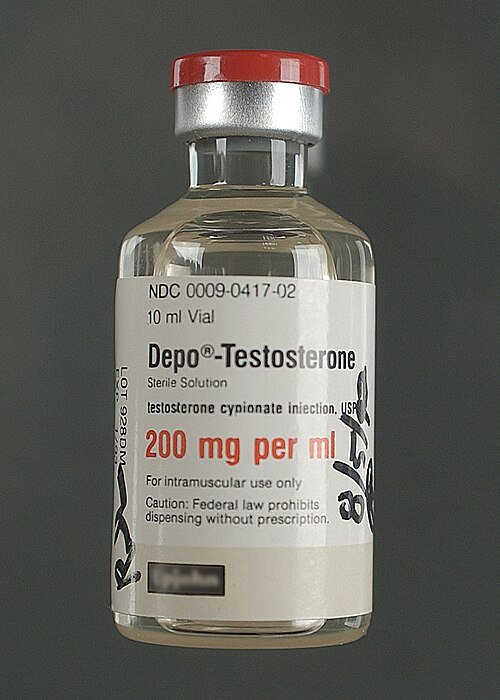
Testosterone is the main male sex hormone. When the testicles fail (primary hypogonadism) or the brain does not send them the right signals (secondary hypogonadism), levels fall and symptoms appear. Testosterone replacement therapy uses manufactured testosterone to restore the hormone to a normal range. It does not repair the testicles or the pituitary gland.
Source: Cleveland Clinic, EAU Guidelines
This guide is about testosterone replacement therapy itself: who should and should not take it, its forms, benefits, risks, fertility effects and follow-up. If you are still wondering whether your tiredness, low libido or weaker erections could be hormonal, start with our guide to low testosterone symptoms.
Source: NHS
Testosterone is a medicine, not a lifestyle supplement. In the United States it is a controlled substance, and Cleveland Clinic advises against using it for bodybuilding or as an anti-aging treatment because the risks outweigh any benefit. The NHS points out that late-onset hypogonadism is an uncommon, specific medical condition and not a normal part of getting older.
Source: MedlinePlus, Cleveland Clinic, NHS
Who is a candidate for TRT?
Guidelines agree on two conditions that must both be present: symptoms or signs of testosterone deficiency, and blood tests that are consistently low. The Endocrine Society recommends diagnosing hypogonadism only in men who have both, and advises against routine screening of men without symptoms.
Source: Endocrine Society
The European Association of Urology (EAU) uses a total testosterone level of 12 nmol/L (3.5 ng/mL, about 350 ng/dL) as the threshold for adult-onset deficiency. Results below this should be repeated on at least two occasions, with blood taken fasting between 7 and 10 a.m. When the binding protein SHBG may be abnormal, doctors also measure it and calculate free testosterone.
Source: EAU Guidelines
Men over 65
Age alone is not a reason for testosterone replacement therapy. The Endocrine Society suggests against routinely prescribing testosterone to all men aged 65 or older with low levels. Instead, older men with clear symptoms, such as low libido or unexplained anemia, and unequivocally low morning levels can be offered treatment case by case after discussing risks and benefits. Cleveland Clinic notes that, as of 2025, the FDA had not approved testosterone for the natural decline that comes with ageing.
Source: Endocrine Society, Cleveland Clinic
Who should not take it
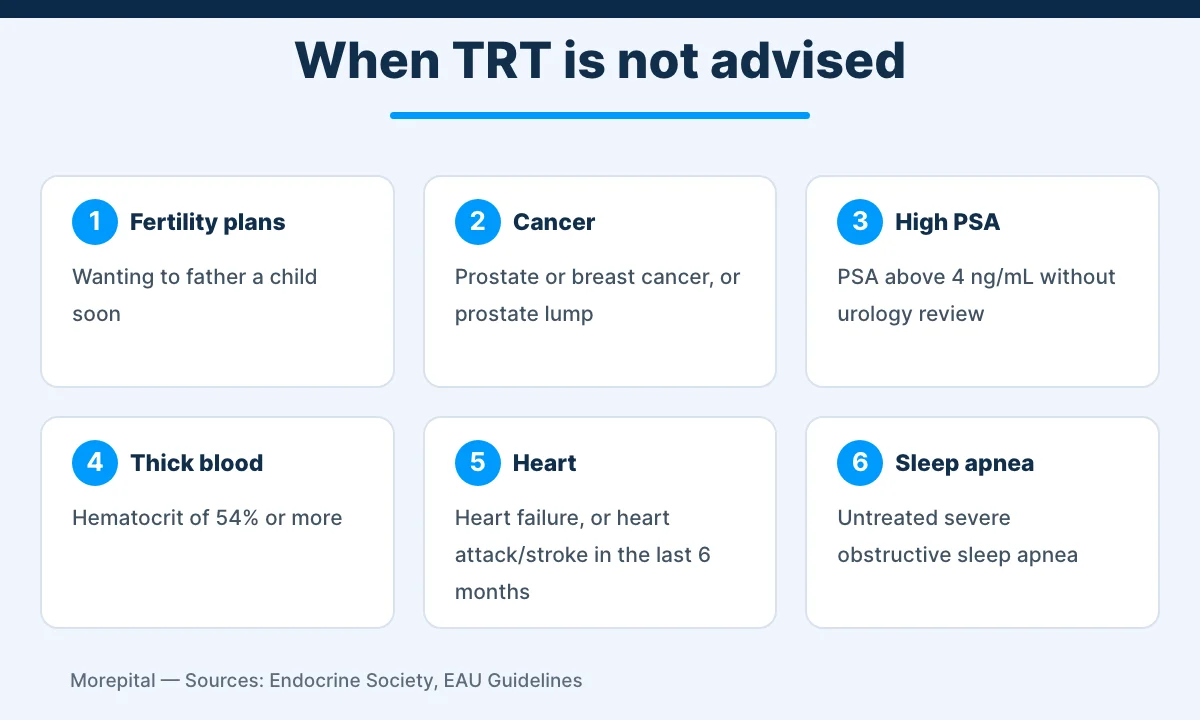
Guidelines list situations in which testosterone should not be started or needs specialist review first:
- Wanting to father a child in the near future
- Prostate or breast cancer, a prostate lump, or a PSA above 4 ng/mL (or above 3 ng/mL in men at high risk) without further urology assessment
- A high hematocrit (thick blood); the EAU treats 54% or more as an absolute contraindication and 48–50% as a reason for caution
- Untreated severe obstructive sleep apnea or severe urinary symptoms
- Uncontrolled heart failure, or a heart attack or stroke in the last 6 months
- A known clotting disorder (thrombophilia)
Source: Endocrine Society, EAU Guidelines
Testosterone replacement therapy is also not a treatment for blood sugar. The Endocrine Society recommends against using it to improve glucose control in men with type 2 diabetes, even though low testosterone is more common in men with diabetes or obesity. EAU guidance is to treat reversible causes first; weight loss and physical activity raise testosterone by a small amount, about 1–2 nmol/L.
Source: Endocrine Society, EAU Guidelines, NHS
Tests before you start
Before testosterone replacement therapy is prescribed, a doctor should take a medical history, examine you and order baseline blood tests. Cleveland Clinic lists two morning testosterone tests, hemoglobin and hematocrit, liver function, luteinizing hormone (LH), PSA and prolactin. LH and follicle-stimulating hormone (FSH) show whether the problem is in the testicles or in the pituitary gland, which changes the treatment options, especially for fertility.
Source: Cleveland Clinic, Endocrine Society
The EAU makes a PSA test and a digital rectal examination of the prostate mandatory at baseline, and recommends recording blood pressure, weight and waist size, and blood fats and sugar where indicated. A pituitary MRI scan is advised when prolactin is high, other pituitary hormones are low, there are symptoms such as headaches or vision problems, or total testosterone is below 6 nmol/L.
Source: EAU Guidelines
Bring a list of all your medicines and supplements, and say if you snore loudly or have urinary symptoms, because both influence the decision. If you have an enlarged prostate, the doctor will weigh how severe your urinary symptoms are; the EAU lists a symptom score (IPSS) above 19 as a relative contraindication.
Source: EAU Guidelines, Endocrine Society
Testosterone replacement therapy forms compared
All forms of testosterone replacement therapy deliver the same hormone but differ in dosing frequency, steadiness of levels and how quickly they can be reversed. Skin gels are among the most common choices in the United States and in Europe. The EAU recommends starting with a gel rather than a long-acting depot injection in men at higher risk, because a gel can be stopped quickly if a problem appears.
Source: Cleveland Clinic, EAU Guidelines
| Form | How often | Main points |
|---|---|---|
| Skin gel or solution | Once daily | Steady levels; can transfer to partners and children by skin contact |
| Short-acting injection (enanthate, cypionate) | Every 1–2 weeks into muscle, or weekly under the skin | Levels rise and fall between doses |
| Long-acting undecanoate injection | Every 10–14 weeks | Steady levels; slower to reverse |
| Skin patch | Daily | Rotate sites to limit skin reactions |
| Pellets under the skin | Every 3–6 months (EAU: 4–7) | Needs a minor procedure to insert |
| Buccal tablet or nasal gel | Twice daily (gum) or up to 3 times daily (nose) | Absorbed through the gums or nose |
| Oral testosterone undecanoate | Twice daily with food | Absorption depends on dietary fat; newer capsules carry blood pressure warnings |
Source: Cleveland Clinic, EAU Guidelines
Using gels safely at home
Gel on your skin can harm women and children who touch it. Let the gel dry, cover the skin with clothing and wash your hands after applying it. Do not apply it to the penis, scrotum or broken skin, and keep away from open flames and smoking until it is dry. A woman who develops new hair growth or acne, or a child with early puberty signs, should see a doctor.
Source: MedlinePlus, Cleveland Clinic
What testosterone replacement therapy can and cannot do
Cleveland Clinic lists possible improvements in sexual function, lean body mass, bone density, mood, energy and general well-being. If symptoms have not improved after 3 to 6 months, low testosterone was probably not the cause and stopping is reasonable.
Source: Cleveland Clinic
The best controlled evidence on testosterone replacement therapy comes from the Testosterone Trials (TTrials), seven linked US studies of 790 men aged 65 or older with low testosterone, who used testosterone or placebo gel daily for 12 months. Testosterone significantly improved all aspects of sexual function, including desire, sexual activity and erections. Walking speed, mood and depressive symptoms improved by smaller amounts. Hemoglobin rose and anemia was corrected, and bone density and estimated bone strength increased. There was no effect on memory or any other aspect of thinking.
Source: National Institute on Aging
Testosterone and erections
The TTrials showed better erectile function in men with confirmed low testosterone, but erectile dysfunction is not always hormonal. If erections remain weak once your levels are normal, standard erectile dysfunction treatment such as tablets can be added.
Source: National Institute on Aging, Cleveland Clinic
Testosterone replacement therapy side effects and heart safety
Common side effects of testosterone replacement therapy include acne or oily skin, mild ankle swelling from fluid retention, urinary symptoms from prostate stimulation, breast tenderness or enlargement, worsening sleep apnea, smaller testicles and skin irritation with gels or patches. Blood tests can show a rising PSA and a higher red blood cell count, which thickens the blood. The FDA’s required blood pressure studies showed that testosterone products raise blood pressure across the whole class, so it should be checked regularly.
Source: Cleveland Clinic, FDA
What the TRAVERSE trial showed
Concerns about heart attacks led the FDA to require a large safety trial in 2015. In TRAVERSE, 5,204 men aged 45 to 80 with symptoms, two morning levels below 300 ng/dL and existing heart disease or high cardiovascular risk were randomized to 1.62% testosterone gel or placebo, with a mean follow-up of 33 months. Major heart events (cardiovascular death, heart attack or stroke) occurred in 7.0% on testosterone and 7.3% on placebo, meeting the safety goal.
Source: Cleveland Clinic Consult QD
The trial was not risk free. Atrial fibrillation (3.5% vs 2.4%), acute kidney injury (2.3% vs 1.5%) and pulmonary embolism (0.9% vs 0.5%) were more common with testosterone, and the authors advise caution in men with previous blood clots. The study chair warned that the results should not justify widespread prescribing to ageing men.
Source: Cleveland Clinic Consult QD
On February 28, 2025, the FDA asked makers of all testosterone products to remove the increased cardiovascular risk wording from the boxed warning and add the TRAVERSE results and blood pressure warnings, while keeping the limitation on use for age-related low testosterone. Long-term effects over decades remain poorly studied.
Source: FDA, National Institute on Aging, Cleveland Clinic
Medical treatment is not steroid misuse
Testosterone replacement therapy aims for normal levels. Anabolic steroid misuse uses far higher doses without monitoring, and the NHS lists infertility, shrunken testicles, breast growth, heart attack, stroke, liver damage and dependence among the harms.
Source: NHS, MedlinePlus
Testosterone replacement therapy and fertility
This is the point most men are not told early enough. Testosterone from outside the body switches off the brain signals (LH and FSH) that tell the testicles to make sperm, so sperm production falls and can stop completely. In contraception studies, sperm counts dropped below 1 million per mL after a median of about 3.5 months. That is why every major guideline says testosterone replacement therapy should not be used by men who want to father a child soon, or as a treatment for male infertility.
Source: Asian Journal of Andrology (PMC), EAU Guidelines, Endocrine Society
Options if you want children
For men whose deficiency comes from the pituitary gland (secondary hypogonadism), the EAU standard is gonadotropin treatment, hCG combined with FSH, which raises testosterone and can restore sperm production. Anti-estrogen tablets are sometimes used off-label, but they only work when the hormone axis is intact and the evidence is poor. In primary testicular failure, testosterone is the only replacement option, and it eventually impairs fertility.
Source: EAU Guidelines, Asian Journal of Andrology (PMC)
Recovery after stopping
After testosterone replacement therapy stops, sperm production usually recovers, but it takes time. In data from testosterone contraception trials, the median time to recover a sperm concentration of 20 million per mL was 3 to 6 months, with cumulative recovery of 67% at 6 months, 90% at 12 months and 100% at 24 months. Longer use and older age may slow recovery, and Cleveland Clinic warns that repairing fertility can be expensive.
Source: Asian Journal of Andrology (PMC), Cleveland Clinic
Monitoring, adjusting and stopping treatment
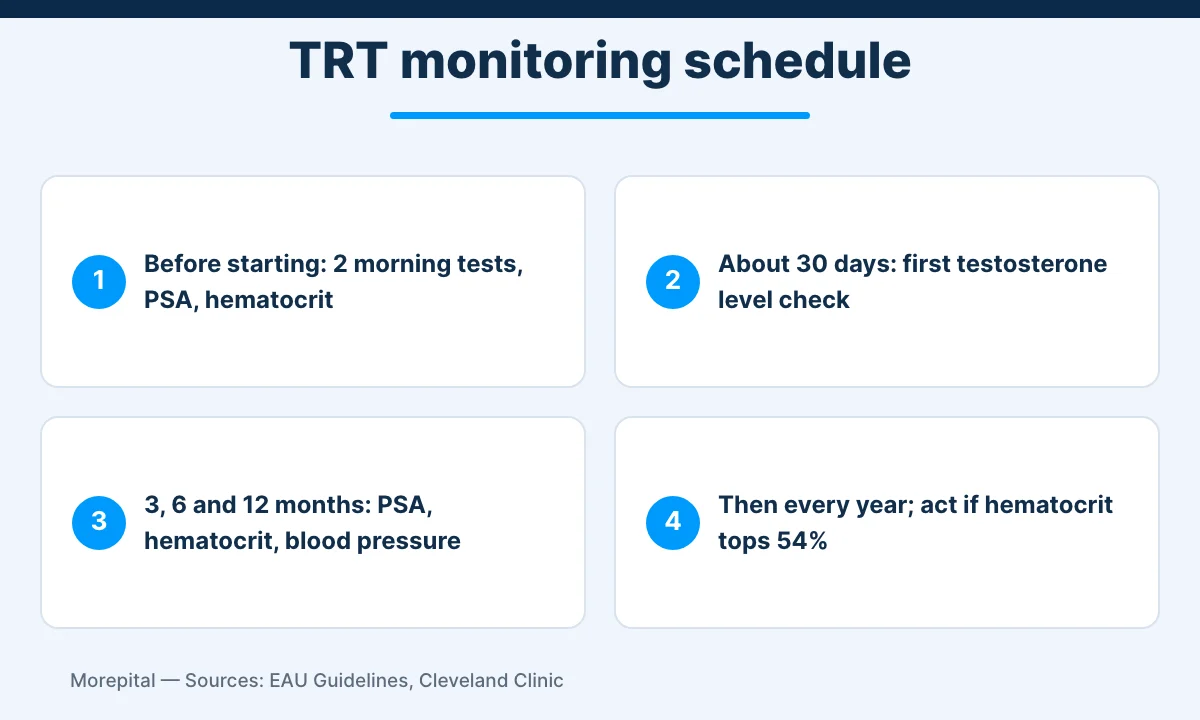
Follow-up is part of testosterone replacement therapy, not an optional extra. The EAU recommends reviews at 3, 6 and 12 months in the first year, then once a year. Visits check symptoms, weight, blood pressure, testosterone, hematocrit, PSA and the prostate. The first testosterone check is typically about 30 days after starting.
Source: EAU Guidelines, Cleveland Clinic
Two results trigger action. If hematocrit rises above 54%, the EAU advises stopping or lowering the dose, changing the form and sometimes removing blood (venesection), then restarting at a lower dose once it normalizes. In the first 12 months, the Endocrine Society advises urology referral for a confirmed PSA rise above 1.4 ng/mL from baseline, a PSA above 4.0 ng/mL or an abnormal prostate examination.
Source: EAU Guidelines, Endocrine Society
You can stop testosterone replacement therapy at any time, for example because of side effects, no benefit or a new condition that makes treatment unsafe, but agree a plan with your doctor. Levels fall back to where they were, and your own production may take time to restart.
Source: Cleveland Clinic
Choosing a clinic at home or abroad
Because testosterone replacement therapy is long term, the key question about any clinic is who will run your follow-up. Some men combine a testosterone replacement therapy consultation in Istanbul or elsewhere with travel. That can work if the diagnosis follows guideline standards and a doctor near home can do the 3-, 6- and 12-month blood tests. A clinic that prescribes after a single test or skips PSA and hematocrit checks is not following the evidence.
Source: EAU Guidelines, Endocrine Society, Cleveland Clinic
Questions to ask before you start
- Were my two low results taken in the morning, fasting, and repeated?
- Which form suits me, and how quickly can it be reversed?
- What happens to my fertility, and should I bank sperm first?
- Who will check my hematocrit, PSA and blood pressure, and when?
Source: EAU Guidelines, Endocrine Society
Male Hospital, a men’s health clinic in Istanbul, publishes its own testosterone replacement therapy guide and an overview of low testosterone symptoms, useful for preparing questions. Take copies of all blood results home so your own doctor can continue monitoring.
Source: Cleveland Clinic
Considering testosterone replacement therapy? Contact us for a free consultation and a treatment plan tailored to you.
Testosterone replacement therapy: frequently asked questions
How long does testosterone replacement therapy take to work?
Some changes may appear within a few weeks, but responses vary. Doctors usually judge the effect after 3 to 6 months; if symptoms have not improved by then, treatment is often stopped.
Source: Cleveland Clinic
Is testosterone replacement therapy for life?
Often it is long term, because it replaces the hormone without fixing the cause. You can stop at any time, but levels return to baseline and your own production may take time to restart.
Source: Cleveland Clinic
Does testosterone replacement therapy cause prostate cancer?
Testosterone can raise PSA and must not be used in untreated prostate cancer. Guidelines therefore require a PSA test and prostate examination before treatment and urology referral if PSA rises sharply in the first year.
Source: Endocrine Society, EAU Guidelines
Is testosterone replacement therapy safe for the heart?
In the TRAVERSE trial of men with heart risk, testosterone gel did not increase heart attacks or strokes over about 33 months, but atrial fibrillation, kidney injury and lung clots were more common.
Source: Cleveland Clinic Consult QD, FDA
Will testosterone replacement therapy make me infertile?
It lowers sperm production and can stop it completely, though recovery after stopping is usual over months. Men who want children soon should discuss alternatives such as hCG and FSH.
Source: Asian Journal of Andrology (PMC), EAU Guidelines
Can I take testosterone just because I am getting older?
No. Guidelines advise against routine treatment of older men with low levels; treatment is reserved for clear symptoms with consistently low morning results.
Source: Endocrine Society, NHS
Disclaimer: this article is for general health education and does not replace advice from a qualified doctor who can assess your individual case. Last updated: October 2026.