
Melasma is a common, harmless skin condition that causes flat brown, gray-brown or bluish-gray patches, usually on both cheeks, the forehead, the chin and above the upper lip. It is driven mainly by sunlight and female hormones, so it often starts in pregnancy or after beginning the birth control pill, and it can be controlled but rarely cured: daily broad-spectrum sunscreen plus prescription creams usually lighten it over 3 to 12 months.
Source: American Academy of Dermatology, American Academy of Dermatology
Contents
- What is melasma?
- What causes melasma: sun, hormones and genes
- Melasma symptoms, patterns and diagnosis
- Sun protection: the foundation of every plan
- Prescription creams for melasma
- Tranexamic acid: tablets, creams and injections
- Peels, lasers and microneedling for melasma
- Pregnancy, the pill and hormone-related patches
- Results, relapse and when to see a doctor
- Melasma: frequently asked questions
What is melasma?
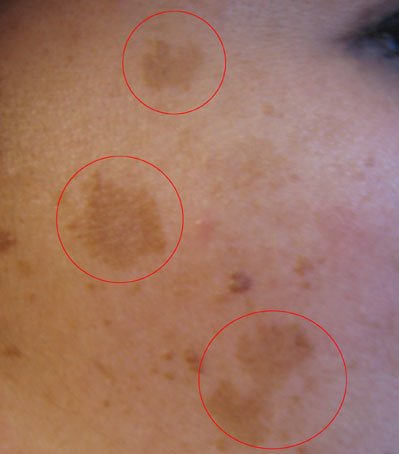
Melasma, also called chloasma, is an acquired pigment disorder in which the pigment-producing cells of the skin (melanocytes) make too much melanin in sun-exposed areas. The result is blotchy, darker-than-usual patches and freckle-like spots that are typically flat and appear on both sides of the face. Because it is so common in expectant mothers, it is sometimes called the “mask of pregnancy.”
Source: Cleveland Clinic, American Academy of Dermatology, DermNet
Melasma is a frequent reason to visit a dermatologist. Cleveland Clinic cites estimates that 15% to 50% of pregnant women develop it, while figures for the general population range widely, from 1.5% to 33%, depending on the group studied. About 90% of people affected are women and about 10% are men. It usually begins between the ages of 20 and 40 and rarely appears before puberty.
Source: Cleveland Clinic
Skin tone matters. People with medium to dark skin and those who tan easily are most likely to develop melasma. DermNet notes that it is most common in Fitzpatrick skin types III and IV (light brown to olive and moderate brown skin) and less common in very fair or very dark skin.
Source: American Academy of Dermatology, DermNet
Melasma is not dangerous. It is not a type of skin cancer and does not turn into one, it does not itch or hurt, and you cannot catch it from someone else. Its burden is mostly emotional: visible facial patches can make people self-conscious and affect their social life.
Source: American Academy of Dermatology, Cleveland Clinic
What causes melasma: sun, hormones and genes
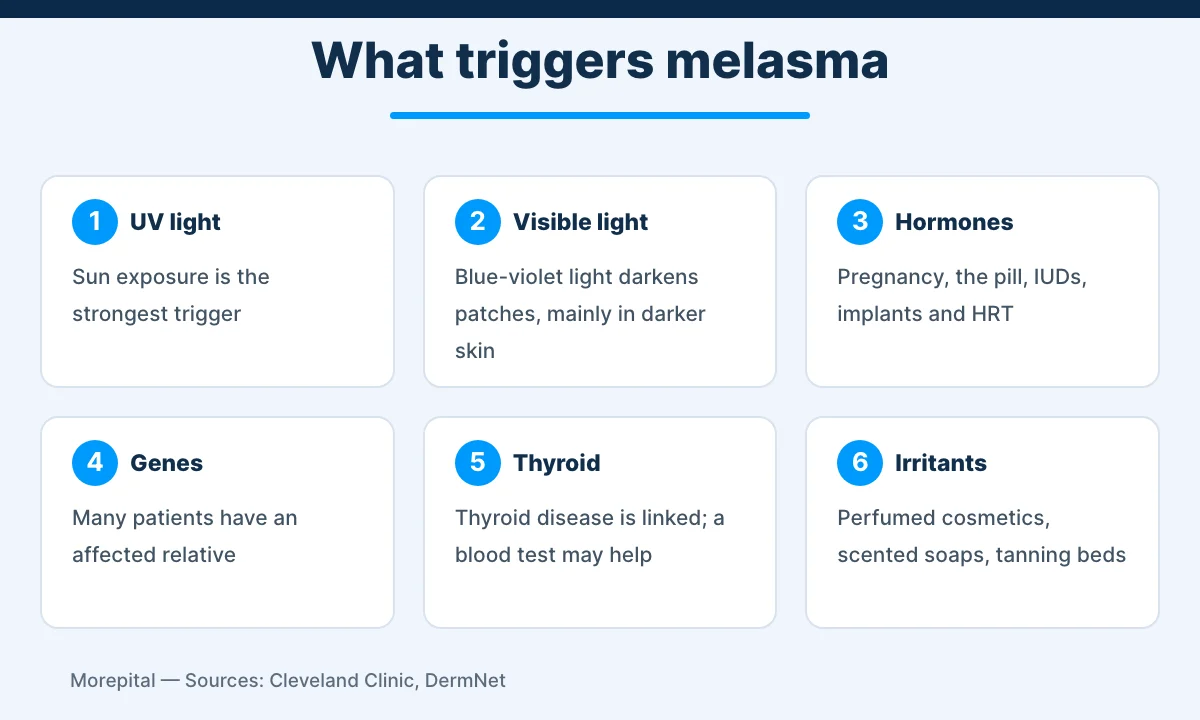
Melasma has no single cause. Researchers see it as a long-term response of genetically predisposed skin to light and hormones, sometimes described as a form of photoaging. Melanocytes in affected areas become overactive and keep producing extra pigment, and skin samples often show sun damage and extra blood vessels in the deeper layer (dermis).
Source: DermNet, Photodermatology, Photoimmunology & Photomedicine (Morgado-Carrasco et al., 2022)
Light: UV, visible light and heat
Sunlight is the strongest trigger. Ultraviolet (UV) rays stimulate melanin production, and so does visible light, especially high-energy blue-violet light in the 400 to 450 nm range, which mainly affects darker skin types. Heat and infrared radiation are also thought to play a role. This explains why the patches typically darken in summer and fade in winter, and why standard sunscreens that block only UV are often not enough.
Source: Cleveland Clinic, Photodermatology, Photoimmunology & Photomedicine (Morgado-Carrasco et al., 2022), American Academy of Dermatology
Hormones
Estrogen and progesterone are the second major driver of melasma. Pregnancy, combined birth control pills, hormonal IUDs, implants and hormone replacement therapy have all been implicated; DermNet estimates that hormones are involved in about a quarter of affected women. Thyroid disease is also associated with melasma, so a doctor may suggest a thyroid blood test.
Source: DermNet, Cleveland Clinic
Genes and other triggers
Family history is common, although sources give different figures: Cleveland Clinic reports that 33% to 50% of patients have an affected relative, while DermNet puts the figure at about 60%. Other possible contributors include certain anti-seizure medicines, phototoxic drugs (some antibiotics, anti-inflammatory painkillers, retinoids and diuretics), some targeted cancer therapies, tanning beds, and irritating or perfumed cosmetics, skin care products and scented soaps. No specific food is known to cause or cure it.
Source: Cleveland Clinic, DermNet
Melasma symptoms, patterns and diagnosis
The main sign is flat patches that are tan, brown, gray-brown or bluish-gray. They develop gradually over weeks to months, tend to be larger than individual sun spots or age spots, and are usually symmetrical. Common sites are the cheeks, bridge of the nose, forehead, chin and upper lip. Less often, the arms, shoulders or neck are affected.
Source: American Academy of Dermatology, Cleveland Clinic, DermNet
Common patterns
- Centrofacial: forehead, cheeks, nose and upper lip, usually sparing the groove under the nose (philtrum). It is the most common pattern, seen in 50% to 80% of cases.
- Malar: cheeks and nose.
- Mandibular: jawline and chin.
- Extrafacial: sun-exposed arms and shoulders.
Source: DermNet, Cleveland Clinic
Epidermal, dermal and mixed types
Doctors also classify melasma by how deep the pigment sits. Epidermal pigment is in the top layer, looks dark brown with a sharp border and usually responds well. Dermal pigment is deeper, looks light brown or bluish with a blurry edge and responds poorly. Mixed is the most common type, with both brown and bluish areas and a partial response.
Source: Cleveland Clinic, DermNet
How the diagnosis is made
Diagnosis is usually clinical. A dermatologist examines the skin, often with a Wood’s lamp (a handheld ultraviolet light that shows how deep the pigment is) and a dermatoscope. A small skin biopsy is only needed when the picture is unclear. Severity can be scored with the Melasma Area and Severity Index (MASI).
Source: Cleveland Clinic, DermNet
Confirming the diagnosis matters because several conditions look similar, including post-inflammatory hyperpigmentation (dark marks left after acne, eczema or injury), sun spots (solar lentigines), freckles, drug-induced pigmentation and birthmark-type conditions such as nevus of Ota. Some skin cancers can also resemble flat brown patches. If your dark spots followed breakouts, our guide to acne treatment explains how to prevent new marks, and the acne reference page covers the underlying condition.
Source: DermNet, Cleveland Clinic, American Academy of Dermatology
Sun protection: the foundation of every plan

Dermatology sources agree that no melasma cream or procedure works for long without strict daily sun protection. The American Academy of Dermatology (AAD) recommends a broad-spectrum sunscreen with SPF 30 or higher applied throughout the day, plus a wide-brimmed hat and seeking shade. Cleveland Clinic advises SPF 30 to 50, reapplied every two hours, and DermNet recommends SPF 50+ as part of lifelong protection.
Source: American Academy of Dermatology, Cleveland Clinic, DermNet
Why tinted sunscreen with iron oxides helps
Because visible light also darkens melasma, mineral sunscreens with zinc oxide or titanium dioxide, and especially tinted formulas containing iron oxides, are preferred. A 2022 review in Photodermatology, Photoimmunology & Photomedicine describes iron oxides as the only physical sunscreen ingredient with demonstrated efficacy in reducing severity and preventing relapse, citing a small randomized trial of 40 patients. Its authors, several of whom reported ties to a sunscreen maker, suggest reapplying every 1 to 2 hours outdoors.
Source: Photodermatology, Photoimmunology & Photomedicine (Morgado-Carrasco et al., 2022), American Academy of Dermatology
Use sunscreen daily, all year, avoid tanning beds and choose gentle, fragrance-free products, since irritation can darken patches. Daily protection also helps prevent the pigment from returning once it has faded.
Source: Cleveland Clinic, American Academy of Dermatology
Prescription creams for melasma
The most effective approach combines sun protection with medicines applied to the skin, chosen by a dermatologist according to your skin type, pigment depth and pregnancy status.
Source: American Academy of Dermatology
Hydroquinone
Hydroquinone is the classic skin-lightening agent for melasma and has been used for decades to even out skin tone. Cleveland Clinic notes it is typically used for two to four months at a time. In the United States it is no longer sold over the counter: since September 23, 2020, under the CARES Act, non-prescription hydroquinone lighteners can no longer be legally marketed, and the Food and Drug Administration (FDA) has warned companies still selling them.
Source: American Academy of Dermatology, Cleveland Clinic, U.S. FDA
The FDA reports skin rashes, facial swelling and ochronosis (a bluish-black skin discoloration that may be permanent) linked to these products, and it advises consumers not to use unapproved skin lighteners. Use hydroquinone only on a doctor’s advice and for the agreed period.
Source: U.S. FDA
Triple combination cream
The combination of hydroquinone, tretinoin (a retinoid) and a moderate-strength corticosteroid in one cream has shown the best results among topical options. DermNet reports that it clears or improves 60% to 80% of cases. In the US, the prescription product Tri-Luma is the only FDA-approved drug containing hydroquinone, approved for short-term treatment of moderate-to-severe facial melasma under medical supervision. A dermatologist may also prescribe tretinoin with a mild corticosteroid without hydroquinone.
Source: Cleveland Clinic, DermNet, U.S. FDA, American Academy of Dermatology
Gentler alternatives
For sensitive skin, maintenance or pregnancy, doctors may use azelaic acid, kojic acid, vitamin C, cysteamine, soy extracts, alpha hydroxy acids or topical tranexamic acid. Common side effects are irritation and dermatitis with hydroquinone and tretinoin and stinging with azelaic acid.
Source: American Academy of Dermatology, Cleveland Clinic, DermNet, American Academy of Dermatology
Tranexamic acid: tablets, creams and injections
Tranexamic acid is a medicine traditionally used to reduce bleeding. It blocks the conversion of plasminogen to plasmin, which in turn reduces signals that stimulate pigment cells. The AAD notes that studies show it can decrease melasma patches when other treatments have failed. It can be taken by mouth, usually twice a day, or applied to the skin. Because it affects clotting, your doctor will ask about any history of blood clots before prescribing tablets.
Source: American Academy of Dermatology, DermNet
The evidence is strongest for tablets. A 2023 meta-analysis in the Indian Dermatology Online Journal found that oral tranexamic acid significantly reduced MASI scores at 8 and 12 weeks when compared with other treatments, while topical and intradermal (injected) forms did not show a significant effect. The included studies varied widely, the authors called for larger trials, and doses in the studies were typically 250 mg two or three times a day. The analysis did not assess side effects.
Source: Indian Dermatology Online Journal (Panchal et al., 2023)
Source: American Academy of Dermatology
Peels, lasers and microneedling for melasma
When creams are not enough, dermatologists may add in-office procedures. Options include chemical peels, which use a solution to remove excess pigment; microneedling, which creates tiny controlled injuries that heal with a more even tone; laser and light treatments such as intense pulsed light (IPL), fractional and Q-switched lasers; and platelet-rich plasma injections. A few studies show added benefit from lasers when combined with medicines and sun protection.
Source: American Academy of Dermatology, Cleveland Clinic
The risks to understand
In melasma, procedures are a double-edged sword. Heat and inflammation can trigger post-inflammatory hyperpigmentation, making the skin darker than before, and they can cause scarring. DermNet warns that lasers, IPL and microneedling carry a high risk of relapse and increased resistance to treatment, and it recommends pretreating the skin with a lightening agent such as hydroquinone. People with darker skin are especially prone to irritation-related darkening. For this reason, the AAD advises that only a board-certified dermatologist should perform these procedures.
Source: DermNet, Cleveland Clinic, American Academy of Dermatology, American Academy of Dermatology
Choosing a clinic and questions to ask
Whether you are treated at home or abroad, for example in Turkey, ask: Has a dermatologist confirmed the diagnosis and pigment type? Which creams will I use before and after the procedure? What happens if my skin darkens? Who handles follow-up? Because results take months, plan for ongoing creams, sun protection and follow-up rather than a single session. Treatment is considered cosmetic, so most insurers will not cover it.
Source: American Academy of Dermatology, DermNet
Melasma is different from the concerns treated with injectables. Wrinkle-relaxing Botox injections target expression lines and lip fillers add volume; neither treats pigment.
Source: American Academy of Dermatology, DermNet
Pregnancy, the pill and hormone-related patches
Melasma that appears during pregnancy or after starting hormonal contraception often fade on their own, frequently within about three months after giving birth or stopping the hormone. However, they can also persist for years, and some people have them for life. Non-hormonal contraception may help; talk to your doctor before stopping any medicine.
Source: Cleveland Clinic, American Academy of Dermatology
During pregnancy, treatment choices are limited. Tretinoin should be avoided, while azelaic acid is considered safe; use only products your doctor has approved for pregnancy. Sun protection with a mineral or tinted sunscreen and a hat is the safest and most useful step. Small trials suggest intensive sunscreen use can reduce new cases in pregnant women.
Source: Cleveland Clinic, Photodermatology, Photoimmunology & Photomedicine (Morgado-Carrasco et al., 2022)
Results, relapse and when to see a doctor
Expect gradual progress. The AAD says results usually take 3 to 12 months and can take longer for long-standing patches. Dermal pigment takes the longest to fade. No treatment reliably removes melasma completely, and it is a chronic condition that can last 10 to 20 years, with frequent relapses, especially after summer sun. Long-term maintenance with sunscreen and a gentle lightening agent is the realistic goal.
Source: American Academy of Dermatology, Cleveland Clinic, Photodermatology, Photoimmunology & Photomedicine (Morgado-Carrasco et al., 2022), DermNet
| Option | Role | Key caution |
|---|---|---|
| Broad-spectrum tinted sunscreen (iron oxides) | Daily foundation; prevents relapse | Reapply every 2 hours outdoors |
| Hydroquinone | Classic lightening cream | Prescription only in the US; ochronosis risk |
| Triple combination cream | Most effective topical option | Short-term use; avoid in pregnancy (tretinoin) |
| Azelaic, kojic acid, vitamin C | Gentler or maintenance options | Stinging or irritation possible |
| Oral tranexamic acid | For stubborn cases | Screening for blood-clot history |
| Peels, lasers, microneedling | Add-on to creams | Can worsen pigment; expert use only |
Source: American Academy of Dermatology, Cleveland Clinic, DermNet, U.S. FDA
When to see a doctor
See a doctor or dermatologist as soon as you notice new dark patches, because early treatment tends to work better and other conditions need to be ruled out. Seek advice promptly if a patch does not fit the typical flat, symmetrical pattern, because some skin cancers can look similar. Also see a dermatologist if a non-prescription product has not helped within three to six months or if the patches affect your confidence.
Source: Cleveland Clinic, American Academy of Dermatology
Melasma: frequently asked questions
Is melasma permanent?
Not always. Hormone-related melasma may fade within months of pregnancy or stopping the pill, but many cases are long-lasting and relapse is common. Treatment controls it rather than curing it.
Source: Cleveland Clinic, Photodermatology, Photoimmunology & Photomedicine (Morgado-Carrasco et al., 2022)
Can melasma turn into skin cancer?
No. It is not cancer and does not become cancer, but some skin cancers can look like flat brown patches, which is why a dermatologist should confirm the diagnosis.
Source: American Academy of Dermatology, Cleveland Clinic
Can men get melasma?
Yes. About 10% of people with melasma are men. Sun exposure, family history and darker skin types are the main risk factors in men too.
Source: Cleveland Clinic
What is the best sunscreen for melasma?
A broad-spectrum sunscreen with SPF 30 or higher, ideally a tinted mineral formula containing iron oxides, because it also blocks visible light. Reapply it regularly through the day.
Source: American Academy of Dermatology, Photodermatology, Photoimmunology & Photomedicine (Morgado-Carrasco et al., 2022)
Can I buy hydroquinone over the counter?
Not in the United States, where it has been prescription-only since 2020. Rules differ between countries, but in any country it should be used under medical supervision because of side effects such as ochronosis.
Source: American Academy of Dermatology, U.S. FDA
How long does melasma treatment take to work?
Usually 3 to 12 months, and longer for patches that have been present for years. Maintenance sun protection is needed afterward.
Source: American Academy of Dermatology
Disclaimer: this article is for general health education and does not replace advice from a qualified doctor who can assess your individual case. Last updated: October 2026.