
PRP hair treatment (platelet-rich plasma therapy) is a series of scalp injections made from a concentrate of your own blood platelets, used mainly to slow thinning and improve hair density in male and female pattern hair loss. A typical course is one session a month for three months, followed by maintenance sessions every three to six months. Randomized trials show a modest gain in hair density, but PRP is not an FDA-approved hair loss treatment and protocols vary widely between clinics.
Source: AAD, Harvard Health, Aesthetic Plast Surg
Source: Int J Womens Dermatol, An Bras Dermatol, Drug Des Devel Ther
Contents
- What is PRP hair treatment?
- How PRP hair treatment is thought to work
- Does PRP hair treatment work? What the research shows
- Who is a good candidate for PRP hair treatment?
- What happens during a PRP hair treatment session
- PRP hair treatment schedule and results timeline
- Side effects, risks and who should avoid it
- Combining PRP with medication or a hair transplant
- Choosing a clinic for PRP hair treatment, at home or in Turkey
- PRP hair treatment: frequently asked questions
What is PRP hair treatment?
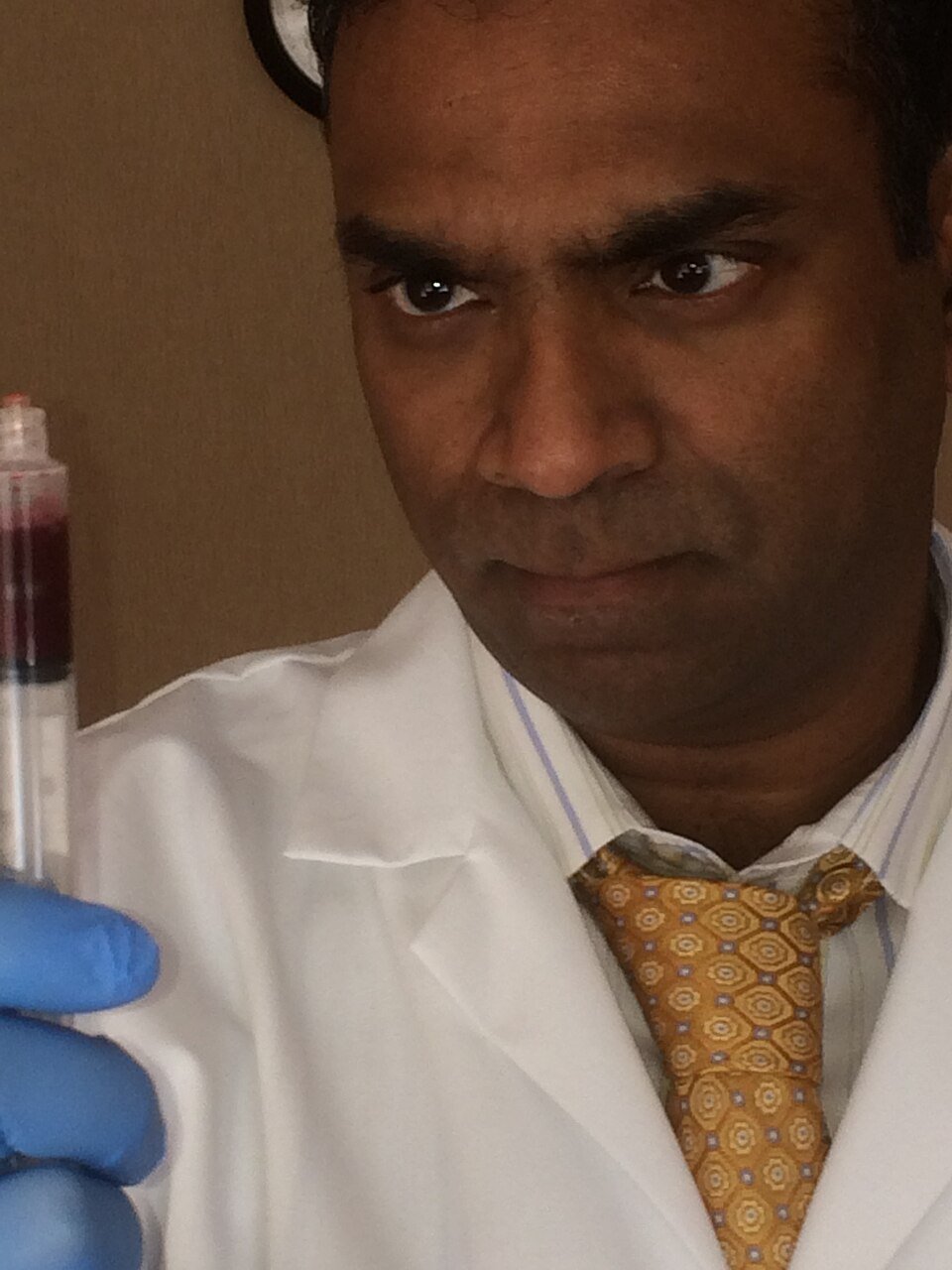
Platelets are small cell fragments in the blood best known for helping wounds clot and heal. Platelet-rich plasma is the liquid part of your blood after most red cells have been removed and the platelets concentrated. Harvard Health describes the final product as having about five times the platelet concentration of ordinary blood, while a 2018 review in the International Journal of Women’s Dermatology gives a usual target range of two to seven times whole-blood levels.
Source: Harvard Health, Int J Womens Dermatol
Doctors first used PRP to help damaged joints heal. Dermatologists later adopted it for the scalp after research linked high platelet concentrations to hair growth. Because a PRP hair treatment uses material from your own body, it is called “autologous.”
Source: Cleveland Clinic, Drug Des Devel Ther
It is important to understand the regulatory position. The US Food and Drug Administration has approved oral finasteride (for men) and topical minoxidil for androgenetic alopecia, but not PRP. The centrifuge kits used to prepare PRP are regulated as devices, and injecting PRP into the scalp is an off-label use that physicians are allowed to offer as part of medical practice. So PRP hair treatment is a legitimate medical procedure, but not an approved hair loss drug.
Source: Drug Des Devel Ther, Cleveland Clinic
How PRP hair treatment is thought to work
Platelets carry storage packets called alpha granules. When activated, they release growth factors including platelet-derived growth factor (PDGF), transforming growth factor beta (TGF-β), vascular endothelial growth factor (VEGF), epidermal growth factor (EGF) and insulin-like growth factor 1 (IGF-1). Laboratory and clinical studies suggest these signals act on the dermal papilla, the cluster of cells at the base of each follicle that controls hair growth.
Source: Int J Womens Dermatol, Harvard Health
The proposed effects include prolonging the anagen (growth) phase of the hair cycle, helping follicle cells survive, and encouraging new small blood vessels around the follicle. The 2018 review stresses that the exact mechanism of PRP hair treatment is still not fully defined.
Source: Int J Womens Dermatol
This explains an important limit. In male pattern baldness and female pattern hair loss, the hormone DHT gradually shrinks follicles. PRP does nothing to block DHT, which is why specialists describe a PRP hair treatment as an add-on to hormonal treatment, not a replacement for it. It also means PRP cannot create new follicles where they have disappeared completely: Cleveland Clinic notes that it works better when hair loss is recent, because long-dormant follicles are harder to reactivate.
Source: Int J Womens Dermatol, Cleveland Clinic
Does PRP hair treatment work? What the research shows
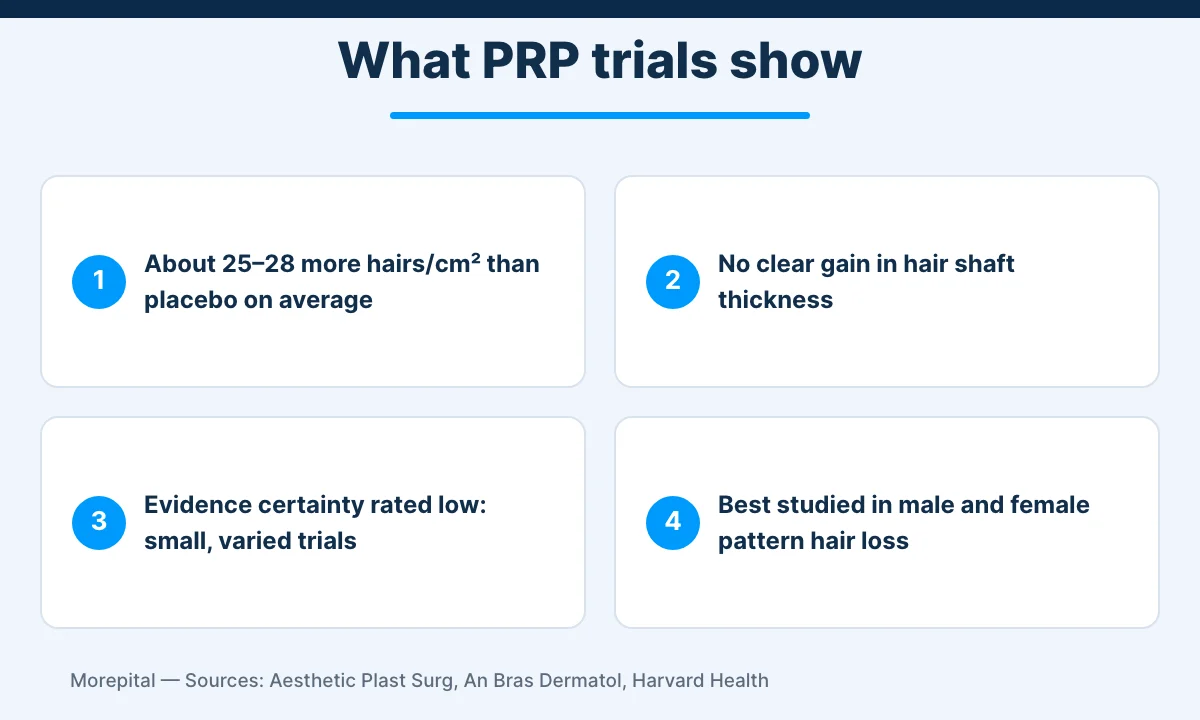
The best evidence comes from pooled analyses of randomized controlled trials comparing PRP with saline placebo, often in “split-scalp” designs where one side of the head gets PRP and the other gets placebo. A 2023 meta-analysis in Aesthetic Plastic Surgery combined 10 trials (555 treatment units from 318 participants) and found significantly higher hair density with PRP, a mean difference of 25.09 hairs per square centimeter. It found no significant difference in hair shaft thickness.
Source: Aesthetic Plast Surg
A 2024 meta-analysis in Anais Brasileiros de Dermatologia reached a similar figure: about 27.55 extra hairs per square centimeter versus placebo. The authors rated the certainty of that evidence as low, however, because studies differed greatly in how PRP was prepared, who was enrolled, how many people took part and how long they were followed, and because there were signs of publication bias.
Source: An Bras Dermatol
Why results vary so much
Not every trial was positive. The 2018 review found that seven of nine studies it examined showed benefit, while two small placebo-controlled trials, one in 26 women and one in 13 men, found no significant improvement in hair count or density. The 2023 meta-analysis also noted that smaller trials and male-only trials reported larger effects, and warned that small studies may overestimate the benefit of PRP.
Source: Int J Womens Dermatol, Aesthetic Plast Surg
Part of the problem is that there is no standard recipe. Clinics use different kits, one or two centrifuge spins, different volumes and schedules, and many trials do not report the platelet count they injected. Harvard Health points out that the best method of PRP hair treatment has not been established.
Source: Int J Womens Dermatol, Harvard Health
Which types of hair loss have evidence
Most research covers androgenetic alopecia in men and women. Harvard Health says there is not enough evidence to draw conclusions about telogen effluvium, alopecia areata or scarring hair loss. A 2022 review in Drug Design, Development and Therapy describes PRP as a possible steroid-sparing option for alopecia areata, but also notes that some trials found it clearly less effective than steroid injections, which remain a standard treatment.
Source: Harvard Health, Drug Des Devel Ther
Who is a good candidate for PRP hair treatment?
The people most likely to benefit from PRP hair treatment have a diagnosed pattern of hair loss that is early to moderate, still have miniaturized but living follicles in the thinning area, and are willing to commit to repeat sessions. Cleveland Clinic notes that the right schedule depends on genetics, the pattern and amount of hair loss, age and hormones, so candidacy is an individual decision.
Source: Cleveland Clinic, AAD
Diagnosis comes first. The NHS advises seeing a GP to find out what is causing hair loss before going to a commercial hair clinic, because hair loss can occasionally be a sign of a medical condition, and it lists temporary causes such as iron deficiency. Cleveland Clinic adds that PRP is not recommended when an underlying condition such as thyroid disease or lupus is still driving the loss, because that cause needs treating directly.
Source: NHS, Cleveland Clinic
Realistic expectations matter too. PRP hair treatment can thicken thinning hair and may slow loss, but it does not restore a hairline in areas that are completely bald. For extensive baldness with a healthy donor area, a hair transplant is the treatment that relocates follicles; the American Academy of Dermatology describes transplantation as an effective and permanent option for pattern hair loss.
Source: AAD
What happens during a PRP hair treatment session
A PRP hair treatment is an outpatient procedure. According to the American Academy of Dermatology, a small sample of blood is taken from your arm, it is processed to concentrate the platelets, and the plasma is injected into the areas of hair loss. The injection part takes about 10 minutes, and there is little downtime.
Source: AAD
- Blood draw: a tube of blood is collected with an anticoagulant so it does not clot before processing.
- Centrifuge: the tube is spun so red cells settle at the bottom; the lower, platelet-rich portion of the plasma is collected. Some systems use a second spin to raise platelet concentration further.
- Scalp preparation: the scalp is cleaned, and local anesthetic or cooling may be used for comfort.
- Injections: PRP is injected in small amounts across the thinning areas, such as the hairline, part line, vertex and crown, deep enough to reach the base of the follicles.
Source: Harvard Health, Int J Womens Dermatol
Trials have used a total of 2 to 12 mL of PRP per session. In one Greek study of 20 patients, everyone felt mild pain during injection despite local anesthesia, and a quarter had mild pain afterward that settled within about four hours. Most people can return to work the next day.
Source: Int J Womens Dermatol, J Cutan Aesthet Surg, Drug Des Devel Ther
PRP hair treatment schedule and results timeline
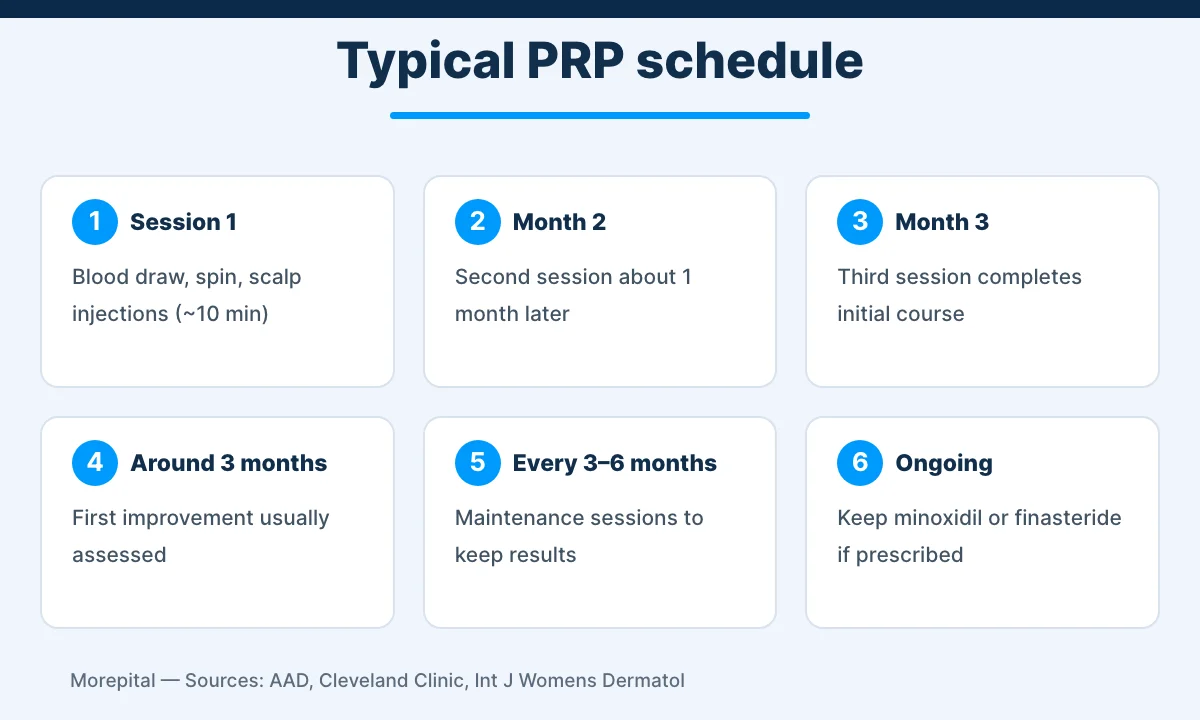
The most widely cited schedule is an initial phase of three sessions about one month apart, followed by maintenance. The American Academy of Dermatology says most patients return once a month for three months and then once every three to six months. The 2018 review proposed sessions at months 1, 2, 3, 6, 9 and 12 in the first year. Cleveland Clinic describes a similar pattern, with sessions spread out every three to four months for up to two years.
Source: AAD, Int J Womens Dermatol, Cleveland Clinic
Improvement from PRP hair treatment is judged after the initial course, not one session. Cleveland Clinic says it takes about three months to see improvement, and the 2018 review notes that most studies saw benefit from around month three. Without maintenance, gains can fade: in the one-year Greek study, hair density peaked at three months (about 20% above baseline), fell to about 9% above baseline at six months and about 7% at one year, despite a booster session at six months.
Source: Cleveland Clinic, Int J Womens Dermatol, J Cutan Aesthet Surg
| Question | What the evidence says |
|---|---|
| Initial course | Usually 3 sessions about 1 month apart |
| Maintenance | Every 3 to 6 months to keep results |
| Session length | Injections take about 10 minutes; little downtime |
| First visible change | Around 3 months after starting |
| Average effect in trials | About 25 to 28 more hairs/cm² than placebo (low-certainty evidence) |
| Best evidence for | Androgenetic alopecia (male and female pattern) |
| FDA status | Not approved for hair loss; off-label use |
Source: AAD, Aesthetic Plast Surg, An Bras Dermatol, Drug Des Devel Ther
Because PRP hair treatment results depend on repeat visits, cost adds up. In the United States, Cleveland Clinic quotes about $500 to $1,000 per session and Harvard Health about $1,000, and both say insurance generally does not cover it because it is considered cosmetic. Ask for the full cost of the initial course and a year of maintenance in writing.
Source: Cleveland Clinic, Harvard Health
Side effects, risks and who should avoid it
Because PRP hair treatment uses your own blood, side effects are generally mild. Reported effects include temporary pain at the injection sites, redness, swelling, itching, mild headache and temporary hair shedding. Harvard Health considers the procedure safe when performed by a trained medical provider. The 2022 review states that no major side effects such as scarring, infection, hematoma or allergic reaction have been documented after PRP for hair.
Source: Harvard Health, Drug Des Devel Ther
That said, the absence of reported serious problems in small trials does not prove there is zero risk, as the authors of the 2024 meta-analysis point out. Have PRP hair treatment done only by a licensed medical team in a clinical setting.
Source: An Bras Dermatol
Who should not have PRP, or needs a doctor’s review first
- Absolute contraindications: critically low platelet counts (thrombocytopenia), platelet dysfunction disorders and hemodynamic instability.
- Relative contraindications: NSAID use within 48 hours, recent steroid injection or systemic steroids, recent illness or fever, cancer (especially of the blood or bone), anemia and tobacco use.
- Blood thinners and bleeding disorders: Cleveland Clinic says PRP is not recommended for people on blood thinners because their platelets may not work as well; never stop a prescribed anticoagulant without your doctor’s advice.
- Autoimmune disease and scalp disease: Harvard Health notes PRP may not suit people with autoimmune disease, and trials have excluded people with active scalp skin disease or a tendency to keloid scars.
Source: Drug Des Devel Ther, Cleveland Clinic, Harvard Health, J Cutan Aesthet Surg
Combining PRP with medication or a hair transplant
Most experts present PRP hair treatment as one part of a plan, not a standalone cure. Harvard Health notes evidence that PRP may work best when combined with topical minoxidil or oral finasteride. In one randomized trial summarized in the 2022 review, the group receiving PRP plus topical minoxidil improved the most, followed by PRP alone. The 2018 review recommends continuing minoxidil, spironolactone or finasteride during PRP because PRP does not address the hormonal driver of pattern hair loss.
Source: Harvard Health, Drug Des Devel Ther, Int J Womens Dermatol
Medication has its own commitment. The American Academy of Dermatology notes that minoxidil usually takes 6 to 12 months to show results and that hair is lost again when finasteride is stopped. Our guide to finasteride for hair loss explains how the tablet works, its side effects and who can take it.
Source: AAD
PRP alongside a hair transplant
Some surgeons use PRP during or after transplantation. Studies cited in the 2022 review reported better graft survival, faster growth and improved density when PRP was added to follicular unit extraction (FUE) procedures, and the authors conclude that PRP can be used as an adjunct to hair transplantation. These studies are small, so PRP hair treatment is an optional extra during surgery. If you are comparing methods, our articles on DHI hair transplant and hair transplant in Turkey explain the options and the recovery.
Source: Drug Des Devel Ther
Choosing a clinic for PRP hair treatment, at home or in Turkey
Because protocols are not standardized, the quality of a PRP hair treatment depends heavily on the clinic. Useful questions to ask include:
- Who will diagnose my hair loss, and is a doctor examining my scalp before treatment?
- Which kit or centrifuge method do you use, single or double spin, and do you measure the platelet concentration?
- How many sessions do you recommend initially and for maintenance, and what is the total cost?
- Will I continue minoxidil or finasteride, and how will you measure results (standardized photos or hair counts)?
- Who performs the injections, and what happens if I have a problem afterward?
Source: Int J Womens Dermatol, NHS
Many patients combine PRP hair treatment with travel abroad, often to Turkey, especially when also planning a transplant. Because the initial course needs three visits about a month apart, a single trip usually covers only one session unless PRP is given around the time of surgery; plan follow-up sessions at home or further trips. The NHS advice for treatment abroad applies: research how clinics are regulated in the country, meet the doctor rather than only sales staff, check the team’s qualifications and language, ask what aftercare is provided, and check whether your insurance covers complications.
One option in Istanbul is Hair Cultivate, a specialised hair-transplant centre whose doctors assess hair loss and advise on whether PRP, a transplant or both are suitable. You can read its page on PRP hair treatment in Turkey and its overview of hair transplant in Turkey. Whichever clinic you choose, apply the same checks listed above.
Source: NHS
Finally, keep expectations realistic. The NHS reminds readers that no hair loss treatment is 100% effective, and PRP hair treatment needs repeat visits to keep its effect. If you are worried about your hair loss at any stage, a GP or dermatologist visit is the right first step before paying for any course of treatment.
Considering PRP hair treatment? Contact us for a free consultation and a treatment plan tailored to you.
PRP hair treatment: frequently asked questions
Is PRP hair treatment permanent?
No. Gains tend to fade without maintenance, which is why most schedules include repeat sessions every three to six months after the initial course.
Source: AAD, J Cutan Aesthet Surg
How many sessions of PRP hair treatment do I need?
Most protocols start with three sessions about a month apart. There is no single standard, and your doctor may adjust the plan to your response.
Source: Harvard Health, Int J Womens Dermatol
Does PRP hair treatment hurt?
Most people feel mild pain or pressure during the injections and some soreness for a few hours afterward. Local anesthetic or cooling can reduce discomfort.
Source: J Cutan Aesthet Surg, Cleveland Clinic
Can women have PRP hair treatment?
Yes. Trials have included women with female pattern hair loss, although results have been mixed, and one small placebo-controlled trial in women found no significant benefit.
Source: Harvard Health, Int J Womens Dermatol
Is PRP hair treatment better than minoxidil or finasteride?
It is not a replacement. Minoxidil and finasteride are FDA-approved, while PRP is off-label; evidence suggests PRP works best combined with them.
Source: Drug Des Devel Ther, Harvard Health
Can PRP hair treatment help alopecia areata?
The evidence is limited and mixed. Some studies suggest a benefit, but others found PRP less effective than steroid injections, which a dermatologist should consider first.
Source: Drug Des Devel Ther, Harvard Health
Can I wash my hair after a PRP session?
Follow your clinic’s instructions. In one study of PRP hair treatment, 60% of patients noticed temporary scalp sensitivity at their first hair wash.
Source: J Cutan Aesthet Surg
Disclaimer: this article is for general health education and does not replace advice from a qualified doctor who can assess your individual case. Last updated: October 2026.