Dental bonding is a cosmetic dental treatment in which a dentist applies tooth-colored composite resin to a tooth, shapes it and hardens it with a curing light to repair chips, close small gaps, hide discoloration or change a tooth’s shape. It usually takes one visit of about 30 to 60 minutes per tooth, needs little or no removal of natural enamel and typically lasts 3 to 10 years before touch-ups or replacement.
Source: Cleveland Clinic, ADA MouthHealthy
Contents
What is dental bonding?
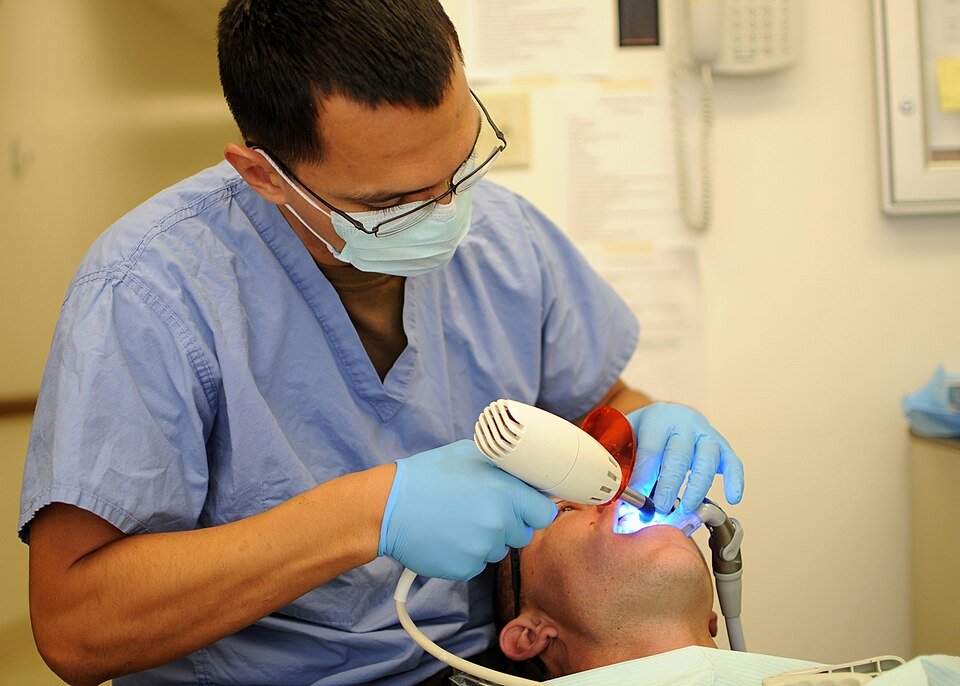
Dental bonding, also called composite bonding or teeth bonding, uses the same family of tooth-colored resin materials that dentists use for white fillings. The dentist builds the resin up directly on the tooth, sculpts it by hand, then sets it with a special light so it bonds to the enamel. Because the work is done in the mouth, researchers call dental bonding a “direct” restoration, unlike “indirect” porcelain veneers made in a laboratory.
Source: Cleveland Clinic, ADA MouthHealthy, Elkaffas et al. 2024, Materials (PMC)
The resin starts as a soft, putty-like paste and comes in a range of shades, so the dentist can match it to the surrounding teeth. Once hardened, the dental bonding is trimmed and polished to blend in with the natural enamel.
Source: Cleveland Clinic
When dental bonding is used to cover the whole front surface of a tooth, it is often called a composite veneer. A composite veneer is made from a tooth-colored filling material bonded to the tooth, while a porcelain veneer is a thin ceramic shell made in a dental laboratory. The two differ in enamel removal, visits and lifespan, compared below.
Source: ADA MouthHealthy, Oral Health Foundation
What bonding can and cannot fix
Dental bonding is best suited to small cosmetic changes on teeth that are otherwise healthy. Typical uses include:
- Chipped teeth: rebuilding a corner or edge that has broken off.
- Minor cracks and craze lines: covering fine surface cracks that catch the light.
- Small gaps: closing spaces between teeth, such as a gap between the two front teeth (a diastema).
- Discoloration: masking a dark or stained area on a single tooth.
- Shape and size: making a tooth longer, wider or more even, for example a small or misshapen tooth next to normal-sized ones.
Source: Cleveland Clinic, Cleveland Clinic (cosmetic dentistry)
Bonding also has limits. It changes the surface of the tooth, not its position, so it cannot correct a bad bite or move crooked teeth into line; significant crowding or a misaligned bite (malocclusion) is a job for orthodontics, such as clear aligners like Invisalign or braces. It does not replace a missing tooth either: for a gap left by a lost tooth, options such as dental implants, bridges or dentures are needed. And because composite is weaker than ceramic, bonding is usually not the first choice for teeth that need major rebuilding or carry heavy biting forces.
Source: Cleveland Clinic, Cleveland Clinic (cosmetic dentistry)
Stained teeth: whitening first, then bonding
If several teeth are generally yellow, whitening may be a better first step than bonding, and the order matters. Whitening products only lighten the color of natural teeth; they do not change the shade of existing dental work such as crowns. For that reason, people who want both treatments usually whiten first and then have the resin shade matched to their new, lighter tooth color. If you whiten after bonding, the natural teeth may end up lighter than the bonded ones. The causes and types of stains are explained in our guide to tooth discoloration.
Source: NHS, Cleveland Clinic
Who is a good candidate?
Dental bonding suits people who are unhappy with the appearance of one or a few teeth and whose teeth and gums are healthy. A dentist will check for problems that should be treated first. Tooth decay, for example, needs to be dealt with before cosmetic work, and gum disease needs to be under control, because bonding on top of an unhealthy tooth or inflamed gums is unlikely to last.
Source: Cleveland Clinic, Oral Health Foundation
Dental bonding is often a good option when you want a small change, such as one chipped front tooth or a narrow gap, in one appointment, while keeping your natural enamel as intact as possible and at a lower cost than porcelain, accepting more maintenance.
Source: Cleveland Clinic, Elkaffas et al. 2024, Materials (PMC)
Bonding may be less suitable if you bite your nails, chew pens or use your teeth to open packages, as these habits can chip the resin. People who clench or grind their teeth should discuss this with the dentist before dental bonding. Smokers and heavy coffee, tea or red wine drinkers should know that composite picks up stains more readily than porcelain.
Source: Cleveland Clinic, ADA MouthHealthy
Teeth that have had a root canal (nonvital teeth) may also carry more risk. In one study cited by a 2022 systematic review, front-tooth composite restorations on nonvital teeth had an annual failure rate of 9.8%, compared with 4.9% on vital teeth. Your dentist can tell you whether a crown would protect such a tooth better.
Source: Shah et al. 2022, J Conserv Dent (PMC)
Dental bonding step by step
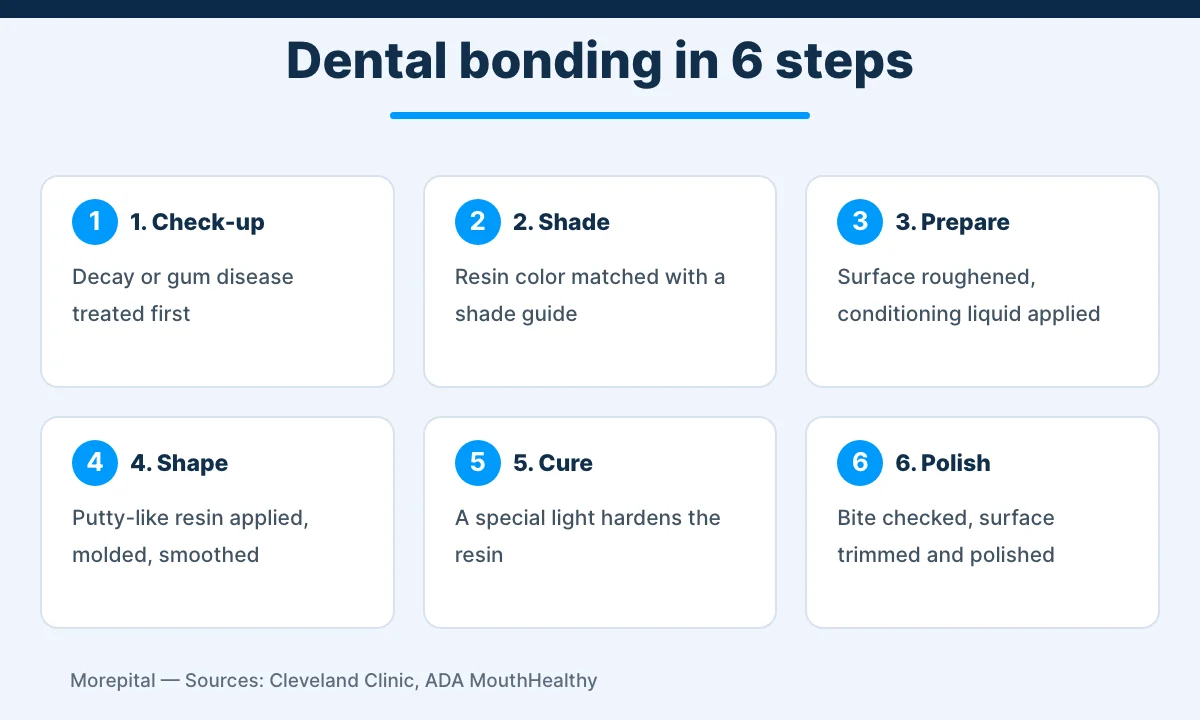
Dental bonding is usually completed in a single office visit, with no laboratory stage. A typical appointment follows these steps:
- Shade selection: the dentist uses a shade guide to choose a resin color that matches your teeth.
- Surface preparation: the tooth surface is lightly roughened and a conditioning liquid is applied so the resin can stick.
- Application and shaping: the putty-like resin is applied in layers, molded and smoothed into the desired shape.
- Curing: a special curing light hardens each layer of resin.
- Finishing: the dentist adjusts the shape, checks your bite and polishes the surface to a natural sheen.
Source: Cleveland Clinic, ADA MouthHealthy
Each tooth usually takes about 30 to 60 minutes, so treating several teeth means a longer appointment. Dental bonding is generally described as painless, and because enamel is usually left largely intact, many cases do not need a local anesthetic. An injection may still be used if the dentist needs to remove decay or reshape the tooth more than usual.
Source: Cleveland Clinic, Blum et al. 2014, Clin Cosmet Investig Dent (PMC)
Recovery after dental bonding
There is typically no downtime after dental bonding: you can go back to normal activities straight away. Some people notice short-term sensitivity, which over-the-counter pain relievers can ease. In a two-year clinical trial of veneers for closing gaps, sensitivity was reported in some teeth at first in both the composite and the porcelain groups, and it resolved within two weeks in all cases.
Source: Cleveland Clinic, Cleveland Clinic (cosmetic dentistry), Elkaffas et al. 2024, Materials (PMC)
Call your dentist if a bonded tooth has a sharp edge or if your teeth feel odd when you bite down. A high spot on the bite is usually easy to polish away at a short follow-up visit.
Source: Cleveland Clinic
Dental bonding vs veneers and crowns
Dental bonding, porcelain veneers and crowns can all improve the look of teeth, but they are very different treatments. A porcelain veneer is a thin ceramic shell bonded to the front of the tooth after a small amount of enamel is removed; it is generally not reversible. A crown covers the whole visible part of the tooth and needs much more reshaping. Bonding sits at the conservative end of the scale.
Source: Cleveland Clinic, ADA MouthHealthy, Oral Health Foundation
| Feature | Dental bonding (composite) | Porcelain veneers |
|---|---|---|
| Material | Tooth-colored composite resin, shaped on the tooth | Ceramic shell made in a laboratory |
| Enamel removal | Little or none; usually reversible | Some enamel removed; not reversible |
| Visits | Usually one | More than one |
| Typical lifespan | About 3–10 years before touch-ups or replacement | About 10–20 years before replacement |
| Staining | Somewhat stain-resistant, less than porcelain | More color-stable |
| If it chips | Often repaired chairside | Small chips may be repaired; often replaced |
| Cost | Among the least expensive cosmetic options | Higher |
Source: Cleveland Clinic, ADA MouthHealthy, Oral Health Foundation
Clinical research supports this picture but also adds nuance. In a 2024 randomized trial in 28 patients who had gaps between their upper front teeth closed, 60 direct composite veneers and 60 lithium disilicate ceramic veneers had similar survival after two years (93.4% and 95%), with no statistically significant difference. The composite veneers, however, showed significantly more marginal staining and surface roughness, which may mean more polishing and maintenance over time. The authors called their results preliminary, because two years is short and larger restorations may fail more often.
Source: Elkaffas et al. 2024, Materials (PMC)
If you are weighing a bigger change than dental bonding can offer, read our overview of porcelain veneers and our guide to the so-called Hollywood smile, a marketing term that can mean veneers, crowns or bonding. Patients thinking about porcelain abroad can also see veneers in Turkey.
Source: Cleveland Clinic (cosmetic dentistry), Oral Health Foundation
How long dental bonding lasts
Estimates vary between sources. Cleveland Clinic’s page on the procedure says dental bonding typically lasts 3 to 10 years before it needs touching up or replacing, while its broader cosmetic dentistry overview gives about five to eight years. Both agree that bonding lasts less long than porcelain veneers or crowns. How long your own bonding lasts depends on your habits and on how many teeth are treated.
Source: Cleveland Clinic, Cleveland Clinic (cosmetic dentistry)
Long-term studies show a wide range. A 2022 systematic review of 25 clinical studies of front-tooth composite restorations, covering 75,637 restorations followed for 2 to 17 years, found annual failure rates from 0% to 27.11% and survival rates from 28.6% to 100%. The authors did not pool these varied studies but judged clinical performance good overall. Smaller restorations (Class III, on the side surfaces of front teeth) failed less often than larger ones.
Source: Shah et al. 2022, J Conserv Dent (PMC)
The same review found that fracture was the most common reason a composite restoration failed, followed by esthetic problems such as color mismatch. Other factors linked with failure included the adhesive technique, the type of composite, replacing an earlier restoration and how much time was taken to complete the work, which underlines how much the result depends on careful technique.
Source: Shah et al. 2022, J Conserv Dent (PMC)
Repair rather than replacement
One practical advantage of composite is that it can often be fixed. Dental researchers describe a ladder of options: refurbishment (smoothing and polishing a dull or rough surface without adding material), repair (adding new composite to a localized chip or defect) and, as a last resort, full replacement. Repair preserves tooth structure, usually takes less time, costs less and often needs no local anesthetic if it is small. Practice-based studies cited in a 2014 review found that repaired restorations lasted as long as, or longer than, replacement restorations.
Source: Blum et al. 2014, Clin Cosmet Investig Dent (PMC)
Risks and limitations
For healthy teeth and gums, dental bonding is a low-risk procedure, and Cleveland Clinic notes that it generally carries no risks to oral health in that situation. The main drawbacks are about durability and appearance rather than safety:
- Chipping and fracture: the resin can chip over time, especially with nail biting, pen chewing or opening packages with your teeth. Fracture is the most common reason composite front-tooth restorations fail.
- Staining: composite resists stains somewhat, but less than porcelain; coffee, tea, red wine and smoking all darken it over time, and edges can pick up marginal stains.
- Surface wear: composite surfaces can become rougher and lose their shine, which may need polishing.
- Color mismatch: a mismatch in shade is one of the main esthetic reasons dental bonding is redone.
- Operator dependence: because the resin is shaped freehand, results depend heavily on the dentist’s skill; achieving symmetry across several front teeth is difficult.
Source: Cleveland Clinic, Shah et al. 2022, J Conserv Dent (PMC), Elkaffas et al. 2024, Materials (PMC)
Dental bonding on many teeth at once also raises the maintenance burden: Cleveland Clinic notes that the number of bonded teeth affects how long the work lasts, and the 2024 trial authors pointed out that larger restorations may increase failure risk. A full-mouth composite makeover is therefore a different commitment from bonding one chipped tooth.
Source: Cleveland Clinic, Elkaffas et al. 2024, Materials (PMC)
When to see a dentist urgently
Dental bonding is cosmetic, but pain is not. See a dentist promptly if a bonded tooth becomes painful, if sensitivity gets worse rather than better after the first couple of weeks, if your gums around the tooth are swollen, or if a large piece of resin breaks off and leaves a sharp edge that cuts your tongue or lip.
Source: Cleveland Clinic, Elkaffas et al. 2024, Materials (PMC)
Dental bonding aftercare and maintenance
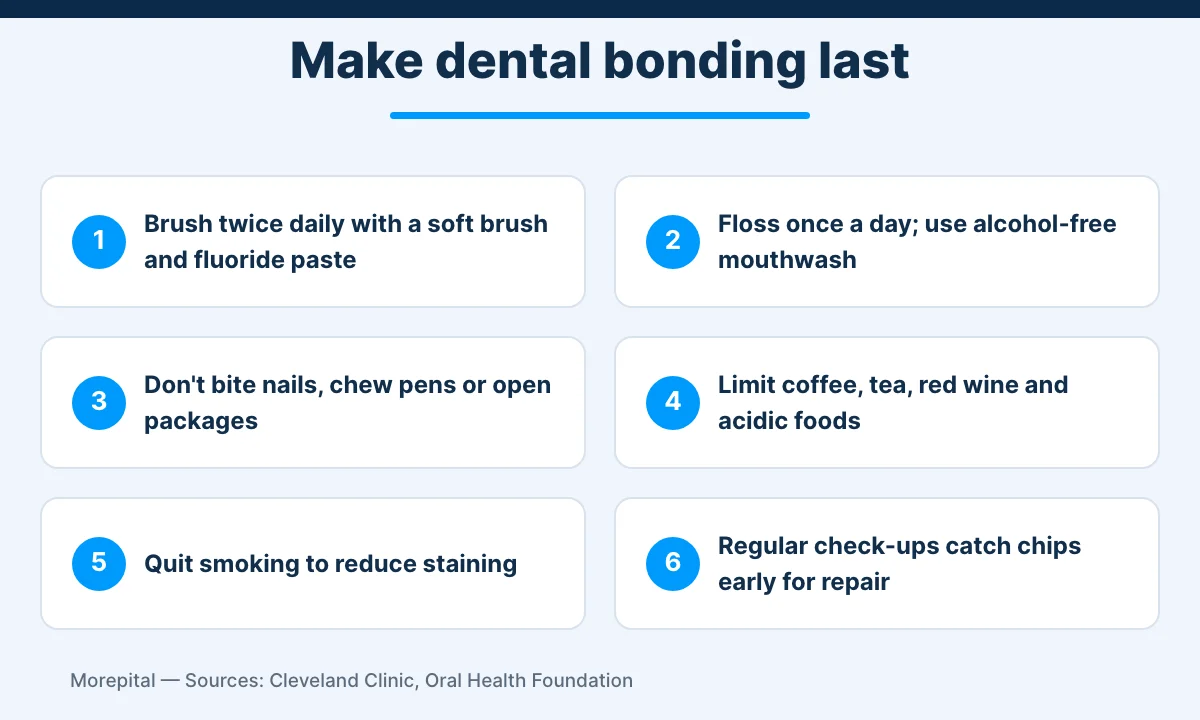
Teeth with dental bonding need the same daily care as natural teeth, plus a little extra attention to avoid chips and stains. Cleveland Clinic recommends:
- brushing twice a day with a soft toothbrush and fluoride toothpaste;
- flossing once a day;
- using an alcohol-free mouthwash;
- not biting your nails, chewing on pens or using your teeth to open packages;
- limiting coffee, tea and red wine, and acidic foods such as citrus and vinegar;
- quitting smoking if you smoke.
Source: Cleveland Clinic
Keep up regular dental check-ups. They allow your dentist to spot small chips, rough patches or stained edges early, when a quick polish or a small repair is enough. The Oral Health Foundation gives the same advice for making veneers last.
Source: Oral Health Foundation, Blum et al. 2014, Clin Cosmet Investig Dent (PMC)
Choosing a dentist, at home or abroad
Because dental bonding is shaped by hand, the dentist’s skill matters as much as the material. Before you agree to treatment, ask to see the dentist’s own before-and-after photos of similar cases, how many teeth they recommend bonding and why, which alternatives they considered, how long they expect the result to last, and what touch-ups or repairs will cost later. A good plan explains why dental bonding suits you better than whitening, orthodontics or porcelain.
Source: Cleveland Clinic, General Dental Council
Dental bonding in Turkey and other countries
Many international patients travel for cosmetic dental work, including to Turkey. Dental bonding abroad is in some ways easier to have abroad than porcelain veneers or implants, because it usually needs only one visit and no laboratory stage. The usual cautions still apply. The UK’s General Dental Council advises checking whether the country has a dental regulator, making sure a qualified dentist assesses you before you get a treatment plan and price, and not committing on the day if you are unhappy with the answers.
Source: Cleveland Clinic, Oral Health Foundation, General Dental Council
Useful questions to ask a clinic abroad include:
- Who will carry out the treatment, and what are their qualifications and registration?
- Will the team speak your language, or will an interpreter be provided?
- Is the work guaranteed, and for how long?
- What happens if you are unhappy with the result, and who pays for extra travel and remedial work?
- Who can you contact for advice after you return home?
- Can you see a copy of the clinic’s complaints procedure?
Source: General Dental Council
The NHS treatment-abroad checklist adds warning signs to watch for: high-pressure sales, limited information, rushed decisions, no discussion of complications and no aftercare plan. It also advises a second opinion from your own dentist, travel insurance and budgeting for return trips; the NHS does not reimburse dental treatment abroad. The Oral Health Foundation links many complaints to language barriers and notes that a Which? report found over a quarter of patients treated abroad did not feel they received the follow-up care they needed.
Source: NHS, Oral Health Foundation
Tell your regular dentist about your plans before you travel, and ask for a written record of the dental bonding, including the material and shade used. That makes future touch-ups and repairs much easier, whether you return to the same clinic or see a dentist at home.
Source: General Dental Council, NHS
Considering dental bonding? Contact us for a free consultation and a treatment plan tailored to you.
Dental bonding: frequently asked questions
Is dental bonding permanent?
No. Dental bonding typically lasts about 3 to 10 years before it needs touch-ups or replacement, depending on your habits and how many teeth are treated. Because little or no enamel is removed, it is usually reversible.
Source: Cleveland Clinic
Does dental bonding hurt?
The procedure is generally painless and often does not need a local anesthetic. Some people have short-term sensitivity afterwards, which over-the-counter pain relievers can ease.
Source: Cleveland Clinic, Blum et al. 2014, Clin Cosmet Investig Dent (PMC)
Can bonded teeth be whitened?
Whitening only lightens natural teeth, not dental work. If you want whiter teeth, whiten first and have the bonding matched to the new shade; whitening later can leave bonded teeth darker than the rest.
Source: NHS
Is dental bonding better than veneers?
Neither is better for everyone. Bonding is quicker, cheaper, reversible and easier to repair; porcelain veneers resist stains better and last longer, about 10 to 20 years, but need enamel removal and more visits.
Source: Cleveland Clinic, ADA MouthHealthy
How long does dental bonding take?
About 30 to 60 minutes per tooth, usually in one appointment, with no downtime afterwards.
Source: Cleveland Clinic
Can a chipped bonded tooth be fixed?
Often, yes. Small chips or rough areas can usually be polished or repaired by adding fresh composite, which preserves tooth structure and is quicker than replacing the whole restoration.
Source: Blum et al. 2014, Clin Cosmet Investig Dent (PMC)
Is dental bonding available on the NHS?
The NHS dental treatments page does not list bonding separately. It says whitening is cosmetic and generally only available privately, and veneers too unless there is a clinical need. Ask your dentist how your case would be treated.
Source: NHS
Disclaimer: this article is for general health education and does not replace advice from a qualified doctor who can assess your individual case. Last updated: October 2026.