
PCOS (polycystic ovary syndrome) is a common, lifelong hormonal and metabolic condition that typically causes irregular or missed periods, signs of excess male-type hormones such as unwanted facial hair and acne, and difficulty getting pregnant. Doctors diagnose it when at least two of three features are present after other causes are ruled out: irregular ovulation, high androgens, and polycystic-looking ovaries on ultrasound or a high AMH level. There is no cure, but lifestyle changes, hormonal medicines, metformin and fertility drugs such as letrozole control symptoms well for most people.
Source: WHO, NHS, International Guideline 2023 (Human Reproduction)
Source: WHO, Monash Health, Office on Women’s Health (HHS), International Guideline 2023 (Human Reproduction)
Contents
- What is PCOS, and why is it now called PMOS?
- PCOS symptoms: what to look for
- What causes it: insulin, androgens and genes
- How PCOS is diagnosed: the two-out-of-three rule
- Long-term health risks and the checks you need
- PCOS treatment options
- PCOS and fertility: getting pregnant
- Pregnancy, mood and body image
- When to see a doctor
- PCOS: frequently asked questions
What is PCOS, and why is it now called PMOS?

Polycystic ovary syndrome is one of the most common hormone disorders in women. It usually begins around puberty and continues until menopause, and it can affect anyone with ovaries. The CDC notes that it can appear as early as age 11 or 12, around the first period, but most people are diagnosed in their 20s or 30s, often when they have trouble conceiving. The severity varies widely: some people have many symptoms, others very few or none at all.
Source: NHS, CDC, Cleveland Clinic
Estimates of how common PCOS is differ between sources, mainly because they use different definitions and populations. The WHO puts it at 10–13% of women of reproductive age, the US Office on Women’s Health says about 1 in 10 women of childbearing age, Cleveland Clinic says up to 15%, and Monash Health, which led the renaming effort, describes it as affecting about 1 in 8 women worldwide. Whatever the exact figure, it is very common and widely underdiagnosed.
Source: WHO, Office on Women’s Health (HHS), Cleveland Clinic, Monash Health
The new name: polyendocrine metabolic ovarian syndrome
On 12 May 2026 a global consensus published in The Lancet renamed the condition polyendocrine metabolic ovarian syndrome (PMOS). The process, led from Monash University in Australia, took 14 years and drew on more than 22,000 survey responses and over 50 patient and professional organizations. The reason is simple: the old name made people focus on ovarian cysts, yet research shows no increase in abnormal cysts in this condition. The “cysts” seen on scans are not true cysts but many small follicles. The new name reflects a long-term hormonal and metabolic disorder that affects weight, mental health, skin and fertility.
Source: Monash Health, Endometriosis UK, NICHD (NIH)
The switch will happen gradually over three years and is expected to be fully adopted in the 2028 update of the international guideline. The NHS and NICHD already use the term PMOS, but most doctors, clinics and patients still say PCOS, so this article uses the familiar name. Both terms describe the same condition.
Source: Monash Health, NHS, NICHD (NIH)
PCOS symptoms: what to look for
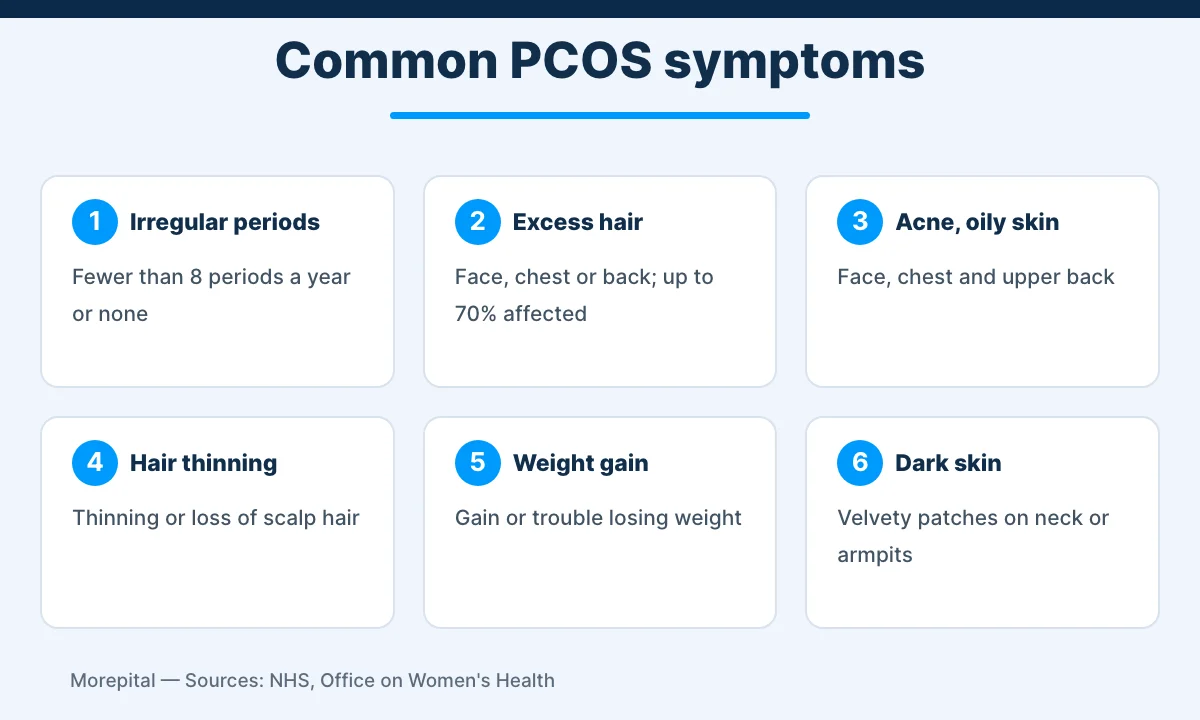
PCOS symptoms come from three overlapping problems: irregular ovulation, higher levels of androgens (hormones such as testosterone), and insulin resistance. The most common signs are:
- Irregular, infrequent or absent periods – for example fewer than eight periods a year, or periods that come every 21 days or more often. Bleeding can sometimes be heavy.
- Excess hair growth (hirsutism) on the face, chest, back or stomach, which affects up to 70% of women with PCOS.
- Thinning scalp hair or hair loss in a male-type pattern.
- Oily skin and acne, often on the face, chest and upper back.
- Weight gain or difficulty losing weight.
- Dark, thick, velvety skin patches (acanthosis nigricans) on the neck, armpits, groin or under the breasts, and skin tags.
- Difficulty getting pregnant, because the ovaries do not release an egg every month.
- Tiredness, low mood or anxiety.
Source: NHS, Office on Women’s Health (HHS), Cleveland Clinic
Not everyone has all of these. Some people have regular periods but high androgens, and some people have irregular cycles without any visible skin or hair changes. Because acne, hair thinning and weight change are so common in the general population, PCOS is easy to miss. If stubborn adult acne is your main concern, our guide to acne treatment explains the creams and tablets that also help hormonal acne, and our article on minoxidil for hair loss covers one option for thinning scalp hair.
Source: Cleveland Clinic, International Guideline 2023 (Human Reproduction)
What causes it: insulin, androgens and genes
The exact cause of PCOS is unknown, but experts agree that genes, high androgen levels and high insulin levels all play a part. In insulin resistance, the body’s cells respond poorly to insulin, so the pancreas makes more of it. Those high insulin levels push the ovaries to produce more androgens, and the excess androgens interfere with the normal development and release of eggs, which leads to irregular cycles.
Source: Office on Women’s Health (HHS), Cleveland Clinic
Several factors raise the chance of having the condition:
- Family history – risk is higher if a mother, sister or other close relative has it.
- Ethnic background – the NHS notes a higher risk in people of Asian background.
- Excess weight – obesity is a major contributor and makes symptoms worse; Cleveland Clinic reports that 40–80% of people with PCOS have obesity. Read more on our obesity reference page.
Source: NHS, Cleveland Clinic
Chronic low-grade inflammation is also common in PCOS. Genetic research suggests there may be two or more distinct subtypes, which may help explain why people experience it so differently. Excess weight is not essential: the guideline notes that diabetes risk is raised regardless of BMI, so a healthy weight does not rule PCOS out.
Source: Cleveland Clinic, NICHD (NIH), International Guideline 2023 (Human Reproduction)
How PCOS is diagnosed: the two-out-of-three rule
There is no single test for PCOS. In adults, the international guideline and the WHO recommend diagnosis when at least two of these three features are present and other causes have been excluded:
- Irregular cycles or no ovulation. From three years after the first period until perimenopause, cycles shorter than 21 days, longer than 35 days, or fewer than eight cycles a year are considered irregular. In the first three years after the first period, the cut-offs are under 21 or over 45 days.
- High androgens, shown either clinically (mainly hirsutism) or on a blood test for total and free testosterone.
- Polycystic ovarian morphology on ultrasound, meaning 20 or more follicles in at least one ovary on a modern scan, or a raised anti-Müllerian hormone (AMH) level.
Source: International Guideline 2023 (Human Reproduction), WHO
If you have both irregular cycles and high androgens, an ultrasound or AMH test is not needed to confirm the diagnosis. Doctors should use either ultrasound or AMH, not both, to avoid overdiagnosis. A transvaginal scan gives the clearest picture, and the NHS offers ovarian scans for this purpose only to people over 18.
Source: International Guideline 2023 (Human Reproduction), NHS
Tests that rule out other conditions
Because other problems can cause irregular periods and excess hair, your doctor will usually take a history, examine you and order blood tests. These typically include hormone levels and glucose or insulin markers, and doctors exclude other causes of high androgens such as congenital adrenal hyperplasia, Cushing’s syndrome and ovarian hyperthecosis. If you have a regular cycle but other features, a blood progesterone test in the second half of the cycle can show whether you are ovulating. If you have symptoms such as tiredness and weight change, our guide to diabetes symptoms explains the blood sugar tests you may also be offered.
Source: Cleveland Clinic, NHS, International Guideline 2023 (Human Reproduction)
Diagnosis in teenagers
Irregular periods and acne are normal in the first years after puberty, so diagnosing PCOS in adolescents needs extra care. The guideline says ultrasound and AMH should not be used for teenagers, so diagnosis relies on irregular cycles and signs of high androgens. Teenagers with some features but not a full diagnosis can be labeled “at increased risk” and reassessed at or before eight years after their first period.
Source: International Guideline 2023 (Human Reproduction), WHO
Long-term health risks and the checks you need
PCOS is not only a fertility or cosmetic problem. It persists beyond the reproductive years and raises the risk of several serious conditions:
- Insulin resistance, prediabetes and type 2 diabetes – the CDC reports that more than half of women with the condition develop type 2 diabetes by age 40. See our type 2 diabetes reference page.
- High blood pressure, high cholesterol and cardiovascular disease, with heart disease risk rising with age.
- Obstructive sleep apnea, especially in people with excess weight.
- Fatty liver disease, which can progress to liver inflammation (steatohepatitis).
- Endometrial hyperplasia and womb (endometrial) cancer, with a markedly higher risk before menopause.
Source: WHO, CDC, NHS, Cleveland Clinic
For this reason, the international guideline recommends that everyone with PCOS has a cardiovascular risk assessment. In practice that means a cholesterol (lipid) test at diagnosis, a blood pressure check every year, and a check of blood sugar at diagnosis repeated every one to three years. The 75 g oral glucose tolerance test (OGTT) is the most accurate way to detect diabetes in this group. People with snoring, daytime sleepiness or other signs of sleep apnea should be screened. Routine ultrasound screening of the womb lining is not recommended, but unusual or prolonged bleeding should be checked. Our article on high cholesterol explains what your lipid results mean.
Source: International Guideline 2023 (Human Reproduction), NHS
PCOS treatment options
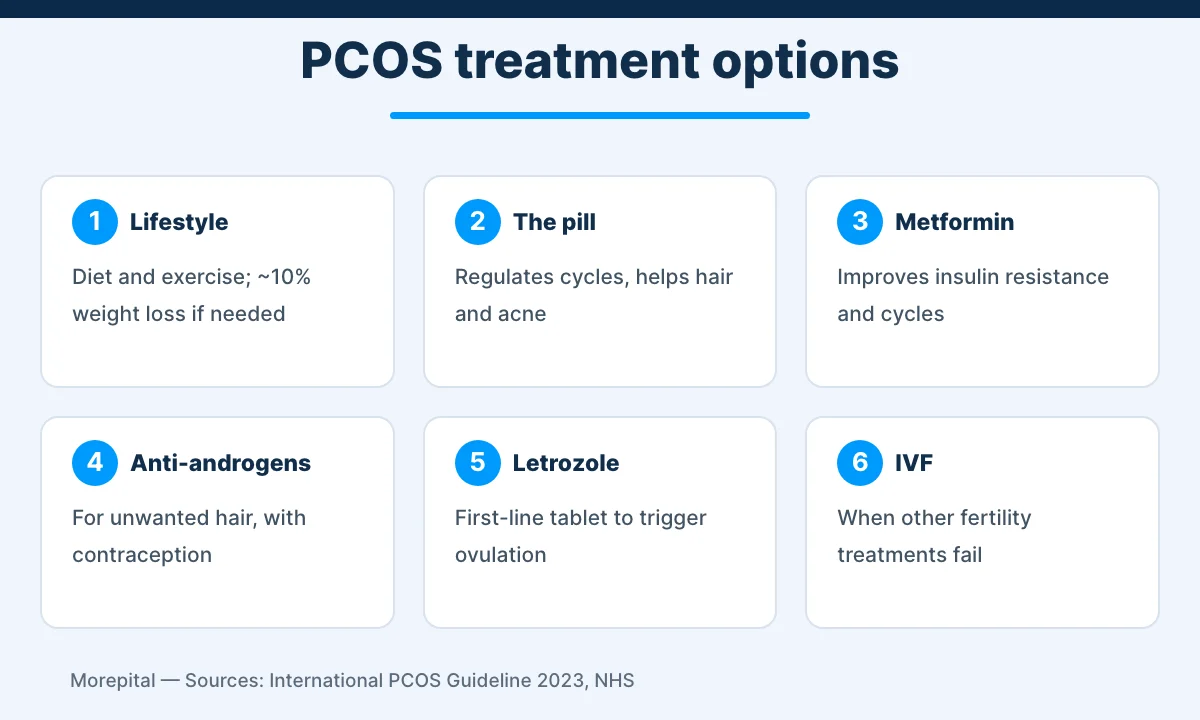
There is no cure for PCOS, but treatment is very effective at controlling symptoms. The right plan depends on your main goals: regular periods, clearer skin, less hair growth, weight management, or pregnancy.
Source: WHO, Cleveland Clinic
Lifestyle: the foundation for everyone
The international guideline recommends healthy lifestyle support, including diet and exercise with behavioral strategies, for all women with the condition. No single diet type or form of exercise has been proven better than others, so the best plan is one you can maintain. If you are overweight, losing around 10% of your body weight, about 15 pounds (7 kg) for a 150-pound (68 kg) woman, can make your periods more regular and improve your chance of pregnancy. Preventing further weight gain is a lifelong goal, and doctors are encouraged to avoid weight stigma, which can make people less likely to seek care.
Source: International Guideline 2023 (Human Reproduction), Office on Women’s Health (HHS)
Medicines for periods, skin and hair
- Hormonal contraception – the combined pill regulates irregular cycles and can reduce hirsutism and acne; a progestogen-only pill or hormonal IUS (coil) are other options for irregular periods.
- Metformin – an insulin-sensitizing diabetes drug that can improve cycles and metabolic health; the guideline suggests considering it in adults with a BMI of 25 or more.
- Anti-androgens such as spironolactone – for unwanted hair, usually considered after at least six months of the pill or cosmetic treatment, and always with reliable contraception because they can harm a developing baby.
- Eflornithine cream – slows facial hair growth.
- Weight-loss medicines – liraglutide, semaglutide or orlistat may be considered alongside lifestyle changes.
- Skin treatments – creams or tablets for acne.
Source: NHS, International Guideline 2023 (Human Reproduction), Cleveland Clinic
Inositol supplements are popular, but the guideline says the evidence for benefit is limited and metformin is preferred for hirsutism. Laser or light hair removal should be considered for facial hair, and shaving, waxing, creams and electrolysis are all reasonable options. For people with severe obesity, bariatric (metabolic) surgery may also be considered to improve weight, metabolic and reproductive outcomes.
Source: International Guideline 2023 (Human Reproduction), NHS
| Goal | Main options | Notes |
|---|---|---|
| Regular periods | Combined pill, progestogen pill or IUS, metformin | Lifestyle and weight loss also help |
| Unwanted hair | Combined pill, laser, eflornithine, anti-androgens | Anti-androgens need reliable contraception |
| Acne | Combined pill, acne creams or tablets | Hormonal and skin treatments can be combined |
| Weight and metabolic health | Diet, exercise, metformin, GLP-1 drugs, orlistat, bariatric surgery | About 10% weight loss can restore cycles |
| Pregnancy | Letrozole, clomiphene, gonadotropins, ovarian drilling, IVF | Letrozole is first-line |
Source: International Guideline 2023 (Human Reproduction), NHS, Office on Women’s Health (HHS)
PCOS and fertility: getting pregnant
PCOS is the most common cause of infertility due to lack of ovulation, but it is also one of the most treatable. The problem is usually that the ovaries do not release an egg each month, so the main aim of treatment is to restore ovulation. Many people with the condition conceive naturally, sometimes after lifestyle changes alone.
Source: NICHD (NIH), Office on Women’s Health (HHS), NHS
Step-by-step fertility treatment
- Letrozole – the 2023 international guideline recommends this tablet as the first-line medicine to induce ovulation in women with PCOS who have no other fertility problems, and says it should be used in preference to clomiphene.
- Clomiphene (clomifene) – an older ovulation tablet that remains widely used; the guideline says combining it with metformin could improve ovulation and pregnancy rates compared with clomiphene alone, and notes that it raises the risk of multiple pregnancy, so cycles may need ultrasound monitoring.
- Gonadotropin injections – hormone injections that stimulate the ovaries directly, an option for people who do not respond to clomiphene.
- Laparoscopic ovarian drilling – keyhole surgery that uses heat or laser on the ovaries. It is offered when tablets fail and usually restores ovulation for six to eight months.
- In vitro fertilization (IVF) – an option when other treatments have not worked or there are additional fertility factors.
Source: International Guideline 2023 (Human Reproduction), NHS, Office on Women’s Health (HHS), Cleveland Clinic
Before trying to conceive, the guideline recommends checking blood pressure and blood sugar (with an OGTT) because PCOS makes pregnancy higher-risk. Because most people are diagnosed in their 20s or 30s while trying to conceive, raising irregular periods with your doctor before you start trying can save time.
Source: International Guideline 2023 (Human Reproduction), Cleveland Clinic
Pregnancy, mood and body image
Most people with PCOS have healthy pregnancies, but the risks are higher. Studies summarized by the Office on Women’s Health and Cleveland Clinic show more miscarriage, gestational diabetes, preeclampsia, preterm birth and cesarean delivery, and babies have a higher chance of being large for their age (macrosomia). Many of these risks are linked to obesity, diabetes or high blood pressure, which is why the guideline advises a glucose tolerance test at 24–28 weeks of pregnancy.
Source: Office on Women’s Health (HHS), Cleveland Clinic, International Guideline 2023 (Human Reproduction)
PCOS also affects emotional health. The WHO lists anxiety, depression, eating disorders and negative body image as common, and notes that infertility, weight and unwanted hair carry social stigma. The international guideline recommends that all adults and teenagers be screened for depression, and all adults for anxiety, and that eating disorders be considered regardless of weight. The NHS recommends talking therapy for low mood or anxiety linked to PCOS.
Source: WHO, International Guideline 2023 (Human Reproduction), NHS
Does PCOS go away after menopause?
Sources describe this slightly differently. Cleveland Clinic says symptoms often resolve after menopause and the NHS says some symptoms may stop or change, but the Office on Women’s Health stresses that although cycles often become more regular near menopause, the underlying hormonal imbalance does not change with age. Metabolic risks such as diabetes and heart disease therefore still need monitoring later in life.
Source: Cleveland Clinic, NHS, Office on Women’s Health (HHS)
When to see a doctor
See a doctor or GP if you have irregular or missed periods, excess facial or body hair, persistent acne, thinning scalp hair, or difficulty getting pregnant, or if any of these symptoms affect your daily life, work or relationships. It is not an emergency, but early diagnosis means earlier screening for diabetes and heart risk. You may be referred to a gynecologist or an endocrinologist. Heavy bleeding can occur with irregular cycles, and since the risk of womb cancer is higher, any unusual or very heavy bleeding deserves prompt assessment.
Source: NHS, Cleveland Clinic, WHO
Before your appointment, track your cycle dates for a few months, note any hair, skin or weight changes, list family members with the condition or diabetes, and write down your goals, such as regular periods or pregnancy. This makes the first consultation much more productive.
Source: NHS, International Guideline 2023 (Human Reproduction)
PCOS: frequently asked questions
Can you have PCOS without cysts on your ovaries?
Yes. Ovarian “cysts” are not required for diagnosis: two of the three criteria are enough, and the follicles seen on scans are not true cysts. This is one reason the condition was renamed PMOS.
Source: WHO, Monash Health
Can you have PCOS with regular periods?
Yes. If you have high androgens and polycystic-looking ovaries or a high AMH level, you can meet the criteria even with regular cycles. A progesterone blood test can show whether you are ovulating.
Source: International Guideline 2023 (Human Reproduction)
Can thin women get PCOS?
Yes. Obesity is common but not universal: estimates suggest 40–80% of people with PCOS have obesity, so many do not. Diabetes risk is raised regardless of BMI, and metformin may be considered even below a BMI of 25.
Source: Cleveland Clinic, International Guideline 2023 (Human Reproduction)
Is PCOS curable?
No, but it is very manageable. Lifestyle changes, the pill, metformin, hair and skin treatments and fertility medicines control symptoms for most people.
Can I get pregnant with PCOS?
Yes, most people with PCOS can. Many conceive naturally or with ovulation tablets such as letrozole; injections, ovarian drilling and IVF are further options.
Source: International Guideline 2023 (Human Reproduction), Office on Women’s Health (HHS)
Does PCOS cause diabetes?
It greatly raises the risk. More than half of women with PCOS develop type 2 diabetes by age 40, so regular blood sugar checks are advised.
Source: CDC, International Guideline 2023 (Human Reproduction)
Is AMH a reliable PCOS test?
In adults, a high AMH level can replace the ultrasound criterion, but it should never be used alone to diagnose the condition and should not be used in teenagers.
Source: International Guideline 2023 (Human Reproduction)
Disclaimer: this article is for general health education and does not replace advice from a qualified doctor who can assess your individual case. Last updated: October 2026.