High cholesterol means there is too much cholesterol, a fatty substance, in your blood. Over time it can build up in the artery walls, narrowing them and making a heart attack or stroke more likely. It usually causes no symptoms, so the only way to know your numbers is a blood test, and most people can bring their levels down with diet, exercise and, when needed, medicines such as statins.
Contents
- What is high cholesterol?
- LDL, HDL and triglycerides explained
- High cholesterol levels in mg/dL and mmol/L
- Does high cholesterol cause symptoms?
- Causes and risk factors of high cholesterol
- Cholesterol testing: who, when and how
- Diet and lifestyle changes that lower cholesterol
- Statins and other medicines for high cholesterol
- Why it matters and when to see a doctor
- High cholesterol: frequently asked questions
What is high cholesterol?

Cholesterol is a waxy, fat-like substance that your body needs to stay healthy, but only in the right amounts. It cannot travel through the blood on its own, so it is carried in particles called lipoproteins. Your genes and your daily habits both play a major role in how much of it ends up circulating in your bloodstream.
Source: NHLBI
When levels are too high, the excess, especially LDL cholesterol, can build up as plaque inside the arteries. Plaque narrows the vessels and can block blood flow, which is why high cholesterol is a key risk factor for heart disease, chest pain (angina), heart attack and stroke. The problem is common: in the United States, about 86 million adults aged 20 or older had total cholesterol above 200 mg/dL between 2017 and 2020, and nearly 25 million had levels above 240 mg/dL. About 7% of US children and adolescents aged 6 to 19 also have high total cholesterol.
Source: CDC, CDC High Cholesterol Facts
LDL, HDL and triglycerides explained
The blood test used to check for high cholesterol, often called a lipid panel or lipid profile, reports several numbers. Each one tells you something different about your heart risk:
- LDL (low-density lipoprotein) cholesterol is often called “bad” cholesterol. High LDL drives plaque buildup in the arteries, which can lead to heart disease and stroke.
- HDL (high-density lipoprotein) cholesterol is often called “good” cholesterol. Higher HDL levels are linked to a lower risk of heart disease and stroke.
- Triglycerides are a type of blood fat the body uses for energy. High triglycerides combined with low HDL or high LDL can raise the risk of heart attack and stroke.
- Total cholesterol is the overall amount of cholesterol in the blood.
Source: CDC, CDC Cholesterol Testing
UK reports usually also show non-HDL cholesterol, which is your total cholesterol minus HDL. It includes LDL and the other cholesterol-carrying particles that can harm arteries, and the NHS refers to it as “bad” cholesterol. Some labs calculate LDL rather than measuring it directly, using the Friedewald equation (total cholesterol minus HDL minus triglycerides divided by 5, in mg/dL), which is only valid when triglycerides are 400 mg/dL or lower.
Source: NHS, CDC NHANES documentation
Another marker, lipoprotein(a) or Lp(a), is largely inherited. MedlinePlus notes that doctors are more likely to recommend medicine when Lp(a) is 50 mg/dL or higher, or when LDL is 160 mg/dL or higher.
Source: MedlinePlus
High cholesterol levels in mg/dL and mmol/L
The United States reports cholesterol in milligrams per deciliter (mg/dL), while the UK, Europe and many other countries use millimoles per liter (mmol/L). To convert, multiply a cholesterol value in mg/dL by about 0.0259 to get mmol/L, and multiply triglycerides in mg/dL by about 0.0113. This matters if you compare high cholesterol results from different countries. The mmol/L figures in the table below are approximate conversions, except where UK guidance gives its own numbers.
Source: CDC NHANES documentation
| Measure | Desirable (adults) | Borderline / elevated | High |
|---|---|---|---|
| Total cholesterol | Below 200 mg/dL (5.2 mmol/L); NHS: below 5 mmol/L | 200–239 mg/dL (5.2–6.2 mmol/L) | 240 mg/dL (6.2 mmol/L) or higher |
| LDL cholesterol | Below 100 mg/dL (2.6 mmol/L) | 100–129 elevated; 130–159 borderline high (2.6–4.1 mmol/L) | 160–189 high; 190+ very high (4.1 / 4.9 mmol/L) |
| HDL cholesterol | Men 40+ mg/dL, women 50+ mg/dL; ideal 60–80 mg/dL. NHS: above 1.0 (men) / 1.2 mmol/L (women) | Below 40 (men) or 50 mg/dL (women) is low | Above 80 mg/dL may not be healthy |
| Non-HDL cholesterol | NHS: below 4 mmol/L | — | — |
| Triglycerides | Below 150 mg/dL (1.7 mmol/L) | 150–199 mg/dL mild (1.7–2.2 mmol/L) | 200–499 moderate; 500+ severe (2.3 / 5.6 mmol/L) |
Source: Cleveland Clinic, NHS, Cleveland Clinic (triglycerides)
Your personal LDL target
These ranges are for healthy adults. Your doctor may set a lower target depending on your age, other conditions and overall cardiovascular risk. MedlinePlus lists LDL goals of below 100 mg/dL (2.6 mmol/L) for people at moderate risk, below 70 mg/dL (1.8 mmol/L) for people at high risk or with diabetes, and below 55 mg/dL (1.4 mmol/L) after a heart attack or stroke. Illness, some medicines and recent childbirth can also temporarily push results up or down.
Source: MedlinePlus, NHS
Does high cholesterol cause symptoms?
Usually not. High cholesterol rarely causes any symptoms, and many people only find out they have it from a routine blood test. That is why it is often described as a silent risk factor: you can feel completely well while plaque slowly builds up in your arteries. The first sign may be a complication such as angina, a heart attack or a stroke.
Visible signs of very high, inherited cholesterol
When levels are very high, usually because of an inherited condition called familial hypercholesterolemia (FH), some people develop visible signs:
- Fatty bumps on the skin (xanthomas), most often on the elbows, knees, knuckles, hands, ankles or buttocks
- A swollen or painful Achilles tendon
- Yellowish patches around the eyes
- A grayish-white ring or half-moon arc around the cornea (corneal arcus)
Not everyone with FH has these signs. FH affects about 1 in 311 people and is suspected when LDL is above 190 mg/dL (4.9 mmol/L) in adults or above 160 mg/dL (4.1 mmol/L) in children, especially with a family history of early heart disease. Without treatment, heart attacks occur in about 50% of men with FH by age 50 and 30% of women by age 60, but early diagnosis and treatment can cut the risk of coronary artery disease by about 80%. Once a gene change is found, relatives can be tested for the same change.
Source: CDC
Causes and risk factors of high cholesterol
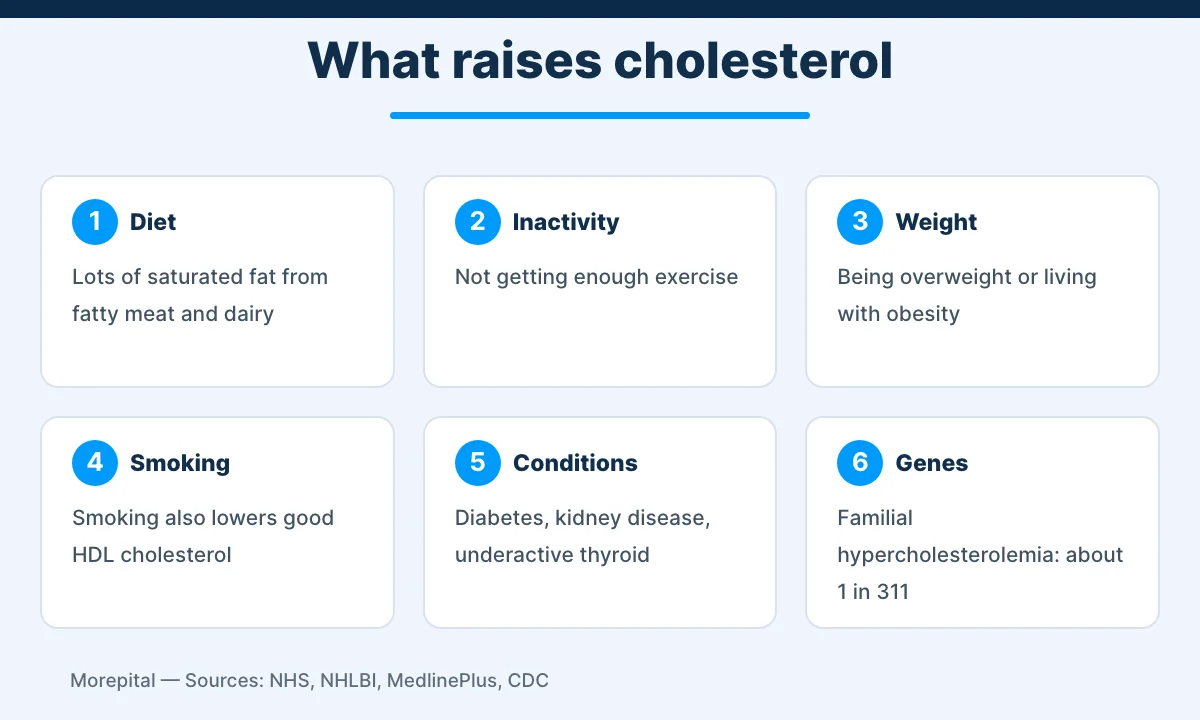
Most cases come from a mix of genes and lifestyle. Lifestyle factors include eating a lot of foods high in saturated fat, such as fatty red meat and full-fat dairy, not exercising enough, being overweight and smoking, which also lowers HDL. Drinking alcohol can raise levels too. High cholesterol is most often diagnosed between ages 40 and 59, partly because the liver becomes less efficient at clearing LDL with age.
Source: NHLBI, MedlinePlus, NHS
According to the NHS, you are also more likely to have it if you are over 50, a man, past the menopause, of South Asian or sub-Saharan African origin, or if it runs in your family.
Source: NHS
Medical conditions and medicines
Several health problems raise cholesterol, including type 2 diabetes, obesity, chronic kidney disease, an underactive thyroid (hypothyroidism), polycystic ovary syndrome (PCOS), HIV, lupus and sleep apnea. Pregnancy can raise levels too. Some medicines taken for other conditions can increase LDL, including beta-blockers, diuretics, steroids, retinoids, some birth control pills and some antidepressants.
Source: NHLBI, MedlinePlus
What pushes triglycerides up
High triglycerides have some causes of their own: heavy alcohol use, uncontrolled diabetes, a diet high in sugar and simple carbohydrates, liver or kidney disease, smoking, thyroid disease, a body mass index above 25 and inactivity. Very high triglycerides also raise the risk of pancreatitis, a painful and potentially life-threatening inflammation of the pancreas.
Source: Cleveland Clinic
Because diabetes and high cholesterol so often go together, it is worth knowing the early diabetes symptoms and getting both checked if you have risk factors.
Source: CDC
Cholesterol testing: who, when and how
The CDC says most healthy adults should have their cholesterol checked every 4 to 6 years, and more often if they have heart disease, diabetes or a family history of high cholesterol. Children should be screened at least once between ages 9 and 11 and again between 17 and 21; those with obesity or diabetes may need more frequent checks. Cleveland Clinic suggests more frequent testing with age: every one to two years for men aged 45 to 65 and women aged 55 to 65, and every year after 65.
Source: CDC, Cleveland Clinic
In England, adults over 40 may have a cholesterol test as part of the NHS Health Check. The NHS advises asking your GP surgery for a test if you have never had one and you are over 40, overweight, or have high cholesterol or heart problems in the family.
Source: NHS
What happens during the test
A high cholesterol check is simple. Usually a small blood sample is taken from your arm and sent to a lab, with results in a few days. A finger-prick test, available at some pharmacies, gives a reading within minutes. Guidance on fasting varies: the NHS says most people do not need to fast and that fasting has little effect on the results, while the CDC notes you may be asked to avoid food and drink for 8 to 12 hours. Follow the instructions from whoever orders your test.
Diet and lifestyle changes that lower cholesterol
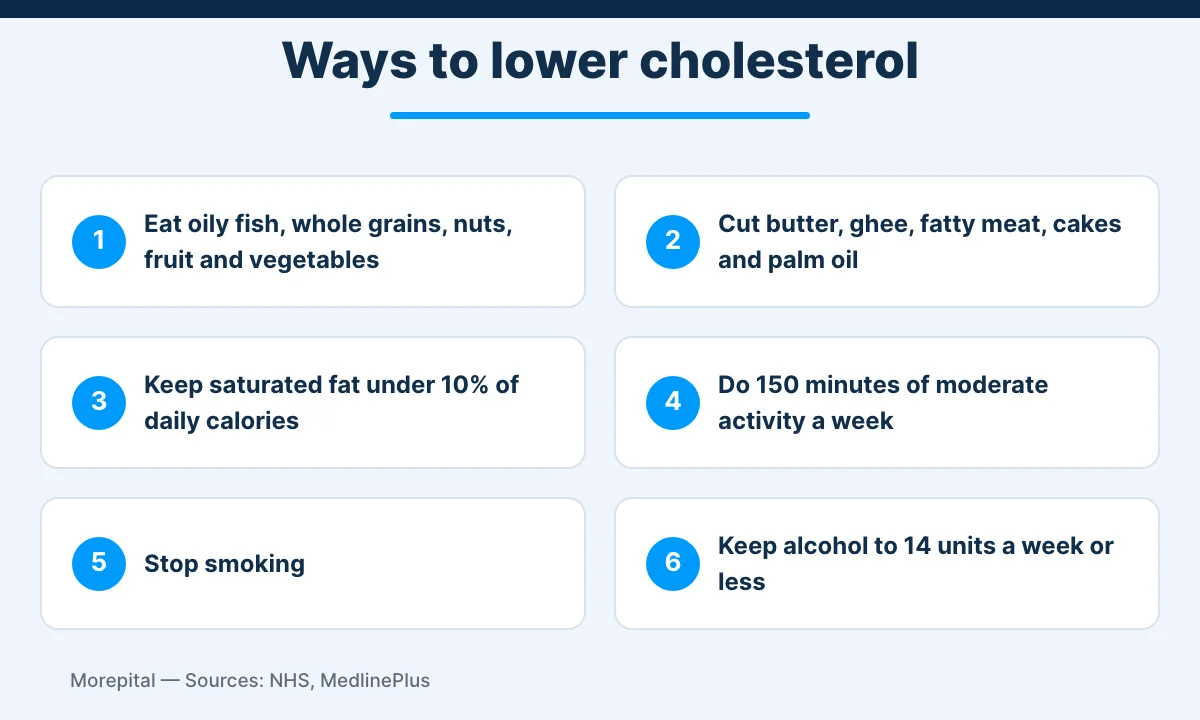
Lifestyle changes are the first step for almost everyone with high cholesterol, and they remain important even if you take medicine. US eating plans such as TLC (Therapeutic Lifestyle Changes) and DASH focus on limiting saturated fat, eating whole grains, fruits and vegetables, and using little or no salt.
Source: NHLBI
Foods that help with high cholesterol
The NHS recommends oily fish such as mackerel and salmon, olive or rapeseed (canola) oil and spreads made from them, wholegrain foods such as brown rice, wholegrain bread and wholewheat pasta, nuts and seeds, and plenty of fruit and vegetables. Swapping red meat for skinless chicken or fish a few days a week, and choosing low-fat or nonfat milk, yogurt and cheese, also reduces saturated fat.
Source: NHS, MedlinePlus
Oats are a useful addition. The European Food Safety Authority concluded that oat beta-glucan, a type of soluble fiber, lowers blood LDL cholesterol, and that foods should provide at least 3 g of oat beta-glucan per day to carry that health claim.
Source: EFSA Journal (via PMC)
Foods to limit if you have high cholesterol
Reduce meat pies, sausages and fatty meat; butter, lard and ghee; cream and cheese; cakes and biscuits; and foods containing coconut or palm oil. Check food labels for saturated fat. US guidance is to keep saturated fat below 10% of daily calories, which is about 22 g a day on a 2,000-calorie diet, and to get no more than 25% to 30% of calories from fat overall. Trans fat is also harmful and worth avoiding.
Source: NHS, MedlinePlus
Exercise, smoking, alcohol and weight
To help bring down high cholesterol, aim for at least 150 minutes of moderate-intensity activity, such as brisk walking, swimming or cycling, or 75 minutes of vigorous activity each week. Stopping smoking is one of the most important changes: MedlinePlus calls quitting the single biggest step you can take to reduce your risk of heart attack and stroke. Keep alcohol to no more than 14 units a week, spread over 3 or more days, with several alcohol-free days. Reaching a healthy weight, sleeping well and managing stress also help.
Source: NHS, MedlinePlus, NHLBI
Reaching a healthy weight is part of every cholesterol plan. For people living with severe obesity who have not managed to lose weight with diet and exercise alone, a specialist may discuss further options, including weight-loss surgery such as a gastric sleeve.
Source: NHLBI
Statins and other medicines for high cholesterol
You may need medicine if your levels have not improved after diet and lifestyle changes, or if you are at high risk of a heart attack or stroke. Statins are the most common treatment. They reduce the amount of cholesterol made in the liver by blocking an enzyme called HMG-CoA reductase, and they lower the risk of heart attack and stroke. Common examples are atorvastatin, fluvastatin, pravastatin, rosuvastatin and simvastatin, usually taken as one tablet a day for the long term.
Source: NHS, NHS Statins, NHLBI, Cleveland Clinic
How much statins help
High-intensity statin doses, such as atorvastatin 40–80 mg or rosuvastatin 20–40 mg daily, lower LDL by about 50% or more, while moderate-intensity doses lower it by 30–49%. A large meta-analysis of 26 randomized trials with about 170,000 participants found that each 1.0 mmol/L (about 39 mg/dL) drop in LDL reduced major vascular events by roughly a fifth (rate ratio 0.78), with no increase in cancer.
Source: PMC review, Cholesterol Treatment Trialists, The Lancet (via PMC)
Statin side effects and precautions
Possible side effects include headaches, dizziness, feeling sick, tiredness, digestive problems, muscle pain and sleep problems. Cleveland Clinic also lists changes in liver enzymes, higher blood sugar and reversible memory problems. If side effects occur, your doctor may change the dose or switch statins. Avoid grapefruit and grapefruit juice, which can increase side effects. Statins are not suitable during pregnancy or when trying to conceive, for people of childbearing age not using contraception, or with severe liver disease. Do not stop a statin without talking to a doctor or pharmacist.
Source: NHS, Cleveland Clinic
Other high cholesterol medicines
Other medicines are used if statins do not work well enough or cannot be taken:
- Ezetimibe blocks the absorption of cholesterol from the gut and adds roughly a 20–25% LDL reduction on top of a statin.
- Bempedoic acid is a tablet option when statins cause side effects or are not enough, sometimes combined with ezetimibe.
- PCSK9 inhibitors such as alirocumab and evolocumab are injections that can lower LDL a further 50–70% when added to a statin; inclisiran is a related injection.
- Bile acid sequestrants bind bile in the intestine to help lower LDL.
- Fibrates mainly lower triglycerides.
- Lipoprotein apheresis, a blood-filtering procedure, removes LDL for some people with severe familial hypercholesterolemia.
Source: NHS, NHLBI, PMC review, Cleveland Clinic
Why high cholesterol matters and when to see a doctor
Left untreated, high cholesterol can lead to serious problems. Plaque that narrows the arteries reduces blood flow to the heart and brain, causing angina, heart attack or stroke. The good news is that while age and family history cannot be changed, many other risk factors, such as diet, activity, weight, smoking and diabetes control, can be improved. Only slightly more than half of US adults who could benefit from cholesterol medicine are taking it, so many people at risk remain untreated.
Source: NHLBI, CDC, CDC High Cholesterol Facts
Book an appointment with your doctor if:
- You are over 40 and have never had a cholesterol test, or you are overweight
- You have diabetes, high blood pressure, kidney disease or an underactive thyroid
- A parent or sibling had high cholesterol or early heart disease
- You notice fatty bumps on your skin or tendons, or yellow patches around your eyes
- You get side effects from a cholesterol medicine, especially unexplained muscle pain
Source: NHS, CDC, NHS Statins
Crushing or squeezing chest pain that may spread to the arm, neck or jaw can signal a heart attack. A face drooping on one side, being unable to lift both arms or slurred speech can signal a stroke. In either case, call emergency services (999 in the UK, 911 in the US) immediately and do not drive yourself to hospital.
Source: NHS (heart attack), NHS (stroke)
High cholesterol: frequently asked questions
What level is considered high cholesterol?
For adults, total cholesterol of 240 mg/dL (6.2 mmol/L) or more is high, and 200–239 mg/dL is borderline high. LDL of 160 mg/dL (4.1 mmol/L) or more is high. In the UK, a total above 5 mmol/L or non-HDL above 4 mmol/L is above the healthy range.
Source: Cleveland Clinic, NHS
Can you feel high cholesterol?
No, in most people it causes no symptoms. Visible signs such as xanthomas or a corneal arc usually appear only with very high, inherited levels.
Source: NHLBI
Can high cholesterol be lowered without medicine?
Often, yes. Eating less saturated fat, more fiber and whole grains, exercising regularly, losing excess weight, stopping smoking and cutting back on alcohol can lower levels. People at high risk or with inherited forms usually also need medicine.
Source: NHS, MedlinePlus
Do I need to fast before a cholesterol test?
Most people do not, according to the NHS, although some labs or doctors ask for an 8–12 hour fast. Follow the advice you are given.
Is high cholesterol genetic?
It can be. Familial hypercholesterolemia affects about 1 in 311 people and causes very high LDL from birth. If it runs in your family, ask about testing for you and your relatives.
Source: CDC
Are statins safe to take long term?
Statins are usually taken long term, and most side effects are mild. A large trial meta-analysis found no increase in cancer with lower LDL. Talk to your doctor about any side effects rather than stopping on your own.
Source: NHS, CTT meta-analysis (via PMC)
How do I convert cholesterol from mg/dL to mmol/L?
Multiply cholesterol (total, LDL or HDL) in mg/dL by about 0.0259, and triglycerides by about 0.0113. For example, 200 mg/dL of total cholesterol is about 5.2 mmol/L.
Source: CDC NHANES documentation
Disclaimer: this article is for general health education and does not replace advice from a qualified doctor who can assess your individual case. Last updated: October 2026.