
Hair transplant recovery usually takes about one to two weeks for the scalp to heal, but the full result takes much longer: the transplanted hairs typically shed within a few weeks, new hair starts to appear around four months, and the final look can take 10 to 18 months. For the first two weeks the grafts are not yet secure, so how you wash, sleep and move matters most in that window.
Contents
- Hair transplant recovery: what to expect
- Hair transplant recovery timeline
- Hair transplant recovery in the first 14 days
- Washing and sleeping during hair transplant recovery
- Returning to work, exercise and normal life
- Normal side effects during hair transplant recovery
- Warning signs: when to call your surgeon
- Shedding, regrowth and final results
- Hair transplant recovery after surgery abroad
- Hair transplant recovery: FAQ
Hair transplant recovery: what to expect
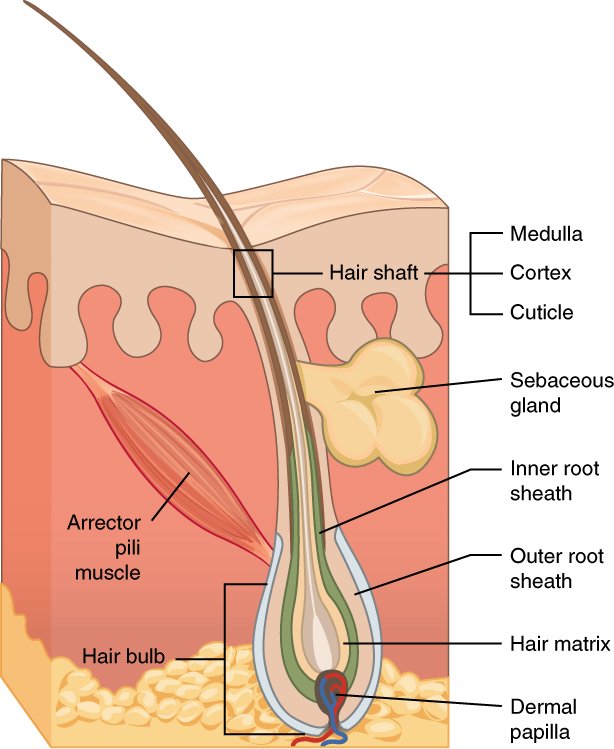
A hair transplant moves hair follicles from the back and sides of the scalp (the donor area) to thinning or bald areas. The two main techniques are follicular unit transplantation (FUT), where a thin strip of skin is removed and divided into grafts, and follicular unit extraction (FUE), where follicles are removed one by one. Surgery commonly takes four to eight hours, and people having a large number of grafts may return for a few more hours the next day. Afterward, your scalp is usually bandaged and you go home with written aftercare instructions.
Hair transplant recovery has two separate tracks. The first is wound healing: the tiny incisions in the recipient area and the extraction sites or strip scar in the donor area close over days to a couple of weeks. The second is hair growth, which runs on the much slower rhythm of the hair cycle and takes many months. Knowing that these two tracks move at different speeds helps you avoid two common worries: thinking something is wrong when the new hairs fall out, and expecting a full head of hair at the one-month mark. If you are still deciding on surgery, our hair transplant treatment guide covers candidacy and techniques in more detail.
Hair transplant recovery also differs slightly by technique. FUT leaves a linear incision in the donor area that is closed with stitches, while FUE leaves many small round wounds. Non-dissolvable stitches are usually removed after about a week to 14 days, depending on the surgeon. Whichever method is used, the transplanted area itself needs the same careful handling in the first two weeks.
Hair transplant recovery timeline
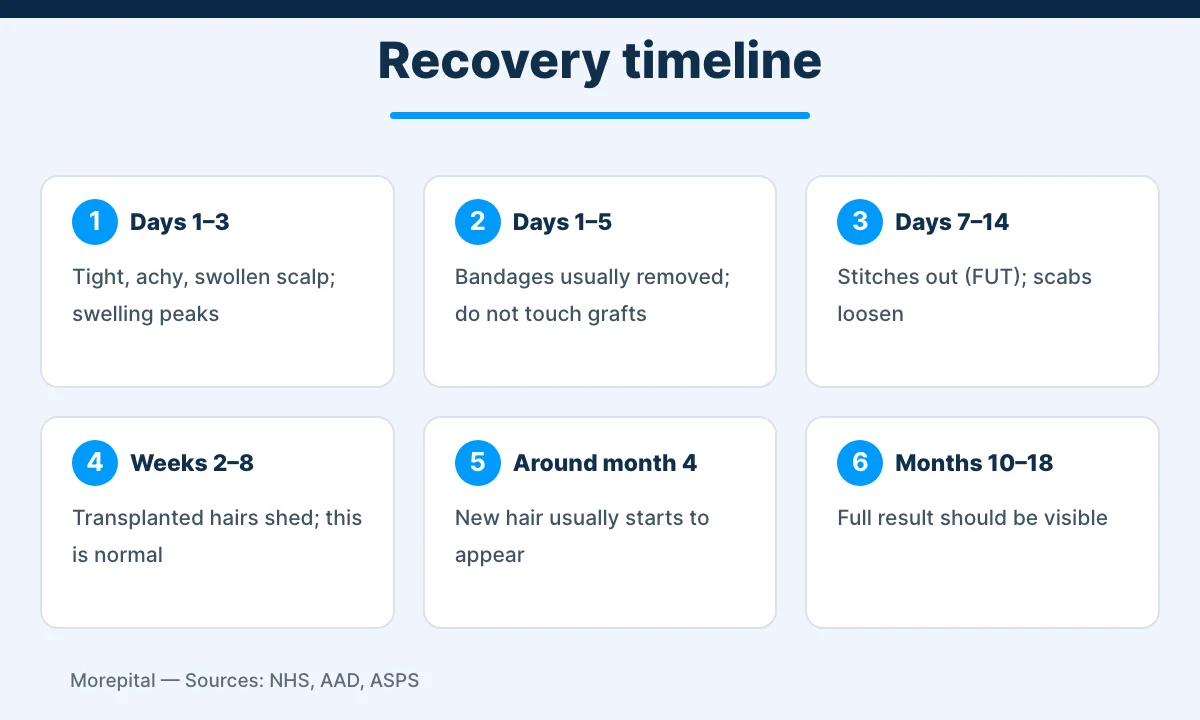
Every surgeon gives their own schedule, so treat this hair transplant recovery timeline as a general guide rather than a rulebook.
Source: NHS, ASPS, The Aesthetic Society
| Stage | What usually happens | What to do |
|---|---|---|
| Days 1–3 | Tight, achy scalp; swelling builds and peaks around days 2–3 | Rest, keep your head raised, take prescribed pain relief |
| Days 1–5 | Bandages, if used, are usually removed | Do not touch or rub the grafts |
| Days 2–6 | Gentle washing begins (timing varies by surgeon) | Wash by hand, no strong water pressure |
| Days 5–7 | Swelling usually settles | Light activity; many return to desk work |
| Days 7–14 | Stitches removed (FUT); scabs loosen | Still protect the grafts; do not pick scabs |
| Weeks 2–8 | Transplanted hairs shed | Normal; follicles stay in place |
| Around month 3 | Hair may look thinner than before surgery | Be patient; this phase passes |
| Around month 4 | New hair usually starts to appear | Follow-up with your surgeon |
| Months 6–9 | Most patients see visible results | Discuss medicine to protect native hair |
| Months 10–18 | Full result | Assess the outcome; consider any touch-up |
Source: NHS, AAD, ASPS, Front Med
The biggest difference between sources is how early bandages come off and washing starts. The American Society of Plastic Surgeons (ASPS) says bandages, if used, are usually removed one day later and gentle washing can start within two days. The NHS says bandages can usually be removed after two to five days and gentle hand washing should be possible by day 6. A 2026 review of FUE complications recommends gentle cleansing within 24 to 72 hours, because delayed washing was linked to more folliculitis. Your own surgeon’s written plan should decide which schedule you follow.
Hair transplant recovery in the first 14 days
The first two weeks are the most delicate part of hair transplant recovery. The NHS advises being very careful with the transplanted hair for the first two weeks because the grafts are not yet secure. In practice, this means not touching, scratching or rubbing the recipient area, avoiding anything that presses on it, and not picking at scabs. The FUE review also warns against early manipulation of scabs; if crusts need loosening, it suggests moist compresses or emollient gels rather than scraping them off.
Pain in early hair transplant recovery is usually mild to moderate. The NHS describes a tight, achy and swollen scalp for a few days, and The Aesthetic Society notes that the scalp can be very sensitive, so pain medicine may be prescribed for about the first week. Donor-site pain was the most frequently reported early complication in the FUE review, and it was usually controlled with ordinary, non-opioid painkillers. Ask your surgeon which painkillers are safe, because some medicines and supplements can increase bleeding.
Source: NHS, The Aesthetic Society, Front Med
Some surgeons prescribe antibiotics to lower infection risk, while others do not. The FUE review states that routine oral antibiotics are not supported by current evidence and suggests limiting them to higher-risk patients. Take exactly what your surgeon prescribes, and do not add or stop medicines without asking. If you see a little oozing from the donor area, the review describes controlling minor bleeding with sterile gauze and steady pressure for 5 to 10 minutes; bleeding that keeps going needs a call to the clinic.
Source: The Aesthetic Society, Front Med
Smoking deserves a special mention in any hair transplant recovery plan. The review lists smoking as a risk factor for poor graft growth and for necrosis, a rare but serious loss of skin and grafts in the recipient area, and recommends stopping smoking for at least one month before surgery. Staying smoke-free during hair transplant recovery is a sensible extension of that advice; ask your surgeon how long they want you to avoid it.
Source: Front Med
Washing and sleeping during hair transplant recovery
Washing your hair
Washing matters because clean skin heals faster and is less likely to develop folliculitis. The review recommends gentle cleansing with saline or a mild shampoo early on, and it found that washing delayed beyond three days was one of the risk factors for folliculitis. The NHS says you should be able to wash your hair gently by hand from around day 6, and many clinics give a specific technique, such as pouring water from a cup instead of using a strong shower jet. Follow your clinic’s method, and pat the scalp dry rather than rubbing it.
Sleeping and swelling
Swelling of the forehead is the most common early finding in hair transplant recovery after FUE. The review reports frontal swelling in nearly half of patients and swelling around the eyes in about 3 to 5%, typically peaking around days 2 to 3 and settling within 5 to 7 days. Bruising can last 10 to 15 days. To limit it, the authors recommend keeping the head raised by about 20 to 30 degrees and using intermittent cold compresses. Sleeping propped up on pillows or in a reclining position is a practical way to do this, but keep cold packs on the forehead rather than on the grafts unless your surgeon says otherwise.
Source: Front Med
Itching and scabs
Itching is a common part of hair transplant recovery as the scalp heals and scabs form. The review suggests saline sprays, emollients and cool compresses, and stresses avoiding scratching. Scabs usually loosen over one to two weeks; crusts that are still present after two weeks should be checked by your surgeon, because they may signal delayed healing or poor blood supply.
Returning to work, exercise and normal life
Advice on time off during hair transplant recovery varies. The Aesthetic Society says many people return to work within one to two days, depending on their job, while ASPS says you may feel well enough for work and light activity after several days. The NHS suggests you may need one to two weeks off. The difference mostly reflects the type of work and how visible the scabs and swelling are: a desk job you can do from home is very different from manual work in a dusty environment or a job where you meet the public.
Source: The Aesthetic Society, ASPS, NHS
During hair transplant recovery, exercise needs more patience than work. ASPS says you may be told to avoid vigorous exercise and contact sports for at least three weeks, and some doctors advise avoiding sexual activity for at least 10 days. The NHS says you may be asked to cut down on exercise in the first month to reduce scarring, which matters especially after FUT because strain on the donor incision can widen the scar. Check with your surgeon before returning to the gym, swimming or contact sports.
Expect follow-up appointments. ASPS notes that your doctor will probably want to see you several times during the first month, so plan your diary and travel around these checks. Photos of any worrying changes help the surgeon track your hair transplant recovery.
Source: ASPS
Normal side effects during hair transplant recovery
Most side effects of hair transplant recovery are temporary. A retrospective study of 73 men in the International Journal of Trichology found postoperative swelling in 42.47%, sterile folliculitis in 23.29%, a wide donor scar in 15.07%, and bacterial folliculitis and numbness each in 10.96%. Bleeding and infection together affected one patient (1.37%). These figures come from one clinic, so rates elsewhere may differ.
Source: Int J Trichol
Numbness and tingling
Changes in sensation, mostly numbness or tingling in the donor or recipient area, are usually transient. According to the FUE review, persistent cases usually resolve completely within four to eight months, while one large series reported long-term numbness or altered sensation in about 2% of patients.
Source: Front Med
Folliculitis and pimples
Folliculitis appears as small red bumps or pimples around hair follicles. The review cites an incidence of 12.1% in one multicenter study, typically one to four weeks after surgery, with a later form linked to new hairs pushing through the skin around week 10. Risk factors included very large sessions, very dense packing, delayed washing and summer procedures. It is usually treated conservatively with warm compresses and topical antibiotics, so show any bumps to your surgeon rather than squeezing them.
Source: Front Med
Shock loss of existing hair
Some people lose native hair near the transplant site, known as shock loss or effluvium. The review reports a recipient-site incidence ranging from 0.15% to 15%, usually two to eight weeks after surgery, with regrowth typically starting around three months. Women and older women with female pattern hair loss are at higher risk, and hairs that were already miniaturized may not come back. Donor-area shedding can also begin two to four weeks after surgery and usually resolves within three to six months.
Source: Front Med
Cysts and scars
Small cysts can form weeks to months after surgery, more often in the recipient area when a graft is buried too deep. Harmless cysts may simply be watched, while inflamed ones may need drainage. Scarring is part of any hair transplant: the NHS mentions one or more tiny scars and a small risk of a noticeable scar.
Warning signs: when to call your surgeon
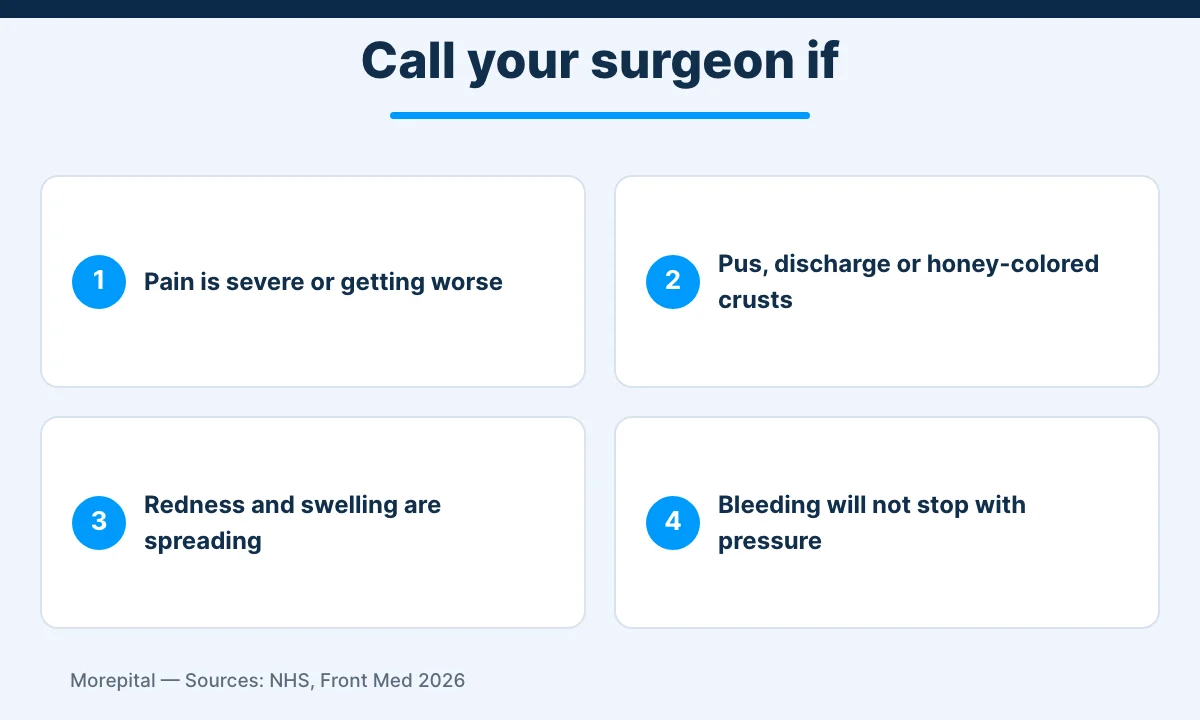
Serious problems during hair transplant recovery are uncommon, but you should know what they look like. The NHS advises contacting the clinic as soon as possible if you have severe pain or any unexpected symptoms, and The Aesthetic Society lists extreme or long-lasting pain and redness with swelling as reasons to contact your surgeon. Infection affects fewer than 1% of patients in the FUE review and usually appears within the first one to four weeks.
Source: NHS, The Aesthetic Society, Front Med
Contact your surgeon promptly if you notice any of the following during hair transplant recovery:
- Pain that is severe, getting worse after the first few days or not controlled by your prescribed medicine
- Pus-filled spots, honey-colored crusts or discharge from the scalp
- Redness and swelling that spread or increase instead of settling
- Swollen glands in the neck or behind the ears
- Bleeding that does not stop with steady pressure
- Dark, crusted patches that persist for more than two weeks
Dark, persistent crusting in the recipient area matters because it can be an early sign of necrosis, a rare complication that usually shows within hours to days after surgery. Risk factors include smoking, diabetes, high blood pressure and very dense graft placement. Other risks the NHS lists include an allergic reaction to the anesthetic. If you have chest pain, shortness of breath or a swollen, painful leg, especially after a long flight, seek emergency care.
Shedding, regrowth and final results
The phase of hair transplant recovery that surprises most people is shedding. The American Academy of Dermatology (AAD) says that between two and eight weeks after surgery the transplanted hair falls out, and that this is normal. ASPS describes the same thing within six weeks and calls it normal and almost always temporary. The follicles stay in the scalp and enter a resting phase before producing new hair, which is why the transplant still works even though the hairs you saw on day one are gone.
By the third month, the AAD notes, your hair may even look thinner than before the transplant. New growth usually starts to appear around four months, according to the NHS, and ASPS says to expect roughly half an inch (about 1.3 cm) of growth a month once it starts. Most patients see results between six and nine months, though for some it takes 12 months, and the NHS puts the full result at 10 to 18 months. The early hairs are often finer and can thicken over time.
Hair transplant recovery does not end the underlying condition. With male pattern baldness, native hair can keep thinning around the transplanted area, and the AAD says medicine can prevent or slow new hair loss. Your doctor may suggest a treatment such as minoxidil for hair loss, and some clinics also offer PRP hair treatment alongside surgery. ASPS adds that it is best to anticipate a possible touch-up procedure once the incisions have healed, and the NHS notes a small risk that the transplant will not take.
Hair transplant recovery after surgery abroad
Many people travel for surgery, especially to Istanbul. If you are planning a hair transplant in Turkey, part of your hair transplant recovery will happen in a hotel and on a plane, and the rest at home, away from the surgical team. The CDC notes that flying after surgery can increase the risk of blood clots, including deep vein thrombosis, and recommends delaying air travel after major surgery. Ask your surgeon when it is safe for you to fly, and walk, stretch and drink water during long flights.
Source: CDC
Before you leave, and before hair transplant recovery continues at home, get copies of your medical records, including the technique used, the number of grafts, the medicines you were given and your aftercare instructions. The CDC also advises confirming that you can get follow-up care at home, noting that treating complications can be expensive and may not be covered by insurance; supplemental travel health insurance is one option. Agree with the clinic how remote check-ups will work, for example by sending photos at set points such as the first week, the first month and the fourth month.
Source: CDC
Technique choice can change the early experience of hair transplant recovery but not the basic biology of healing. If you are comparing methods, our guide to DHI hair transplant explains how implanter pens differ from standard FUE. Clinics that specialize in hair, such as Hair Cultivate, a specialised hair-transplant centre in Istanbul, publish their own patient guide to aftercare; whichever clinic you choose, make sure the written instructions are clear and that a named doctor is responsible for your follow-up.
Considering a hair transplant? Contact us for a free consultation and a treatment plan tailored to you.
Hair transplant recovery: frequently asked questions
How long is hair transplant recovery?
The scalp usually heals in about one to two weeks, but hair growth takes far longer: new hair appears around four months and the full result takes 10 to 18 months.
Source: NHS
Is it normal for transplanted hair to fall out?
Yes. Shedding between two and eight weeks after surgery is normal and almost always temporary, because the follicles remain in place and regrow.
When can I wash my hair during hair transplant recovery?
It depends on your surgeon: guidance ranges from within two days to around day 6. Wash gently by hand and avoid strong water pressure on the grafts.
When can I exercise during hair transplant recovery?
Light walking is usually fine early on, but avoid vigorous exercise and contact sports for at least three weeks, or longer if your surgeon advises.
How long does swelling last in hair transplant recovery?
Forehead swelling usually peaks on days 2 to 3 and settles within 5 to 7 days. Keeping your head raised and using cold compresses can help.
Source: Front Med
Is numbness after a hair transplant permanent?
Usually not. Numbness or tingling tends to fade, with most persistent cases resolving within four to eight months.
Source: Front Med
When should I worry during hair transplant recovery?
Call your clinic for severe or worsening pain, spreading redness, pus, honey-colored crusts, swollen glands or bleeding that will not stop.
Disclaimer: this article is for general health education and does not replace advice from a qualified doctor who can assess your individual case. Last updated: October 2026.