Migraine is a common neurological condition that causes repeated attacks of moderate to severe, often one-sided, throbbing headache, usually with nausea and sensitivity to light and sound. An untreated attack typically lasts 4 hours to 3 days, and some people see visual or sensory warning signs called aura first. There is no cure, but the right mix of early painkillers or triptans, preventive medicines and steady daily habits can make attacks shorter, milder and less frequent.
Source: NHS, MedlinePlus (NIH), Cleveland Clinic
Source: MedlinePlus (NIH), NHS
Contents
- What is migraine?
- Migraine symptoms and the four phases of an attack
- Types of migraine, with and without aura
- Causes, risk factors and common triggers
- How doctors make the diagnosis
- Migraine attack treatment: painkillers, triptans and gepants
- Migraine prevention: medicines, Botox and CGRP drugs
- Self-care, lifestyle and a headache diary
- Periods, contraception and pregnancy
- When to see a doctor or call an ambulance
- Migraine: frequently asked questions
What is migraine?

Migraine is far more than a bad headache. It is a disorder of the brain in which changes in nerves and blood vessels set off attacks of pain and other symptoms. Researchers believe it has a strong genetic basis: up to 80% of people with migraine have a first-degree relative (a parent, sibling or child) who also has it. During an attack, nerves around blood vessels send pain signals and release inflammatory substances, which helps explain why the pain throbs and why light, sound and movement make it worse.
Source: NHS, Cleveland Clinic, MedlinePlus (NIH)
The global burden is large. The World Health Organization says headache disorders affect about 40% of the world’s population, or 3.1 billion people in 2021. Migraine ranked as the third leading cause of disability-adjusted life years worldwide in the Global Health Estimates 2021, after stroke and neonatal encephalopathy. It most often begins at puberty and mainly affects people aged 35 to 45.
Source: WHO
How it differs from other headaches
A tension-type headache usually causes pain on both sides of the head, face or neck, often like a tight band or pressure, and it does not usually bring the nausea and strong light sensitivity typical of a migraine attack. Cluster headache is a separate, rarer condition that affects about six men for every woman. Describe the location, quality and timing of your pain clearly to your doctor.
Migraine symptoms and the four phases of an attack
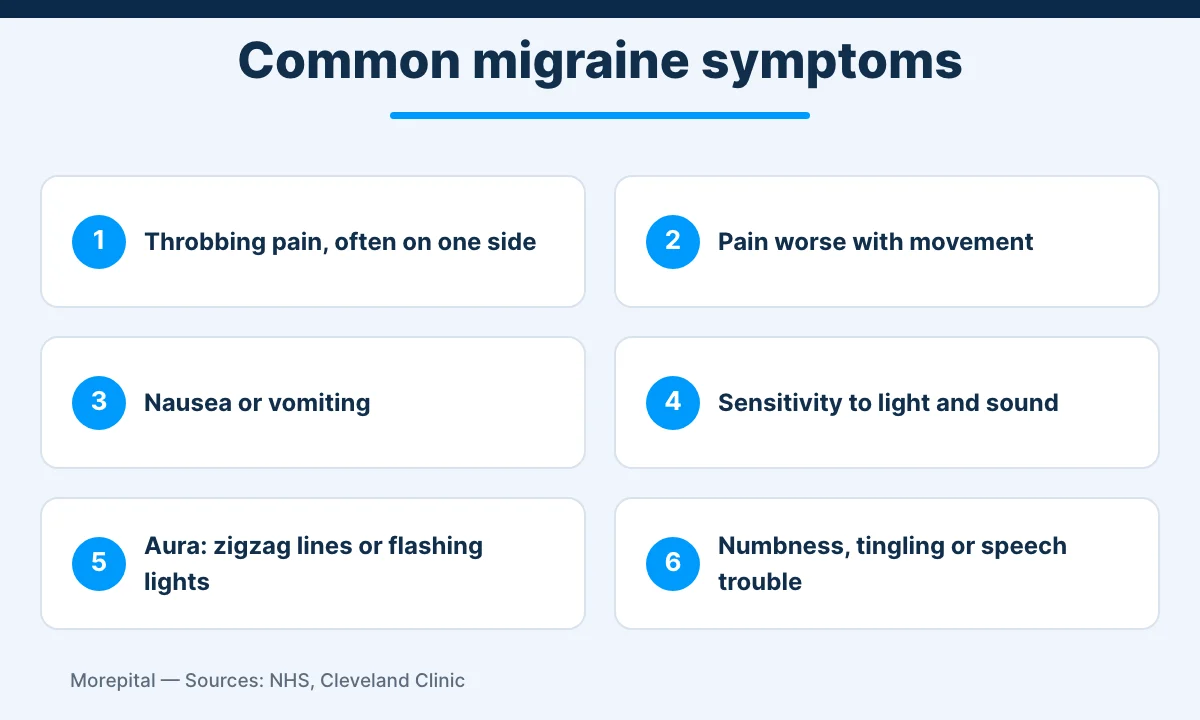
The main symptom is a throbbing headache, often on one side, that gets worse when you move. It is commonly joined by nausea, vomiting and sensitivity to light and sound; some people are also bothered by smells. The pain can also feel pulsing, pounding or dull, and it may shift from one side to the other. Most people have two to four attacks a month, although this varies widely: some have attacks several times a week, while others go months between them.
Source: NHS, Cleveland Clinic
An attack can move through up to four stages. Not everyone has every stage, and they can overlap:
- Prodrome (early warning): starts hours, and up to 1–2 days, before the pain. Tiredness and yawning, food cravings or thirst, mood changes, a stiff neck, trouble concentrating and needing to pee more often are typical.
- Aura: zigzag lines or flashing lights, pins and needles or numbness, dizziness or difficulty speaking. Most aura symptoms last 5 to 60 minutes, and aura should not last longer than an hour.
- Headache: the pain phase lasts 4 to 72 hours, with nausea and sensitivity to light and sound. For many people, sleep, even an hour or two, ends it.
- Postdrome (the “hangover”): fatigue, a stiff neck, dizziness and lingering sensitivity that can last a few hours up to 48 hours.
Source: Cleveland Clinic, NHS, The Migraine Trust
Types of migraine, with and without aura
Most people have one of the two main forms of migraine. Attacks without aura are the most common pattern. Attacks with aura include vision, speech or sensation problems, and up to a third of people with the condition experience aura at some point. Aura usually comes before the headache, but it can also start at the same time or after the pain begins, and it can happen with no headache at all, which is sometimes called a silent attack.
Source: The Migraine Trust
Doctors also describe several less common forms:
- Chronic: headache on 15 or more days a month for more than 3 months, with features of the condition on at least 8 of those days.
- Menstrual: attacks linked to periods, which are often longer and more severe.
- Vestibular: mainly vertigo, dizziness or unsteadiness.
- Abdominal: a form that is common in children, affecting about 4 in 100 of them, and some adults.
- Hemiplegic: a rare type with temporary weakness on one side of the body.
- Rarer forms: retinal (ocular) attacks and status migrainosus, a prolonged attack.
Source: The Migraine Trust, European Headache Federation (J Headache Pain, 2018), NHS
Causes, risk factors and common triggers
The exact cause is still unknown, but genes clearly matter, and women are affected about three times as often as men, possibly because of hormonal influences. Risk is also higher in people with depression, anxiety, bipolar disorder, sleep disorders or epilepsy, and in regular tobacco users. Many people notice that attacks improve with age, after menopause and sometimes during pregnancy.
Source: MedlinePlus (NIH), Cleveland Clinic, WHO, NHS
Triggers do not cause migraine, but they can tip a sensitive brain into an attack. They differ from person to person, and the most often reported are:
- Stress, anxiety and tiredness
- Hormonal changes, especially around periods
- Too much or too little sleep, or changes to your sleep routine
- Skipped or irregular meals
- Too much caffeine, or caffeine withdrawal, and tobacco
- Bright or flickering lights, loud noise and strong smells
- Weather changes and overexertion
- Some foods and drinks: alcohol, aged cheese, chocolate, cured or processed meats, MSG, and fermented or pickled foods
Source: MedlinePlus (NIH), Cleveland Clinic, NHS
How doctors make the diagnosis
There is no blood test or scan that proves the diagnosis. A doctor, usually your primary care physician or GP, makes it from your medical and family history, a description of your attacks, and a physical and neurological examination. Blood tests, a CT or MRI scan, or an EEG are used only when the doctor needs to rule out other causes, for example when symptoms are unusual or have changed. If treatment is not working, you may be referred to a neurologist or headache specialist.
Source: Cleveland Clinic, MedlinePlus (NIH), NHS
To make the appointment count, bring a record of a few weeks of headaches: the date, how long each one lasted, how severe it was on a 1–10 scale, other symptoms such as nausea, dizziness or numbness, every medicine and dose you took, and possible triggers, including your period.
Source: The Migraine Trust
Migraine attack treatment: painkillers, triptans and gepants
Acute treatment aims to stop an attack once it has started, and timing is everything: medicines work better when you take them as soon as the headache begins, or at the first sign such as aura. For mild to moderate attacks, over-the-counter ibuprofen, aspirin, naproxen, paracetamol (acetaminophen) or caffeine-containing combinations are often enough. Anti-sickness medicines such as metoclopramide help with nausea and vomiting. Rest in a dark, quiet, cool room, a cold or warm compress on the forehead and plenty of fluids add relief.
Source: NHS, Cleveland Clinic, WHO
Triptans
Triptans are prescription medicines made specifically for these attacks. They include almotriptan, eletriptan, frovatriptan, naratriptan, rizatriptan, sumatriptan and zolmitriptan, available as tablets, dissolvable tablets, nasal sprays or injections. Sumatriptan may start working within 30 minutes, though it can take up to 2 hours. If symptoms return, a second dose can be taken (at least 2 hours after a tablet or spray), but not if the first dose did not help. Triptans are not suitable for people with heart or blood vessel disease, uncontrolled high blood pressure, or a past stroke or TIA, and people over 65 need a doctor’s assessment first.
Source: NHS Medicines, The Migraine Trust
Newer options: gepants and ditans
Gepants block the receptor for CGRP (calcitonin gene-related peptide), a protein that can intensify and prolong pain signals during an attack. Rimegepant (a tablet that dissolves under the tongue), ubrogepant (a tablet) and zavegepant (a nasal spray) treat attacks, while atogepant is a daily tablet for prevention. Lasmiditan, a ditan, is another acute option, and dihydroergotamine is an older alternative. These can help people who cannot take triptans or do not respond to them.
Source: Cleveland Clinic, Cleveland Clinic, The Migraine Trust
The 2-days-a-week rule
The NHS advises against taking painkillers on more than 2 days a week, because doing so can lead to more headaches and make migraine harder to treat. This is medication-overuse headache, the most common secondary headache disorder according to the WHO. It occurs on more days than not, is often worst on waking, and can affect up to 5% of some populations. If you find yourself reaching for tablets most days, that is a signal to talk to a doctor about prevention rather than to take more pills.
Source: NHS, WHO, Cleveland Clinic
Migraine prevention: medicines, Botox and CGRP drugs
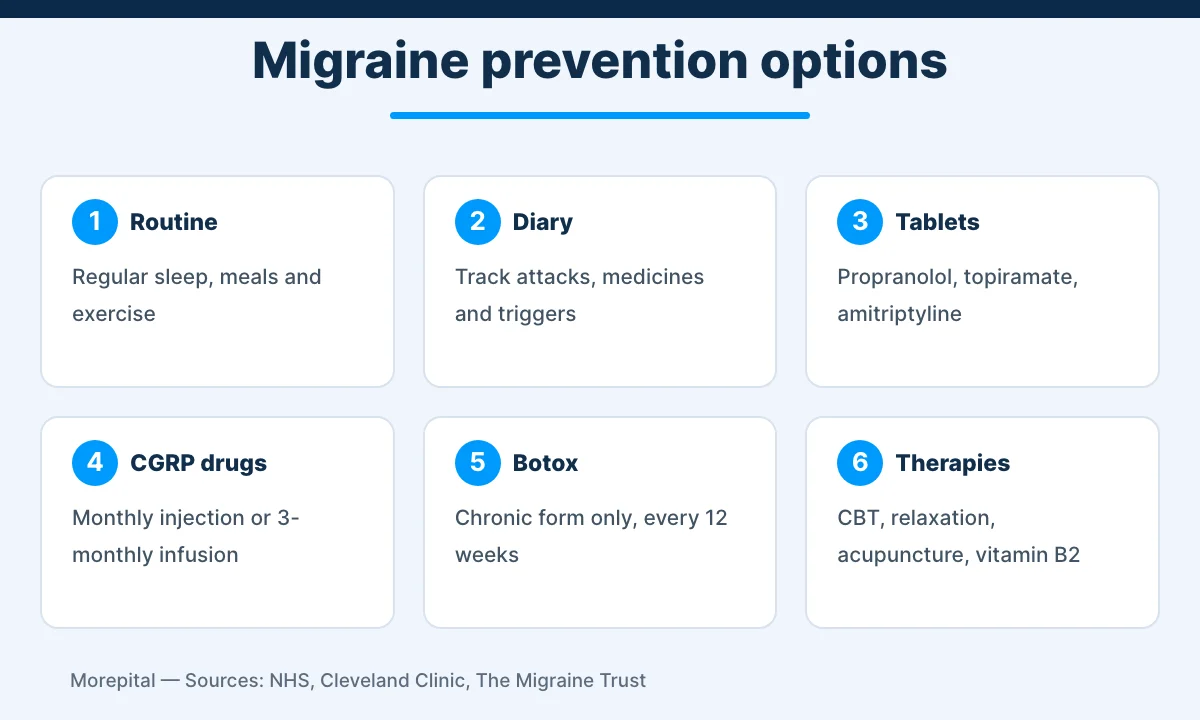
Preventive treatment is taken every day or at regular intervals, whether or not you have symptoms, to cut how often attacks happen. It is worth discussing if you have attacks more than once a week, if they are severe or getting worse, or if acute medicines are not controlling them.
Source: NHS, MedlinePlus (NIH)
Standard preventive tablets
Common first choices are the beta blocker propranolol, the anticonvulsant topiramate and the tricyclic antidepressant amitriptyline; candesartan, other beta blockers such as atenolol and nadolol, verapamil, valproate and the antidepressants venlafaxine and duloxetine are alternatives. They can take up to eight weeks to show an effect, so give a medicine at least three months before judging it. Topiramate and sodium valproate can harm a developing baby, so strict prescribing rules apply to women and girls who could become pregnant.
Source: The Migraine Trust, Cleveland Clinic
CGRP monoclonal antibodies
These lab-made antibodies target CGRP or its receptor. Erenumab, fremanezumab and galcanezumab are self-injected under the skin, usually once a month (some people on fremanezumab need only four doses a year), and eptinezumab is given as an IV infusion about every three months. Atogepant is a daily preventive tablet from the gepant family. Common side effects include constipation, injection-site reactions, nausea and joint or back pain; rare serious effects include liver problems.
Source: Cleveland Clinic
Botox for chronic migraine
OnabotulinumtoxinA, the same toxin used cosmetically to soften wrinkles, is licensed for prevention of the chronic form only, not for episodic attacks. Under the PREEMPT protocol, a specialist gives 155 to 195 units as 31 to 39 small injections into the forehead, temples, back of the head, neck and shoulders, repeated every 12 weeks. In the UK, you usually need to have tried at least three other preventives first. Many people have 30–50% fewer headache days, and most need at least two cycles before deciding whether it works. Neck pain, muscle stiffness or weakness and a drooping eyelid are possible, usually temporary, side effects. Read more about the toxin’s medical and cosmetic uses in our guide to Botox.
Source: The Migraine Trust, European Headache Federation (J Headache Pain, 2018)
Non-drug and complementary options
The NHS lists acupuncture, relaxation techniques, cognitive behavioral therapy (CBT) and vitamin B2 (riboflavin) among preventive approaches. Biofeedback, yoga, magnesium (if levels are low) and coenzyme Q10 are other options some people try, and a greater occipital nerve block injection at the back of the head can help some patients. Butterbur may not be safe for long-term use, so check any supplement with your doctor or pharmacist first.
Source: NHS, MedlinePlus (NIH), The Migraine Trust
| Option | Used for | Examples | Key point |
|---|---|---|---|
| Simple painkillers | Mild to moderate attacks | Ibuprofen, aspirin, paracetamol | Take early; no more than 2 days a week |
| Triptans | Moderate to severe attacks | Sumatriptan, rizatriptan, zolmitriptan | Avoid with heart disease or past stroke |
| Gepants and ditans | Attacks; some also prevent | Rimegepant, ubrogepant, lasmiditan | Option when triptans fail or are unsuitable |
| Preventive tablets | Frequent or severe attacks | Propranolol, topiramate, amitriptyline | Judge after at least 3 months |
| CGRP antibodies | Prevention | Erenumab, fremanezumab, eptinezumab | Monthly injection or 3-monthly infusion |
| Botox | Chronic form only | OnabotulinumtoxinA | 31–39 injections every 12 weeks |
Source: NHS, Cleveland Clinic, The Migraine Trust
Self-care, lifestyle and a headache diary
Daily habits will not cure migraine, but they lower the number of attacks for many people and make medicines work better. The WHO and the NHS both recommend a regular routine: go to bed and wake up at similar times, eat meals at regular times, stay well hydrated, limit alcohol and caffeine, exercise regularly and find ways to manage stress. Losing weight if you live with obesity is also listed by MedlinePlus as a preventive step.
Source: WHO, NHS, MedlinePlus (NIH)
Keep the migraine diary described above going for a few months: patterns usually appear, and it lets you and your doctor judge objectively whether a new preventive is helping.
Source: The Migraine Trust, WHO
Periods, contraception and pregnancy
Hormones play a large part in why women get migraine more often. Attacks linked to periods tend to be longer and more severe, and the NHS advises seeing a GP if you regularly get attacks before or during your period. For women whose attacks follow their menstrual cycle, hormone therapy is one preventive option a doctor may consider.
Source: NHS, MedlinePlus (NIH)
Contraception needs special care. The NHS says the combined pill may not be suitable if you have ever had attacks with aura, so tell whoever prescribes contraception about any aura symptoms, as well as whether you smoke.
Source: NHS
Many women have fewer migraine attacks during pregnancy, but some medicines should be avoided. Paracetamol (acetaminophen) is generally the first choice for pain in pregnancy, and triptans are used only if the benefits outweigh the risks. If you are pregnant or have just had a baby and develop a severe headache, ask for an urgent GP appointment or call NHS 111 (or your local equivalent).
Source: NHS, Cleveland Clinic, The Migraine Trust, NHS
When to see a doctor or call an ambulance
Book a routine appointment if your migraine attacks are severe, getting worse or lasting longer than usual, if they happen more than once a week, if you find them hard to control, or if you regularly get them around your period. Seek an urgent appointment or call NHS 111 if an attack has lasted longer than 72 hours, if aura lasts more than an hour, or if you are pregnant or have recently given birth.
Source: NHS
Call 999 or 911, or go to the emergency department, if you or your child:
- Have a sudden, extremely painful headache, the worst of your life (thunderclap headache)
- Have trouble speaking or remembering things, or feel drowsy or confused
- Lose vision, or have blurred or double vision
- Have weakness or cannot move an arm, leg, or one side of the face or body
- Have a seizure, or a very high temperature with signs of meningitis
- Develop the headache after a recent head injury
Source: NHS, Cleveland Clinic
These symptoms can look like an attack with aura but can signal a more serious problem, such as meningitis, so do not wait to see whether they pass, and do not drive yourself to the hospital.
Source: NHS
Migraine: frequently asked questions
Can migraine be cured?
No. There is no cure, but treatment can relieve symptoms and prevent many attacks, and for many people attacks become less frequent with age and after menopause.
Source: MedlinePlus (NIH), NHS
How long does a migraine last?
The headache phase usually lasts 4 to 72 hours, and early warning symptoms and the post-attack “hangover” can add hours or days on either side. An attack lasting longer than 72 hours needs urgent medical advice.
Source: Cleveland Clinic, NHS
Is it possible to have aura without a headache?
Yes. Aura can happen with no head pain, sometimes called a silent attack. Triptans are not usually prescribed for aura without pain. Any first-ever aura, or aura lasting more than an hour, should be checked by a doctor.
Source: The Migraine Trust, NHS
Is migraine hereditary?
Often, yes. Up to 80% of people with migraine have a parent, sibling or child who has it too, and having a close relative with it raises your own risk.
Source: Cleveland Clinic, NHS
Why do my painkillers seem to make headaches worse?
Taking pain relief too often can cause medication-overuse headache, which occurs on more days than not and is often worst on waking. Keep acute medicines to no more than 2 days a week and ask your doctor about prevention.
Who can get Botox for chronic migraine?
Adults with headache on at least 15 days a month, with features of the condition on at least 8, who have usually tried at least three other preventives. A headache specialist or neurologist gives it every 12 weeks.
Source: The Migraine Trust
Do I need a brain scan?
Usually not. The diagnosis is made from your history and an examination; scans are used only to rule out other causes when symptoms are unusual or change.
Source: MedlinePlus (NIH), Cleveland Clinic
Disclaimer: this article is for general health education and does not replace advice from a qualified doctor who can assess your individual case. Last updated: October 2026.