
Tooth loss
Edentulism (partial or complete loss of permanent teeth)
Tooth loss is the loss of one or more permanent teeth, most often caused by gum disease, tooth decay or injury; losing all natural teeth is called edentulism. Untreated gaps can lead to jawbone loss, shifting teeth and difficulty chewing, but missing teeth can be replaced with dental implants, bridges or dentures, and most tooth loss can be prevented with good oral care.
Source: Cleveland Clinic, WHO, CDC
- What is tooth loss?
- How common is tooth loss?
- Warning signs before a tooth is lost
- Causes and risk factors
- Types of tooth loss
- Diagnosis
- Treatment options for missing teeth
- First aid for a knocked-out tooth
- Complications of untreated tooth loss
- Prevention and living with missing teeth
- When to see a dentist
- FAQ
- Sources
What is tooth loss?
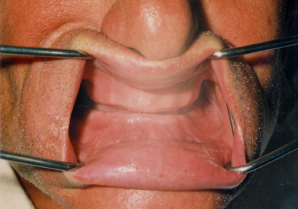
Tooth loss means losing one or more permanent (adult) teeth. Losing baby teeth in childhood is a normal part of growing up, but when an adult loses a tooth it almost always points to an underlying problem, most often gum disease, tooth decay or an injury. Dentists call the complete loss of all natural teeth edentulism; losing some but not all teeth is called partial edentulism.
Source: Cleveland Clinic, WHO
Tooth loss is rarely dangerous in itself, but it matters more than many people expect. Gaps make chewing and speaking harder, neighboring teeth can drift, the jawbone in the empty area slowly shrinks, and missing teeth can change the shape of the face and affect confidence. The World Health Organization describes tooth loss as the end point of a lifetime of oral disease that can be psychologically, socially and functionally limiting.
Source: Cleveland Clinic, WHO, NHS
The good news is that most tooth loss can be prevented, and teeth that are already missing can be replaced. Dental implants, bridges and dentures each restore function and appearance in different ways, and treating the cause (for example gum disease) protects the teeth that remain.
Source: Cleveland Clinic, NHS
How common is tooth loss?
Tooth loss is very common worldwide. WHO estimates that almost 7% of people aged 20 or older have lost all their natural teeth, rising to about 23% of people aged 60 or older. In the United States, Cleveland Clinic reports that about 178 million adults are missing at least one tooth and about 40 million have lost all of them.
Source: WHO, Cleveland Clinic
US national survey data (NHANES, 2017 to March 2020) summarized by the National Institute of Dental and Craniofacial Research (NIDCR) show:
- Adults aged 20 to 64 have an average of about 25.5 remaining permanent teeth, and about 2% have no natural teeth left.
- Seniors aged 65 and older have an average of about 21 remaining teeth, and about 15% have no natural teeth.
- Among seniors, total tooth loss is about 20% at age 75 and older, compared with about 11% at ages 65 to 74.
Tooth loss in US adults and seniors has fallen steadily since the early 1970s. Among people 65 and older, the share with no teeth dropped from about 27% in 1999–2004 to about 15% in 2017–March 2020. Large gaps remain, however: seniors who smoke (about 29% with no teeth versus about 12% of never-smokers), those living in poverty (about 30% versus 12%) and those without a high-school education (about 33% versus 9%) are far more likely to have lost all their teeth. The NIDCR notes that the most recent survey cycle was partly disrupted by COVID-19, so it may not be directly comparable with earlier ones.
Warning signs before a tooth is lost
Teeth rarely fall out without warning. The diseases that cause tooth loss usually produce signs months or years beforehand, and acting on them early may save the tooth. Watch for:
- Bleeding, red, swollen or tender gums
- Gums that recede or pull away from the teeth
- A loose or wobbly tooth, or teeth that feel sensitive
- Pain when chewing, or a toothache
- Persistent bad breath
- A change in how your teeth fit together when you bite, or in how a partial denture fits
Source: Cleveland Clinic, CDC
Gum disease is often painless until it is advanced, so it can become serious before you notice anything. This is one reason regular dental check-ups matter even when nothing hurts.
Source: CDC
Causes and risk factors
Main causes
- Gum disease (periodontitis) – a chronic infection that destroys the gum and bone holding the teeth. As support is lost, teeth loosen and may fall out or need to be removed.
- Tooth decay (cavities) – decay that is not stopped keeps growing and can destroy a tooth beyond repair; untreated infection can also cause a tooth abscess.
- Injury – falls, sports, fights and road accidents can knock out or break teeth.
- Teeth grinding (bruxism) – long-term grinding or clenching can damage teeth and their support.
Source: Cleveland Clinic, CDC, CDC
Sources weigh the two main diseases slightly differently. Cleveland Clinic calls gum disease the leading cause of tooth loss in adults, while the CDC describes periodontitis and cavities together as the two leading causes, and WHO names advanced decay and severe gum disease as the main routes to tooth loss.
Source: Cleveland Clinic, CDC, WHO
Risk factors
- Smoking, other tobacco use and vaping
- Poor oral hygiene and infrequent dental care
- Diabetes, especially when blood sugar is poorly controlled (Cleveland Clinic cites an A1C consistently above 7%)
- Dry mouth, including dry mouth caused by medicines, and autoimmune conditions such as Sjögren’s syndrome
- Hormonal changes, such as pregnancy or menopause
- A family history of gum disease
- A diet high in sugar and frequent sugary or acidic snacks and drinks
- Crooked teeth, grinding or clenching, poor nutrition, obesity and stress
- Lower income and less education, which are strongly linked to more tooth loss
Source: Cleveland Clinic, CDC, CDC, WHO
Types of tooth loss
Partial tooth loss
One or several teeth are missing, while others remain. This is by far the most common situation. It can be replaced with an implant, a bridge or a partial denture, depending on how many teeth are missing and where.
Source: Cleveland Clinic, NHS
Complete tooth loss (edentulism)
All natural teeth in one or both jaws are gone. It is much more common in older adults and in people with long-standing gum disease or decay. Full dentures, implant-supported dentures or full-arch implant bridges are the usual options.
Source: WHO, NIDCR, Cleveland Clinic
Traumatic tooth loss
A tooth is knocked out (avulsed) or broken by an injury. An adult tooth that is knocked out can sometimes be saved if it is put back quickly (see the first-aid section below).
Source: NHS, MedlinePlus
Congenitally missing teeth (hypodontia)
Some people are born without one or more permanent teeth because the teeth never formed. Excluding wisdom teeth, hypodontia affects roughly 1.6% to 6.9% of people depending on the population, and most affected people lack only one or two teeth, most often a lower second premolar or an upper lateral incisor. Missing more than six teeth is called oligodontia, and missing all teeth is called anodontia. Hypodontia is mainly genetic and can occur with conditions such as cleft lip and palate, Down syndrome and ectodermal dysplasia. Treatment usually involves a team, often orthodontics combined with tooth replacement.
Source: Biomed Res Int (Al-Ani et al., 2017)
Diagnosis
A dentist diagnoses the cause and extent of tooth loss during a dental examination. They check the remaining teeth for decay and the gums for signs of gum disease, such as bleeding, recession and loose teeth.
Source: Cleveland Clinic, CDC
Dental X-rays show how much jawbone has been lost and whether any fragments of a tooth remain in the socket. This information also helps the dentist decide which replacement is suitable: a dental implant, for example, needs enough healthy jawbone, and a bone graft may be needed if too much has been lost.
Source: Cleveland Clinic, Cleveland Clinic
Because gum disease and decay share risk factors with other conditions, your dentist may also ask about your general health, smoking, diabetes and the medicines you take. Useful questions to ask include whether the gap needs treating, which replacement option suits you, how your health history affects your options, how many visits treatment will take and how to look after the result.
Source: Cleveland Clinic, CDC
Treatment options for missing teeth
Treating tooth loss has two parts: stopping the disease that caused it (for example deep cleaning for gum disease, fillings or root canal treatment for decay) and replacing the missing teeth. Replacing a lost tooth gives the best chance of long-term oral health and lowers the risk of bone loss, shifting teeth and further tooth loss.
Source: Cleveland Clinic, CDC
Dental implants
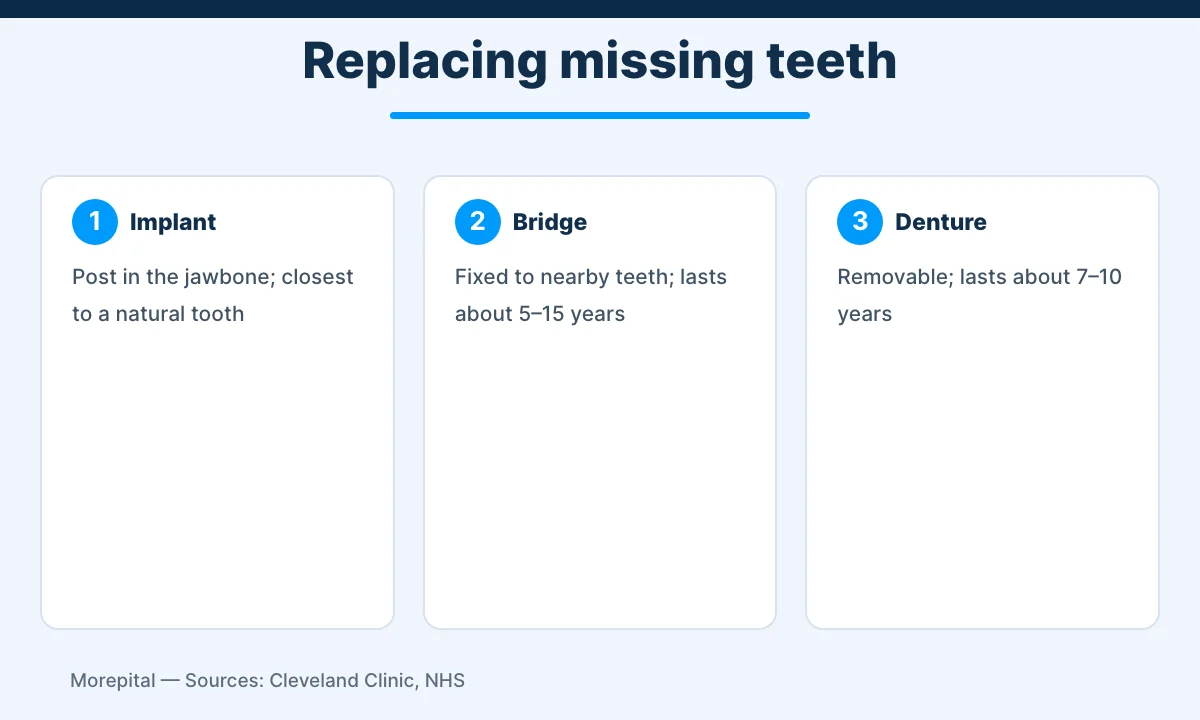
Dental implants are small threaded posts, usually titanium, placed in the jawbone to replace a missing tooth root. Over about three to nine months the bone fuses to the implant (osseointegration), and then a crown, bridge or denture is attached. Implants are the closest match to natural teeth and tend to last longer than other options, but you need enough healthy jawbone, and active gum disease, uncontrolled diabetes and smoking raise the risk of problems. Implants are usually a private treatment; the NHS offers them only in particular cases, such as people who cannot wear dentures after mouth cancer or an accident. Read more in our guide to dental implants in Turkey.
Source: Cleveland Clinic, Cleveland Clinic, NHS
Dental bridges
A bridge (fixed partial denture) fills a gap with one or more artificial teeth that are anchored to the natural teeth on either side, or to implants. A fixed bridge cannot be taken out except by a dentist. Bridges can be made of porcelain, metal alloys or a combination, and last about 5 to 15 years on average. Their success depends on the health of the supporting teeth.
Source: ADA MouthHealthy, NHS, Cleveland Clinic
Dentures
Dentures are removable false teeth that fit over the gums. Complete dentures replace all the teeth in a jaw; partial dentures replace some and may clip onto the remaining teeth. Immediate dentures can be fitted the same day teeth are removed but often need relining or replacing as the gums heal, while overdentures and implant-supported dentures rest on a few natural teeth or implants for extra stability. Dentures last about 7 to 10 years on average, and new ones can feel loose or awkward for a few weeks.
Source: NHS, ADA MouthHealthy, Cleveland Clinic
| Option | Fixed or removable | Typical lifespan | Key points |
|---|---|---|---|
| Dental implant | Fixed | Longer than other options | Replaces the root; needs enough bone; healing takes months |
| Bridge | Fixed | About 5–15 years | Relies on neighboring teeth or implants |
| Denture | Removable | About 7–10 years | Replaces one, several or all teeth; may loosen as the jaw changes |
Source: Cleveland Clinic, NHS, Cleveland Clinic
Recovery time depends on the option chosen, how many teeth are being replaced and your overall health. Your dentist can give you a personal timeline.
Source: Cleveland Clinic
First aid for a knocked-out tooth
An adult tooth that has been knocked out can often be saved if you act fast. The NHS advises treatment as soon as possible, ideally within 30 minutes to 1 hour; MedlinePlus simply stresses that the longer you wait, the lower the chance of saving it.
Source: NHS, MedlinePlus
- Hold the tooth by the crown (the white chewing part), never by the root.
- If it is dirty, rinse it briefly in milk, saline or saliva. Do not scrub it, wipe the root, use alcohol or peroxide, or let it dry out.
- Try to push it gently back into its socket and bite on a clean cloth or gauze to hold it in place.
- If it will not go back, keep it in a small container of milk or saliva, or between the cheek and gum (only if there is no risk of swallowing it).
- Get an emergency dental appointment straight away, even if you cannot find the tooth.
Source: NHS, MedlinePlus
Never put a baby tooth back in, because it can damage the adult tooth developing underneath. At the dentist the tooth may be X-rayed, repositioned and splinted to its neighbors, often followed by root canal treatment. If it cannot be saved, a temporary denture can be fitted while the area heals, with a bridge or implant as later options.
Source: NHS
Complications of untreated tooth loss
Leaving a gap untreated can cause problems that build up over time:
- Jawbone loss in the area where the tooth used to be
- Shifting teeth – neighboring teeth drift into the gap and opposing teeth can over-erupt
- Bite problems (malocclusion), extra pressure on the remaining teeth and further tooth loss
- Jaw joint problems (TMJ disorders) and jaw pain
- Changes in appearance, such as visible gaps and sagging of the face
- Speech changes and difficulty pronouncing some words
Source: Cleveland Clinic, J Family Med Prim Care (Alshehri et al., 2021), NHS
Difficulty chewing can limit food choices: people with missing teeth may find meat, fruit and vegetables harder to eat, which can lead to poor nutrition and lower quality of life. The gum disease that causes much tooth loss is an infection that can also affect the rest of the body.
Source: CDC, Cleveland Clinic
Research has also linked tooth loss with brain health. A 2021 meta-analysis of 14 long-term studies (34,074 participants) found that people with more tooth loss had about a 48% higher risk of cognitive impairment and a 28% higher risk of dementia, and the risk rose with each additional tooth lost. In people who wore dentures, the link was not statistically significant. These studies show an association, not proof that tooth loss causes cognitive decline.
Source: JAMDA (Qi et al., 2021)
Prevention and living with missing teeth
Tooth loss cannot always be prevented, especially after an accident, but most of it can be avoided by controlling decay and gum disease:
- Brush twice a day with a soft-bristled brush and fluoride toothpaste (WHO recommends toothpaste with 1,000–1,500 ppm fluoride).
- Clean between your teeth once a day with floss or interdental brushes.
- Limit sugary snacks and drinks, especially between meals.
- Do not smoke, vape or chew tobacco, and limit alcohol.
- Keep diabetes well controlled.
- See your dentist regularly – for some people every six months, more often if you are prone to decay or gum disease, and at least once a year according to the CDC.
- Wear a mouth guard for contact sports and if you grind your teeth, and always wear a seatbelt.
Source: Cleveland Clinic, WHO, CDC, MedlinePlus, MedlinePlus
Caring for replacement teeth
If you wear dentures, rinse them after meals, brush them daily with a soft brush and a non-abrasive cleaner (not ordinary toothpaste), take them out at night and keep them in water so they do not warp. Brush your gums, tongue and any remaining teeth morning and evening. See your dentist if dentures become loose or uncomfortable, because the gums and jaw change shape over time.
Source: NHS, ADA MouthHealthy
Implants and bridges need the same daily cleaning and regular check-ups as natural teeth. Report a loose implant, bleeding or swollen gums, pus or fever to your dentist promptly.
Source: Cleveland Clinic, ADA MouthHealthy
When to see a dentist
Book a dental appointment if you notice bleeding or swollen gums, receding gums, persistent bad breath, a loose tooth, pain when chewing, or a change in your bite. Early treatment may save a tooth that would otherwise be lost. You should also see a dentist to discuss replacing any missing tooth, even if the gap does not bother you.
Source: Cleveland Clinic, CDC
- An adult tooth has been knocked out – go to an emergency dentist immediately, ideally within 30 minutes to 1 hour
- A tooth is broken after an accident, especially with heavy bleeding that does not stop with pressure
- You have a facial injury, or swelling in the face or gum with fever
- A dental implant becomes loose, or there is pus, fever or swollen neck glands around it
Source: NHS, NHS, MedlinePlus, Cleveland Clinic
Related treatments
Related conditions
Further reading
Tooth loss: frequently asked questions
What is the most common cause of tooth loss in adults?
Gum disease (periodontitis) and tooth decay are the main causes. Cleveland Clinic names gum disease as the leading cause in adults; the CDC lists periodontitis and cavities as the two leading causes. Injuries and teeth grinding are other causes.
Source: Cleveland Clinic, CDC
Is it bad to leave a missing tooth unreplaced?
It can be. Over time the jawbone in the gap shrinks, neighboring teeth can drift, your bite can change and the remaining teeth carry extra load. Replacing the tooth lowers the risk of these problems.
Source: Cleveland Clinic, J Family Med Prim Care (Alshehri et al., 2021)
What is the best way to replace a missing tooth?
There is no single best option for everyone. Implants are the closest match to natural teeth and tend to last longest, but need enough healthy bone. Bridges are fixed to neighboring teeth, and dentures are removable and suit one, several or all missing teeth. Your dentist will advise based on your mouth and health.
Source: Cleveland Clinic, NHS, Cleveland Clinic
How long do bridges and dentures last?
According to Cleveland Clinic, bridges last about 5 to 15 years and dentures about 7 to 10 years on average. Dentures may loosen as the gums and jaw change, so regular check-ups matter.
Source: Cleveland Clinic, NHS
Can a knocked-out tooth be saved?
Often, yes, if it is an adult tooth and you act quickly. Hold it by the crown, put it back in the socket or keep it in milk or saliva, and see an emergency dentist at once, ideally within 30 minutes to 1 hour. Never replant a baby tooth.
Source: NHS, NHS, MedlinePlus
How many people lose all their teeth?
Is tooth loss a normal part of aging?
No. Tooth loss is more common with age because decay and gum disease build up over the years, but it is not inevitable. More than 4 in 5 US adults keep their teeth until they die, and good care and regular check-ups help protect them.
Source: CDC, Cleveland Clinic
Can you be born with missing teeth?
Yes. This is called hypodontia. Excluding wisdom teeth, it affects about 1.6% to 6.9% of people, and most lack only one or two teeth, usually a lower second premolar or an upper lateral incisor.
Is tooth loss linked to dementia?
Studies show an association. A 2021 meta-analysis found that people with more tooth loss had a higher risk of cognitive impairment and dementia, while the link was not significant in denture wearers. This does not prove that tooth loss causes dementia.
Source: JAMDA (Qi et al., 2021)
Missing one or more teeth? Contact us to discuss implants, bridges or dentures with our dental team.
Sources
- Cleveland Clinic — Tooth Loss: Signs, Causes & What To Do
- WHO — Oral health (fact sheet)
- NIDCR — Tooth Loss
- NIDCR — Tooth Loss in Adults (Age 20 to 64)
- NIDCR — Tooth Loss in Seniors
- CDC — About Periodontal (Gum) Disease
- CDC — About Cavities (Tooth Decay)
- NHS — Dentures (false teeth)
- NHS — Dental treatments
- NHS — Knocked-out tooth
- MedlinePlus (NIH) — Broken or knocked out tooth
- MedlinePlus (NIH) — Tooth Disorders
- ADA MouthHealthy — Bridges
- ADA MouthHealthy — Dentures
- Cleveland Clinic — Dental Implants: Types, Purpose & Benefits
- Biomed Res Int (Al-Ani et al., 2017) — Hypodontia: An Update on Its Etiology, Classification, and Clinical Management
- J Family Med Prim Care (Alshehri et al., 2021) — Awareness to consequences of teeth missing and prosthodontics treatment options among people of Aseer region, Saudi Arabia
- JAMDA (Qi et al., 2021) — Dose-response meta-analysis on tooth loss with the risk of cognitive impairment and dementia
This page is part of the Morepital medical reference. It is for general health education and does not replace a consultation with a qualified doctor. Last reviewed: October 2026.