
Bruxism
Teeth grinding and clenching (sleep and awake bruxism)
Bruxism is the habit of clenching, grinding or gnashing the teeth, usually without realizing it, either while awake or during sleep. It is often linked to stress, anxiety, sleep problems and some medicines, and can cause jaw pain, headaches and worn or cracked teeth. Mild cases may need no treatment, while custom mouth guards, stress reduction and lifestyle changes help protect the teeth and ease symptoms.
Source: Cleveland Clinic, NHS, MedlinePlus
- What is bruxism?
- Symptoms of bruxism
- Causes and risk factors
- Types of bruxism
- How bruxism is diagnosed
- Treatment options for bruxism
- Complications
- Bruxism in children
- Prevention and living with bruxism
- When to see a dentist or doctor
- FAQ
- Sources
What is bruxism?
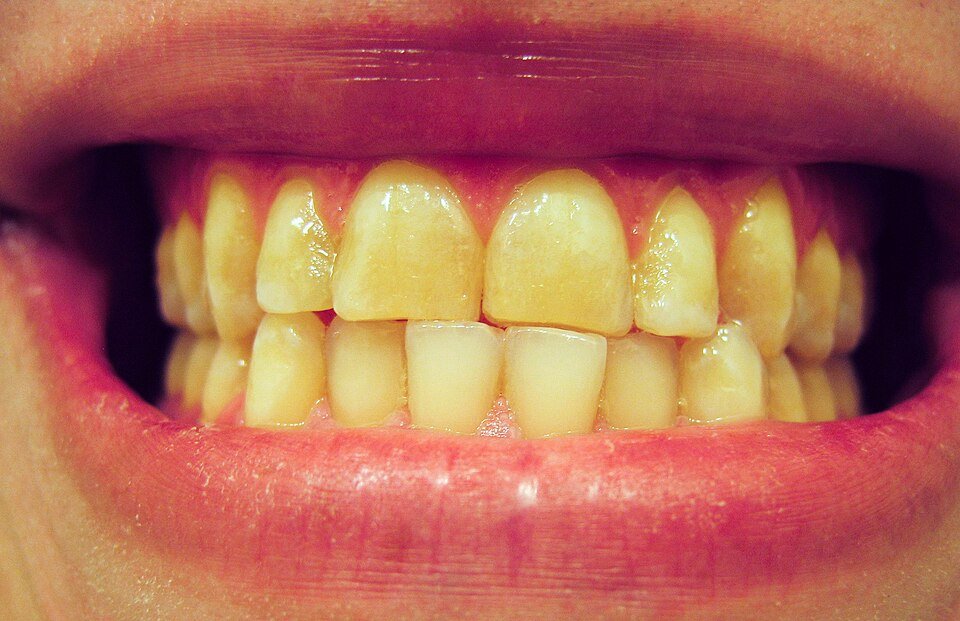
Bruxism is the medical name for clenching, grinding or gnashing your teeth. Grinding means sliding the upper and lower teeth back and forth against each other, while clenching means pressing them together hard. Most people who do it are not aware of it, and it can happen during the day or at night while you sleep. Many people grind now and then, especially at stressful times, and occasional grinding usually does no harm. When it happens often, however, it puts strain on the teeth, jaw muscles and jaw joints.
Source: Cleveland Clinic, MedlinePlus, NHS
Experts now describe bruxism as repeated activity of the chewing (masticatory) muscles. An international expert consensus published in 2018 stated that, in otherwise healthy people, bruxism should be seen as a behavior rather than a disorder. It only becomes a clinical problem when it leads to consequences such as tooth damage, jaw pain or headaches. The same group noted that in some situations it may even have protective effects, for example during breathing-related arousals in sleep, although that evidence is still inconclusive.
Source: Lobbezoo et al., J Oral Rehabil 2018 (PMC)
How common bruxism is remains hard to pin down, because much of it happens during sleep and studies measure it in different ways. A 2022 review summarizing earlier research reported sleep bruxism in about 16.5% of adults and awake bruxism in about 5%, with regular sleep bruxism falling with age from about 13% in people aged 18 to 29 to about 3% in people over 60. In children, reported rates reach as high as 49%. Cleveland Clinic notes that bruxism is most common in childhood, adolescence and young adulthood, and that anyone can develop it.
Source: Lee, Children 2022 (PMC), Cleveland Clinic
Symptoms of bruxism
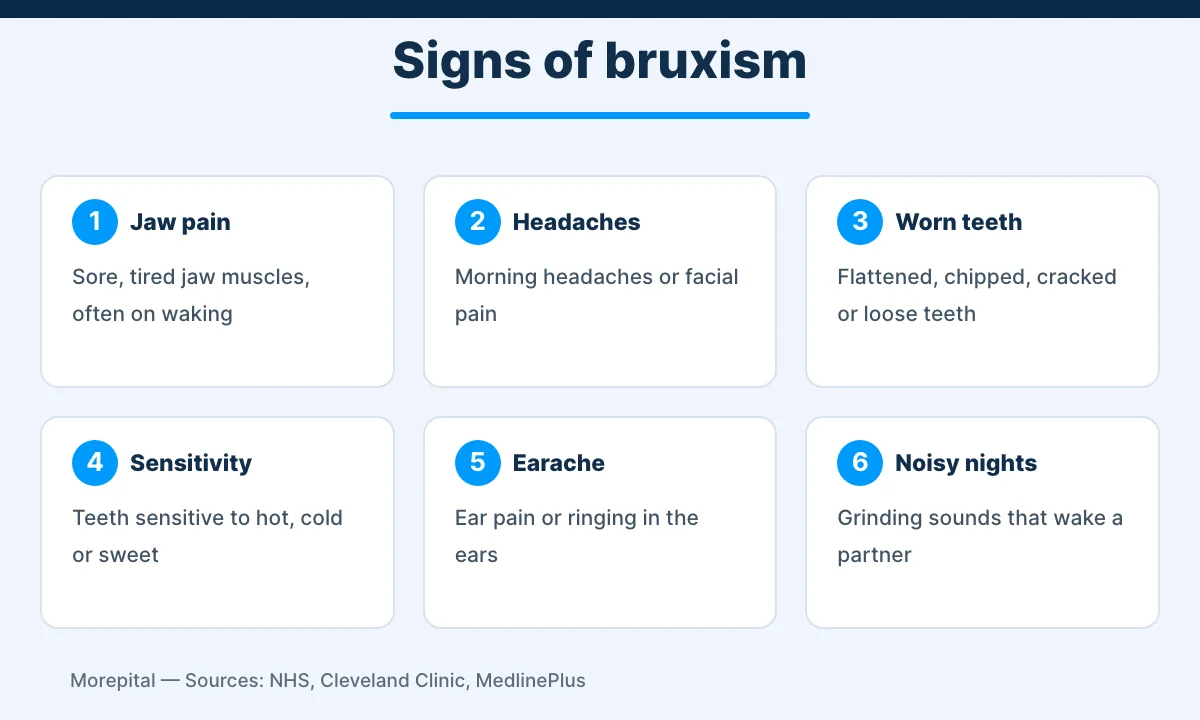
Because people usually grind without knowing it, the first clue often comes from a bed partner or family member who hears grinding noises at night, or from a dentist who spots worn teeth at a check-up. The symptoms come from the pressure the grinding puts on the teeth, chewing muscles and the temporomandibular joints (TMJs) that connect the jaw to the skull. During sleep, people may clench with a force of up to about 250 pounds.
Source: Merck Manual, MedlinePlus, KidsHealth (Nemours)
Common signs and symptoms
- A sore, tired or painful jaw, especially on waking
- Headaches or facial pain, often worse in the morning; some people feel a dull ache at the temples
- Earache, which may be pain referred from the jaw
- Ringing in the ears (tinnitus)
- Pain when eating or chewing, and difficulty opening or closing the mouth
- Worn, flattened, chipped, cracked or loose teeth
- Teeth that are sensitive to hot, cold or sweet foods
- Broken or lost fillings and damaged crowns
- Disturbed sleep, for you or for a partner woken by the noise
Source: NHS, Cleveland Clinic, MedlinePlus, Merck Manual
Symptoms vary a lot from person to person. Whether grinding causes pain depends on things such as how hard and how long you clench, your stress level, how your teeth line up, your posture, your sleep habits and how well you are able to relax. Some people grind for years and never notice any symptoms.
Source: MedlinePlus
Causes and risk factors
There is no single known cause of bruxism, and experts still debate exactly why it happens. Several factors appear to contribute, and they often act together. Stress and anxiety are the most common triggers named by the NHS, and Cleveland Clinic notes that depression and generalized anxiety disorder raise the risk.
Source: NHS, Cleveland Clinic, MedlinePlus
Main risk factors
- Stress, anxiety and strong emotions: awake bruxism in particular is linked to anxiety, anger, tension and intense concentration.
- Sleep problems: snoring and obstructive sleep apnea often occur together with sleep bruxism, although it is not clear whether one causes the other.
- Medicines: some drugs, including selective serotonin reuptake inhibitors (SSRIs) used for depression and anxiety, are associated with grinding. A 2022 review also lists antipsychotics and amphetamines.
- Smoking, alcohol and caffeine: Cleveland Clinic reports that smoking, drinking alcohol and very heavy caffeine intake (more than six cups of coffee a day) roughly double the chance of grinding.
- Recreational drug use: the NHS and Cleveland Clinic advise avoiding drugs as part of reducing risk.
- Other medical conditions: secondary bruxism has been linked to conditions such as epilepsy and Parkinson’s disease.
Source: NHS, Cleveland Clinic, Merck Manual, Lee, Children 2022 (PMC)
Causes in children
In children, grinding may be linked to misaligned teeth, pain such as an earache or teething, stress (for example worry about tests, a change in routine or family arguments), and some medical factors such as hyperactivity, cerebral palsy or certain medicines. Childhood risk factors described in research also include nasal blockage, enlarged tonsils and breathing problems during sleep.
Source: KidsHealth (Nemours), Lee, Children 2022 (PMC)
Sources differ on the role of the bite. KidsHealth lists misaligned teeth as one possible cause in children, while the US National Institute of Dental and Craniofacial Research (NIDCR) says research does not support the idea that a bad bite causes jaw joint disorders.
Source: KidsHealth (Nemours), NIDCR (NIH)
Types of bruxism
Bruxism is divided into two types according to when it happens. They can occur on their own or together, and they tend to have somewhat different triggers and treatments.
Source: Cleveland Clinic, Lobbezoo et al., J Oral Rehabil 2018 (PMC)
| Awake bruxism | Sleep bruxism | |
|---|---|---|
| When | During the day, while awake | During sleep |
| Typical action | Mostly clenching or bracing the jaw, with repeated or sustained tooth contact | Rhythmic grinding or sustained clenching |
| Common links | Stress, anxiety, anger, deep concentration | Sleep apnea, snoring, some medicines, stress |
| Awareness | Can be noticed and reduced with effort | Usually not noticed by the person; partners often hear it |
| Usual approach | Habit awareness, stress reduction; may not need formal treatment | More likely to need treatment, such as a night guard |
Source: Cleveland Clinic, Lobbezoo et al., J Oral Rehabil 2018 (PMC), Merck Manual
Doctors also sometimes separate primary bruxism, which occurs without another underlying condition, from secondary bruxism, which is linked to a medical condition or medicine.
Source: Lee, Children 2022 (PMC)
How bruxism is diagnosed
A dentist or doctor usually diagnoses bruxism from your symptoms and an examination. The dentist looks for signs such as unusual tooth wear, chipped enamel, cracked teeth or fillings, tooth sensitivity and tender jaw muscles. Reports from a partner or parent who hears grinding at night are often an important clue. Dental X-rays may be used, particularly when the jaw joint is involved.
Source: Cleveland Clinic, KidsHealth (Nemours), MedlinePlus
Because jaw and ear pain can have other causes, the examination also checks for problems such as dental disease, ear infections and temporomandibular disorders (TMD). In some cases, an overnight sleep study (polysomnography) at a sleep center is used. It records muscle activity during sleep and gives a definite diagnosis, and it can also look for related problems such as sleep apnea. It is considered the gold standard, but it is costly and not needed for most people.
Source: MedlinePlus, Cleveland Clinic, Lee, Children 2022 (PMC)
Possible, probable and definite bruxism
For research and specialist use, the 2018 international consensus proposed three grades: possible bruxism, based only on self-report; probable bruxism, based on signs found during a clinical examination; and definite bruxism, confirmed with instruments such as electromyography (EMG) or polysomnography. The authors stressed that this system is still a proposal that needs further testing.
Source: Lobbezoo et al., J Oral Rehabil 2018 (PMC)
Treatment options for bruxism
Bruxism does not always need treatment. Mild or occasional grinding often needs nothing more than awareness and self-care. When treatment is needed, the goals are to relieve pain, prevent permanent damage to the teeth and reduce clenching. No single treatment works for everyone, and treatment is usually aimed at protecting the teeth and managing the triggers.
Source: NHS, Cleveland Clinic, MedlinePlus
Mouth guards and splints
The most common dental treatment is a custom-made mouth guard, also called a night guard or occlusal splint. It is a plastic appliance, made and adjusted by a dentist, that fits over the upper or lower teeth and stops them grinding together. It protects the teeth and may help position the jaw to ease muscle strain. A guard protects the teeth but does not stop the grinding itself, and results vary; symptoms may return when you stop wearing it. People with severe awake bruxism sometimes also wear a guard during the day as a reminder not to clench. Over-the-counter, heat-molded guards are sometimes suggested when tooth wear is the main problem, but a dental evaluation should come first. If an appliance causes pain, stop using it and contact your dentist.
Source: NHS, Cleveland Clinic, MedlinePlus, Merck Manual, NIDCR (NIH)
Stress reduction and behavior change
Relaxation methods such as breathing exercises, meditation, mindfulness, music and regular exercise can help, and cognitive behavioral therapy (CBT) may reduce symptoms. Behavioral training to unlearn clenching works better for daytime clenching than for grinding during sleep. For causes such as stress, anxiety, smoking, heavy drinking or drug use, your doctor can offer advice and support.
Source: NHS, Cleveland Clinic, MedlinePlus
Medicines
A doctor may sometimes prescribe a muscle relaxant to take at bedtime, usually only for a short time. Evidence for drug treatment is weak: an overview of systematic reviews found no benefit over placebo for several medicines tested for sleep bruxism, including amitriptyline, clonidine and propranolol. If grinding seems to be linked to a medicine you take, such as an SSRI, talk to your doctor before changing it.
Source: Cleveland Clinic, Bussadori et al., J Pain Res 2020 (PMC)
Botulinum toxin (Botox) injections
In severe cases, botulinum toxin can be injected into the jaw muscles to relax them and reduce pain. The effect wears off, so injections usually need repeating every three to four months. Sources differ on how well this works: Cleveland Clinic lists it as an option for severe cases, and a 2020 overview found some evidence that it reduces sleep bruxism-related pain, while the NIDCR describes its benefit for jaw joint disorders as unclear and advises trying simpler treatments first.
Source: Cleveland Clinic, Bussadori et al., J Pain Res 2020 (PMC), NIDCR (NIH)
Repairing damaged teeth
Grinding can wear down, crack or loosen teeth and damage fillings and crowns. A dentist can repair this damage, for example with new fillings or dental crowns, and regular check-ups help find damage early. Bite adjustment is sometimes offered after splint therapy, but the NIDCR cautions that permanent changes to the teeth or bite, such as reshaping teeth, crowns or orthodontics, may not help jaw problems and can make them worse. Ask about the benefits, risks and alternatives, and consider a second opinion, before any irreversible treatment.
Source: MedlinePlus, Merck Manual, Cleveland Clinic, NIDCR (NIH)
Complications
Bruxism is not considered dangerous, and for most people it does not cause serious problems. Frequent or forceful grinding over a long time, however, can lead to permanent damage.
Source: MedlinePlus, Cleveland Clinic
- Dental damage: worn enamel, flattened, cracked, broken or loose teeth, and in some cases tooth loss. Fillings and crowns can crack or break, and porcelain on a crown’s chewing surface can wear down the opposing tooth.
- Receding gums.
- Jaw joint and muscle problems: painful jaw muscles and temporomandibular disorders (TMD).
- Ongoing pain: headaches, facial pain and ear pain.
- Sleep problems: disturbed sleep and insomnia, for the person grinding and for a bed partner.
Source: NHS, Cleveland Clinic, MedlinePlus, Merck Manual
The link between bruxism and jaw joint disorders is complex. TMD is a group of more than 30 conditions affecting the jaw joints and chewing muscles and affects about 5% of US adults. The NIDCR does not describe bruxism as a proven direct cause, and a 2022 review called the link between sleep bruxism and TMD in children controversial, with limited evidence.
Source: NIDCR (NIH), Lee, Children 2022 (PMC)
Bruxism in children
Teeth grinding is common in children, and in this age group sleep bruxism is not considered a disorder. Most children grind without any lasting harm and grow out of it, often around the time they lose their baby teeth or by adolescence. Parents or siblings usually notice it first because of the noise at night, or the child may complain of a sore jaw or face in the morning or pain when chewing.
Source: KidsHealth (Nemours), Cleveland Clinic, Lee, Children 2022 (PMC)
If you think your child grinds their teeth, take them to the dentist. The dentist checks for chipped enamel, unusual wear and sensitivity, and may look for causes such as misaligned teeth or stress. If grinding causes soreness or damage, a custom night guard may be advised. At home, a calming bedtime routine such as a warm bath, soothing music or a book, and dealing with sources of worry, can help. Talk to a dentist or doctor if your child has trouble sleeping or seems to be acting differently.
Source: KidsHealth (Nemours), NHS
Prevention and living with bruxism
Bruxism cannot always be prevented, especially when it happens during sleep, but you can lower your risk and limit the damage. Most of the steps also ease jaw pain.
Source: Cleveland Clinic, NHS
- Manage stress with breathing exercises, meditation, mindfulness, music or regular exercise.
- Keep good sleep habits: a regular bedtime, time to relax before bed, and a dark, quiet bedroom.
- Stop smoking, and cut down on alcohol and caffeine. Avoid recreational drugs.
- During the day, notice when you clench and relax your face and jaw.
- If your jaw hurts, avoid chewing gum and hard or dense foods.
- For jaw pain or swelling, try an ice pack wrapped in a tea towel for 20 to 30 minutes, or damp heat, and gentle jaw and neck stretches or massage.
- Over-the-counter painkillers such as paracetamol (acetaminophen) or ibuprofen can ease pain.
- Wear your mouth guard regularly if one has been made for you; it only works when worn.
- Have regular dental check-ups so damage is found and treated early.
Source: NHS, Cleveland Clinic, MedlinePlus
The outlook is generally good. Many people find that bruxism eases over time, though flare-ups can return during stressful periods, so it helps to know how to manage them.
Source: Cleveland Clinic
When to see a dentist or doctor
See a dentist if you grind your teeth and your teeth are damaged, worn or sensitive, if you have pain in your jaw, face or ear, if a partner tells you that you grind your teeth at night, or if you are worried about a child who grinds. See a doctor for help with possible underlying causes such as stress, anxiety, smoking, heavy drinking or drug use. Cleveland Clinic advises seeing a provider if symptoms persist or happen more often than not. If self-care does not help jaw symptoms within several weeks, get a full dental evaluation, because many conditions can cause jaw joint pain.
Source: NHS, Cleveland Clinic, MedlinePlus
- You have trouble eating or chewing
- You have difficulty opening or closing your mouth
- A tooth or filling breaks or a tooth becomes loose
- A mouth guard or splint causes pain
Source: MedlinePlus, Cleveland Clinic, NHS, NIDCR (NIH)
Related treatments
Related conditions
Bruxism: frequently asked questions
What is the main cause of bruxism?
There is no single cause. Stress and anxiety are the most common triggers; sleep apnea, some medicines such as SSRIs, smoking, alcohol and heavy caffeine use also raise the risk.
Source: NHS, Cleveland Clinic
Is teeth grinding serious?
Usually not. Bruxism is not considered dangerous, but frequent grinding can permanently wear or crack teeth and cause jaw pain, headaches and ear pain.
Source: MedlinePlus, Cleveland Clinic
Can bruxism be cured?
There is no single cure, but it can be managed. Children often outgrow it, and in adults it often eases over time, with mouth guards, stress reduction and lifestyle changes controlling symptoms.
Source: Cleveland Clinic, KidsHealth (Nemours)
Does a night guard stop teeth grinding?
A night guard protects the teeth and may ease jaw strain, but it does not stop the grinding itself. It must be worn regularly, and symptoms may return when you stop.
Source: Cleveland Clinic, MedlinePlus, NHS
How do I know if I grind my teeth at night?
Signs include a sore jaw or headache on waking, worn or sensitive teeth, and a partner hearing grinding. A dentist can spot tooth wear, and a sleep study can confirm it.
Source: Cleveland Clinic, NHS, Merck Manual
Is it normal for children to grind their teeth?
Yes, it is common in children and most outgrow it without lasting problems, often when they lose their baby teeth. See a dentist if you are concerned.
Source: KidsHealth (Nemours), NHS
Does Botox help bruxism?
Botulinum toxin injections can relax the jaw muscles and ease pain in severe cases, with repeat treatment every three to four months. Evidence is mixed, so simpler treatments are usually tried first.
Source: Cleveland Clinic, Bussadori et al., J Pain Res 2020 (PMC), NIDCR (NIH)
Can stress cause teeth grinding?
Yes. Stress and anxiety are the most common causes, especially of daytime clenching. Relaxation, exercise and cognitive behavioral therapy may help.
Source: NHS, Cleveland Clinic
Is bruxism linked to sleep apnea?
Often. Sleep bruxism frequently occurs together with snoring and sleep apnea, but it is not clear whether one causes the other.
Source: Cleveland Clinic, NHS
Worried about worn teeth or jaw pain from grinding? Contact us to discuss dental treatment options with our team.
Sources
- NHS — Teeth grinding (bruxism)
- Cleveland Clinic — Teeth Grinding (Bruxism)
- MedlinePlus (NIH) — Bruxism
- Merck Manual Consumer Version — Teeth Grinding
- KidsHealth (Nemours) — Bruxism (Teeth Grinding or Clenching)
- National Institute of Dental and Craniofacial Research (NIH) — TMD (Temporomandibular Disorders)
- Journal of Oral Rehabilitation (PMC) — International consensus on the assessment of bruxism: Report of a work in progress (Lobbezoo et al., 2018)
- Children (Basel) (PMC) — Relationship Analogy between Sleep Bruxism and Temporomandibular Disorders in Children: A Narrative Review (Lee, 2022)
- Journal of Pain Research (PMC) — The Current Trend in Management of Bruxism and Chronic Pain: An Overview of Systematic Reviews (Bussadori et al., 2020)
This page is part of the Morepital medical reference. It is for general health education and does not replace a consultation with a qualified doctor. Last reviewed: October 2026.