
Beard transplant in Turkey is a facial hair restoration procedure in which a surgical team moves individual hair follicles, usually from the back and sides of the scalp, into patchy or hairless areas of the cheeks, chin, moustache or sideburns. It is done under local anesthetic, most often with follicular unit extraction (FUE), and the transplanted hairs typically shed in the first weeks, start regrowing after about 3 to 4 months and show the overall result after roughly 10 to 14 months. The outcome depends far more on the doctor who plans and performs the surgery than on the country or the technique’s brand name.
Source: ISHRS, Int J Trichology, BAAPS
Contents
- What is a beard transplant in Turkey?
- Who is a good candidate for a beard transplant in Turkey?
- Non-surgical options to consider first
- How a beard transplant in Turkey is performed, step by step
- How many grafts does a beard need?
- Recovery and results after a beard transplant in Turkey
- Risks and side effects of facial hair transplantation
- How to choose a clinic for a beard transplant in Turkey
- Beard transplant in Turkey: frequently asked questions
What is a beard transplant in Turkey?
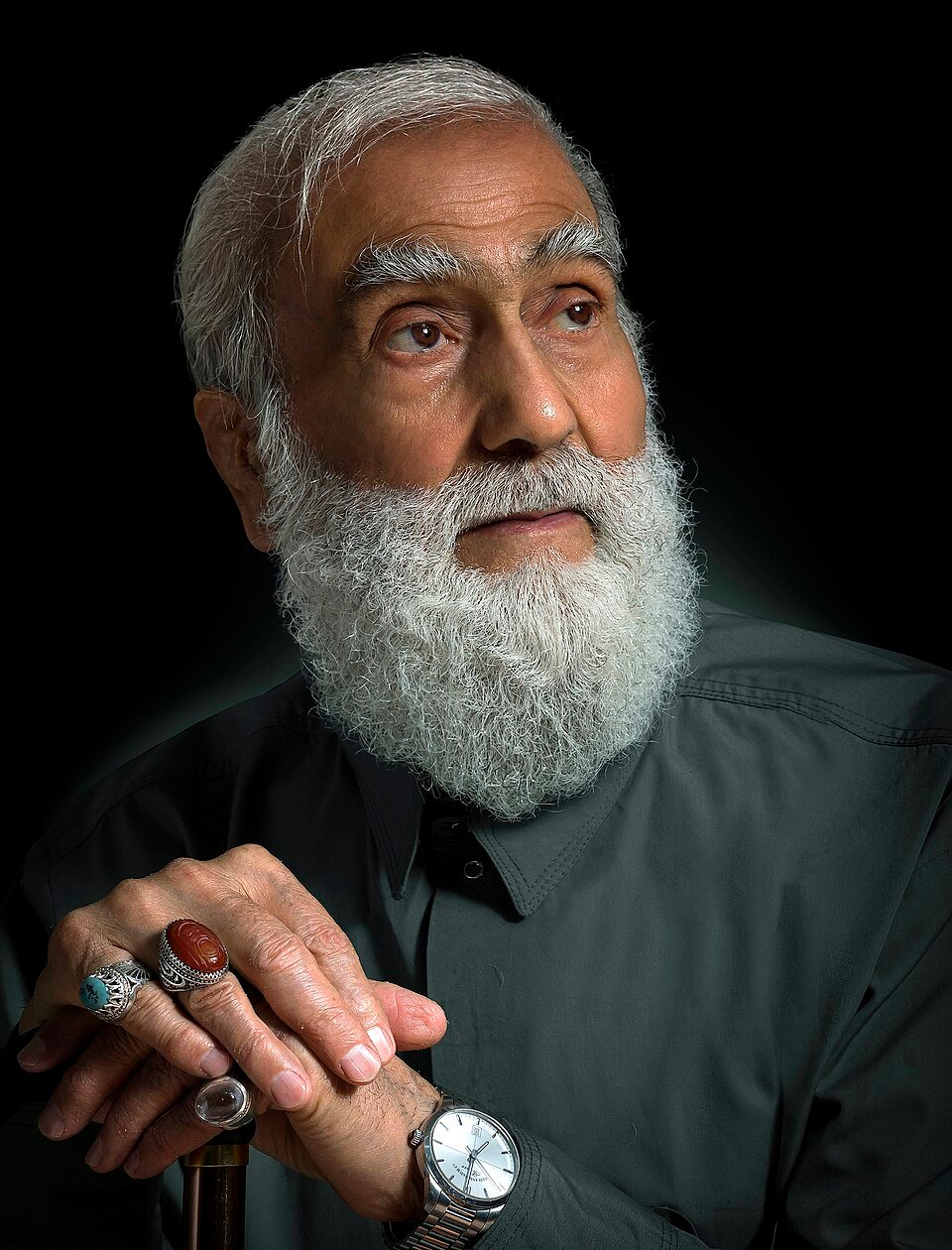
A beard transplant is hair restoration surgery adapted to the face: the surgeon places follicular units (natural groups of one to a few hairs) into the cheeks, jawline, chin, moustache or sideburns. A beard transplant in Turkey follows the same medical steps and standards of diagnosis, design and aftercare as anywhere else.
Source: ISHRS, Int J Trichology
Interest in facial hair restoration, including beard transplant in Turkey, has grown quickly. The International Society of Hair Restoration Surgery (ISHRS) reports that facial procedures rose by 196% between 2012 and 2014 (from 4,707 to 13,956 procedures) and by a further 121% between 2014 and 2019, reaching 30,957 procedures. UK and Turkish plastic surgery associations have also noted a significant increase in people travelling abroad for hair transplant surgery, with a particular focus on Türkiye.
Beard growth is driven by male hormones from puberty, as dihydrotestosterone (DHT) turns fine facial hairs into thick terminal hairs, and genetics strongly shape beard density. When follicles are simply absent, waiting will not fill the gap, which is why some men consider a beard transplant in Turkey. If you are also losing scalp hair, read our overview of hair transplant in Turkey, because the same donor hair may be needed for both.
Source: ISHRS
Who is a good candidate for a beard transplant in Turkey?
According to the ISHRS, the main groups who seek facial hair transplantation are:
- Men with little or no facial hair since puberty, or with gaps that make the beard look patchy.
- People with scarring hair loss in the beard area after burns, traffic or other injuries, acne, cleft lip correction or other surgery.
- Transgender men undergoing masculinization who want a fuller beard.
Source: ISHRS
In a Brazilian series, beardless patients made up 60% of cases, patchy beards 30% and scar camouflage 10%, mostly for cleft lip scars; patients ranged from 23 to 64 years old. In an Indian series of 20 patients treated with FUE, 75% had beard loss after burns, 15% after acne scarring and 10% had a congenital absence of beard.
Source: Rev Bras Cir Plást, Int J Trichology
Conditions that need diagnosis before surgery
Not every patchy beard is a surgical problem. Seborrheic dermatitis, folliculitis, fungal infection of the skin (dermatophytosis) and alopecia areata should be diagnosed and treated medically first; genetic sparseness is the main indication for surgery. Alopecia areata, in which hair can regrow by itself, was excluded in the Indian series. A doctor who examines your skin, possibly with dermatoscopy, should rule these causes out before recommending a beard transplant in Turkey or elsewhere.
Source: Rev Bras Cir Plást, Int J Trichology
Donor hair: the limiting factor
Anyone planning a beard transplant in Turkey also needs enough healthy donor hair. The scalp’s safe zone at the back and sides of the head usually has plenty of follicles with thick hair, and darker, thicker donor hair tends to give a better-looking beard. If you have, or are likely to develop, male pattern baldness, remember that every graft moved to your face is one less available for your scalp later, because donor hair is a limited resource.
Source: ISHRS
Non-surgical options to consider first
Some men try topical minoxidil before booking a beard transplant in Turkey. Facial use is off-label; the drug is approved for scalp hair loss. A randomized, double-masked, placebo-controlled trial in 48 men aged 20 to 60 found that 0.5 mL of 3% minoxidil solution applied twice daily produced a statistically significant increase in beard hair count over 16 weeks.
Source: SAGE Open Med Case Rep
The evidence is limited and responses vary widely, from new hair within weeks to little gain after two years. Reported side effects include skin dryness, dermatitis, itching, headache, unwanted hair elsewhere and, less often, palpitations, so people with heart disease need closer monitoring. On the scalp, gains fade after stopping minoxidil; whether the same happens with facial hair is unknown. See our guide to minoxidil for hair loss.
Source: SAGE Open Med Case Rep
Minoxidil cannot create follicles where none exist, so it is no substitute for a beard transplant in Turkey or elsewhere when scars are hairless. If you have had a beard transplant, the ISHRS advises stopping topical minoxidil in the recipient area afterward; ask your surgeon how this applies to you.
Source: ISHRS, SAGE Open Med Case Rep
How a beard transplant in Turkey is performed, step by step
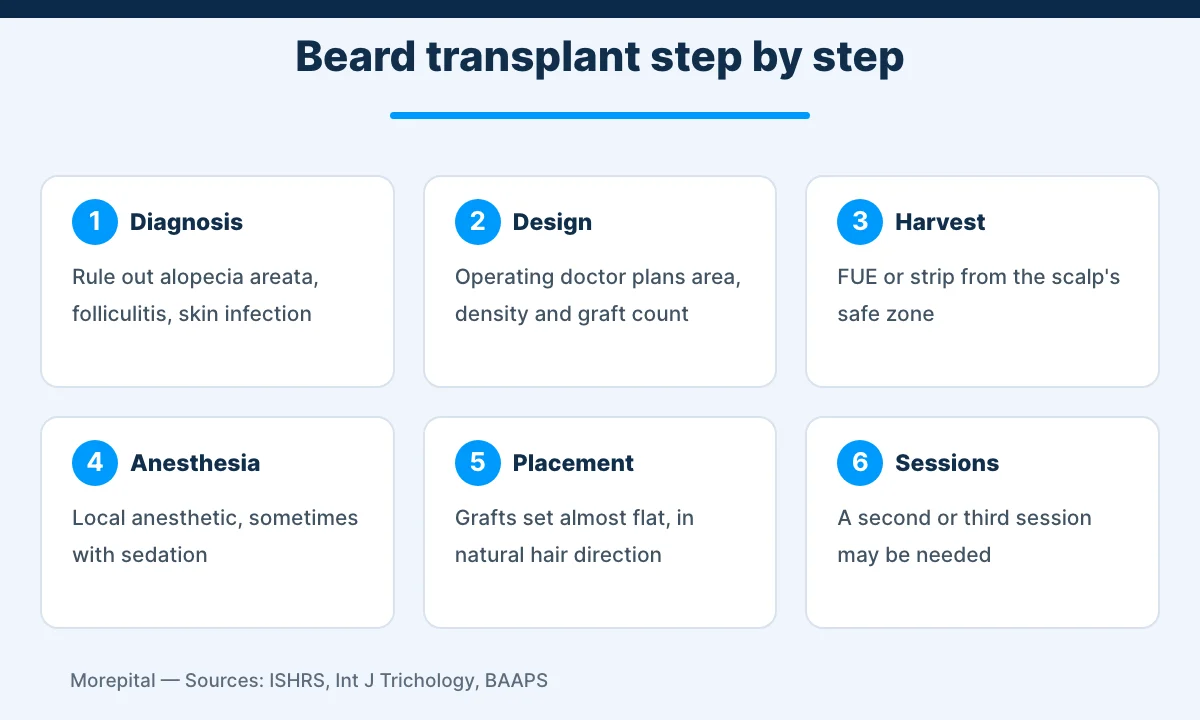
1. Consultation and design
For a beard transplant in Turkey, the number of grafts depends on your goals, face size, design, area, planned density, hair thickness, existing hair and, above all, how many grafts the donor area can safely supply. The doctor assesses existing density and skin elasticity, takes photographs and marks feathered edges so the result blends in. In scarred skin, the Indian team performed a small test transplant before the full procedure in every case.
Source: ISHRS, Int J Trichology
Because the beard line you choose is effectively permanent, consider how you would feel if you later wanted to shave or change style.
Source: ISHRS
2. Harvesting the grafts
Grafts are taken either by FUE, in which individual follicular units are removed with a micro-punch, or by strip excision (FUT), which removes a narrow strip of scalp and leaves one linear scar. The Brazilian surgeon preferred FUT for speed and reported that the method did not affect the outcome. Beard hair from under the jawline is a secondary donor source with favorable characteristics but limited supply, and neck hair can be used for small patches.
Source: ISHRS, Int J Trichology, Rev Bras Cir Plást
A multicenter study of 82 patients, 64 with beard procedures, reported a graft transection (damage) rate of 4.8% for beard FUE. Our hair transplant page compares FUE and FUT.
Source: Dermatol Surg
3. Anesthesia and placement
A beard transplant in Turkey is performed under local anesthetic, sometimes with sedation. Before implantation, any existing beard is trimmed to 3 to 5 mm (about 1/8 to 1/5 inch) so the gaps are visible. Grafts are placed with forceps or with implanters, the pen-like tools also used in a DHI hair transplant. They must sit as parallel to the skin as possible and follow the natural angle and direction of the surrounding hair; where no hair exists, the opposite side of the face is used as a guide. The Brazilian surgeon described a slope of about 20 degrees and noted that an expert team needs at least six hours.
Source: ISHRS, Int J Trichology, Rev Bras Cir Plást
How many grafts does a beard need?
There is no single correct number for a beard transplant in Turkey; the ISHRS gives no standard count because the plan depends on the factors above. Published series give a rough sense of scale, not targets:
Source: ISHRS, Int J Trichology, Rev Bras Cir Plást
| Area or measure | Reported figure | Source |
|---|---|---|
| Each sideburn | About 250 follicular units on average | Indian series (20 patients) |
| Each cheek | About 350 to 600 follicular units | Indian series |
| Moustache and chin | About 550 to 650 follicular units | Indian series |
| Total per patient | 150 to 1,000 follicular units | Indian series |
| Planned density | 20 to 30 follicular units per cm² (about 130 to 195 per square inch) | Indian and Brazilian series |
| Natural full beard | About 20,000 to 25,000 hairs; 8,000 to 10,000 hairs judged cosmetically acceptable in beardless men | Brazilian series |
Source: Int J Trichology, Rev Bras Cir Plást
Higher density looks thicker; lower density covers more area but looks lighter. A second or even third session may be needed, and the Brazilian author noted that a second session can double the number of roots placed in the first. Scarred skin in particular often needed multiple sessions in the Indian series. A clinic that promises “unlimited” grafts should raise questions about how your finite donor supply will be protected.
Source: ISHRS, Rev Bras Cir Plást, Int J Trichology, ISHRS
Recovery and results after a beard transplant in Turkey
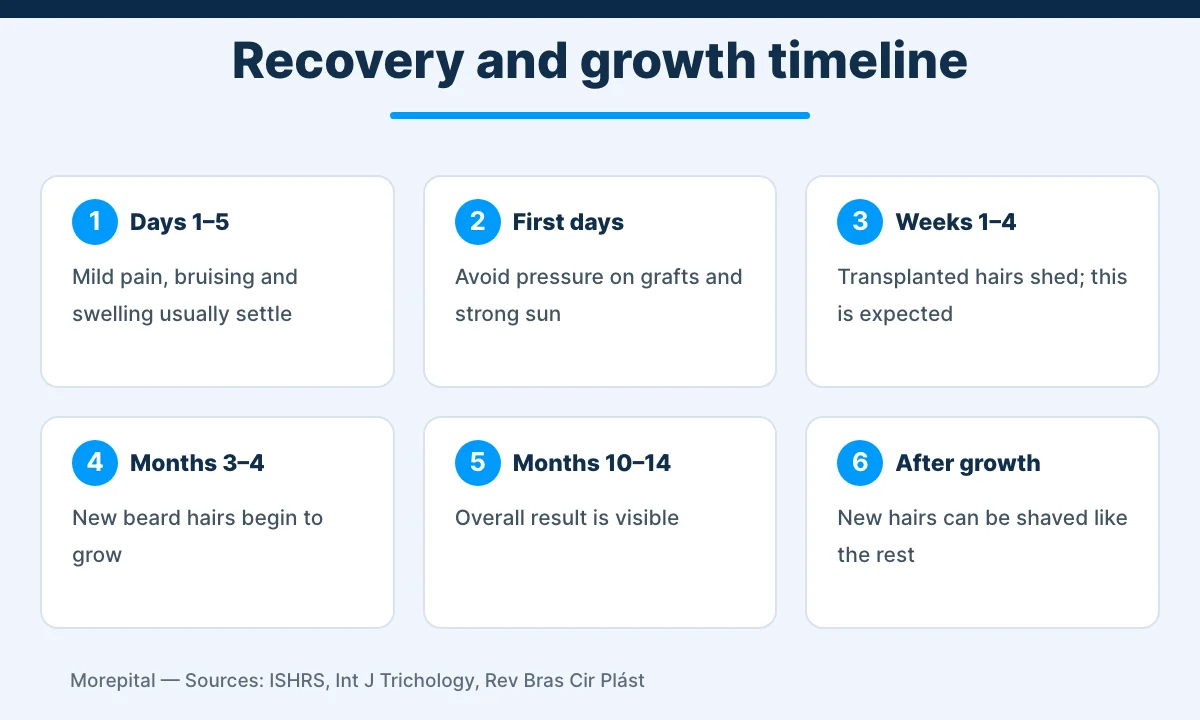
The first days
Immediate recovery after a beard transplant in Turkey is usually simple, and most daily activities can resume. Common short-term effects are mild pain, bruising and swelling; in the Indian series, the two patients who bruised recovered within 4 to 5 days. That team also gave oral antibiotics for 3 to 5 days and removed the donor dressing on day 3.
Source: Rev Bras Cir Plást, Int J Trichology
The ISHRS advises avoiding excessive pressure on the implants for the first few days and avoiding intense sun exposure after surgery. For hair transplants in general, the NHS notes that grafts are not secure for the first two weeks and that many people take one to two weeks off work after hair transplant surgery. Our article on hair transplant recovery covers donor-area care in more detail.
Shedding, regrowth and the final look
Transplanted hairs usually fall out in the first weeks; this is expected and does not mean the grafts have failed. Regrowth begins after about 3 to 4 months, and the ISHRS says overall results are visible after 10 to 14 months. Once the new hairs have grown, they can be shaved like the rest of the beard.
Source: ISHRS, Int J Trichology, Rev Bras Cir Plást
What the evidence shows
The evidence comes from small observational series, not large trials. In the Indian series of 20 patients, 55% were highly satisfied, 40% satisfied and 5% dissatisfied at one year, and congenital cases achieved good density. In the multicenter FUE study, 43 patients rated their outcomes at six months: 79.1% were “very happy” and 20.9% rated their result as satisfactory.
Source: Int J Trichology, Dermatol Surg
Risks and side effects of facial hair transplantation
The ISHRS lists several complications specific to facial work, and they apply to a beard transplant in Turkey as anywhere else:
- Unnatural growth: grafts placed at the wrong angle or direction can look unnatural and sometimes need to be removed.
- Skin darkening: post-inflammatory hyperpigmentation in the implant area, mainly in darker skin, which may need treatment.
- Folliculitis: uncommon, most often under the lower lip and on the chin.
- “Cobblestoning”: small bumps around grafts under the lip and on the chin; good-quality grafts and technique reduce the risk.
- Donor-site lightening: hypopigmentation where grafts were extracted, especially in darker skin.
- Loss of donor reserve: hair used for the beard is no longer available for future scalp restoration.
Source: ISHRS
General hair transplant risks also apply: bleeding, infection or an allergic reaction to the anesthetic, grafts that fail to take, noticeable scarring and continued thinning of surrounding hair. Ask before surgery how the clinic will reach you and treat you if you suspect an infection or bleeding after you return home.
Source: NHS
How to choose a clinic for a beard transplant in Turkey
In December 2023, the British Association of Hair Restoration Surgery, BAAPS, BAPRAS and the Turkish Society of Plastic, Reconstructive and Aesthetic Surgeons issued joint minimum guidelines for UK patients considering hair transplant surgery in Türkiye. They recommend that:
- The doctor who will operate consults you and recommends the harvesting method, graft number and design.
- You get two weeks to consider the recommendation and consent form before paying anything.
- You are told at the first consultation if a technician, rather than a doctor, will make skin incisions or implant hair.
- The operating doctor reviews your progress and final result, and there is a clear complaints process.
- The clinic can manage complications such as infection, cysts or skin necrosis, including outside working hours.
Source: BAAPS
Red flags to watch for
The ISHRS warns against clinics that market under a brand name without naming the responsible physician, consultations that feel like a sales pitch and proprietary-sounding technology used as a selling point. It suggests asking who will design the beard line, make the incisions and remove the follicles, and checking for ISHRS membership or certification by the American Board of Hair Restoration Surgery. The NHS suggests asking how many procedures the surgeon has done and how many had complications.
Planning travel and aftercare
If you are travelling for a beard transplant in Turkey, the UK Foreign, Commonwealth and Development Office advises discussing plans with your own doctor first and doing independent research, because private companies arranging treatment have a financial interest. It notes that standard travel insurance does not normally cover elective surgery abroad and that follow-up care may be limited, so ask who will see you if a problem appears after you fly home.
Source: GOV.UK, GOV.UK (FCDO)
Hair Cultivate, a specialised hair-transplant centre in Istanbul, publishes information on its beard transplant in Turkey service, as well as on moustache transplant and sideburn transplantation. Whichever clinic you consider for a beard transplant in Turkey, apply the same checklist.
Considering a beard transplant in Turkey? Contact us for a free consultation and a treatment plan tailored to you.
Beard transplant in Turkey: frequently asked questions
Is a beard transplant in Turkey permanent?
The ISHRS describes the beard design you choose as effectively permanent, which matters if you later want to shave or restyle. Some people need a second or third session to reach the density they want.
Source: ISHRS
Where do the grafts for a beard transplant in Turkey come from?
Mainly from the back and sides of the scalp. Hair from under the jawline or the neck is a smaller secondary source when few grafts are needed or the scalp supply is limited.
Source: ISHRS, Rev Bras Cir Plást
Does a beard transplant in Turkey hurt?
It is done under local anesthetic, sometimes with sedation. Afterward, mild pain, bruising and swelling are common for a few days.
Source: ISHRS, Int J Trichology
When will I see results after a beard transplant in Turkey?
Transplanted hairs shed in the first weeks, regrowth starts after about 3 to 4 months, and the overall result is visible after about 10 to 14 months.
Source: ISHRS
Can I shave after a beard transplant in Turkey?
Yes. Once the new hairs have grown in, they can be shaved; ask your surgeon when it is safe to start.
Source: Rev Bras Cir Plást
How much does a beard transplant in Turkey cost?
There is no reliable published average for beard procedures. The NHS says hair transplants in the UK cost between £1,000 and £30,000 depending on the extent, technique and clinic. Get a written quote stating graft number, who operates and what aftercare is included.
Can a beard transplant in Turkey cover scars?
Yes, scars from burns, injury, acne or cleft lip repair are a recognized indication, although scarred skin often needs a test graft and more than one session.
Source: ISHRS, Int J Trichology
Disclaimer: this article is for general health education and does not replace advice from a qualified doctor who can assess your individual case. Last updated: October 2026.