
Dental implants in Turkey are titanium or ceramic posts placed in the jawbone to replace missing tooth roots, then topped with a crown, bridge or denture, and Turkey is one of the most popular countries for this treatment among international patients. Because the bone needs roughly three to nine months to fuse with the implant, dental implants in Turkey usually mean two trips, careful planning and a clear arrangement for follow-up at home.
Source: Cleveland Clinic, Oral Health Foundation, Euronews
Contents
- What dental implants in Turkey involve
- Why patients consider Turkey
- Who is a good candidate?
- Single implants, bridges, full arch and bone grafts
- Steps, trips and timeline
- Recovery after implant surgery
- How long implants last
- Risks and complications
- Choosing a clinic and questions to ask
- Aftercare and follow-up at home
- Frequently asked questions
What dental implants in Turkey involve
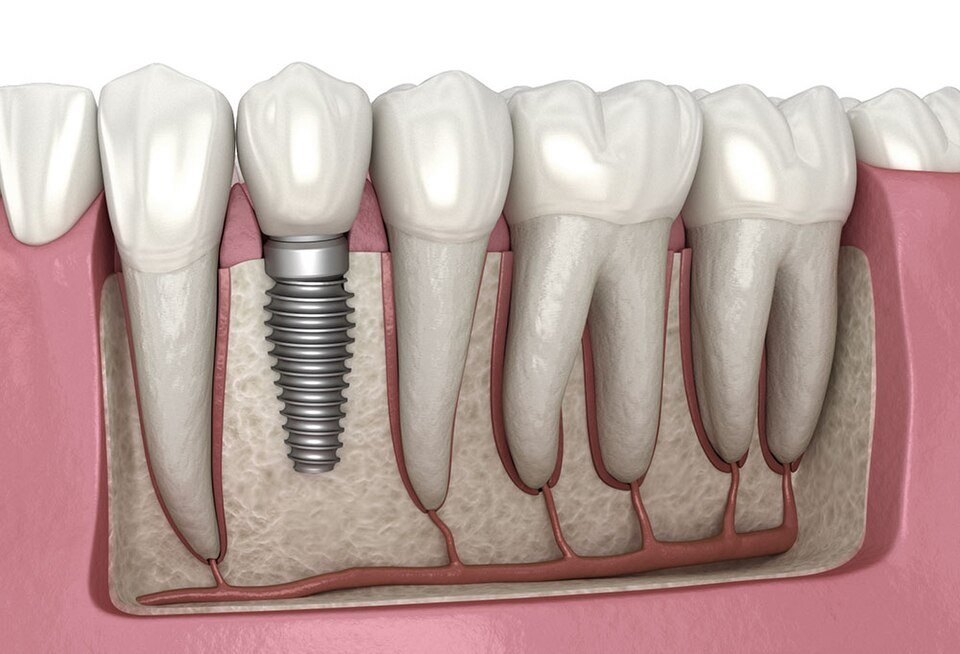
A dental implant is a small threaded post that a surgeon places in the jawbone to act as an artificial tooth root. It has three parts: the post itself, a connector called the abutment, and the restoration you see in the mouth, which can be a single crown, a bridge or a denture. Most implants are made of titanium, and some are ceramic; both materials are considered biocompatible. For a fuller overview of the treatment itself, see our reference page on dental implants.
Source: Cleveland Clinic, Oral Health Foundation
Once the bone has healed around it, an implant is fixed in place and cannot be taken out by the patient, unlike a conventional removable denture. Implants can replace one tooth, several teeth or a whole arch, and you can have them even if some of your natural teeth remain. The surgery is identical whether you are treated at home or choose dental implants in Turkey; what changes is travel, communication and follow-up.
Source: Oral Health Foundation, Cleveland Clinic
Why patients consider dental implants in Turkey
Dental care is one of the most common reasons people travel abroad for treatment, alongside cosmetic surgery and fertility care, according to the US Centers for Disease Control and Prevention. The Turkish Dental Association has estimated that Turkey receives 150,000 to 250,000 foreign dental patients a year, which places it among the main dental-tourism destinations together with countries such as Hungary and Thailand.
Arabic-speaking readers: a detailed, source-referenced Arabic overview of this topic is available in the Alphateb medical encyclopedia — زراعة الأسنان.
The main draws of dental implants in Turkey are usually lower prices than at home, shorter waiting times and the chance to combine treatment with travel. We do not quote prices, because a fair estimate depends on how many implants you need, whether bone grafting is required and what kind of final teeth are planned; any reliable quote should come only after an examination and X-rays or a scan.
Source: GDC, Oral Health Foundation
The growth of dental implants in Turkey and other dental tourism has also raised concerns. Reporting from Turkey described clinics competing mainly on price, unexpected extractions and costly repairs. The British Dental Association warned of infections and implants that came loose. Our guide to veneers in Turkey covers them from that angle.
Source: Euronews, Oral Health Foundation
Who is a good candidate for dental implants in Turkey?
Candidacy for dental implants in Turkey is judged exactly as at home. Implants are usually placed in adults aged 18 or older whose jaws have finished growing, and there is no upper age limit. The ideal candidate is in good general and oral health, has enough jawbone to hold the implant and has healthy gums without active periodontal (gum) disease. Only a dentist who has examined you, usually with X-rays or a 3D scan, can decide whether you are suitable.
Source: Cleveland Clinic, AAP
Cleveland Clinic lists several situations that can make someone a poor candidate or require treatment first:
- active or untreated gum disease;
- extensive tooth decay or poor oral hygiene;
- severe loss of jawbone;
- unmanaged diabetes;
- some bone disorders and autoimmune conditions, or medicines that may affect healing;
- smoking or vaping, which can disrupt healing.
Source: Cleveland Clinic
Infections must be treated before implant surgery, whether at home or as part of dental implants in Turkey. If a painful, swollen tooth is part of the reason you are seeking treatment, read about a tooth abscess, which needs prompt care rather than waiting for a planned trip. A proper provider will ask about serious illnesses, long-term conditions, smoking and previous surgery before giving you a plan.
Source: GDC, Cleveland Clinic
Single implants, bridges, full arch and bone grafts
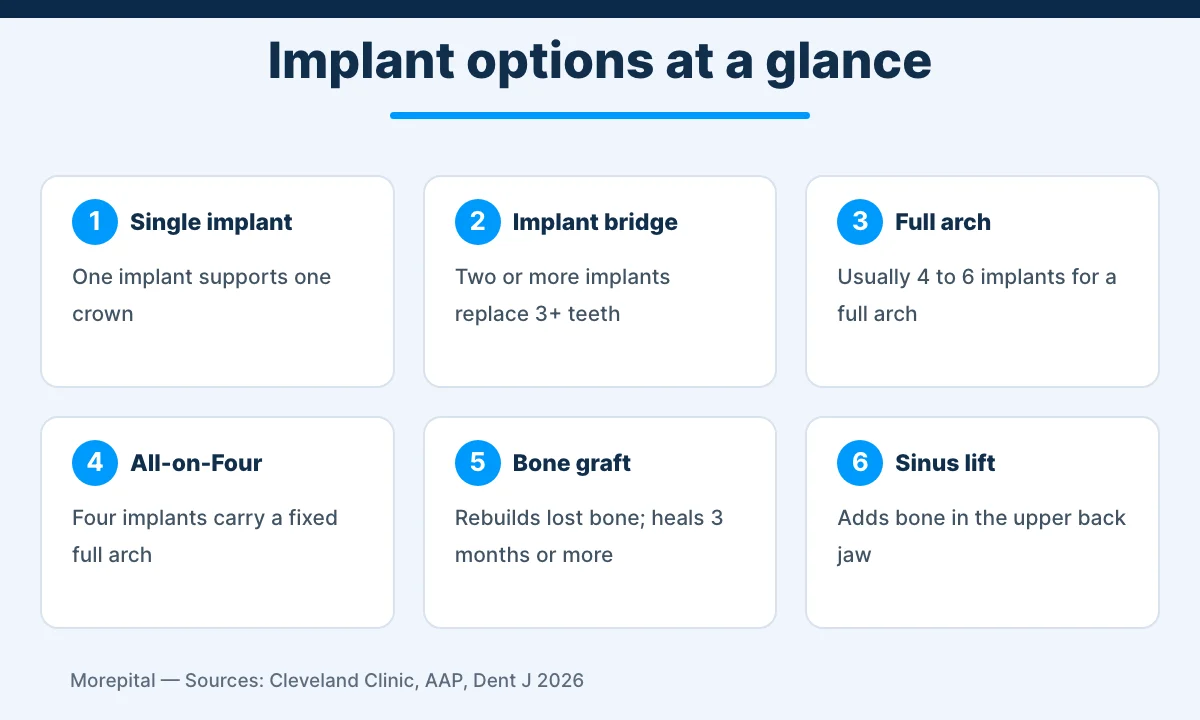
When planning dental implants in Turkey, the number of implants depends on how many teeth are missing and on the type of restoration. A single implant supports one crown. Two or more implants can support a bridge that replaces three or more teeth. For a whole arch, usually four to six implants support either a fixed set of teeth or a removable “snap-on” denture.
Source: Cleveland Clinic, AAP
One full-arch approach you may be offered for dental implants in Turkey is the All-on-Four concept, first described in 2003, in which four implants carry a complete fixed arch. A 2026 systematic review found prosthesis survival for All-on-Four (85.0–100%) comparable to designs using more than four implants (88.2–100%) over up to 20 years, while reported implant survival ranged from 89.7% to 97.9% for All-on-Four and 98.9% to 99.0% for the alternatives. Immediate loading (fitting teeth soon after surgery) may shorten treatment when implants are stable enough.
Source: Dent J 2026
When a bone graft is needed
If bone has been lost, a bone graft may be needed to build a stable base. Grafts can widen the jaw, add volume or lift the floor of the sinus in the upper back jaw, a procedure known as sinus augmentation.
Source: Cleveland Clinic, AAP
Grafting changes your timeline considerably. A graft generally needs at least three months to heal, and large grafts can need nine to 12 months before an implant goes in; the implant should then be placed within about six to 12 months, before the graft shrinks. This is one of the main reasons dental implants in Turkey sometimes require more than two trips.
Source: Cleveland Clinic
Implants versus a cosmetic smile makeover
Implants replace missing teeth, whereas veneers and crowns change the look of teeth you still have. If your main goal is the appearance of your front teeth, our page on the Hollywood smile explains the cosmetic options.
Source: Cleveland Clinic, Oral Health Foundation
Dental implants in Turkey: steps, trips and timeline
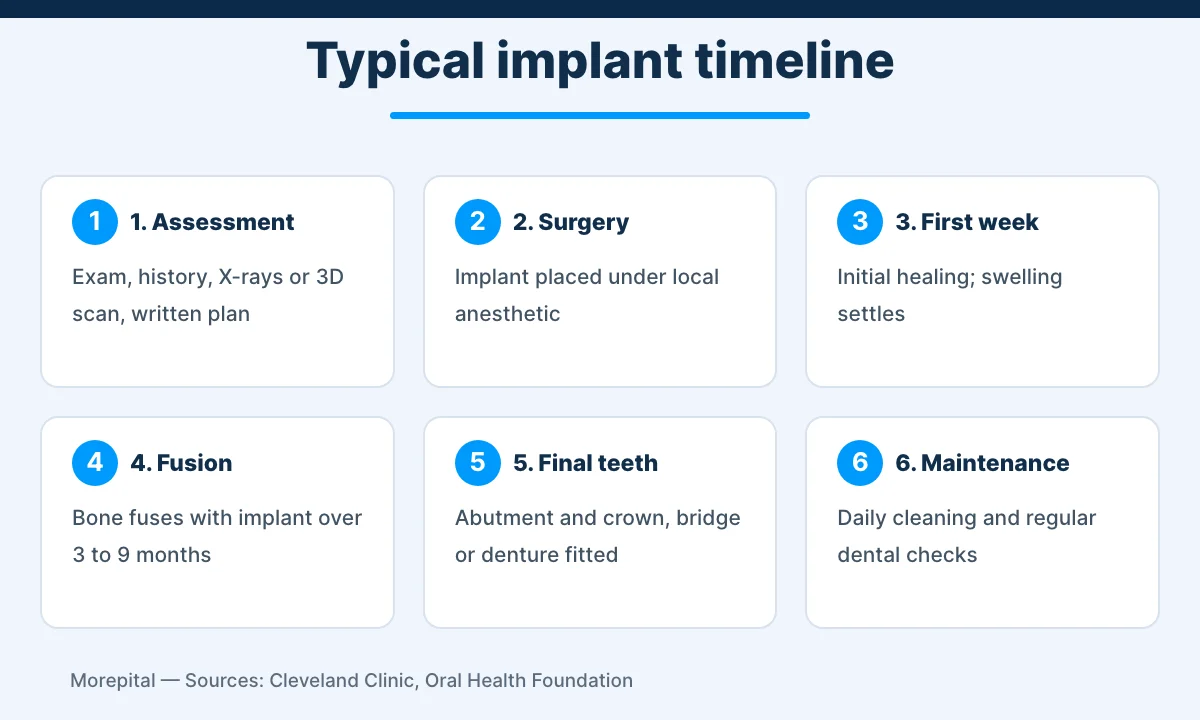
Dental implants in Turkey normally happen in stages. It starts with a consultation and assessment, followed by placement of the implant under local anesthetic, sometimes with sedation. During surgery the dentist opens the gum, prepares a small channel in the bone, inserts the implant and stitches the gum closed. A temporary tooth may be made for implants near the front of the mouth.
Source: Cleveland Clinic, Oral Health Foundation
The first healing phase takes about a week. After that, the bone gradually fuses with the implant, a process called osseointegration, which takes anywhere from three to nine months according to Cleveland Clinic; the Oral Health Foundation describes healing as usually taking around four months. Only then are the abutment and final crown, bridge or denture attached, which may involve a second minor procedure.
Source: Cleveland Clinic, Oral Health Foundation
For travelers this usually translates into one trip for assessment and surgery and a second trip months later for the final teeth. In some cases teeth can be fitted on the same day, but the implant dentist must decide whether this is suitable for you; it is not right for everyone. Ask any clinic offering dental implants in Turkey how many days each visit will take, how many visits are planned and what happens if healing takes longer than expected.
Source: Oral Health Foundation, Dent J 2026, GDC
Recovery after implant surgery
Recovery from dental implants in Turkey is the same as at home: some discomfort and swelling is normal and can usually be managed with over-the-counter pain relief. Most people feel like themselves again within about a week. When a bone graft has been placed, tenderness, swelling and bruising typically settle within one to two weeks; soft foods, ice packs on the outside of the jaw and keeping the head raised help, and smoking, vaping and vigorous rinsing or spitting should be avoided.
Source: Cleveland Clinic, Cleveland Clinic
Contact a dentist promptly if you notice a loose implant, bleeding or swollen gums, pus, swelling in the neck glands, increasing pain or a fever of 101°F (38.3°C) or higher. Agree with the clinic who to call once you are home.
Source: Cleveland Clinic, Cleveland Clinic
If you are having dental implants in Turkey, plan to recover there for a suitable period before flying home, as NHS guidance advises. The CDC notes that flying after major surgery raises the risk of blood clots; implant surgery is much smaller, so ask your surgeon when it is safe to fly.
How long dental implants last
The implant post can last a lifetime with good oral hygiene and regular dental visits, but the parts above it wear out sooner: crowns and bridges on implants typically last about 15 years and dentures at least seven years. The Oral Health Foundation stresses that implants can last many years with good care but come with no lifetime guarantee.
Source: Cleveland Clinic, Oral Health Foundation
Long-term studies are encouraging but not perfect. A 2019 meta-analysis of 18 prospective studies estimated 10-year implant survival at 96.4%; when the authors adjusted for patients lost to follow-up, the estimate fell to 93.2%, and survival appeared lower in people aged 65 and over. An earlier review of 23 studies with at least 10 years of follow-up reported a cumulative mean survival of 94.6% across 7,711 implants.
Source: J Dent 2019, IJOMS 2015
Survival means the implant is still in place, not that the gum, bone and crown are trouble-free; outcomes depend on the patient, the surgeon, planning and maintenance rather than the country.
| Question | What the evidence says |
|---|---|
| Bone healing time | About 3–9 months (often around 4) |
| Healing after a bone graft | At least 3 months; large grafts 9–12 months |
| 10-year implant survival | About 93–96% in pooled studies |
| Lifespan of crowns and bridges | About 15 years; dentures at least 7 years |
| Peri-implantitis (patient level) | About 20–21% in large reviews |
| Smokers vs non-smokers | About 2.4 times the odds of implant failure |
Source: Cleveland Clinic, Cleveland Clinic, J Dent 2019, BMC Oral Health, Medicina 2021
Risks and complications of dental implants in Turkey
Peri-implant disease
The most common long-term problem is inflammation around the implant caused by plaque. In its mild form, peri-implant mucositis, the gum is inflamed; in peri-implantitis the infection also destroys supporting bone and can lead to loosening or loss of the implant. A 2022 meta-analysis of 57 studies estimated peri-implantitis in about 19.5% of patients and 12.5% of implants, and a 2025 AO/AAP review of 102 studies reported patient-level prevalence of 46% for mucositis and 21% for peri-implantitis.
Source: BMC Oral Health, J Periodontol 2025, Oral Health Foundation
The 2025 review identified a history of periodontitis, diabetes, smoking and alcohol use as risk indicators for peri-implantitis. Warning signs include red, sore or swollen gums, bleeding and infection around the implant, so regular professional checks are essential long after your trip for dental implants in Turkey.
Source: J Periodontol 2025, Oral Health Foundation
Smoking
Smoking is one of the clearest modifiable risks. A 2021 meta-analysis covering more than 150,000 implants found that implants in smokers had about 2.4 times the odds of failure compared with non-smokers, along with more bone loss around the implant. Another review found the risk rose with the number of cigarettes smoked per day. If you smoke and are planning dental implants in Turkey, ask your dentist about stopping before and after surgery.
Source: Medicina 2021, J Clin Periodontol 2020
Risks linked to treatment abroad
Dental implants in Turkey, like any treatment, carry a risk of failure, and complex procedures such as implants are more likely to need repeat visits and adjustments to get the bite right, which is harder when your dentist is in another country. A Which? survey cited by the Oral Health Foundation found that more than a quarter of people who had medical treatment abroad felt they did not receive the follow-up care they needed. The CDC adds that care quality varies, language barriers cause misunderstandings and follow-up for complications can be costly.
Source: Oral Health Foundation, CDC
Choosing a clinic for dental implants in Turkey
Start by talking to your own dentist. They know your dental history, can comment on whether implants suit you and should be aware of your plans in case a problem appears later. A reputable clinic abroad should carry out a proper assessment by a qualified dentist before giving you a treatment plan and an estimate, and should ask for your full medical history.
Source: GDC
Before booking dental implants in Turkey, check the qualifications of the team that will treat you, make sure you can ask them questions directly, and verify what the provider tells you using sources other than the clinic itself. Choose a registered dental professional working in a licensed practice, and make sure communication is clear, because misunderstandings are a frequent cause of complaints.
Source: NHS, Oral Health Foundation
Questions to ask before you book dental implants in Turkey
- Who will place the implants and fit the final teeth, and what are their qualifications?
- How many times has the team performed this procedure, and what are its complication and infection rates?
- Will I get a written, tooth-by-tooth plan showing every stage and its cost?
- Is the work guaranteed, and does the initial price include treatment of complications?
- Who pays for extra flights, hotel stays and remedial work if something goes wrong?
- What aftercare do you offer, and who do I contact once I am home?
- Do you have a complaints procedure, and can I see a copy?
Source: GDC, Oral Health Foundation
You do not have to commit on the day of the consultation. Be wary of pressure to add extractions or treatment without a clear clinical reason. Before you go, see a doctor or travel clinic, take your medical records and medication list, and ask for copies of your dental records, X-rays and implant details before you return, translated into English if needed.
Aftercare and follow-up at home
Dental implants in Turkey need the same daily care as natural teeth, or more. Brush for two minutes last thing at night and at least once more during the day with fluoride toothpaste, clean around each implant daily with interdental brushes, and keep regular dental and hygiene appointments.
Source: Oral Health Foundation, AAP
Agree before treatment how your records will be shared with your dentist at home and how aftercare will be coordinated between the two. NHS guidance notes that dental treatment abroad is not reimbursed, and dentists at home may be reluctant to take on complex work done elsewhere without full records, so a clear plan protects you if adjustments are needed after dental implants in Turkey.
See a dentist promptly, wherever you are, if an implant feels loose, the gum around it bleeds, swells or discharges pus, or the bite feels wrong.
Source: Cleveland Clinic, Oral Health Foundation, J Periodontol 2025
Considering dental implants in Turkey? Contact us for a free consultation and a treatment plan tailored to you.
Dental implants in Turkey: frequently asked questions
How many trips do dental implants in Turkey need?
Usually two: one for assessment and surgery, and another a few months later for the final teeth once the bone has fused with the implants. Bone grafting can add time, while same-day teeth are possible only in selected cases.
Source: Cleveland Clinic, Oral Health Foundation, Cleveland Clinic
How long do I need to stay for implant surgery?
The first healing phase takes about a week, and NHS guidance advises staying in the country of treatment for a suitable recovery period before flying. Ask the clinic for the exact number of days for each visit in your plan.
Source: Cleveland Clinic, NHS
Are dental implants in Turkey safe?
The procedure is the same as at home, and Cleveland Clinic notes that complication risk is minimal with an experienced surgeon, although gum and bone problems around implants are common in the long term. Safety depends on choosing a qualified, registered dentist, an honest assessment, good infection control and a clear plan for follow-up care.
Source: Cleveland Clinic, GDC, CDC
Can I get dental implants in Turkey if I smoke or have diabetes?
Possibly, but both raise risks. Smokers have about 2.4 times the odds of implant failure, and unmanaged diabetes can make you a poor candidate. Your dentist may advise stopping smoking and improving blood sugar control first.
Source: Medicina 2021, Cleveland Clinic
Do implants last forever?
The implant itself can last a lifetime with good care, but there is no guarantee. Pooled studies report about 93–96% survival at 10 years, and crowns or bridges on implants usually need replacing after about 15 years.
Source: Cleveland Clinic, Oral Health Foundation, J Dent 2019
What if something goes wrong after dental implants in Turkey?
See a dentist promptly and contact the clinic that treated you. Before booking, ask whether complications are covered, who pays for extra travel and repairs, and whether the clinic has a complaints procedure.
Source: GDC, Oral Health Foundation
Disclaimer: this article is for general health education and does not replace advice from a qualified doctor who can assess your individual case. Last updated: October 2026.