
Tooth discoloration
Stained teeth (dental discoloration, dyschromia)
Tooth discoloration is a change in the natural color of the teeth, which may turn yellow, brown, gray or purple or develop white or dark spots. It is grouped into extrinsic (surface) stains from food, drink and tobacco, intrinsic stains inside the tooth from injury, medicines, fluoride or genetics, and age-related yellowing. Many cases are cosmetic and respond to cleaning or whitening, while deeper stains may need bonding, veneers or crowns.
Source: Cleveland Clinic, MedlinePlus, American Dental Association
- What is tooth discoloration?
- Types of tooth discoloration
- Symptoms: what the colors can mean
- Causes and risk factors
- Medical and genetic conditions that change tooth color
- How tooth discoloration is diagnosed
- Treatment options
- At-home whitening products and DIY remedies
- Side effects and complications
- Prevention and living with stained teeth
- When to see a dentist
- FAQ
- Sources
What is tooth discoloration?
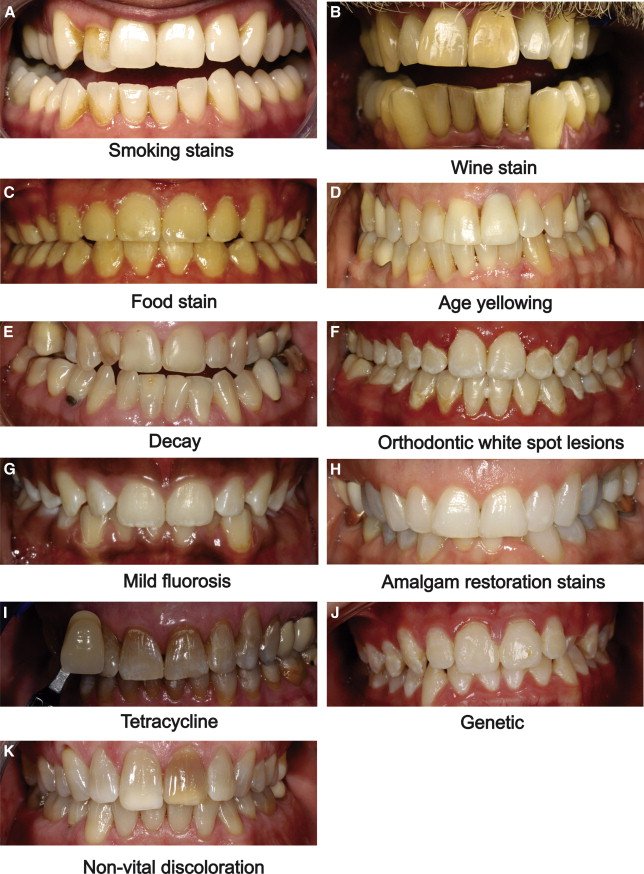
Tooth discoloration is any change in the natural color of the teeth. Teeth may turn yellow, brown, gray or purple, lose their brightness, or develop white or dark flecks, lines and patches. The change can affect one tooth or many, the whole surface or only spots, and it can be temporary or permanent.
Source: Cleveland Clinic, MedlinePlus
Healthy teeth are not pure white, and mild tooth discoloration is very common. MedlinePlus describes normal tooth color as ranging from white to yellowish-white, and Cleveland Clinic notes that natural shade, brightness and translucency vary from person to person because of genetics. A shade that is darker than a friend’s is therefore not automatically a problem.
Source: MedlinePlus, Cleveland Clinic
Most tooth discoloration is a cosmetic concern caused by everyday habits, aging or past medicines. Sometimes, however, a color change is the first visible sign of tooth decay, a dying nerve after an injury, or a developmental or medical condition, which is why persistent or unexplained changes deserve a dental check.
Source: Cleveland Clinic, MedlinePlus, Alder Hey Children’s NHS Foundation Trust
Types of tooth discoloration
Dentists usually sort tooth discoloration by where the color sits. The type matters, because it predicts which treatment will work.
Extrinsic (surface) discoloration
Extrinsic stains sit on the outer enamel. Colored compounds from food, drinks, tobacco or metal salts such as iron and copper build up on the tooth surface, and plaque helps hold them there. These stains can often be removed by professional cleaning and polishing or improved with whitening toothpaste.
Source: American Dental Association, Cleveland Clinic, Frontiers in Pharmacology (PMC)
Intrinsic (internal) discoloration
Intrinsic tooth discoloration lies inside the enamel or the dentin underneath. It develops when tooth structure forms abnormally, when pigments are deposited in the tooth while it is growing, or when something happens inside an adult tooth, such as bleeding or death of the pulp after trauma. Intrinsic stains are harder to remove, and the ADA describes removing deep dentin stains with external whitening alone as near impossible.
Source: American Dental Association, Frontiers in Pharmacology (PMC), Cleveland Clinic
Age-related discoloration
With time, enamel thins and becomes more translucent, so more of the naturally yellowish dentin shows through. Years of surface staining add to this effect. Many people have a combination of extrinsic and intrinsic causes.
Source: Cleveland Clinic, American Dental Association
Symptoms: what the colors can mean
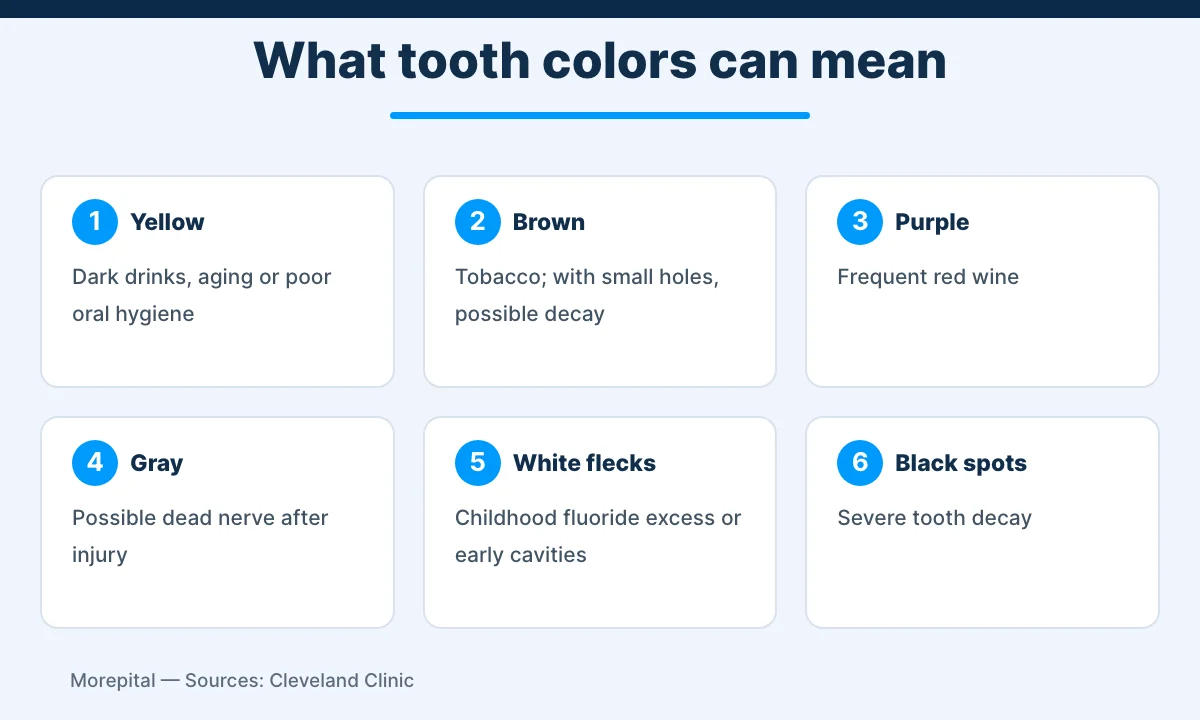
The main symptom of tooth discoloration is the color change itself, and many people notice nothing else. The color can offer a clue to the cause, although only a dentist can confirm it:
- Yellow: dark foods and drinks, aging or poor oral hygiene.
- Brown: smoking or chewing tobacco; brown stains with small holes may point to untreated decay.
- Purple: frequent red wine drinking.
- Gray: the nerve of the tooth may have died, often after an injury; old silver amalgam fillings can also make a tooth look gray.
- White flecks or spots: too much fluoride in childhood, or early cavities.
- Black spots: severe decay.
Source: Cleveland Clinic
A single tooth that changes color, especially after a knock to the mouth, is a different situation from a general yellowing of all teeth. It can mean decay, injury or a damaged nerve. Color change together with pain, bad breath, bleeding gums or visible holes needs prompt dental care.
Source: Cleveland Clinic, Alder Hey Children’s NHS Foundation Trust
Causes and risk factors
Food, drink and tobacco
Coffee, tea, cola, red wine, berries and soy sauce are common culprits, as are liquids that contain iron. Smoking and chewing tobacco stain teeth brown or yellow; nicotine itself oxidizes to a yellow color that sticks to enamel. Poor brushing and flossing let plaque collect and hold these pigments.
Source: Cleveland Clinic, MedlinePlus, Frontiers in Pharmacology (PMC)
Medicines
Tetracycline antibiotics taken while teeth are still forming, before about age 8, can cause lasting yellow, brown or gray tooth discoloration, sometimes in bands. The drug binds to calcium in developing tooth tissue and darkens when exposed to light. Cleveland Clinic also lists doxycycline in childhood, some antihistamines and some blood pressure medicines. An analysis of US FDA adverse event reports from 2004 to 2021 linked 25 drugs to tooth discoloration, including tetracycline, minocycline, chlorhexidine and cetylpyridinium mouthwashes, stannous fluoride, hydrogen peroxide, and inhaled salmeterol/fluticasone. These reports show associations, not proof of cause.
Source: MedlinePlus, Cureus (PMC), Cleveland Clinic, Frontiers in Pharmacology (PMC)
Too much fluoride in childhood
Fluoride protects teeth, but swallowing too much while teeth are developing under the gums can cause dental fluorosis: white flecks, spots or lines on the enamel. Only young children can develop it, because the enamel of permanent teeth is fully formed by about age 8. In the United States most cases are mild, painless and purely cosmetic.
Source: CDC, MedlinePlus
Injury and dental treatment
A blow from a fall, sport or car crash can damage the nerve. Blood and breakdown products from the dying pulp can seep into the dentin and turn the tooth gray or dark, sometimes months or years later. Root canal treatment and silver amalgam fillings can also discolor teeth.
Source: Cleveland Clinic, Alder Hey Children’s NHS Foundation Trust, Leeds Teaching Hospitals NHS Trust, American Dental Association
Genetics, illness and other factors
Inherited conditions such as amelogenesis imperfecta (faulty enamel) and dentinogenesis imperfecta (faulty dentin) cause discolored, weak teeth. Other listed causes include high fever while teeth are forming, severe jaundice in newborns, porphyria, liver disease, celiac disease, calcium deficiency, eating disorders, metabolic diseases, and cancer treatment with chemotherapy or head and neck radiation.
Source: MedlinePlus, Cleveland Clinic, MedlinePlus Genetics, MedlinePlus Genetics
Medical and genetic conditions that change tooth color
Some forms of intrinsic tooth discoloration are part of a wider condition and are worth recognizing:
- Dentinogenesis imperfecta: teeth are usually blue-gray or yellow-brown and translucent, and they wear, break or fall out easily. It affects an estimated 1 in 6,000 to 8,000 people and is inherited in an autosomal dominant pattern; type I occurs with the brittle-bone condition osteogenesis imperfecta.
- Amelogenesis imperfecta: enamel forms thin, weak or soft, so teeth may be discolored, pitted, grooved, sensitive and prone to cavities. Its frequency ranges from about 1 in 700 people in northern Sweden to about 1 in 14,000 in the United States, and variants in more than 20 genes can cause it.
- Tetracycline staining: classified from mild (evenly yellow-gray) to severe (blue-gray or blackish with marked bands), with the most intense cases resisting bleaching.
- Dental fluorosis: ranges from mild white flecks to rare moderate and severe forms with more extensive enamel changes.
Source: MedlinePlus Genetics, MedlinePlus Genetics, Cureus (PMC), CDC
How tooth discoloration is diagnosed
Tooth discoloration is usually diagnosed at a routine dental visit. The dentist examines the teeth and asks when the color change started, about diet, smoking, medicines, fluoride exposure, brushing habits, past injuries, other symptoms, and personal and family health history.
Source: MedlinePlus, Cleveland Clinic
Tests are often unnecessary. Dental X-rays may be taken, for example to check a darkened tooth for decay or a damaged nerve, and blood or other tests may be needed if a medical condition is suspected. Before any whitening, the ADA advises a clinical exam, with X-rays and other tests as needed, and a record of existing fillings and crowns, since these will not change color.
Source: MedlinePlus, American Dental Association
Treatment options
The right treatment for tooth discoloration depends on whether the stain is on the surface or inside the tooth, how many teeth are affected, and whether the tooth is healthy. Surface stains from diet often improve with good hygiene, professional cleaning or whitening, while more severe discoloration may be covered with fillings, veneers or crowns.
Source: MedlinePlus, Cleveland Clinic
Professional cleaning and microabrasion
Scaling and polishing remove many extrinsic stains. Microabrasion uses a mild acid and abrasive to remove a very thin layer of enamel and can treat stains or defects confined to the enamel surface, sometimes followed by whitening.
Source: Frontiers in Pharmacology (PMC), American Dental Association, Leeds Teaching Hospitals NHS Trust
Teeth whitening (bleaching)
Teeth whitening uses hydrogen peroxide or carbamide peroxide, which release oxygen radicals that break down colored molecules inside enamel and dentin. Options include in-office whitening, which usually takes about an hour per session, and dentist-supplied custom trays worn at home, typically for 30 to 60 minutes a day for up to six weeks. The NHS describes home tray treatment lasting 2 to 6 weeks and laser whitening done in a 1 to 2 hour visit, and says results are not permanent but may last up to about 3 years.
Source: Cleveland Clinic, American Dental Association, NHS
Brown stains from tetracycline or fluorosis respond better to bleaching than white fluorosis spots. Tetracycline stains may need three to four months of nightly treatment on average, and bands near the gum line are the hardest to lighten. Only natural teeth whiten: crowns, veneers, fillings, dentures and implants keep their color.
Source: American Dental Association, Cureus (PMC), NHS, Leeds Teaching Hospitals NHS Trust
Internal bleaching of a dead tooth
Tooth discoloration that follows nerve death and root canal treatment can be lightened from the inside. The dentist opens the back of the tooth and places bleaching gel inside, often in combination with gel on the outside. Rarely, this can lead to root resorption, a breakdown of the root that may need surgery or extraction.
Source: Leeds Teaching Hospitals NHS Trust, American Dental Association
Bonding, veneers and crowns
When stains do not respond to whitening, a dentist can cover them. Composite bonding uses tooth-colored resin and needs touch-ups about every 5 to 7 years. Porcelain veneers are thin ceramic shells bonded to the front of the teeth for widespread discoloration; they are irreversible and typically replaced every 5 to 15 years. Crowns cap teeth that are weakened or decayed as well as discolored. Readers considering veneers abroad can see our guide to veneers in Turkey. The broader smile makeover often marketed as a Hollywood smile usually combines these same options.
Source: Cleveland Clinic, MedlinePlus
For most tooth discoloration, experts favor the least invasive approach first: try cleaning and bleaching, and move to restorative options only when needed.
Source: Cureus (PMC)
At-home whitening products and DIY remedies
Over-the-counter strips, gels, rinses, paints and trays contain less peroxide than professional products and work more slowly; in one comparison they needed about 16 days to match a 7-day dentist-supplied tray system. Whitening toothpastes mainly use abrasives to remove surface tooth discoloration and do little for intrinsic ones. Look for the ADA Seal of Acceptance, and ask a dentist before starting.
Source: American Dental Association, Cleveland Clinic
The NHS warns that kits bought online or in pharmacies, and whitening done in beauty salons, may not work as well as treatment from a dental professional and may harm teeth and gums. Do-it-yourself remedies are not supported by evidence: a strawberry and baking soda mix showed no measurable whitening, charcoal products lack evidence of benefit and safety, and a charcoal and salt mix caused enamel loss. Cleveland Clinic advises avoiding products with activated charcoal or citric acid.
Source: NHS, American Dental Association, Cleveland Clinic
Side effects and complications
Tooth discoloration itself is usually harmless, but it can affect confidence and, in some cases, signal decay, infection or a dead nerve. Treatment has its own side effects. Tooth sensitivity is the most common: up to two-thirds of people may feel it early in whitening, usually mildly and briefly. Gum irritation, sore throat and temporary white patches on the gums can also occur. Higher peroxide strengths and longer contact times raise the risk of sensitivity.
Source: Cleveland Clinic, American Dental Association, NHS
Whitening of tooth discoloration may be uneven or incomplete, and some teeth darken again over time and need repeat treatment. Existing fillings may no longer match after whitening and need replacing. The NHS advises against whitening for people aged 17 or under, those with unhealthy teeth or gums, and anyone pregnant or breastfeeding.
Source: Leeds Teaching Hospitals NHS Trust, NHS, American Dental Association
Prevention and living with stained teeth
Not every type of tooth discoloration can be prevented, but these habits limit staining:
- Brush for two minutes at least twice a day with a soft brush and fluoride toothpaste, and floss daily.
- Cut down on coffee, tea, cola and red wine, and drink water or rinse after staining drinks.
- Wait about an hour after acidic foods or drinks before brushing.
- Stop smoking or using tobacco.
- Keep up regular dental cleanings and checkups.
Source: Cleveland Clinic
To protect children’s teeth from fluorosis, use only a rice-grain smear of toothpaste before age 3 and a pea-sized amount from 3 to 6, teach children to spit rather than swallow, ask a doctor or dentist before using fluoride toothpaste under age 2, and check the fluoride level of drinking water for children under 8. Tetracyclines are avoided in the second and third trimesters of pregnancy and in children under 8.
Source: CDC, Frontiers in Pharmacology (PMC)
When to see a dentist
See a dentist about tooth discoloration if your teeth change color for no clear reason, if discoloration persists after thorough cleaning, if a tooth darkens after an injury, or if the color of your teeth makes you self-conscious. Do not assume an injured, discolored tooth will heal on its own.
Source: MedlinePlus, Cleveland Clinic, Alder Hey Children’s NHS Foundation Trust
- a discolored tooth comes with pain, swelling, an unpleasant taste or tenderness when biting, which can signal infection;
- discoloration appears with bad breath, bleeding gums or holes in the teeth;
- a tooth has been knocked, loosened or knocked out, which needs to be seen by a dentist as soon as possible.
Source: Cleveland Clinic, Alder Hey Children’s NHS Foundation Trust
Related treatments
Related conditions
Further reading
Tooth discoloration: frequently asked questions
Can discolored teeth become white again?
Often, yes. Surface tooth discoloration usually respond to cleaning or whitening. Deep internal stains are harder to bleach and may need bonding, veneers or crowns.
Source: Cleveland Clinic, American Dental Association, MedlinePlus
Why are my teeth yellow even though I brush?
Teeth are naturally white to yellowish-white, and enamel thins with age so yellow dentin shows through. Coffee, tea, tobacco and genetics also play a role.
Source: MedlinePlus, Cleveland Clinic
What does a gray tooth mean?
A single gray tooth often means its nerve has died, commonly after an injury. Old amalgam fillings can also look gray. See a dentist to check it.
Source: Cleveland Clinic, Alder Hey Children's NHS Foundation Trust
Do whitening toothpastes remove stains?
They mainly remove surface stains with abrasives. They do little for intrinsic stains inside the tooth.
Source: American Dental Association
How long does teeth whitening last?
It is not permanent. The NHS says results may last up to about 3 years, and some teeth darken again and need repeat treatment.
Source: NHS, Leeds Teaching Hospitals NHS Trust
Can crowns, veneers or fillings be whitened?
No. Only natural teeth lighten, so restorations may need replacing to match newly whitened teeth.
Source: NHS, American Dental Association, Leeds Teaching Hospitals NHS Trust
Which medicines stain teeth?
Tetracycline antibiotics taken in childhood are the best-known cause. Chlorhexidine mouthwash, some antihistamines and blood pressure drugs have also been linked to staining.
Source: Cleveland Clinic, MedlinePlus, Frontiers in Pharmacology (PMC)
Are white spots on teeth from fluoride harmful?
Mild dental fluorosis is cosmetic: it does not hurt or affect how teeth work. It only develops in children up to about age 8.
Source: CDC
Is activated charcoal safe for whitening teeth?
There is not enough evidence that charcoal products work or are safe, and abrasive mixes can wear enamel. Dentists advise avoiding them.
Unhappy with stained or discolored teeth? Contact us to discuss whitening, bonding or veneer options with our dental team.
Sources
- Cleveland Clinic — Tooth Discoloration: Causes & Treatment
- MedlinePlus — Tooth – abnormal colors
- American Dental Association — Whitening (Oral Health Topics)
- NHS — Teeth whitening
- CDC — About Dental Fluorosis
- Frontiers in Pharmacology (PMC) — Drug-induced tooth discoloration: an analysis of the US FDA adverse event reporting system (2023)
- Cureus (PMC) — Minimum intervention in managing two cases of tetracycline staining of different severity (2022)
- MedlinePlus Genetics — Dentinogenesis imperfecta
- MedlinePlus Genetics — Amelogenesis imperfecta
- Leeds Teaching Hospitals NHS Trust — Tooth whitening: information for adult patients
- Alder Hey Children's NHS Foundation Trust — Traumatic dental injuries
This page is part of the Morepital medical reference. It is for general health education and does not replace a consultation with a qualified doctor. Last reviewed: October 2026.