
Chemical peel treatment uses an acid solution applied to the skin to remove its damaged outer layers, so that smoother, more even skin grows back in their place. It is used mainly on the face, and sometimes on the neck, chest and hands, to improve fine lines, sun damage, uneven pigmentation, rough texture and some types of acne. Peels range from light “lunchtime” peels with little or no downtime to deep peels that need anesthesia and two to three weeks of recovery.
Source: American Academy of Dermatology, American Society of Plastic Surgeons
Contents
- What is a chemical peel and how does it work?
- Chemical peel types: superficial, medium and deep
- What a chemical peel can and cannot treat
- Who is a good candidate for a chemical peel?
- Preparing for your peel and what happens on the day
- Chemical peel recovery and aftercare
- Chemical peel side effects, risks and at-home kits
- Chemical peel cost: what affects the price
- Choosing a practitioner at home or abroad
- Chemical peel: frequently asked questions
What is a chemical peel and how does it work?
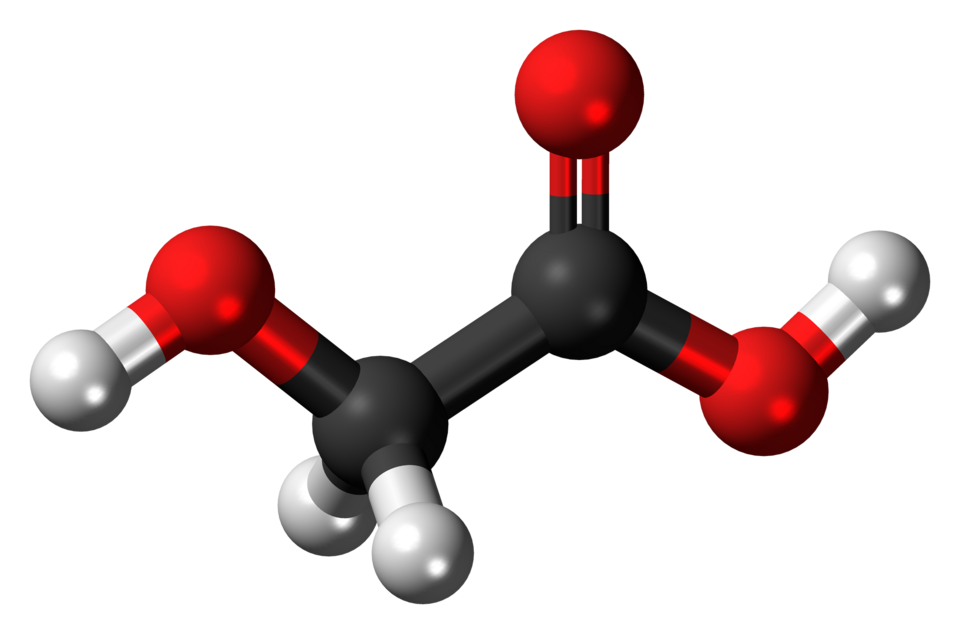
A chemical peel is a controlled injury to the skin. A practitioner applies one or more chemicals that dissolve and lift away layers of sun-damaged cells. As the skin heals, it is replaced by fresh skin that has a more even surface and color, and the healing response may also stimulate new collagen, which can improve texture over time.
Source: DermNet, American Society of Plastic Surgeons
How deep the acid travels depends on the chemical used, its concentration, how many coats are applied and how long it stays on the skin before it is neutralized or removed. Dermatologists group peels by the layer they reach: superficial peels work on the epidermis (the outermost layer) and the junction just below it, medium-depth peels reach the upper part of the dermis (the papillary dermis), and deep peels reach the lower dermis (the reticular dermis).
Source: Rendon et al., Journal of Clinical and Aesthetic Dermatology (PMC), US Food and Drug Administration
Chemical peels are not new: the American Academy of Dermatology notes that dermatologists have been performing them for more than 50 years and describes their safety record as excellent when they are done by an experienced provider. Laser resurfacing aims at a similar goal but uses heat instead of a chemical peel solution.
Source: American Academy of Dermatology, Cleveland Clinic
Chemical peel types: superficial, medium and deep
Choosing the depth is the most important decision in planning a chemical peel, because it determines the result, the downtime and the level of risk. Deeper peels produce the greatest change, but they also need longer healing and carry more potential complications.
Source: Rendon et al. (PMC)
Superficial (light) peels
A light chemical peel uses milder acids such as alpha hydroxy acids (glycolic, lactic or fruit acids), salicylic acid or Jessner’s solution. These chemical peels are well tolerated and are often called “lunchtime” or “refreshing” peels. The first session can look disappointing, but noticeable improvement usually appears after a series of treatments. The AAD says a refreshing peel typically takes 3 to 5 treatments, repeated every 2 to 5 weeks, to reach the desired effect.
Source: Cleveland Clinic, DermNet, AAD
Medium-depth peels
Trichloroacetic acid (TCA) is the most common agent for a medium chemical peel, sometimes combined with Jessner’s solution. Cleveland Clinic lists TCA strengths of 15%, 20% or 30%, while DermNet gives a usual range of 20% to 35%; a blue dye is sometimes added so the practitioner can judge depth, hence the name “blue peel”. A medium peel can clearly improve texture, blotchy pigmentation, freckles and rough sun spots, and make fine wrinkles and some acne scars less obvious, but it does not change deep furrows. More than one TCA peel may be needed, and DermNet advises waiting 3 to 6 months before repeating a moderate-depth peel.
Source: DermNet, Cleveland Clinic, Rendon et al. (PMC)
Deep peels
A deep chemical peel usually uses phenol, often as a phenol-croton oil formula. It can improve both surface wrinkles and deeper lines, for example around the mouth. Phenol absorbed through the skin can cause dangerous heart rhythm problems, so heart monitoring is needed and the face is treated one section at a time. The AAD says a deep peel is done in a surgical setting under anesthesia and that only one deep peel is allowed. DermNet notes that phenol is now rarely used on the face because of its toxicity and scarring risk, and that treated skin can look pale and somewhat waxy afterward.
Source: AAD, DermNet, Cleveland Clinic
| Peel depth | Typical agents | Healing time | How often |
|---|---|---|---|
| Superficial (refreshing) | Glycolic, lactic or salicylic acid; Jessner’s solution | 1 to 7 days | Series of 3 to 5, every 2 to 5 weeks |
| Medium | TCA, alone or combined with Jessner’s solution | 7 to 14 days | Can be repeated; usually wait 3 to 6 months |
| Deep | Phenol (phenol-croton oil) | 14 to 21 days | Once only |
Source: AAD, DermNet, Rendon et al. (PMC)
What a chemical peel can and cannot treat
According to the AAD and ASPS, a chemical peel can help with:
- fine lines and wrinkles, especially under the eyes and around the mouth;
- sun damage, age spots and freckles;
- melasma and other uneven or blotchy skin tone;
- some types of acne and certain acne scars;
- rough, scaly patches and a dull complexion.
Chemical peels are also used for actinic keratoses, the rough precancerous spots caused by years of sun exposure. A review in the Journal of Clinical and Aesthetic Dermatology lists acne, acne scarring, photodamage, actinic keratoses and melasma as common indications, and notes that a chemical peel often works best alongside topical or medical treatment. If acne is your main concern, our guide to acne treatment options explains the creams and medicines that usually come first, and our article on melasma covers why that condition tends to return without strict sun protection.
Source: Rendon et al. (PMC), DermNet
What a peel will not do
ASPS is clear about the limits: a chemical peel cannot treat deep facial lines (apart from what a deep peel can achieve), significantly tighten loose or sagging skin, or remove deep scars. Frown lines respond better to muscle-relaxing injections like Botox, and sagging jowls to surgery such as a facelift. Many people use a combination: the Rendon review describes chemical peels being paired with lasers, dermabrasion, fillers or botulinum toxin, and the AAD notes that combined treatment can give better, longer-lasting results. Our reference page on wrinkles compares these approaches.
Source: ASPS, Rendon et al. (PMC), AAD
Who is a good candidate for a chemical peel?
Good candidates have concerns a peel can realistically improve, such as dark spots, uneven color, fine lines, sun damage, mild to more advanced facial aging or acne scars, and they have realistic expectations about the result.
Source: Cleveland Clinic, AAD
ASPS says you may not be a good candidate if you have:
- a history of abnormal scarring (such as keloids);
- a tendency for scars to darken;
- used certain acne treatments within the last year;
- skin conditions or medicines that make your skin more sensitive than normal;
- a naturally darker skin tone, for medium and deep peels in particular (see below).
Source: ASPS
Peels and darker skin tones
On the Fitzpatrick skin-type scale (I very fair to VI deeply pigmented), darker skin, types IV to VI, has a higher risk of pigment changes and of thick or keloid scars after a chemical peel. The Rendon review notes that superficial peels are considered safe in darker skin, while medium and deep peels carry a high risk of lasting pigment change and are generally avoided. The AAD stresses that people with skin of color can have a peel safely, but they should choose a dermatologist with specific experience treating darker skin, otherwise there is a risk of permanent discoloration.
Source: DermNet, Rendon et al. (PMC), AAD
Preparing for your peel and what happens on the day
The consultation
A consultation should always come before a chemical peel. The AAD recommends telling your doctor whether you take or have ever taken isotretinoin (a strong prescription acne medicine), all current and recent medicines including antibiotics and aspirin, any herbs or supplements, previous cosmetic treatments and surgeries, whether you scar easily, and whether you get cold sores. That last point matters because a peel can trigger a herpes flare; Cleveland Clinic says people having TCA or phenol peels are prescribed an antiviral, started about two days beforehand.
Source: AAD, Cleveland Clinic
Skin priming
Many patients use pre-treatment creams at night for several weeks before a chemical peel, for example tretinoin (a vitamin A derivative), a glycolic or lactic acid product, or hydroquinone for people with melasma or darker skin. The AAD says some patients follow a 2- to 4-week pre-peel plan, and Cleveland Clinic notes priming can take a month or more. A broad-spectrum sunscreen (DermNet suggests SPF 50+) should be used every day during this period.
Source: DermNet, AAD, Cleveland Clinic
On the day
Most chemical peels are same-day outpatient procedures. The skin is cleaned thoroughly to remove oil, the eyes are protected, and the solution is applied for a set time. A superficial session takes about 30 minutes, and a full-face TCA or phenol peel about 45 minutes to an hour. Light peels need no anesthesia; deeper peels may use a numbing cream, local anesthetic, sedation or, for deep peels, a surgical-level anesthetic. Expect a warm feeling for 5 to 10 minutes followed by stinging, which cool compresses or a fan can ease. After a phenol or deeper TCA peel you will need someone to drive you home.
Source: Cleveland Clinic, DermNet
Chemical peel recovery and aftercare
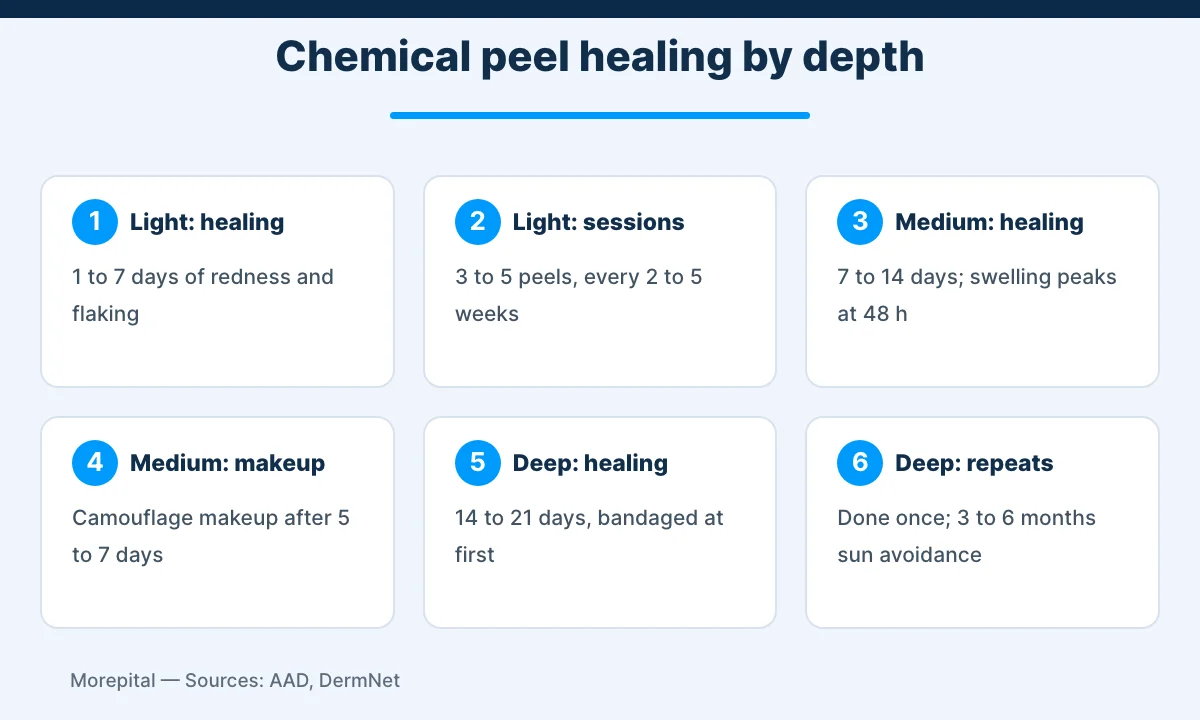
Recovery depends almost entirely on depth. After a superficial chemical peel, skin is usually red and may peel or scale like mild sunburn for 3 to 7 days; DermNet says redness and any swelling usually settle within 48 hours, and most people carry on with normal activities. Makeup can usually go on the same or the next day, and results show as soon as the skin heals.
A medium chemical peel takes 7 to 14 days to heal. Redness and swelling increase for the first 48 hours, eyelids can swell (sometimes enough to close the eyes temporarily) and blisters may form and break, followed by crusting. Camouflage makeup is usually possible after 5 to 7 days, mild redness can last several weeks, and DermNet notes that most people take about a week off work.
Source: AAD, Cleveland Clinic, DermNet
A deep chemical peel takes 14 to 21 days to heal, with the treated area bandaged at first and 2 to 3 weeks of recovery at home. Makeup should wait at least 14 days. Follow-up visits are needed the next day and several times during the first week.
Source: AAD
Aftercare basics
- Do not pick or scratch: picking scabs delays healing and can cause permanent scars.
- Moisturize: light lotions after a superficial peel; after deeper peels, soaks several times a day followed by ointment, as instructed, then a thick moisturizer.
- Take the antiviral for the full course if prescribed; the AAD mentions 10 to 14 days after medium and deep peels.
- Protect from the sun: avoid sun completely until healed after a medium peel and for 3 to 6 months after a deep peel; DermNet stresses sun protection especially in the first 6 months.
- Continue maintenance creams such as tretinoin or hydroquinone if your doctor advises.
How long results last
Results are not permanent because skin keeps aging. People with a lot of sun damage or precancerous spots will likely see new spots appear over time. Light and medium chemical peels can be repeated to maintain results, while a single deep peel lasts longer.
Source: AAD, Cleveland Clinic
Chemical peel side effects, risks and at-home kits
With a trained and experienced practitioner, complications are uncommon and side effects tend to be mild. Possible problems include:
- Prolonged redness that can last weeks or months after deeper peels.
- Darkening of the skin (post-inflammatory hyperpigmentation), usually temporary and treatable with creams such as tretinoin and hydroquinone; it is more likely in darker skin or in people with pigment problems before the peel.
- Lightening of the skin, mainly after medium and deep peels.
- Infection with bacteria, yeast or the cold sore virus.
- Acne flares, blocked pores or milia (tiny white cysts), sometimes from thick moisturizers.
- Visible lines where treated and untreated skin meet.
- Scarring, which is rare, usually linked to a peel that went too deep, infection or picking.
- Heart rhythm problems with phenol, which is why deep peels need monitoring.
Source: Cleveland Clinic, DermNet, Rendon et al. (PMC), AAD
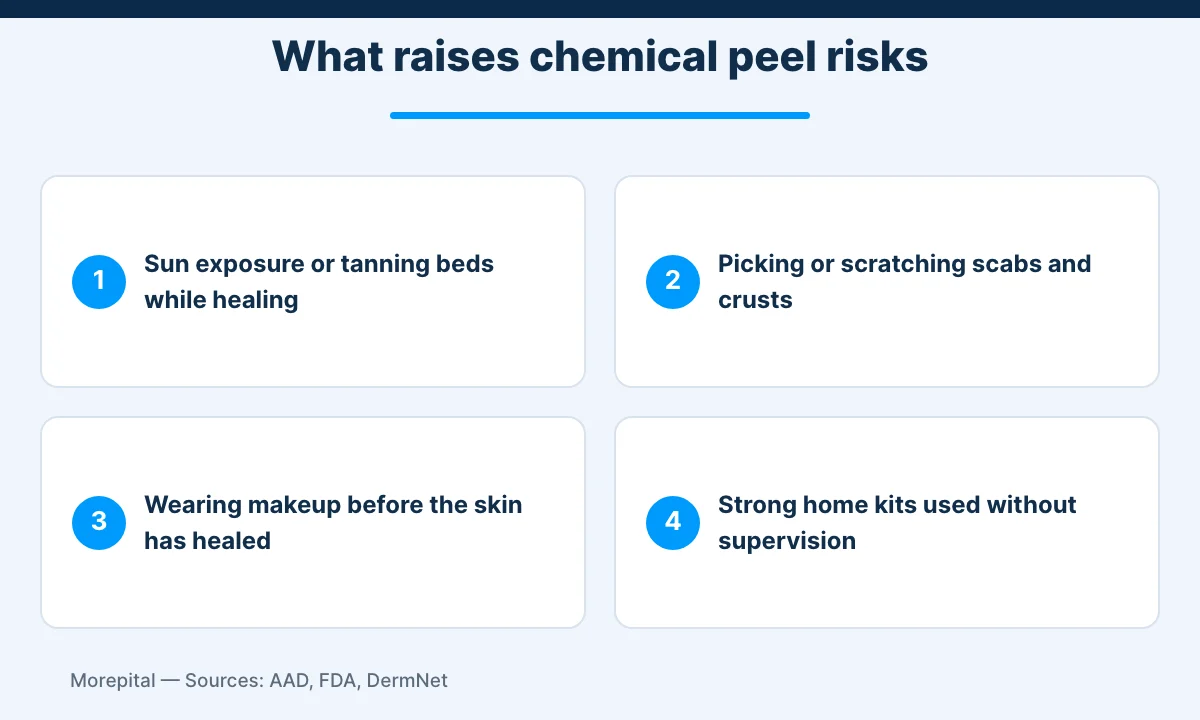
The AAD says serious problems usually happen when aftercare instructions are not followed: sun exposure, poor wound care, scratching or picking, wearing makeup before the skin has healed, or using tanning beds. Contact your practitioner if your skin burns, itches or swells, and report any possible sign of infection or cold sores promptly, because complications are easier to deal with early than late.
Why at-home peels can be dangerous
In July 2024 the US Food and Drug Administration warned consumers not to buy or use certain peel products without professional supervision. The FDA pointed out that it has not approved any chemical peel product, and that many kits sold online and in beauty stores contain TCA, glycolic, salicylic or lactic acid at concentrations too high for safe home use. These products can cause severe chemical burns, pain, swelling, infection, skin color changes and disfiguring scars, sometimes needing emergency or specialist care. Warning letters went to sellers of products labeled as 50% to 100% TCA.
Source: US Food and Drug Administration, AAD
Chemical peel cost: what affects the price
A chemical peel is considered cosmetic, so health insurance rarely covers it. Prices vary widely by depth, area treated and location. ASPS reports an average of $1,829 for skin resurfacing procedures such as chemical peels in its latest statistics. The final bill depends on the practitioner’s expertise and qualifications, the type of peel, the time it takes and the clinic’s location, and may include anesthesia fees, facility costs and prescription medicines.
Source: ASPS, AAD, Cleveland Clinic
When comparing chemical peel quotes, count the full course: superficial peels are usually sold as a series of several sessions, and pre-treatment creams, aftercare products and follow-up visits add to the total.
Choosing a practitioner at home or abroad
Chemical peel results depend heavily on the skill of the person doing the treatment. Superficial peels may be done by trained nurses or aestheticians, while medium and deep peels are usually done by a dermatologist or plastic surgeon. The NHS advises booking a consultation with the person who will actually treat you, and asking:
- how many of these procedures they have done, and on people with your skin tone;
- what qualifications and training they have, and which professional bodies they belong to;
- what the most common complications are and what happens if something goes wrong;
- what aftercare you can expect and who will provide it;
- the total cost, including any further treatment.
The NHS suggests avoiding treatment vouchers from group discount sites, mobile services in homes or hotels, and practitioners who advertise only on social media, and not paying before you have had a consultation.
Having a peel in Turkey or another country
Turkey is a popular destination for cosmetic treatment; our guide to the facelift in Turkey covers the wider planning. The NHS advice on treatment abroad applies here too: find out how clinics and practitioners are regulated in that country, meet the practitioner rather than only a sales coordinator, make sure you share a language, and know what follow-up you will get and what happens if there are complications once you are home.
Source: NHS
Timing matters more for a chemical peel than for many procedures because healing skin must be kept out of the sun. A light peel fits easily into a short trip, but after a medium or deep peel you will have days of visible swelling and crusting, follow-up visits in the first week and a period of strict sun avoidance. The NHS warns against lying in the sun, swimming or sightseeing straight after treatment, so plan the holiday part of your trip before the peel, not after it,.
Considering a chemical peel? Contact us for a free consultation and a treatment plan tailored to you.
Chemical peel: frequently asked questions
Does a chemical peel hurt?
Most people feel warmth for 5 to 10 minutes during a chemical peel, then stinging. Light peels are well tolerated without anesthesia; deeper peels use numbing, sedation or stronger anesthesia, and may cause throbbing afterward that mild pain relief can help.
Source: Cleveland Clinic
How many chemical peel sessions will I need?
For light peels, usually 3 to 5 sessions spaced 2 to 5 weeks apart. Medium peels can be repeated after a gap, while a deep peel is done only once.
Source: AAD
When can I wear makeup after a chemical peel?
Usually right away or the next day after a light peel, after 5 to 7 days for camouflage makeup following a medium peel, and not for at least 14 days after a deep peel.
Source: AAD
Is a chemical peel safe for dark skin?
Superficial peels are generally considered safe for darker skin when done by an experienced dermatologist. Medium and deep peels carry a higher risk of lasting pigment changes and scarring in skin types IV to VI.
Source: Rendon et al. (PMC), AAD
Can I have a chemical peel after isotretinoin?
Tell your practitioner if you have ever taken it. ASPS lists use of certain acne treatments within the last year as a reason you may not be a suitable candidate, so your doctor may advise waiting.
Are at-home chemical peel kits a good idea?
High-strength home kits are risky. The FDA has warned that products with high acid concentrations can cause severe burns and scarring and should be used only under professional supervision.
Source: US Food and Drug Administration
Can a chemical peel treat areas other than the face?
Yes. Chemical peels are mostly used on the face but can also treat the neck, chest and hands.
Disclaimer: this article is for general health education and does not replace advice from a qualified doctor who can assess your individual case. Last updated: October 2026.