Lung cancer symptoms most often include a cough that does not go away or keeps getting worse, shortness of breath, coughing up blood, chest or shoulder pain, and chest infections that keep coming back. General signs such as unexplained weight loss, loss of appetite and constant tiredness are also common. Many people have no symptoms in the early stages, and these symptoms usually have other causes, but a cough lasting more than 3 weeks or any blood in your phlegm should be checked by a doctor.
Source: WHO, American Cancer Society, USPSTF, CDC
Contents
- What lung cancer symptoms are and why they appear late
- The 9 most common lung cancer symptoms
- Cough and coughing up blood: when to worry
- Less common lung cancer symptoms
- Pancoast tumors, SVC syndrome and paraneoplastic syndromes
- Signs that lung cancer has spread
- Who is most at risk, including people who never smoked
- How doctors investigate lung cancer symptoms
- Screening: finding lung cancer before symptoms
- When lung cancer symptoms need a doctor
- FAQ
What lung cancer symptoms are and why they appear late
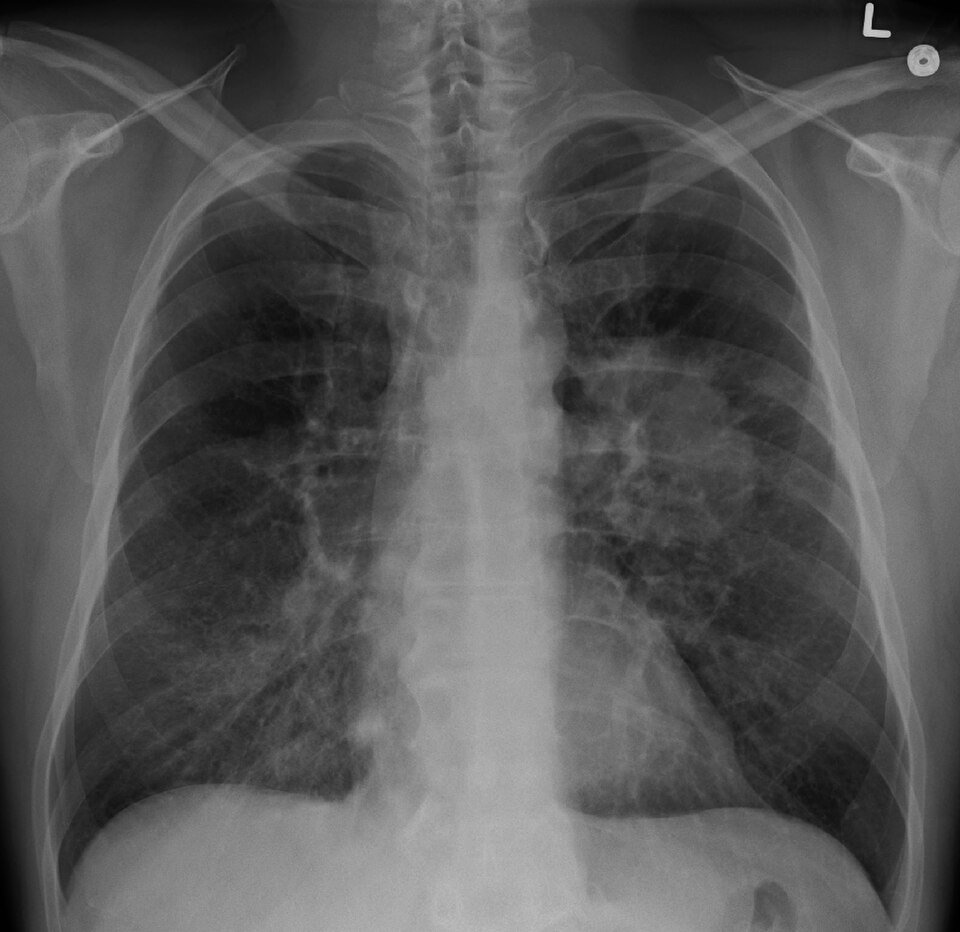
Lung cancer starts when cells in the lungs grow out of control and form a tumor. The World Health Organization estimates there were about 2.5 million new cases and 1.8 million deaths worldwide in 2022, making it the most common cancer and the leading cause of cancer death. About 85% of cases are non-small cell lung cancer (NSCLC); small cell lung cancer (SCLC) is rarer and more aggressive.
Source: WHO, Cleveland Clinic
The main problem with lung cancer symptoms is timing. The CDC notes that most people with lung cancer have no symptoms until the disease is advanced, and Cleveland Clinic says the same. Early symptoms are often mild or mistaken for common respiratory problems. Some tumors cause no lung cancer symptoms at all and are found by chance on a chest X-ray done for another reason.
Source: CDC, Cleveland Clinic, WHO, National Cancer Institute
Stage at diagnosis has a large effect on outcome. In the United States, the overall five-year relative survival for lung and bronchus cancer is about 29.5%. It is about 65.5% when the cancer is still localized, 38.2% when it has reached nearby lymph nodes or tissue (regional), and 10.5% once it has spread to distant organs. Only about 24% of cases are found at the localized stage, while about 51% are found after distant spread. The median age at diagnosis is 71. These figures are why lung cancer symptoms deserve prompt attention.
Source: NCI SEER
The 9 most common lung cancer symptoms

UK and US health services list similar lung cancer symptoms. Each can have a harmless cause, but report it if it is new, persistent or worsening:
- A cough that does not go away or gets worse. Cancer Research UK also highlights a change in a long-standing cough.
- Shortness of breath, for example becoming breathless doing everyday things that used to be easy.
- Coughing up blood or rust-colored or blood-tinged phlegm (sputum).
- Chest or shoulder pain. Chest pain is often worse with deep breathing, coughing or laughing.
- Chest infections that keep returning or do not clear up, including bronchitis or pneumonia that persists.
- Hoarseness or a hoarse voice that does not go away.
- New wheezing.
- Losing weight without trying and loss of appetite.
- Feeling tired all the time or weak.
Source: NHS, American Cancer Society, Cancer Research UK, CDC
Most of these lung cancer symptoms are not specific. The NHS stresses that they are common and often have other causes, so having one does not mean you have cancer. What matters is the pattern: a symptom that lasts for weeks, keeps coming back, or appears together with weight loss and fatigue deserves a medical opinion, especially if you smoke or used to smoke.
Source: NHS
Cough and coughing up blood: when to worry
A persistent or changing cough
Most coughs come from colds or flu and clear up on their own within 3 to 4 weeks. A cough that lasts longer is more often caused by smoking, acid reflux, allergies such as hay fever, infections like bronchitis or COVID-19, or mucus dripping down the back of the throat. The NHS describes a cough as rarely a sign of something serious like lung cancer, but advises seeing a GP if you have had a cough for more than 3 weeks or are losing weight for no reason.
For people who smoke, the cough to watch is the one that changes. If a long-standing cough becomes more frequent, hurts or brings up blood, book an appointment rather than blaming cigarettes. Cancer Research UK lists a “new, persistent or changed” cough as one of the most common lung cancer symptoms.
Source: Cancer Research UK, American Cancer Society
Coughing up blood (hemoptysis)
Blood in the phlegm can come from a severe or long-lasting cough, a lung or airway infection such as pneumonia, tuberculosis or bronchitis, or bronchiectasis. Less often, it signals something more serious, such as a blood clot in the lungs or lung cancer. If you cough up a few small spots, flecks or streaks of blood, the NHS advises contacting a doctor urgently. Coughing up more than a few streaks of blood, or blood with trouble breathing, a very fast heartbeat, or chest or upper back pain, is an emergency.
Less common lung cancer symptoms
Some lung cancer symptoms are less frequent but more distinctive. The NHS lists swelling of the face or neck, difficulty swallowing, a hoarse voice that does not go away, and changes in the way your fingers look, known as clubbing. With clubbing, the fingertips look wider than usual or the nails curve downward. Cancer Research UK notes clubbing is more common in non-small cell lung cancer.
Source: NHS, Cancer Research UK
Cleveland Clinic adds shoulder, back or bone pain to the list. These lung cancer symptoms overlap with many other conditions, so a doctor will also ask about your smoking and family history.
Source: Cleveland Clinic, NHS
Pancoast tumors, SVC syndrome and paraneoplastic syndromes
Pancoast tumors and Horner syndrome
Tumors at the very top of the lung, called Pancoast tumors, can damage nerves to the arm, eye and face. Severe shoulder pain is the most common symptom, sometimes spreading down the arm or up into the head and neck. These tumors can also cause Horner syndrome: a drooping or weak upper eyelid, a smaller pupil on the same side, and reduced or absent sweating on that side of the face. Pancoast tumors are very rare and are more likely to be non-small cell lung cancer.
Source: American Cancer Society, Cancer Research UK
Superior vena cava (SVC) syndrome
The superior vena cava is a large vein that carries blood from the head and arms back to the heart. A tumor pressing on it makes blood back up, causing swelling of the face, neck, arms and upper chest, sometimes with a bluish-red skin color, and trouble breathing. SVC syndrome can develop gradually but can become life-threatening, and the American Cancer Society says it needs to be treated right away.
Source: American Cancer Society, Cleveland Clinic
Paraneoplastic syndromes
Some lung cancers release hormone-like substances or trigger the immune system to attack healthy tissue far from the tumor. These paraneoplastic syndromes can be the first lung cancer symptoms a person notices and are more often linked to small cell lung cancer. Examples include:
- SIADH: low blood salt from water retention, causing fatigue, cramps, nausea and confusion.
- Ectopic Cushing syndrome: excess cortisol causes weight gain, easy bruising, weakness and fluid retention, and can raise blood pressure and blood sugar. Unexplained high glucose can overlap with diabetes symptoms such as thirst and frequent urination.
- High blood calcium (hypercalcemia): thirst, frequent urination, constipation, nausea and confusion.
- Lambert-Eaton syndrome: muscle weakness, often first noticed as difficulty standing up from a chair.
Source: American Cancer Society, Cancer Research UK
Signs that lung cancer has spread
Because the disease is often found late, the first lung cancer symptoms may come from cancer that has already spread (metastasized) beyond the chest. The American Cancer Society groups them by the organ involved:
- Bones: pain, for example in the back or hips.
- Brain: headache, weakness or numbness of an arm or leg, dizziness, balance problems or seizures.
- Liver: yellowing of the skin and eyes (jaundice).
- Lymph nodes: lumps or swelling in the neck or above the collarbone.
Source: American Cancer Society
The CDC also mentions swollen or enlarged lymph nodes inside the chest, between the lungs, which a doctor may see on a scan rather than feel. In someone with a smoking history, lung cancer symptoms like these call for prompt tests rather than waiting. If you want to compare warning signs across cancers, our guides to breast cancer symptoms, prostate cancer symptoms and colon cancer symptoms explain what to look for in each.
Source: CDC, Cleveland Clinic
Who is most at risk, including people who never smoked
Smoking tobacco is the main risk factor. WHO attributes about 60% to 70% of lung cancer cases worldwide to smoking, and in the United States cigarette smoking is linked to about 80% of lung cancer deaths. People who smoke are 15 to 30 times more likely to get or die from lung cancer than people who do not,. Other risk factors include secondhand smoke, radon gas, air pollution, workplace exposure to asbestos, silica or diesel exhaust, previous radiation to the chest, and a family history of lung cancer.
Source: WHO, CDC, Cleveland Clinic
Lung cancer is not only a smoker’s disease. In the United States, about 10% to 20% of lung cancers, or 20,000 to 40,000 cases a year, occur in people who never smoked or smoked fewer than 100 cigarettes in their lifetime. Secondhand smoke and radon are among the known causes. Never-smokers have the same lung cancer symptoms as smokers, so a persistent cough or breathlessness still needs checking.
Source: CDC
The average age at diagnosis in the US is about 70, and most people diagnosed are 65 or older. The American Cancer Society puts the lifetime risk at about 1 in 19 when people who smoke and people who do not are counted together. Quitting helps at any age: the CDC says the added risk of lung cancer drops by half 10 to 15 years after stopping smoking.
Source: American Cancer Society, CDC
How doctors investigate lung cancer symptoms

At the first appointment, the doctor asks about your symptoms, general health, medical history and any family history of lung cancer, listens to your chest, and may order a blood test or a chest X-ray. If cancer is possible, you may be referred urgently for more tests or to a hospital specialist. A referral for lung cancer symptoms does not mean you have cancer.
Source: NHS
A CT scan of the chest is one of the main tests after referral, because it shows the lungs in much more detail than an X-ray. Bronchoscopy, in which a thin, flexible tube with a small camera is passed down the throat into the lungs, lets the specialist look inside the airways and take samples. Other ways to get tissue include a needle biopsy through the skin, endoscopic ultrasound-guided biopsy, thoracoscopy, mediastinoscopy and, if fluid has collected around the lung, thoracentesis to check it for cancer cells.
Source: NHS, National Cancer Institute, Cleveland Clinic
If cancer is confirmed, PET/CT and brain MRI help show whether it has spread, and the pathologist identifies the exact type. Molecular or genetic testing of the tumor looks for gene changes and biomarkers that guide treatment. Depending on type and stage, treatment may include surgery (lobectomy, segmentectomy or wedge resection), radiotherapy, chemotherapy, targeted therapy and immunotherapy.
Source: Cleveland Clinic, WHO, NHS
Screening: finding lung cancer before symptoms
Because lung cancer symptoms often appear late, screening people at high risk is the best way to find it early. In the US, the Preventive Services Task Force recommends a yearly low-dose CT scan for adults aged 50 to 80 who have at least a 20 pack-year smoking history and currently smoke or quit within the past 15 years (grade B). Screening stops once a person has gone 15 years without smoking, or if a health problem substantially limits life expectancy or the ability to have lung surgery.
Source: USPSTF
The evidence comes largely from the National Lung Screening Trial, which enrolled 53,454 current or former heavy smokers aged 55 to 74. Low-dose CT lowered the risk of dying from lung cancer by 15% to 20% compared with chest X-ray. The trade-off is that 24.2% of low-dose CT screens were positive, compared with 6.9% of X-rays, and most positive screens led to further tests.
Source: National Cancer Institute
In England, the NHS offers lung health checks to people aged 55 to 74 who have ever smoked, in areas where the program runs; those at higher risk are invited for a CT scan. Screening is for people without symptoms; if you already have lung cancer symptoms, see a doctor instead of waiting for an invitation.
When lung cancer symptoms need a doctor
Use this summary of lung cancer symptoms to decide how quickly to act. It follows NHS advice.
| What you notice | What it may mean | What to do |
|---|---|---|
| Cough for more than 3 weeks, or a changed smoker’s cough | Usually smoking, reflux, allergy or infection; sometimes cancer | Book a routine doctor’s appointment |
| Weight loss, fatigue, appetite loss, repeated chest infections | Non-specific; needs a cause found | See a doctor soon |
| A few flecks or streaks of blood in phlegm | Infection, bronchiectasis, clot or cancer | Urgent same-day advice (NHS 111 in the UK) |
| Swelling of the face, neck or arms with breathlessness | Possible SVC syndrome | Seek urgent medical care |
| Struggling to breathe, more than a few streaks of blood, chest or upper back pain | Possible emergency, such as a blood clot in the lungs | Call 999/911 or go to the emergency department |
Source: NHS, NHS, NHS, American Cancer Society
In an emergency, do not drive yourself; ask someone to take you or call an ambulance. Before a routine appointment, note when your lung cancer symptoms started and whether they are getting worse. If your doctor treats a chest infection and it does not clear, or it keeps coming back, go back and ask whether imaging is needed.
Source: NHS, Cleveland Clinic
Lung cancer symptoms: frequently asked questions
What are the first lung cancer symptoms?
Often there are none. When early signs appear, the most common are a persistent or changing cough, breathlessness, blood in phlegm, chest pain and repeated chest infections.
Can lung cancer symptoms come and go?
Yes. Chest infections or pneumonia that clear and then return can be an early sign, so a recurring problem deserves the same attention as a constant one.
Source: Cleveland Clinic, American Cancer Society
Do lung cancer symptoms differ in people who never smoked?
The symptoms are the same. About 10% to 20% of US lung cancers occur in never-smokers, so not smoking does not rule it out.
Source: CDC
Are back or shoulder pain lung cancer symptoms?
It can be. Shoulder pain is the main symptom of Pancoast tumors, and back pain may mean spread to the bones, but most back and shoulder pain has other causes.
Source: Cancer Research UK, American Cancer Society
Which scan is used to check lung cancer symptoms?
A chest X-ray is often the first test, but a CT scan is one of the main tests after referral, and low-dose CT is the test used for screening.
Source: NHS, NHS, National Cancer Institute
How long can a cough last before I worry about lung cancer symptoms?
See a doctor if a cough lasts more than 3 weeks, and seek urgent help if you cough up blood or the cough rapidly gets worse.
Source: NHS
Disclaimer: this article is for general health education and does not replace advice from a qualified doctor who can assess your individual case. Last updated: October 2026.