
Low testosterone symptoms in men most often start with sexual changes: lower sex drive, fewer morning erections and erectile dysfunction. Other signs include tiredness, low mood, loss of muscle, more body fat and enlarged breast tissue. Because these symptoms are common and have many other causes, low testosterone is only diagnosed when the symptoms are present and two morning blood tests confirm a low level.
Source: Cleveland Clinic, NHS, Endocrine Society
Source: NHS, Cleveland Clinic, Endocrine Society, N Engl J Med (EMAS)
Contents
- What low testosterone is and why levels fall
- Low testosterone symptoms: sexual changes
- Physical low testosterone symptoms
- Mood, energy and memory
- What causes low testosterone symptoms?
- Low testosterone symptoms or something else?
- How doctors confirm low testosterone
- Treatment options for low testosterone
- TRT safety, side effects and fertility
- When to see a doctor about low testosterone symptoms
- Low testosterone symptoms: frequently asked questions
What low testosterone is and why levels fall

Testosterone is the main male sex hormone. Most of it is made by the Leydig cells in the testicles, under signals from the pituitary gland at the base of the brain. When the testicles do not make enough testosterone and this causes symptoms, doctors call it male hypogonadism. You may also see the terms testosterone deficiency, late-onset hypogonadism or simply “low T”. Cleveland Clinic describes an adult level below 300 nanograms per deciliter (ng/dL) as low, but a 2026 comparison of nine specialist guidelines found that societies use different diagnostic cut-offs, creating “gray zones”.
Source: Cleveland Clinic, Int J Impot Res
Levels drift down naturally as men get older. The NHS puts the fall at about 1% a year from around age 30 to 40 and says this gradual drop is unlikely to cause problems on its own. The NHS also calls the popular phrase “male menopause” unhelpful: unlike menopause in women, there is no sudden shutdown of hormone production. Late-onset hypogonadism, in which the testes make little or no hormone, can occur, but it is uncommon and not a normal part of ageing.
Source: NHS
How common is it? In the European Male Ageing Study (EMAS), which tested 3,369 randomly chosen men aged 40 to 79 in eight European centers, only about 2% had both low testosterone symptoms and blood levels that met strict criteria for late-onset hypogonadism. A 2026 review in the International Journal of Impotence Research puts the figure at about 2.1% of men aged 40 to 79, but notes it can reach 30% in specific higher-risk groups.
Source: University of Manchester (EMAS), Int J Impot Res
Low testosterone symptoms: sexual changes
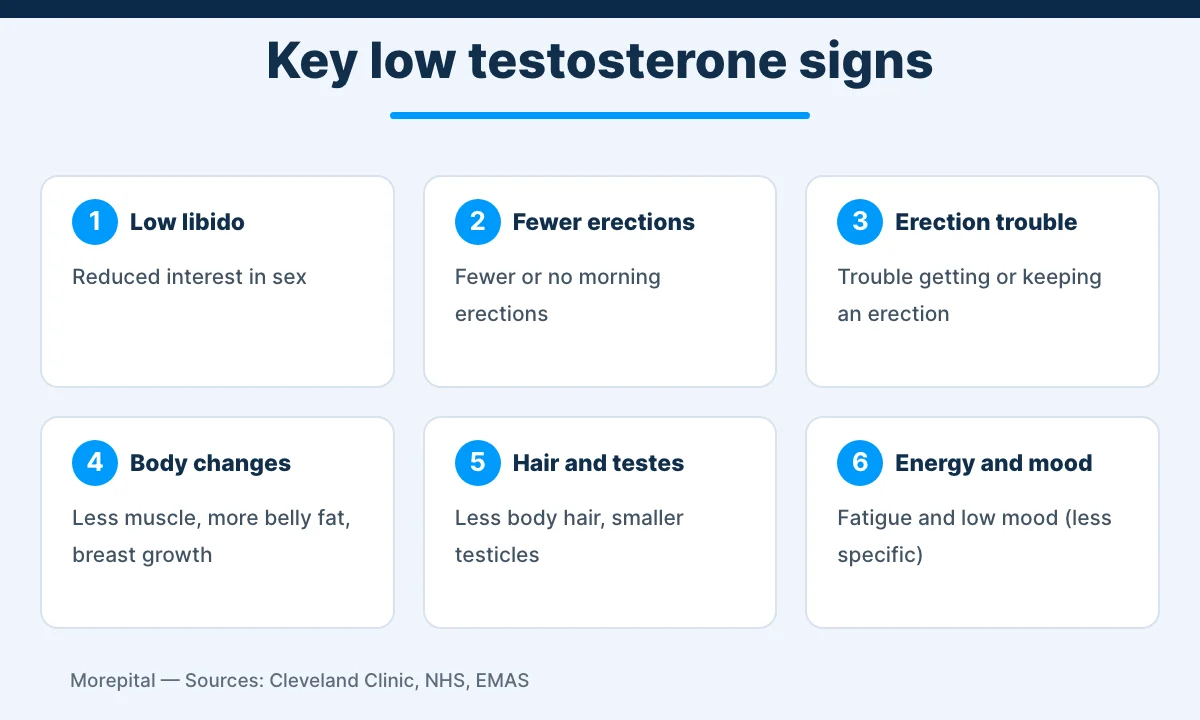
Sexual changes are the most reliable low testosterone symptoms. The EMAS researchers looked at 32 possible symptoms and found that only three sexual ones formed a true syndrome with falling testosterone: fewer morning erections, low sexual desire and erectile dysfunction. The more of these three a man had, the lower his testosterone tended to be. Their proposed definition of late-onset hypogonadism requires all three, plus a total testosterone below 11 nmol/L (3.2 ng/mL) and a free testosterone below 220 pmol/L (64 pg/mL).
Source: N Engl J Med (EMAS), University of Manchester (EMAS)
Cleveland Clinic lists the same trio as the most specific low testosterone symptoms: low libido, loss of morning or spontaneous erections, and trouble getting or keeping an erection. Low or absent sperm count is another highly suggestive sign, and it often shows up when a couple has fertility tests.
Source: Cleveland Clinic
Erection problems on their own are not proof of a hormone problem. The NHS notes that stress, anxiety, smoking and heart problems can all cause erectile dysfunction, sometimes in combination. Our reference page on erectile dysfunction explains the wider causes and treatments, and Male Hospital, a specialised men’s health center in Istanbul, has a detailed guide to erectile dysfunction for readers who want to go deeper.
Source: NHS, Cleveland Clinic
Physical low testosterone symptoms
Physical low testosterone symptoms develop slowly and are easy to dismiss as ageing. Cleveland Clinic describes these low testosterone symptoms in adult men:
- Loss of muscle mass, strength and endurance
- More body fat, often around the belly
- Enlarged breast tissue (gynecomastia)
- Loss of armpit and pubic hair
- Smaller or shrinking testicles
- Hot flashes
Source: Cleveland Clinic, NHS
MedlinePlus adds two findings that doctors may notice before you do: thinning bones and anemia with no other explanation. Untreated low testosterone may contribute to osteoporosis, which is one reason a bone problem in a younger man can prompt a hormone check.
Source: MedlinePlus, Cleveland Clinic
In EMAS, three physical limitations were weakly linked to low testosterone: being unable to do vigorous activity, being unable to walk more than 1 km (about 0.6 miles), and difficulty bending, kneeling or stooping. These are far less specific than the sexual low testosterone symptoms.
Source: University of Manchester (EMAS)
Mood, energy and memory
Fatigue and low mood are among the most talked-about low testosterone symptoms, but also the least specific. The NHS lists depression, mood swings, irritability, poor concentration and memory, insomnia and tiredness among the symptoms men report.
Source: NHS, Cleveland Clinic
The EMAS data help put these in perspective. Loss of energy, sadness and fatigue were only weakly related to testosterone levels. Changes in sleep pattern, poor concentration, feeling worthless, nervousness or anxiety, and difficulty getting up from a chair showed no link at all. In other words, tiredness and low mood without the sexual low testosterone symptoms are more likely to have another cause.
Source: University of Manchester (EMAS), N Engl J Med (EMAS)
What causes low testosterone symptoms?
Doctors divide the causes into two groups, depending on where the problem starts. In primary hypogonadism the testicles themselves are not working. In secondary hypogonadism the testicles are healthy but the hypothalamus or pituitary gland does not send the right signals.
Source: Cleveland Clinic, Endocrine Society
Primary (testicular) causes
These include Klinefelter syndrome, undescended testicles, injury to or removal of the testicles, inflammation of the testicles (orchitis), chemotherapy or radiation, some tumors, iron overload and alcohol use disorder. Klinefelter syndrome, caused by an extra X chromosome, affects about 1 in 650 male newborns, and up to 65% of affected people are never diagnosed. It is often discovered only when a man has fertility tests.
Source: Cleveland Clinic, MedlinePlus Genetics, NHS
Secondary (pituitary or hypothalamic) causes
Cleveland Clinic lists pituitary disease, high prolactin, head injury, Cushing syndrome, cirrhosis, kidney failure, HIV, obstructive sleep apnea, anabolic steroid use and some medicines, including opioid painkillers and certain prostate cancer drugs. Rare inherited conditions such as Kallmann syndrome also belong here.
Source: Cleveland Clinic
Obesity and type 2 diabetes
For most men with low testosterone symptoms, the testicles and pituitary are not the problem. Cleveland Clinic says obesity or diabetes is usually the underlying issue, and the NHS notes that late-onset hypogonadism is more likely in men who are obese or have type 2 diabetes. Other risk factors include age over 45, sleep apnea and chronic kidney or liver disease. Short illnesses can lower testosterone temporarily, so a result taken while you are unwell can be misleading. If weight or blood sugar is part of your picture, see our reference pages on obesity and type 2 diabetes.
Source: Cleveland Clinic, NHS
Low testosterone symptoms or something else?
Many low testosterone symptoms overlap with everyday problems, so self-diagnosis is unreliable. The NHS stresses that midlife complaints resembling low testosterone symptoms often have nothing to do with hormones. It lists other common causes:
- Stress, depression or anxiety, often linked to work, relationships, money or caring for parents
- A “midlife crisis” with low self-esteem about life achievements
- Poor sleep, poor diet, lack of exercise, heavy drinking and smoking
- Heart problems or smoking causing erectile dysfunction
Source: NHS
MedlinePlus adds that a single blood result cannot make a diagnosis on its own. Doctors read it alongside your age, symptoms, other test results and health conditions, and an abnormal result does not always need treatment. The Endocrine Society goes further and recommends against routine testosterone screening of men in the general population; testing makes sense when symptoms and signs point to it.
Source: MedlinePlus, Endocrine Society
How doctors confirm low testosterone

A diagnosis rests on two pillars: low testosterone symptoms and signs of deficiency, plus consistently low blood levels. The Endocrine Society guideline asks doctors to diagnose hypogonadism only in men who have symptoms and unequivocally, consistently low total and/or free testosterone, and to confirm it by repeating a morning fasting total testosterone test.
Source: Endocrine Society
Timing and preparation
Testosterone peaks in the morning, so blood is usually drawn between 7 and 10 a.m. You may be asked to fast for several hours. Tell your doctor about every medicine you take, but do not stop any of them unless you are told to. Cleveland Clinic advises two separate morning samples and recommends mentioning any recent illness, because being sick can temporarily lower your level.
Source: MedlinePlus, Cleveland Clinic
Follow-up tests
If testosterone is low, luteinizing hormone (LH) and follicle-stimulating hormone (FSH) help show whether the problem is in the testicles (primary) or the pituitary (secondary). Prolactin is checked because high levels can point to a pituitary problem or tumor. Before any treatment, doctors also usually check hemoglobin, hematocrit, liver function and prostate-specific antigen (PSA). The NHS notes that your GP may refer you to an endocrinologist, a hormone specialist, to confirm a deficiency.
Source: Endocrine Society, Cleveland Clinic, Cleveland Clinic, NHS
Treatment options for low testosterone
Treatment depends on the cause, how severe the low testosterone symptoms are and whether you want children. The summary table below shows the main options.
Source: Cleveland Clinic, Cleveland Clinic, Endocrine Society
| Option | Who it may suit | Key points |
|---|---|---|
| Weight loss, exercise, healthy diet | Men with obesity, diabetes or mild symptoms | First step; other treatment considered if no help after 6–12 months |
| Treating the cause | Sleep apnea, high prolactin, medicines, steroids | Fixing the trigger may restore levels |
| Testosterone replacement therapy | Confirmed hypogonadism with symptoms | Gel, injection, pellets or nasal gel; needs regular blood tests |
| Clomiphene citrate | Men who want to father children | Stimulates the body’s own production |
| Talking therapy or CBT | Stress, anxiety or depression | Treats look-alike causes of the symptoms |
Source: Cleveland Clinic, Cleveland Clinic, NHS
Lifestyle and weight loss
Cleveland Clinic recommends nutritious eating and physical activity as the first steps, with other treatment considered if this does not help after 6 to 12 months or if symptoms are severe. The evidence for weight loss is encouraging: a meta-analysis of 24 studies in the European Journal of Endocrinology found that both a low-calorie diet and bariatric surgery raised total testosterone, with the rise larger after surgery and in men who lost more weight. The NHS adds exercise, relaxation and talking therapy for symptoms driven by stress or anxiety.
Source: Cleveland Clinic, Eur J Endocrinol, NHS
Testosterone replacement therapy
If a deficiency is confirmed, TRT can relieve low testosterone symptoms. Common forms are a daily skin gel, injections into muscle every 1 to 2 weeks (or long-acting versions about every 10 weeks), weekly injections under the skin, pellets implanted every 3 to 6 months and a nasal gel. Cleveland Clinic says hormone replacement can improve sex drive, depressive symptoms and energy and may boost muscle mass and bone density. Changes may take a few weeks, and if low testosterone symptoms have not improved after three to six months, your doctor may advise stopping because testosterone may not have been the cause.
Source: Cleveland Clinic, Cleveland Clinic, NHS
In Klinefelter syndrome, the NHS says TRT may ease low testosterone symptoms such as low mood and low sex drive, but it cannot reverse infertility. For an overview of forms and follow-up, Male Hospital’s guide to testosterone replacement therapy is a useful companion read.
Source: NHS
TRT safety, side effects and fertility
TRT is a long-term treatment with real side effects, so it should be prescribed and monitored by a doctor. Cleveland Clinic lists acne or oily skin, ankle swelling, urinary symptoms from prostate stimulation, breast enlargement or tenderness, worsening sleep apnea, skin irritation from gels, smaller testicles and a lower sperm count that can lead to infertility. Blood tests can show a rising PSA and a higher red blood cell count, which thickens the blood.
Source: Cleveland Clinic
Fertility comes first
Because TRT can suppress sperm production, the Endocrine Society recommends against testosterone therapy in men planning to father a child in the near term. Clomiphene citrate is the option Cleveland Clinic names for men who want children. If you are trying for a baby, raise this before any hormone is started.
Source: Endocrine Society, Cleveland Clinic, Cleveland Clinic
Who should not take TRT
The Endocrine Society advises against TRT in men with breast or prostate cancer, a prostate nodule, a PSA above 4 ng/mL (or above 3 ng/mL in men at high risk) without further urology assessment, a high hematocrit, untreated severe obstructive sleep apnea, uncontrolled heart failure, a heart attack or stroke within the last 6 months, thrombophilia or severe urinary symptoms. It asks doctors to assess prostate cancer risk before starting and again 3 to 12 months later.
Source: Endocrine Society
Heart and blood pressure
In February 2025 the US Food and Drug Administration (FDA) removed the boxed warning about cardiovascular risk from testosterone products after the TRAVERSE trial found no increase in adverse heart outcomes in men treated for hypogonadism. It added a warning about increased blood pressure, seen across all testosterone products, and kept the limitation on use for age-related low testosterone alone.
Source: US FDA, Cleveland Clinic
When to see a doctor about low testosterone symptoms
See your doctor if you notice low sex drive, fewer morning erections or erection problems that last, or if low testosterone symptoms are affecting your everyday life and happiness. The NHS advises seeing a GP for any of the “male menopause” type symptoms so that the underlying cause, hormonal or not, can be found.
Source: NHS
Book an appointment sooner if you also have shrinking testicles, new breast enlargement, loss of body hair, unexplained thinning bones or anemia, or trouble conceiving. Avoid over-the-counter “testosterone booster” supplements; Cleveland Clinic advises against using them for bothersome symptoms.
Source: Cleveland Clinic, MedlinePlus
Questions to ask your doctor
- Are these really low testosterone symptoms, or could stress, sleep or another condition explain them?
- Was my blood test taken in the morning, and do I need a repeat?
- Is my low level primary or secondary, and what is causing it?
- Could weight loss, better sleep or changing a medicine fix it first?
- If I start TRT, how will it affect my fertility, and how often will I need blood tests?
Source: Endocrine Society, Cleveland Clinic, Cleveland Clinic
Getting treatment abroad
If you are considering assessment or treatment abroad, for example in Turkey, the same rules apply as at home: insist on two morning blood tests, a full medical history and a written plan for follow-up blood tests, because TRT needs monitoring for as long as you use it. Make sure your home doctor can continue the monitoring. Male Hospital’s article on low testosterone symptoms is medically reviewed by a urologist-andrologist in Istanbul, and our diseases A–Z and treatments guide cover related conditions.
Source: Cleveland Clinic, Cleveland Clinic, Endocrine Society
Considering testosterone testing or treatment? Contact us for a free consultation and a treatment plan tailored to you.
Low testosterone symptoms: frequently asked questions
What are the first low testosterone symptoms?
The earliest and most specific signs are usually sexual: lower sex drive, fewer morning erections and erectile dysfunction. Fatigue and low mood are common but less specific.
Source: N Engl J Med (EMAS), Cleveland Clinic
At what age do low testosterone symptoms start?
Testosterone falls slowly from around age 30 to 40, but the NHS says male menopause-type symptoms are typically reported in the late 40s to early 50s. Hypogonadism can occur at any age, including before puberty.
Source: NHS, Cleveland Clinic
Can low testosterone symptoms go away on their own?
Sometimes. A level lowered by illness may recover, and weight loss raises testosterone in men with obesity. Low levels from testicular or pituitary disease usually need treatment.
Source: Cleveland Clinic, Eur J Endocrinol
Which blood test checks for low testosterone?
A total testosterone test, drawn between 7 and 10 a.m. and repeated on another morning. LH, FSH and prolactin help find the cause.
Source: MedlinePlus, Endocrine Society
Is testosterone therapy safe for the heart?
The FDA says the TRAVERSE trial found no increase in adverse cardiovascular outcomes in men treated for hypogonadism, but testosterone can raise blood pressure, so it should be checked.
Source: US FDA
Does TRT affect fertility?
Yes. It can lower sperm count, so the Endocrine Society advises against it for men planning a child soon. Clomiphene is an alternative.
Source: Endocrine Society, Cleveland Clinic
Disclaimer: this article is for general health education and does not replace advice from a qualified doctor who can assess your individual case. Last updated: October 2026.