
Tummy tuck
Abdominoplasty
A tummy tuck (abdominoplasty) is cosmetic surgery that removes excess skin and fat from the abdomen and, in most cases, tightens weakened or separated abdominal muscles to create a flatter, firmer profile. It suits healthy non-smokers at a stable weight who are not planning a pregnancy, and it is not a weight-loss treatment. It leaves a permanent low scar, and results last as long as weight stays stable.
Source: ASPS, Cleveland Clinic, NHS
- What is a tummy tuck?
- Who is a good candidate for a tummy tuck?
- How to prepare for a tummy tuck
- How a tummy tuck is done, step by step
- Tummy tuck recovery timeline
- Tummy tuck results and how long they last
- Tummy tuck risks and complications
- Alternatives to a tummy tuck
- Choosing a surgeon and having a tummy tuck abroad
- When to call your doctor after a tummy tuck
- FAQ
- Sources
What is a tummy tuck?

A tummy tuck, known medically as abdominoplasty, is a cosmetic operation that reshapes the front of the abdomen. The surgeon removes loose, overhanging skin and excess fat from the middle and lower tummy and, in most cases, repairs abdominal muscles that have become weakened or pulled apart. The goal is a flatter, firmer and smoother profile that diet and exercise have not been able to achieve.
Source: ASPS, Cleveland Clinic, MedlinePlus
The most common reasons people seek a tummy tuck are changes left behind by pregnancy, major weight loss, previous abdominal surgery, natural aging and heredity. These changes can appear even in people whose weight and body proportions are otherwise normal. Because the operation is usually elective and done for appearance, it is classed as cosmetic surgery rather than a medically necessary procedure.
Source: ASPS, MedlinePlus, NHS
A tummy tuck is not a weight-loss treatment and is not a substitute for a healthy diet and exercise program. It also does not erase stretch marks in general, although stretch marks located on the skin that is cut away (mostly below the belly button) are removed or improved. Surgeons sometimes add liposuction during the same operation to refine the contour of the waist and flanks.
Source: ASPS, Cleveland Clinic, NHS
Types of tummy tuck
- Full (complete) tummy tuck: a long, low incision running roughly from hip to hip just above the pubic area, plus a second cut around the belly button so it can be repositioned. The muscles are tightened and skin above and below the navel is treated.
- Mini (partial) tummy tuck: a shorter incision across the lower abdomen for people with a smaller amount of loose skin below the belly button. The navel is not cut around.
- Extended or circumferential tummy tuck: a longer incision that wraps toward or around the back to also treat the flanks (love handles) and hips.
- Fleur-de-lis tummy tuck: combines a horizontal and a vertical incision in an inverted T shape. Cleveland Clinic reserves it for people who have lost about 100 pounds (45 kg) or more.
Source: Cleveland Clinic, NHS, MedlinePlus
Who is a good candidate for a tummy tuck?
According to the American Society of Plastic Surgeons (ASPS) and Cleveland Clinic, the people who tend to do best after a tummy tuck share several features:
Source: ASPS, Cleveland Clinic
- Good general physical health
- A weight that has been stable for some time
- No smoking, or the ability to stop well before and after surgery
- Realistic expectations about what surgery can and cannot change
- A personal wish to improve the look of the abdomen, rather than pressure from someone else
- No plans for a future pregnancy
Source: ASPS, Cleveland Clinic
The NHS adds that a tummy tuck is usually recommended only for people with a healthy body mass index (BMI) and is not intended for people who are overweight. A literature review in Archives of Plastic Surgery notes that the risk of blood clots after abdominoplasty is higher when BMI is 30 kg/m² or more.
Source: NHS, Archives of Plastic Surgery (PMC)
When it is better to wait
Surgeons advise postponing the operation if you still plan to lose a substantial amount of weight or if you may become pregnant in the future. Pregnancy can stretch the repaired muscles and skin again, and large weight swings can significantly reduce the result. People with conditions that impair circulation or wound healing, and people who smoke, face a higher risk of complications.
Source: ASPS, Cleveland Clinic
Many people considering a tummy tuck have diastasis recti, a separation of the two vertical “six-pack” muscles. Cleveland Clinic reports that about 6 in 10 women develop it after childbirth. It can often improve with targeted physical therapy, which is usually tried first; a tummy tuck is an option for those who want surgical correction.
Source: Cleveland Clinic
How to prepare for a tummy tuck
Preparation starts with a consultation in which the surgeon reviews your medical history, previous operations, medicines and supplements, and your goals, examines the abdomen and usually takes photographs. You may be asked to have lab tests or a medical evaluation, and to bring conditions such as diabetes or heart disease under good control first.
Source: Cleveland Clinic, ASPS, MedlinePlus
- Stop smoking: smoking slows healing and raises the risk of clots and wound problems. Cleveland Clinic gives the example of stopping at least one month before and two weeks after surgery.
- Review medicines: you may need to stop aspirin, anti-inflammatory painkillers such as ibuprofen or naproxen, vitamin E, certain blood thinners and herbal supplements, because they can increase bleeding. Never stop a prescribed medicine without your doctor’s approval.
- Report illness: tell the team if you develop a cold, flu, fever or COVID-19 before the date, since surgery may be postponed. Tell them if you are or could be pregnant.
- Eat well: balanced nutrition supports healing before and after surgery.
- Arrange help: organize a driver and someone to stay with you for at least the first night or the first 24 hours.
- Prepare your home: place everyday items within easy reach, have loose clothing ready, and consider a handheld shower head or shower chair.
- Follow fasting instructions on the day of surgery and take only approved medicines with a small sip of water.
Source: Cleveland Clinic, ASPS, MedlinePlus, NHS
How a tummy tuck is done, step by step
A tummy tuck is usually performed under general anesthesia, so you are asleep throughout. ASPS notes that intravenous sedation is another option in some cases. Sources give slightly different operating times: the NHS says 2 to 5 hours, MedlinePlus 2 to 6 hours and Cleveland Clinic 1 to 5 hours, depending on the extent of the surgery and whether other procedures are combined.
Source: NHS, MedlinePlus, Cleveland Clinic, ASPS
- Incision: for a full tummy tuck, the surgeon makes a horizontal incision low on the abdomen, between the pubic hairline and the belly button. Its length and shape depend on how much skin needs to be removed.
- Lifting the skin: the abdominal skin is separated from the underlying muscle wall and lifted.
- Muscle repair: weakened or separated abdominal muscles are stitched together and tightened.
- Removing excess tissue: the upper skin is pulled down, and the extra skin and fat are trimmed away.
- New belly button: in a full tummy tuck, a new opening is made, and the navel is brought through and stitched in place.
- Drains and closure: thin drainage tubes may be placed temporarily under the skin, and the incisions are closed with stitches, skin adhesive, tapes or clips. A dressing and an elastic compression garment are applied.
Source: ASPS, Cleveland Clinic, NHS, MedlinePlus
In a mini tummy tuck, the work is limited to the area below the belly button: the lower skin is separated, excess skin and fat are removed, and the remaining skin is stitched together.
Source: NHS
Fluid collection under the skin (seroma) is the complication surgeons most often work to prevent. A 2024 systematic review in Aesthetic Surgery Journal Open Forum found that suction drains are used by about 98% of surgeons, and that progressive tension or quilting sutures had the most data supporting a lower seroma rate, while calling for more randomized trials.
Source: Aesthetic Surgery Journal Open Forum (PMC)
Tummy tuck recovery timeline
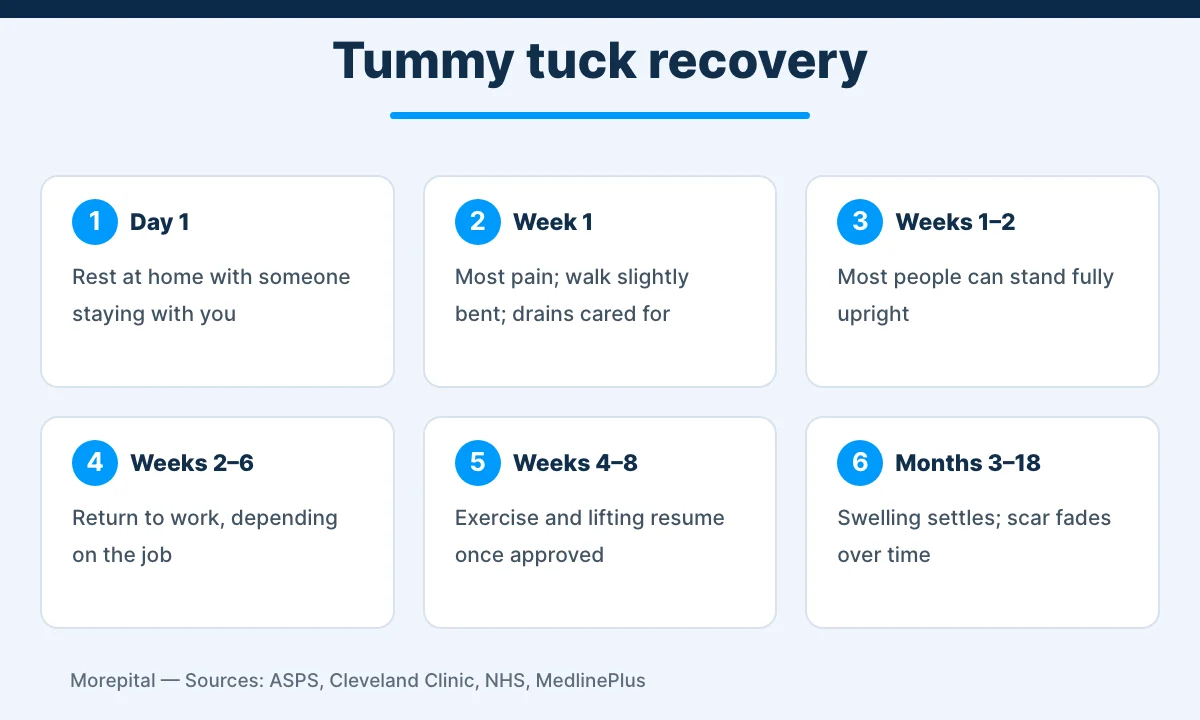
You will wake with dressings, possibly drains, and a compression garment or support pants that reduce swelling and support the abdomen. Advice on the hospital stay varies: Cleveland Clinic describes the operation as usually outpatient, MedlinePlus mentions a stay of 1 to 3 days, and the NHS says most people stay a few nights. Whatever the setting, someone should drive you home and stay with you for the first 24 hours.
Source: Cleveland Clinic, MedlinePlus, NHS, ASPS
Early recovery is about rest, pain control and protecting the wound. Resting with your hips and knees bent eases tension on the stitches. You will be given instructions for caring for drains, bathing and the garment, and you should avoid running, straining and heavy lifting until your surgeon says it is safe.
Source: MedlinePlus, NHS, Cleveland Clinic, ASPS
| Time after surgery | What to expect |
|---|---|
| First day | Tiredness and abdominal soreness; you need a driver and, ideally, someone at home with you |
| First days to week 1 | Pain controlled with medicine; walking slightly bent; most discomfort in this week; drains may still be in place |
| Weeks 1–2 | Starting to feel more like yourself; ASPS says most people can stand fully upright within 1 to 2 weeks |
| Weeks 2–4 | MedlinePlus says most people return to work in 2 to 4 weeks (the NHS advises about 4 to 6 weeks off) |
| Weeks 4–8 | Strenuous exercise, heavy lifting and sexual activity usually resume between 4 and 8 weeks, once approved; the NHS suggests wearing the support garment for about 6 weeks |
| Up to 3 months | Swelling settles and the final shape becomes clearer |
| 12–18 months | Scar flattens and fades as much as it will |
Source: Cleveland Clinic, ASPS, MedlinePlus, NHS, Cleveland Clinic
Expect bruising, numbness, a pulling or tight sensation and difficulty standing up straight at first. These are normal and improve with time, although the NHS notes that numbness of the tummy skin can last for months or even years. A follow-up visit a few weeks after surgery checks that the wound is healing well.
Source: NHS, Cleveland Clinic
Tummy tuck results and how long they last
A tummy tuck produces a flatter, firmer abdomen that is more in proportion with your body. Swelling and a slightly stooped posture hide the result at first. Cleveland Clinic says the final result may take up to about three months, while the NHS says about 6 weeks for the full effect, so expect your shape to keep improving over the first few months.
Source: ASPS, Cleveland Clinic, NHS
The removed skin and fat do not come back, and Cleveland Clinic describes the results as permanent. They are, however, not immune to later changes: significant weight gain or loss and pregnancy can stretch the tissues again and greatly diminish the result. Keeping a stable weight with a nutritious diet and regular exercise is the best way to protect it.
Source: Cleveland Clinic, ASPS
The tummy tuck scar
Every tummy tuck leaves a permanent scar. After a full tummy tuck it usually runs from hip bone to hip bone just above the pubic area, plus a scar around the belly button. A mini tummy tuck leaves a shorter scar of roughly 3 to 6 inches, similar to a C-section scar, which may be incorporated into the new one. The fleur-de-lis technique adds a vertical scar from the lower breastbone to the pubic bone.
Source: Cleveland Clinic, NHS, ASPS
Scars are often raised and red at first and usually flatten and fade over 12 to 18 months, but most people still have a visible line. Silicone gel sheets, gentle massage started around 2 to 3 weeks after surgery (with your surgeon’s approval) and SPF 30 sunscreen for 12 to 18 months can help. Scar revision, if needed, is usually considered after 12 to 18 months, once the scar has matured.
Source: Cleveland Clinic, NHS, MedlinePlus
Most people are happy with their results and report a boost in confidence, according to MedlinePlus. Still, no outcome is guaranteed: previous abdominal surgery can limit what is achievable, and sometimes a second operation is needed to get the desired effect.
Source: MedlinePlus, ASPS, NHS
Tummy tuck risks and complications
A tummy tuck is major surgery. Side effects that are expected and usually temporary include pain, bruising, swelling, a pulling sensation, temporary fluid swelling above the scar and numbness of the abdominal skin.
Source: NHS, Cleveland Clinic
Possible complications listed by ASPS, Cleveland Clinic, MedlinePlus and the NHS include:
Source: ASPS, Cleveland Clinic, MedlinePlus, NHS
- Seroma (fluid collecting under the skin), which may need to be drained
- Hematoma (blood collecting under the skin) and bleeding
- Infection and poor or delayed wound healing
- Skin loss or fat necrosis (death of fatty tissue)
- Thick, widened or unfavorable scars, and “dog ears” (small bulges at the scar ends)
- Numbness, nerve pain or changes in skin sensation
- Asymmetry, recurrent skin looseness or a result that falls short of expectations, sometimes requiring revision surgery
- Deep vein thrombosis and other heart and lung complications
- Risks of anesthesia, including breathing problems and, very rarely, allergic reactions
Source: ASPS, Cleveland Clinic, MedlinePlus, NHS
How common are complications?
A literature review in Archives of Plastic Surgery (2017) estimated that roughly 10% to 20% of patients have a local complication after abdominoplasty, while fewer than 1% have a systemic complication. It reported infection rates of about 1% to 3.8%, hematoma around 2% and venous thromboembolism between 0.3% and 1.1% depending on the series. Seroma rates vary widely between studies; a 2024 review describes 10% as an accepted standard and notes rates of up to 25% have been reported.
Source: Archives of Plastic Surgery (PMC), Aesthetic Surgery Journal Open Forum (PMC)
Smoking is one of the strongest modifiable risk factors: the same review reports that it can raise the infection rate to 12.7% (versus 5% in non-smokers) and roughly triples the risk of skin necrosis. Combining abdominoplasty with intra-abdominal surgery was also linked to a higher clot risk. The NHS stresses that your surgeon should explain how likely each risk is for you.
Source: Archives of Plastic Surgery (PMC), NHS
Alternatives to a tummy tuck
The right alternative depends on whether your main problem is fat, loose skin, separated muscles or a combination:
Source: Cleveland Clinic, MedlinePlus, Cleveland Clinic
- Liposuction: removes fat but does not remove loose skin or repair muscles. It is a different procedure, although surgeons often combine the two.
- Physical therapy for diastasis recti: gentle, breathing-based exercises guided by a physical therapist who targets the deep abdominal muscles are usually the first step for muscle separation. Crunches, sit-ups and planks can make the gap worse. Abdominal binders can support, but not heal, the separation.
- Panniculectomy: removes a hanging apron of lower abdominal skin and fat, often after major weight loss, but unlike a tummy tuck it does not tighten the muscles.
- Diet and exercise: lower overall body fat and improve muscle tone, but cannot remove stretched excess skin.
Source: MedlinePlus, Cleveland Clinic, Cleveland Clinic, Cleveland Clinic
Choosing a surgeon and having a tummy tuck abroad
Choose a surgeon who is fully qualified and registered in plastic surgery and who performs tummy tucks regularly, operating in a regulated, accredited facility. The NHS suggests asking how many of these operations the surgeon has done, how many had complications, what follow-up you will get if something goes wrong and what their patient satisfaction rates are. Ask to see before-and-after photos of the surgeon’s own patients.
Cost varies widely by country and clinic. ASPS reports an average US surgeon’s fee of $8,174, which excludes anesthesia, operating room and other costs, and the NHS estimates £5,000 to £10,000 in the UK plus consultations and follow-up. Most health insurance plans do not cover a cosmetic tummy tuck or its complications, so ask for a full written quote.
If you are traveling for surgery
Many people travel abroad for a tummy tuck. The CDC and NHS advise checking the surgeon’s qualifications and the facility’s credentials (while remembering that accreditation does not guarantee a good outcome), making sure you can communicate in a shared language, and having consultations before committing rather than booking a holiday package. Plan follow-up care at home, get copies of your medical records before you leave, and check whether your insurance covers complications, as travel insurance usually does not.
Flying soon after surgery raises the risk of blood clots. The NHS advises avoiding flights for 7 to 10 days after a tummy tuck, and the CDC suggests waiting 10 to 14 days after major surgery. A 2026 CDC review of complications linked to cosmetic procedures, including those done abroad, found postsurgical infections and serious lapses in infection control at some facilities.
When to call your doctor after a tummy tuck
Some discomfort, swelling and tightness are normal while you heal. Contact your surgeon or clinic promptly if anything seems unusual or is getting worse instead of better.
Source: NHS, Cleveland Clinic
- You have sudden shortness of breath or chest pain, which can signal a blood clot in the lungs
- One calf or leg becomes painful, swollen or warm (a possible deep vein thrombosis)
- Bleeding is heavy or will not stop
- Pain becomes severe or is not controlled by your medicines
Source: Cleveland Clinic, NHS, ASPS
- Swelling that rapidly increases, or a fluid-filled bulge near the scar
- Fluid or pus leaking from an incision, redness spreading around the wound, or a fever
- Wound edges opening or skin turning dark
- Any unexpected symptom after you get home
Source: Cleveland Clinic, NHS, MedlinePlus
If you are unhappy with the result or think the procedure was not done properly, raise it first with your surgeon. In England, concerns about a clinic can be reported to the Care Quality Commission and concerns about a doctor to the General Medical Council.
Source: NHS
Related treatments
Tummy tuck: frequently asked questions
How long does it take to recover from a tummy tuck?
Most discomfort is in the first week, and most people stand fully upright within 1 to 2 weeks. Strenuous exercise and heavy lifting usually wait 4 to 8 weeks, and the final shape appears over about 6 weeks to 3 months.
Source: Cleveland Clinic, ASPS, NHS, Cleveland Clinic
Is a tummy tuck permanent?
The removed skin and fat do not return, so results are considered permanent. Significant weight changes or a later pregnancy can stretch the tissues again and reduce the result.
Source: Cleveland Clinic, ASPS
What is the difference between a mini and a full tummy tuck?
A mini tummy tuck uses a shorter incision and treats only the skin below the belly button, without cutting around the navel. A full tummy tuck uses a hip-to-hip incision, repositions the belly button and treats the whole front of the abdomen.
Source: Cleveland Clinic, NHS
Will a tummy tuck remove stretch marks?
Only partly. Stretch marks on the skin that is cut away, mostly below the belly button, are removed or improved, but stretch marks elsewhere remain.
Source: ASPS
Can a tummy tuck fix diastasis recti?
Yes. Most tummy tucks include repair of weakened or separated abdominal muscles. Physical therapy is usually tried first, and surgery is an option for people who want surgical correction.
Source: ASPS, Cleveland Clinic
Can I get pregnant after a tummy tuck?
Surgeons advise waiting until you have finished having children, because pregnancy can stretch the repaired muscles and skin again and undo part of the result.
Source: ASPS, Cleveland Clinic
How big is the tummy tuck scar?
After a full tummy tuck, the scar usually runs from hip bone to hip bone just above the pubic area, plus a scar around the navel. A mini tummy tuck leaves a shorter scar of about 3 to 6 inches. Scars fade over 12 to 18 months but stay visible.
Source: Cleveland Clinic, NHS
How much does a tummy tuck cost?
Ask about a tummy tuck
Sources
- NHS — Tummy tuck (abdominoplasty)
- NHS — Cosmetic surgery abroad
- Cleveland Clinic — Abdominoplasty (Tummy Tuck)
- Cleveland Clinic — Tummy Tuck Scar: Healing, Treatment & Revision
- Cleveland Clinic — Diastasis Recti (Abdominal Separation)
- Cleveland Clinic — Panniculectomy
- MedlinePlus — Abdominal wall surgery
- ASPS — Tummy Tuck
- ASPS — Tummy Tuck Candidates
- ASPS — Tummy Tuck Preparation
- ASPS — Tummy Tuck Procedure Steps
- ASPS — Tummy Tuck Recovery
- ASPS — Tummy Tuck Results
- ASPS — Tummy Tuck Risks and Safety
- ASPS — Tummy Tuck Cost
- Archives of Plastic Surgery (PMC) — Managing Complications in Abdominoplasty: A Literature Review
- Aesthetic Surgery Journal Open Forum (PMC) — Decreasing Seroma Incidence Following Abdominoplasty: A Systematic Review and Meta-Analysis
- CDC — Medical Tourism: Travel to Another Country for Medical Care
- CDC — CDC Highlights Adverse Outcomes Linked to Travel-Related Cosmetic Procedures
This page is part of the Morepital medical reference. It is for general health education and does not replace a consultation with a qualified doctor. Last reviewed: October 2026.